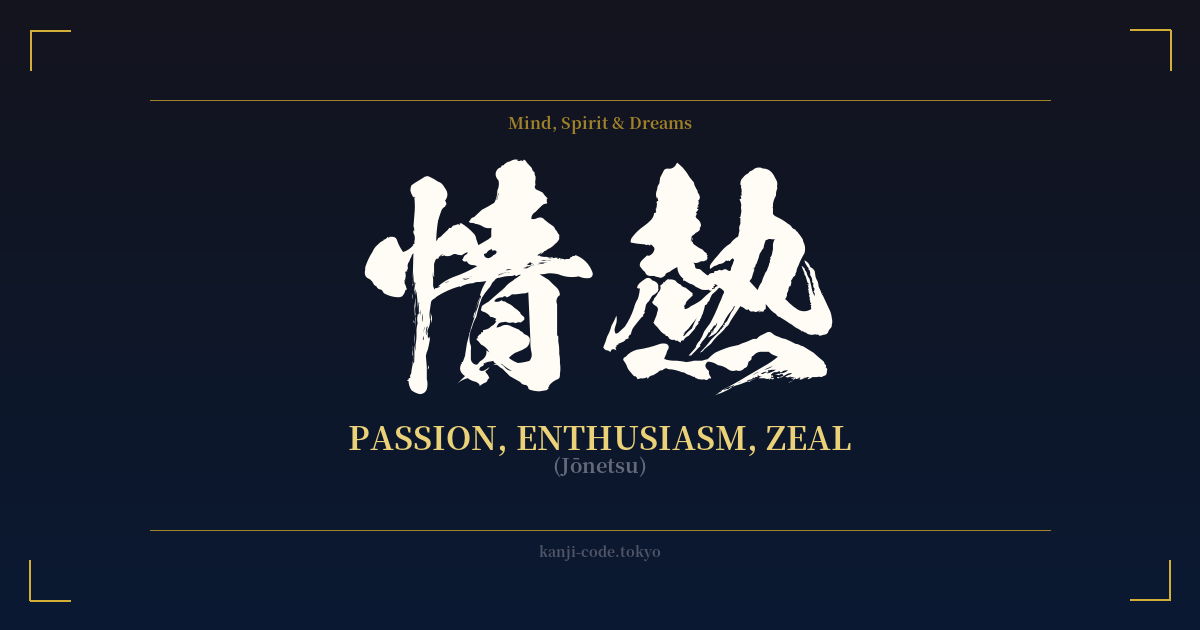
✍️ 情熱 (Jōnetsu) — Cultural Context
情熱 (Jōnetsu) is the Japanese word for passion, but its meaning carries a weight and intensity that the English word sometimes lacks. It’s not a fleeting interest or a casual hobby; Jōnetsu is a profound, all-consuming fire that drives a person forward. It’s the burning enthusiasm of an artist lost in their work, the unwavering dedication of an athlete pushing past their limits, and the intense zeal of a revolutionary fighting for a cause.
The word itself is a beautiful combination of two distinct concepts. The first kanji, 情 (jō), represents feelings, emotions, and the circumstances of the heart. It’s the internal, human element. The second kanji, 熱 (netsu), means heat, fever, or mania. It’s the external, energetic force. When combined, they create the concept of 'emotional heat'—a passion so strong it feels tangible, like a fever in the soul.
In Japanese culture, having a Jōnetsu is highly valued. It is seen as the fuel for achieving one's 生き甲斐 (ikigai), or reason for being. While Western cultures might sometimes view extreme passion with a hint of suspicion, in Japan, it’s often the core of perseverance and excellence. The popular manga and anime genre of 'shōnen' is built on characters driven by Jōnetsu—their passionate pursuit of a goal, whether it's becoming the strongest fighter, the best athlete, or the pirate king, is the central theme.
However, Jōnetsu is not exclusively for grand, world-changing ambitions. It can be found in the quiet dedication of a craftsman perfecting their skill over decades, the focus of a chef creating the perfect bowl of ramen, or the love a person has for their garden. It’s about the intensity of the feeling and the dedication it inspires, regardless of the scale.
It’s important to distinguish Jōnetsu from other related terms. While it can be used in a romantic context to describe passionate love (情熱的な恋, jōnetsu-teki na koi), the word 愛情 (aijō) is more commonly used for love and affection in a broader, more nurturing sense. Jōnetsu carries a fiery, almost obsessive connotation that speaks more to the driving force behind an action or belief.
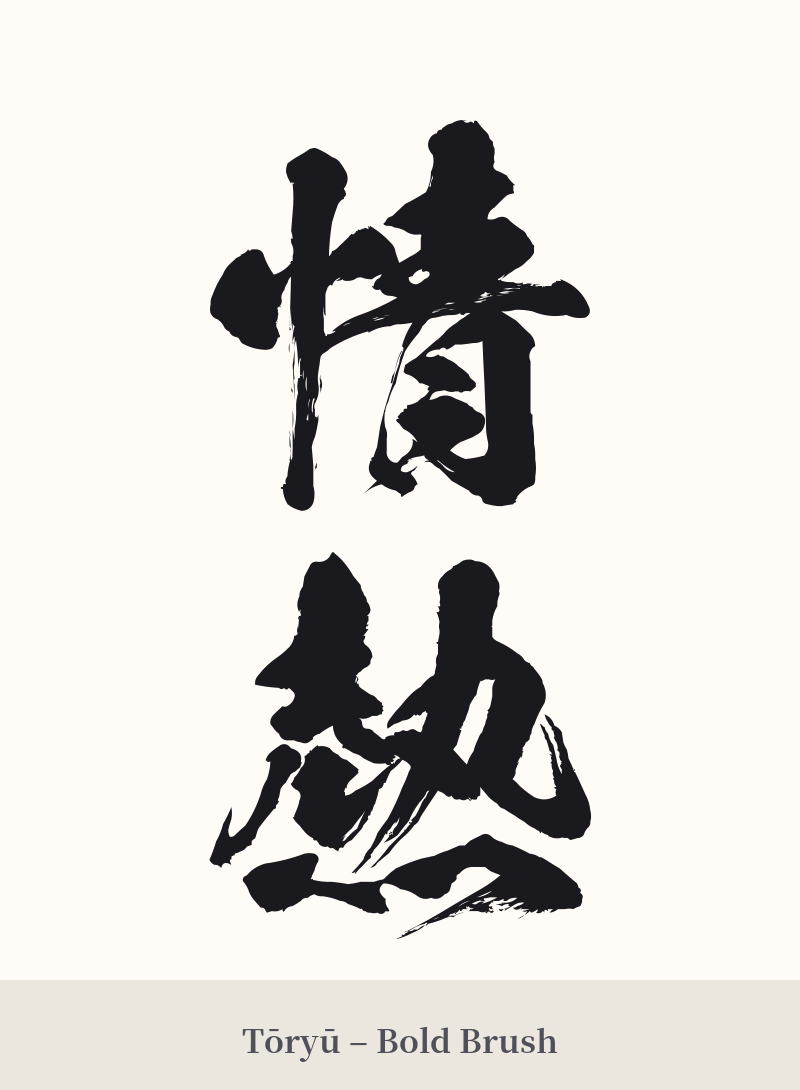
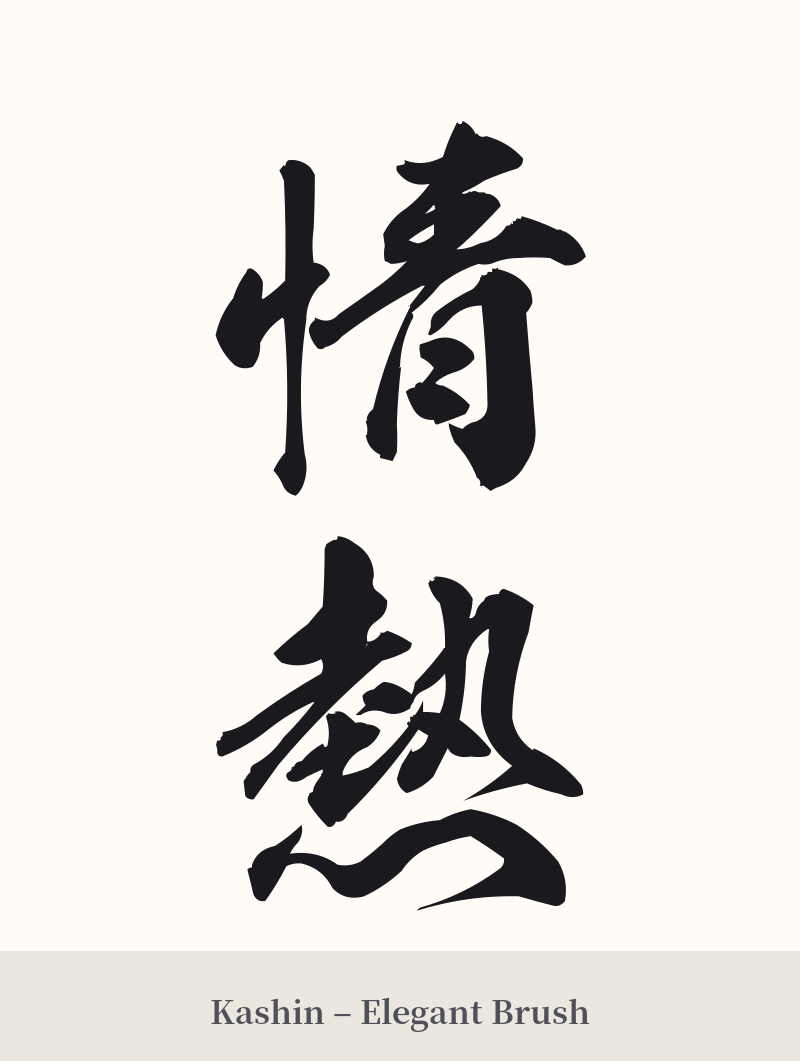
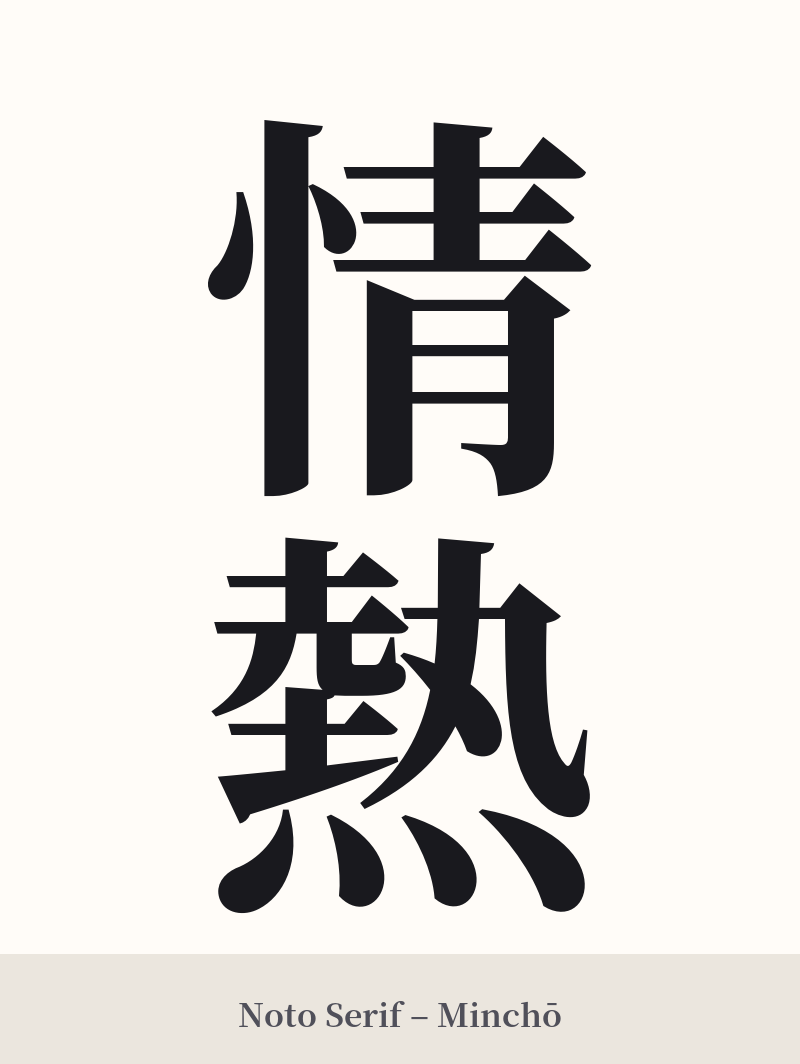
🖌️ Font Styles for 情熱
The same kanji can look dramatically different depending on the calligraphy style. Choose a font that matches the mood you want for your tattoo or design.
🎨 Tattoo Suitability
📐 Tattoo Design Guide
Jōnetsu offers a visually balanced and powerful design for a tattoo. Its inherent meaning of 'fiery emotion' lends itself well to dynamic and expressive styles.
– Placement: A vertical orientation is classic and works well on the forearm, calf, or along the spine. A horizontal layout is also strong and fits perfectly on the chest, upper back, or inner bicep. Choose a location with enough space to appreciate the detail in the characters.
– Style: A calligraphy or brushstroke style (shodō) is highly recommended. The flowing, energetic lines can beautifully capture the 'fiery' and 'passionate' nature of the word. Bold, thick strokes can emphasize power, while more fluid, splash-like strokes can convey raw emotion.
– Visual Elements: Consider subtly incorporating flames or embers around the characters, particularly emanating from the bottom of 熱 (which contains the fire radical). A background in a watercolor style, using reds, oranges, or deep blacks, can enhance the feeling of intensity without overpowering the kanji itself.
Comments