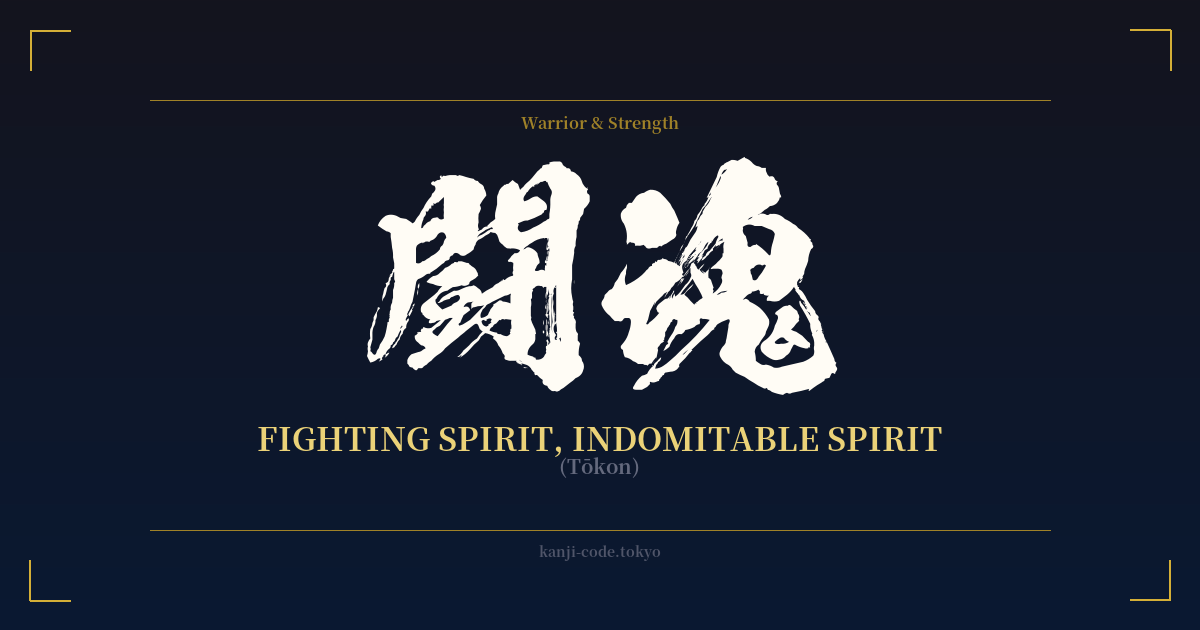
✍️ 闘魂 (Tōkon) — Cultural Context
闘魂 (Tōkon) is a potent and deeply respected term in Japanese culture, literally translating to 'Fighting Soul' or 'Fighting Spirit.' It transcends the simple act of physical combat, embodying a philosophy of relentless perseverance, unbreakable will, and the spiritual fortitude to face any challenge head-on.
The word is a compound of two kanji: 闘 (tō), meaning 'fight' or 'struggle,' and 魂 (kon), meaning 'soul' or 'spirit.' Together, they create a concept that is less about aggression and more about the fire within. It is the spirit that refuses to be extinguished, the courage to get back up after being knocked down, and the dedication to push beyond one's perceived limits.
While its essence can be traced back to the ethos of the samurai and the principles of Bushido (the way of the warrior), the modern popularization of Tōkon is inextricably linked to one man: Antonio Inoki. The legendary professional wrestler and martial artist adopted 'Tōkon' as his personal motto and life philosophy. For Inoki, Tōkon was the source of power that allowed one to overcome adversity both inside and outside the ring. His famous call-and-response chant with audiences—'Genki desu ka?!' ('How are you?!') followed by a roar of 'Tōkon!'—cemented the word in the Japanese public consciousness.
Today, Tōkon is a ubiquitous concept in Japan. You will hear it shouted by coaches on the sidelines of a high school baseball game, see it written on banners at martial arts dojos, and feel its presence in the narratives of countless anime and manga characters who must dig deep to find their inner strength. It is a motivating force in the business world, encouraging employees to tackle difficult projects with tenacity.
To embrace Tōkon is to embrace the struggle itself. It acknowledges that life is filled with battles—some external, some internal—and that true victory lies not just in winning, but in fighting with every fiber of your being. It is the spirit of the underdog, the resilience of the survivor, and the unwavering heart of a champion.
🖌️ Font Styles for 闘魂
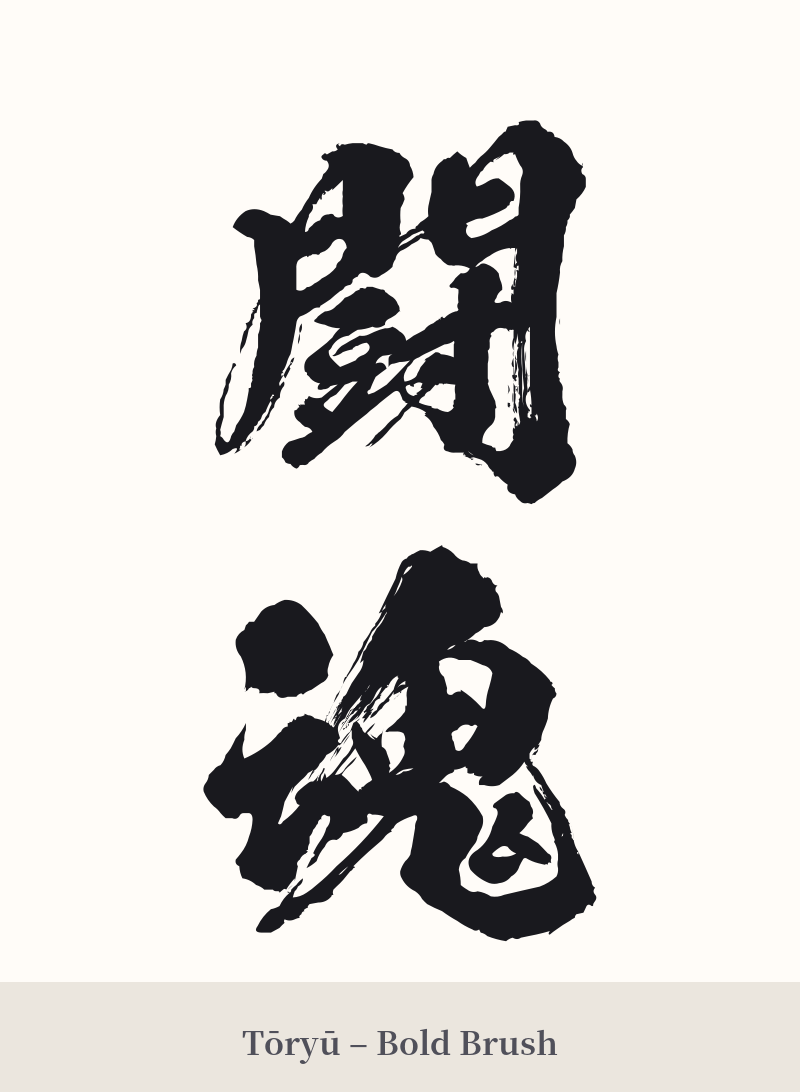
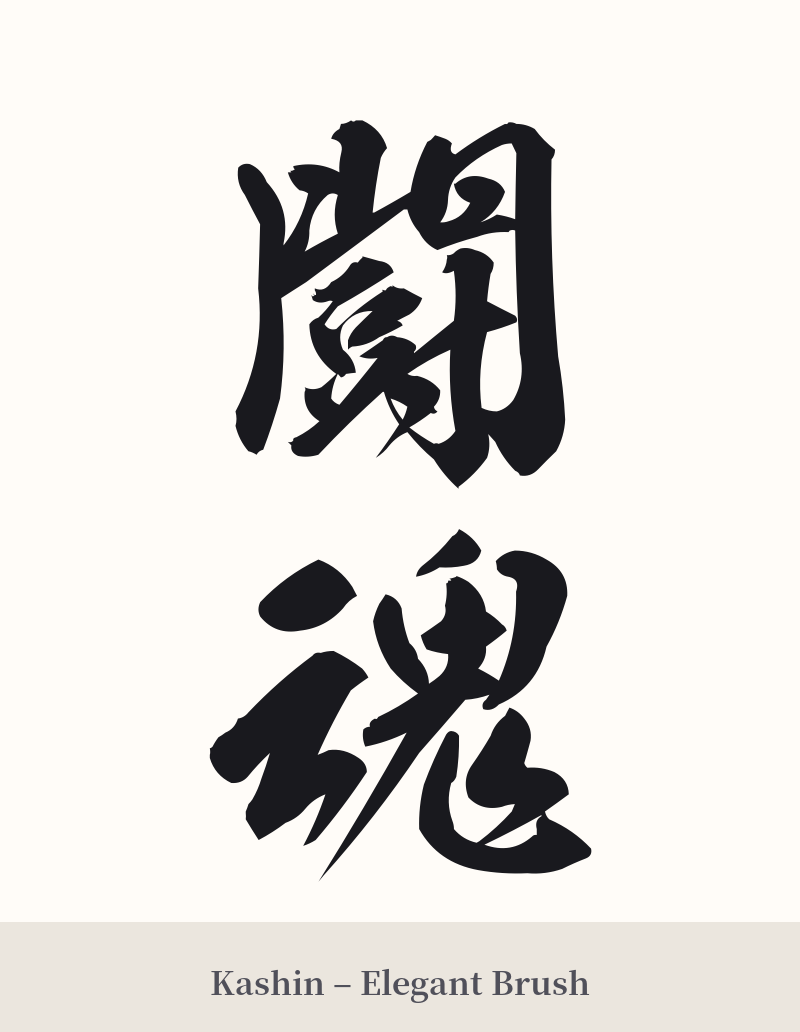
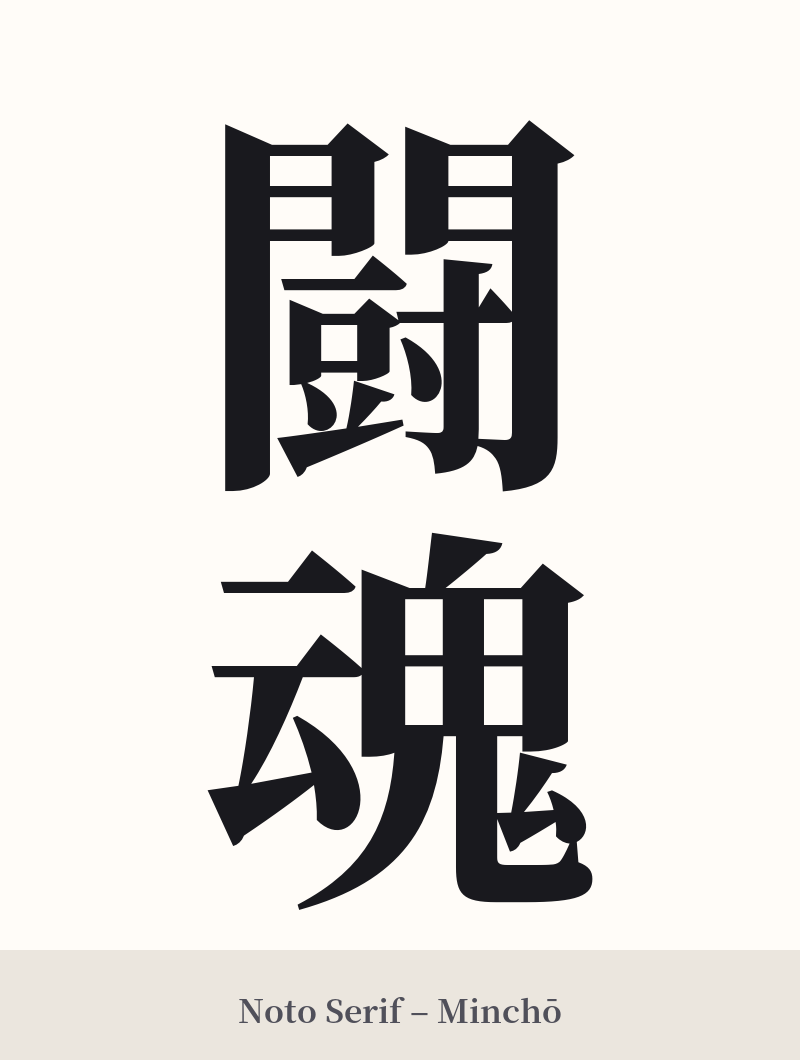
The same kanji can look dramatically different depending on the calligraphy style. Choose a font that matches the mood you want for your tattoo or design.
🎨 Tattoo Suitability
📐 Tattoo Design Guide
A 闘魂 (Tōkon) tattoo is a powerful statement that deserves a design that reflects its intensity.
– Placement: Vertical alignment is the most traditional and visually appealing for this two-character compound. It works exceptionally well along the forearm, the calf, or down the spine or bicep, allowing the characters to flow naturally with the lines of the body.
– Font Style: To emphasize the 'fighting' aspect, a dynamic and energetic brush script style like Gyosho (semi-cursive) or Sosho (cursive) is an excellent choice. These styles convey movement and raw power. For a more solid, disciplined, and stoic look, a clean and angular Kaisho (block script) style is also a strong option.
– Visual Tips: Given the high stroke count of both characters, it is crucial to work with a skilled artist who can maintain clarity and prevent the lines from bleeding into each other over time. Ensure the design is large enough for the details to be legible. While Tōkon stands powerfully on its own, it can be complemented by imagery like a dragon, a tiger, or an enso circle to further enhance its meaning.
Comments