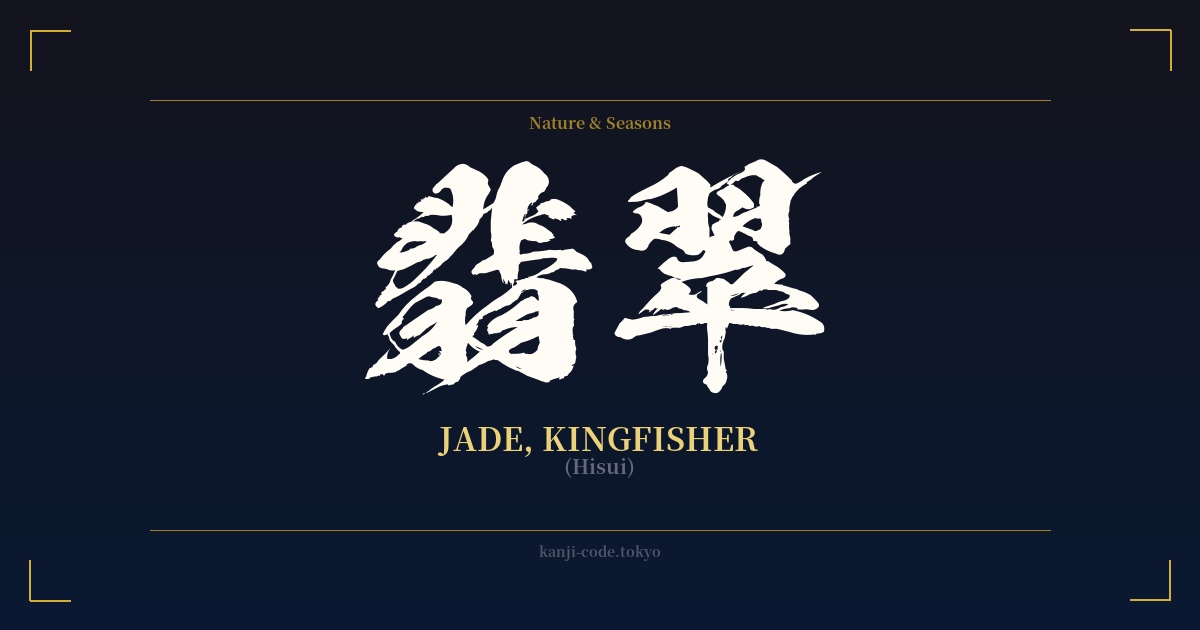
✍️ 翡翠 (Hisui) — Cultural Context
The word 翡翠 (Hisui) is a beautiful example of how Japanese language weaves together observations of the natural world. While it is most commonly known as the word for jade, its origins lie with a creature of vibrant beauty: the kingfisher.
Historically, the individual kanji characters refer to the male and female kingfisher. 翡 (hi) represents the male bird, and 翠 (sui) represents the female. The stunning, iridescent green and blue plumage of these birds was so striking that their name was borrowed to describe the most prized variety of jadeite, a gemstone that shared the same breathtaking color.
Jade itself holds a significant place in East Asian culture. Though its cultural dominance is more pronounced in China, Japan has long cherished jade (known broadly as 玉, gyoku) as a symbol of purity, wisdom, and longevity. It was used for imperial regalia, sacred treasures, and ornaments worn by the nobility. 翡翠, referring specifically to the high-quality green jadeite, carries these connotations of rarity and immense value.
By choosing the name of a bird to describe a stone, the word 翡翠 creates a powerful poetic link. It doesn't just mean 'green stone'; it means a green so vivid and alive it can only be compared to the flash of a kingfisher's wings. The word evokes a specific shade—a deep, lustrous, and almost magical green that is both of the earth and of the air.
In Japan, the kingfisher (カワセミ, kawasemi) is also a symbol in its own right. It represents speed, patience (as it waits for its prey), and the sudden arrival of good fortune or an opportunity. Seeing a kingfisher is often considered a lucky omen.
Today, the word 翡翠 retains its luxurious and elegant image. It is used in literature to describe profound beauty and is also found as a lovely, though not exceedingly common, female given name, Hisui. It speaks to a person who embodies natural elegance, preciousness, and a touch of the wild beauty of nature.
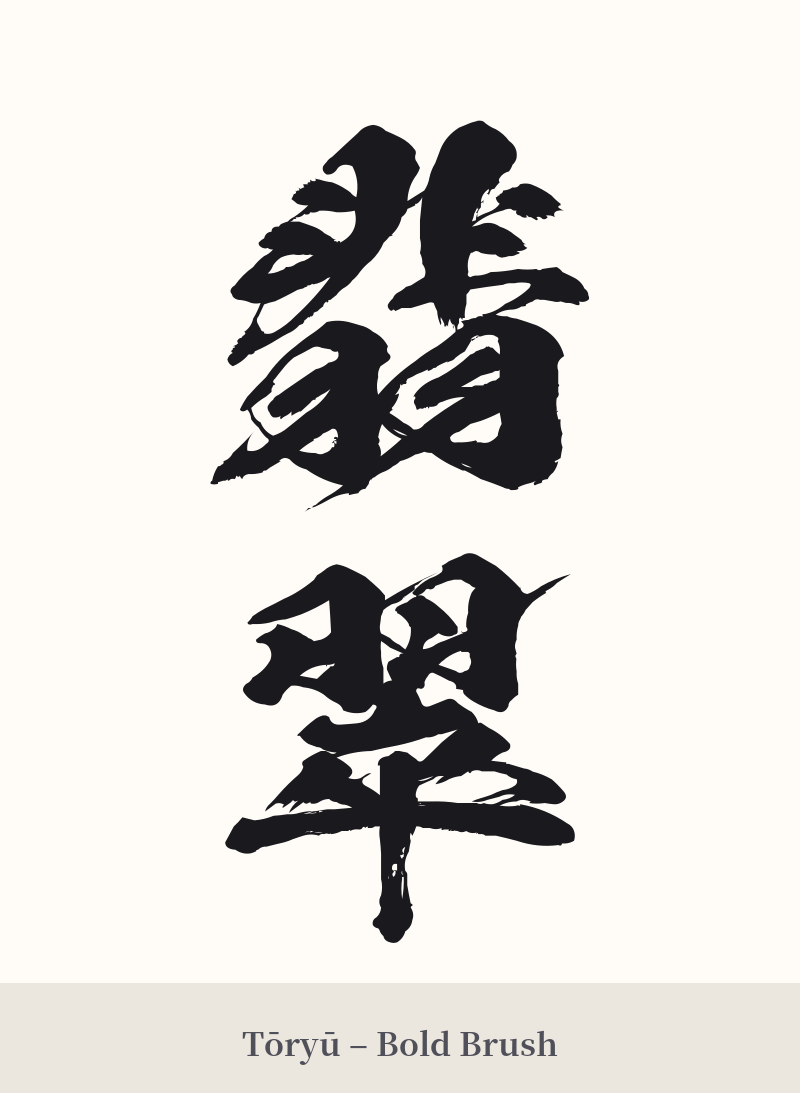
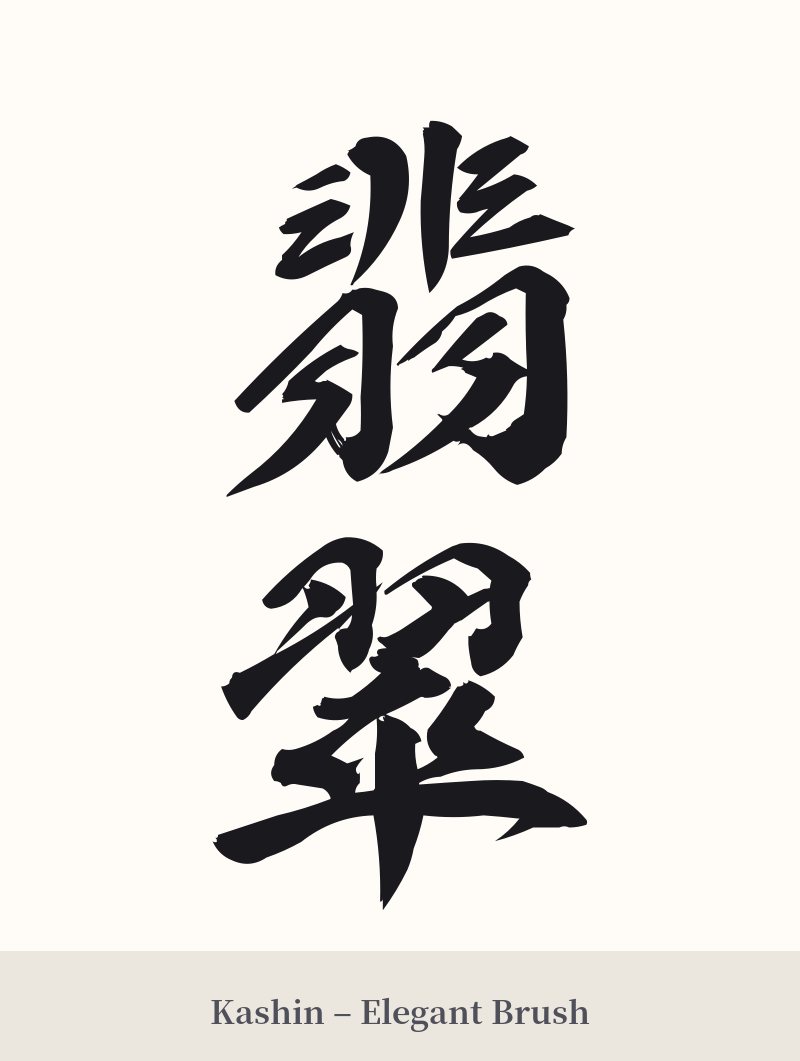
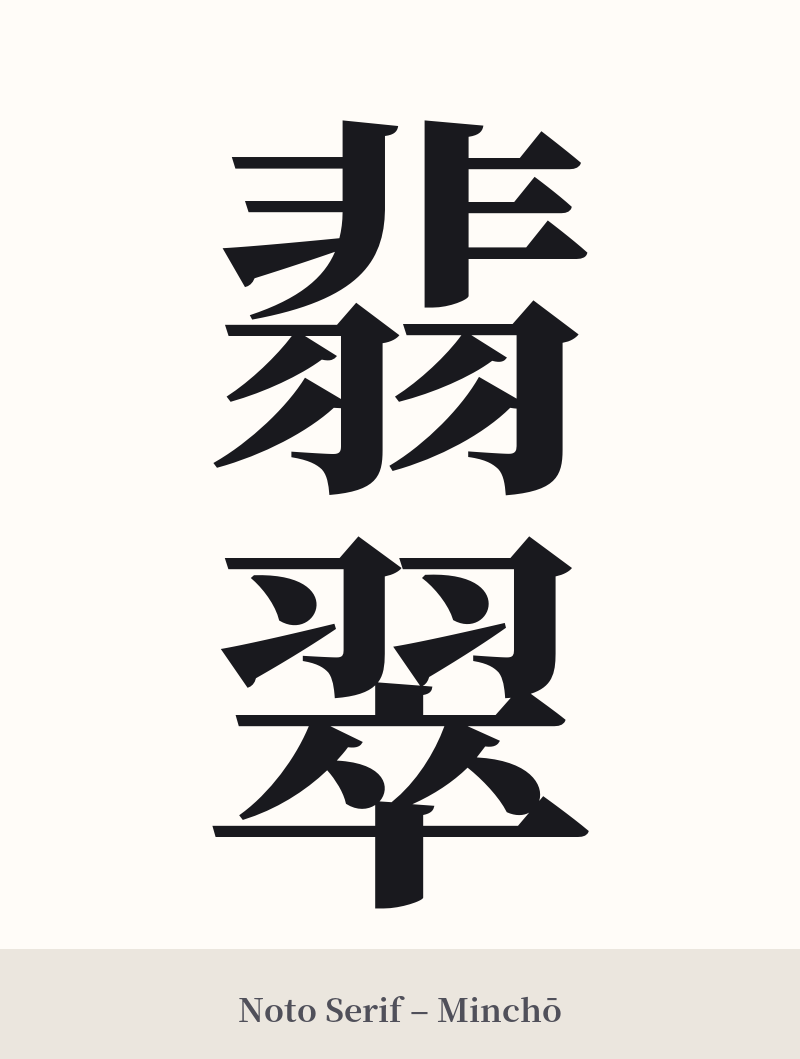
🖌️ Font Styles for 翡翠
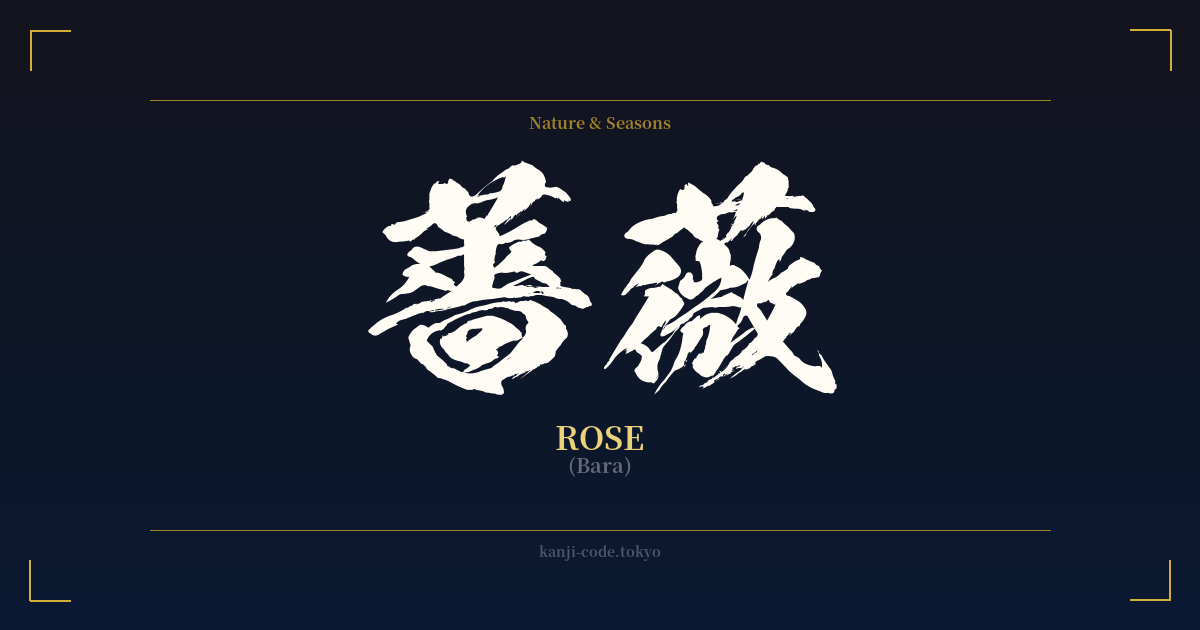
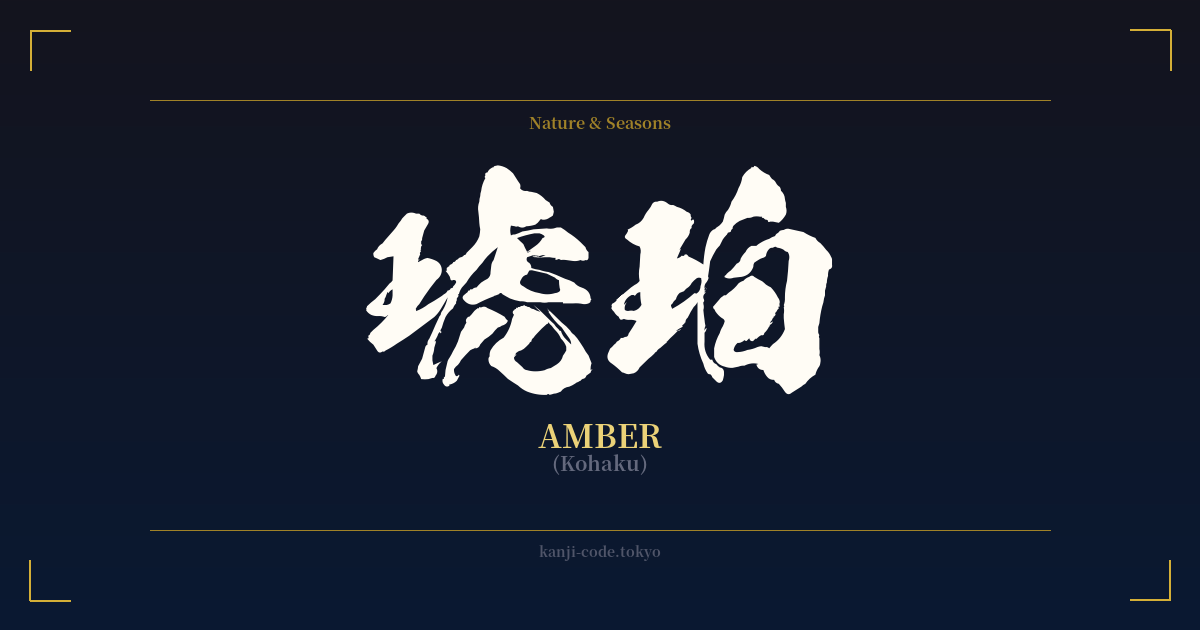
The same kanji can look dramatically different depending on the calligraphy style. Choose a font that matches the mood you want for your tattoo or design.
🎨 Tattoo Suitability
📐 Tattoo Design Guide
A 翡翠 (Hisui) tattoo is about celebrating elegance and intricate beauty. Due to the detailed nature of both kanji, this design benefits from careful planning.
– Placement: Choose a flat, larger surface area to allow the artist room for detail. The forearm, the back of the calf, the shoulder blade, or along the ribs are excellent choices. Avoid small or highly curved areas like the wrist, fingers, or ankle.
– Style: A traditional Kaisho (block) script will emphasize the balanced, architectural quality of the characters. For a more fluid and artistic feel, a Gyosho (semi-cursive) style can link the characters beautifully. A minimalist brushstroke (shodo) style can also be very effective, capturing the word's natural essence.
– Visual Tips: Consider incorporating a watercolor background in shades of jade green or turquoise to visually represent the meaning. Another powerful concept is to have the kanji subtly interwoven with the image of a kingfisher or a texture that mimics polished jade.
Comments