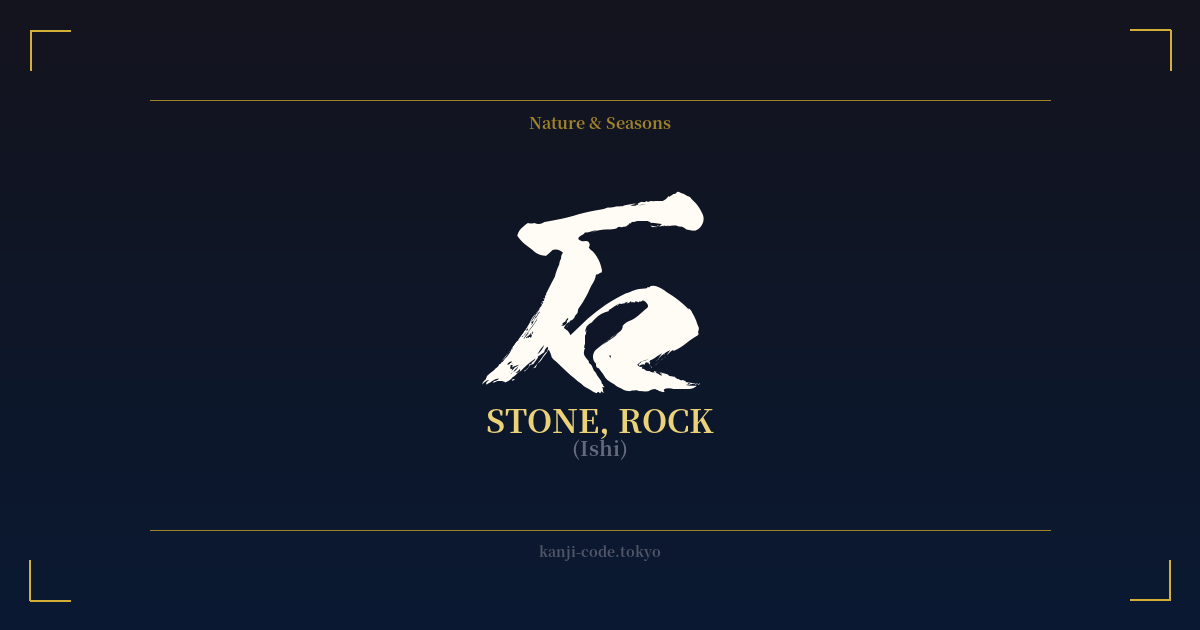
✍️ 石 (Ishi) — Cultural Context
The kanji 石 (ishi) is more than just a character for 'stone' or 'rock'; it is a cornerstone of Japanese aesthetics, philosophy, and spirituality. Its form is a simple pictograph, originally depicting a rock (口) at the base of a cliff (厂). This humble origin belies the immense weight and meaning it carries within Japanese culture.
In Shinto, Japan's indigenous religion, large and uniquely shaped rocks, known as iwakura (岩倉), are revered as yorishiro—objects capable of attracting and housing kami, or gods. These sacred stones are often cordoned off with shimenawa, sacred ropes, signifying their divine connection and creating a space of purity. They are not merely objects but living presences, anchors between the physical and spiritual worlds.
This reverence for stone finds a different but equally profound expression in Zen Buddhism. The karesansui (枯山水), or Japanese dry landscape garden, uses stones and sand to create miniature, stylized landscapes. In these gardens, large stones might represent mountains or islands, while smaller pebbles are raked to symbolize flowing water. These are not just decorative arrangements; they are meditative tools. Contemplating a Zen garden is an exercise in finding tranquility, understanding impermanence, and seeing the universe in a grain of sand—or a single, well-placed stone.
The concept of the stone also permeates Japanese language and ethics. The famous proverb, 石の上にも三年 (Ishi no ue ni mo sannen), literally translates to 'three years even on a stone.' It embodies the virtue of perseverance, suggesting that with enough patience and determination, one can achieve anything, even warming a cold stone. It speaks to a quiet, unyielding strength, a resilience born from endurance.
From the foundational stones of castles to the humble stepping stones in a garden path, 石 represents foundation, stability, and the enduring, silent passage of time. It is a symbol of things that are unchanging in a world of constant flux. It reminds us of the raw, elemental power of nature and the quiet strength that can be found in stillness and solidity. To understand 石 is to appreciate a fundamental aspect of the Japanese worldview: finding beauty and meaning in the simple, the natural, and the enduring.
🖌️ Font Styles for 石
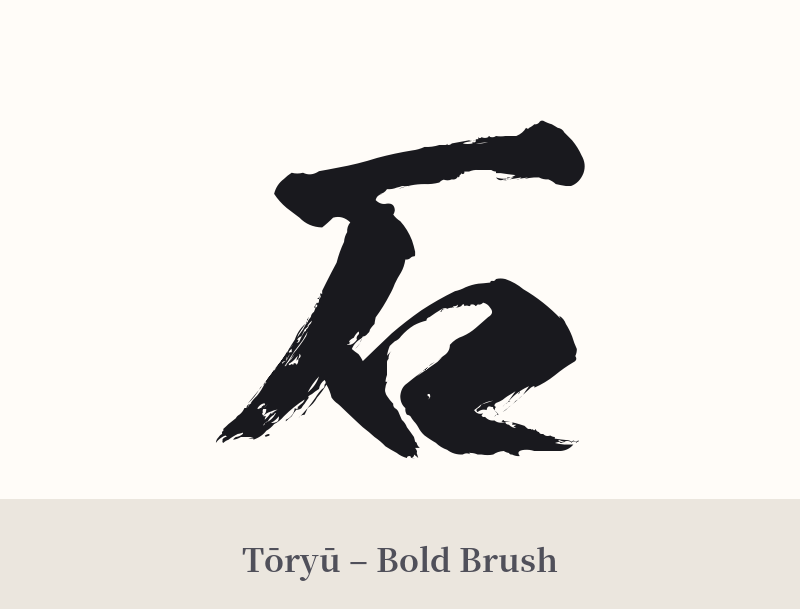
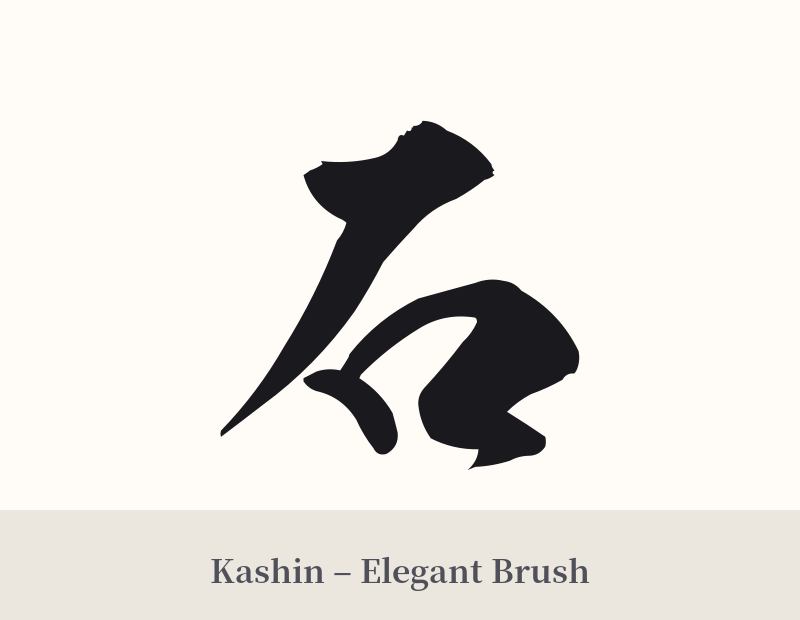
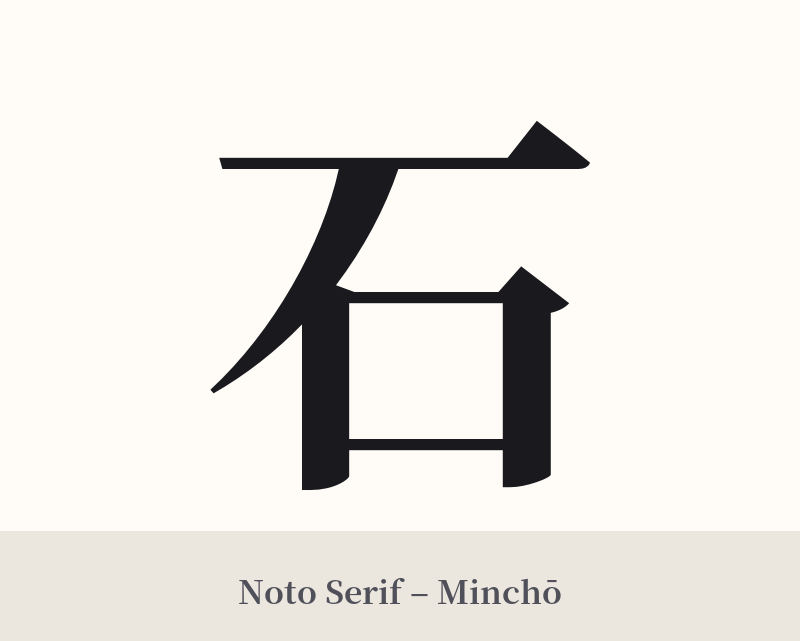
The same kanji can look dramatically different depending on the calligraphy style. Choose a font that matches the mood you want for your tattoo or design.
🎨 Tattoo Suitability
📐 Tattoo Design Guide
The 石 kanji offers a solid foundation for a tattoo, both literally and figuratively. Its simple, balanced form works well in a variety of styles and placements.
– Placement: Consider places that convey strength and support, such as the forearm, calf, or the back of the shoulder. For a smaller, more discreet design, the wrist or ankle can be effective, symbolizing a personal anchor.
– Font Style: A bold, blocky Kaisho script emphasizes the kanji's solid, unyielding nature. For a more organic and natural feel, a flowing Gyosho (semi-cursive) or a textured, brush-stroke style can mimic the rough surface of a real stone.
– Visual Tips: While powerful on its own, 石 can be beautifully integrated with other elements. Consider having it tattooed with imagery of moss growing on it to symbolize time and resilience, or with minimalist raked sand patterns to evoke a Zen garden. A design that makes the ink appear as if it's carved into your skin, like an ancient petroglyph, can also be a visually striking choice.
Comments