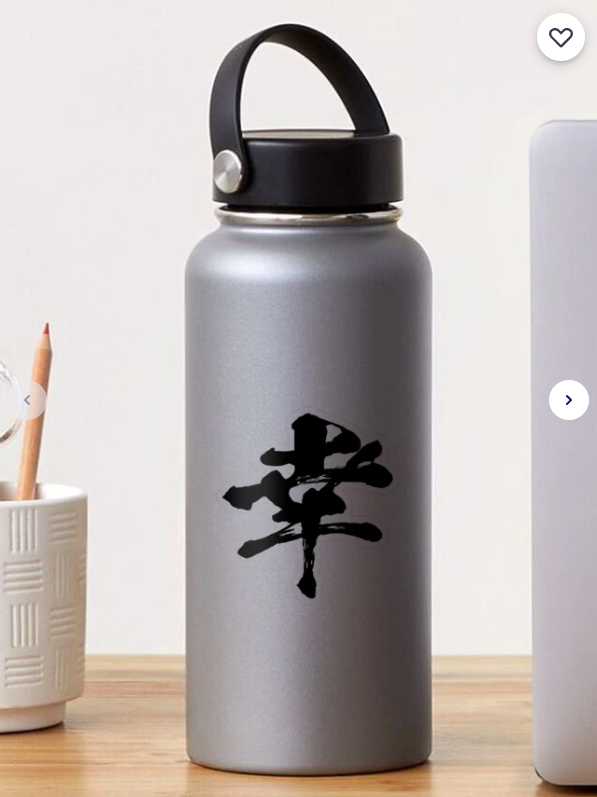
幸
Happiness, Good Fortune
A character born from ancient handcuffs that transformed into the symbol of happiness—because if they only shackled your wrists instead of executing you, that counted as lucky.
The character 幸 appears everywhere in Japanese life. New Year’s cards wish 幸多き年 (sachi ōki toshi, “a year abundant with good fortune”). Wedding speeches toast the couple’s 幸せ (shiawase, happiness). Store names, family names, given names all incorporate this single character hoping to capture its blessing. It’s the kanji equivalent of a four-leaf clover—pure positive energy distilled into eight strokes.
But peer into its etymology and you find something darker. Ancient oracle bone inscriptions show 幸 as a pictograph of handcuffs or shackles—two hands locked together, movement restricted, freedom stolen. This was the image scribes chose to represent what would eventually mean “happiness.” The transformation from restraint to blessing contains the entire character’s philosophy.
The logic works like this: in ancient judicial systems, punishments ranged from fines and shackling to mutilation and execution. If you committed a crime serious enough for arrest but received only handcuffs—temporary restraint rather than permanent maiming or death—you escaped the worst fate. That narrow avoidance of catastrophe WAS good fortune. The reversal of expected calamity became the definition of luck. Your hands might be bound, but you still had hands. You lived. That’s happiness measured against what could have been.
✨ Kanji Styles Gallery
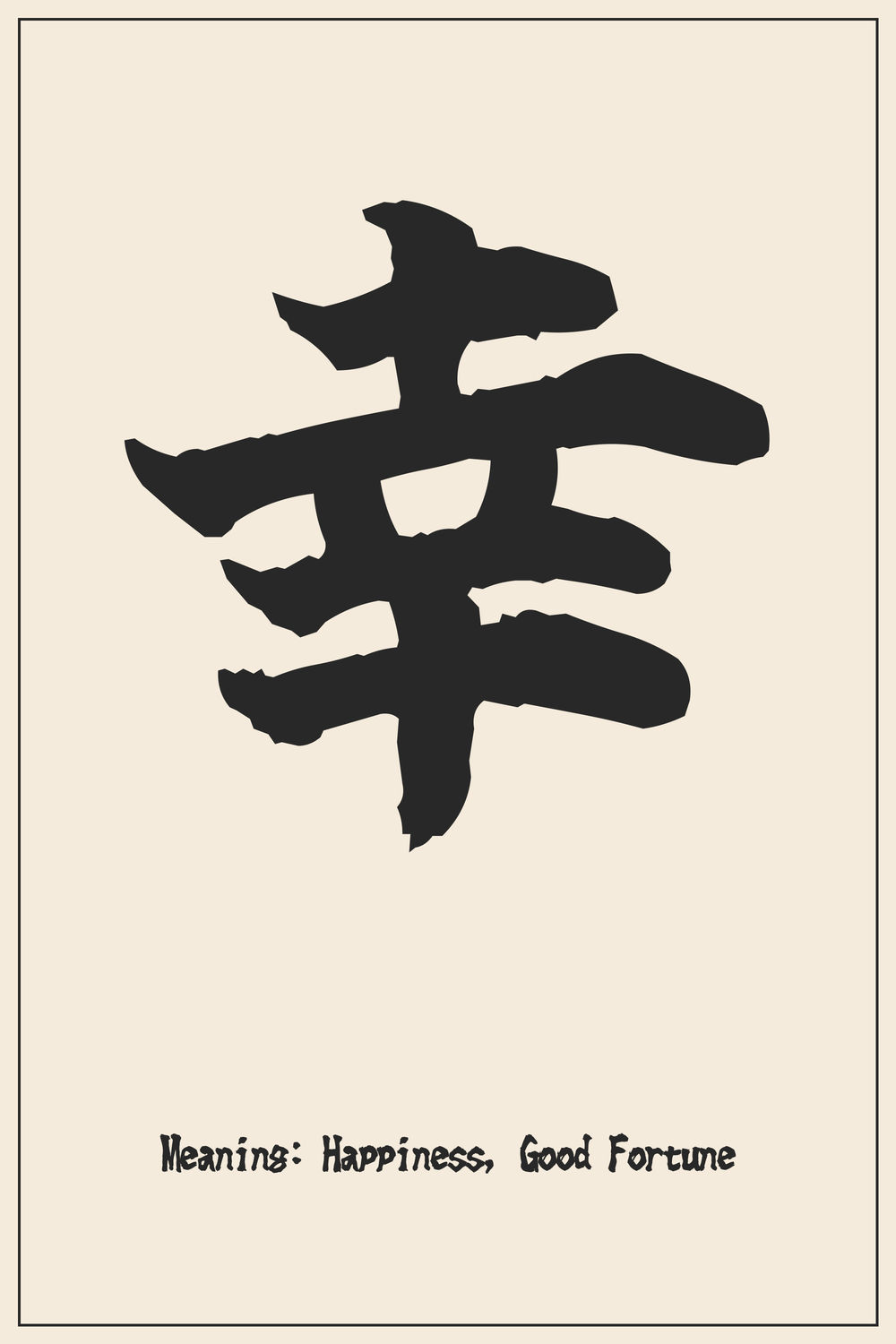
🖌️ Calligraphy Style
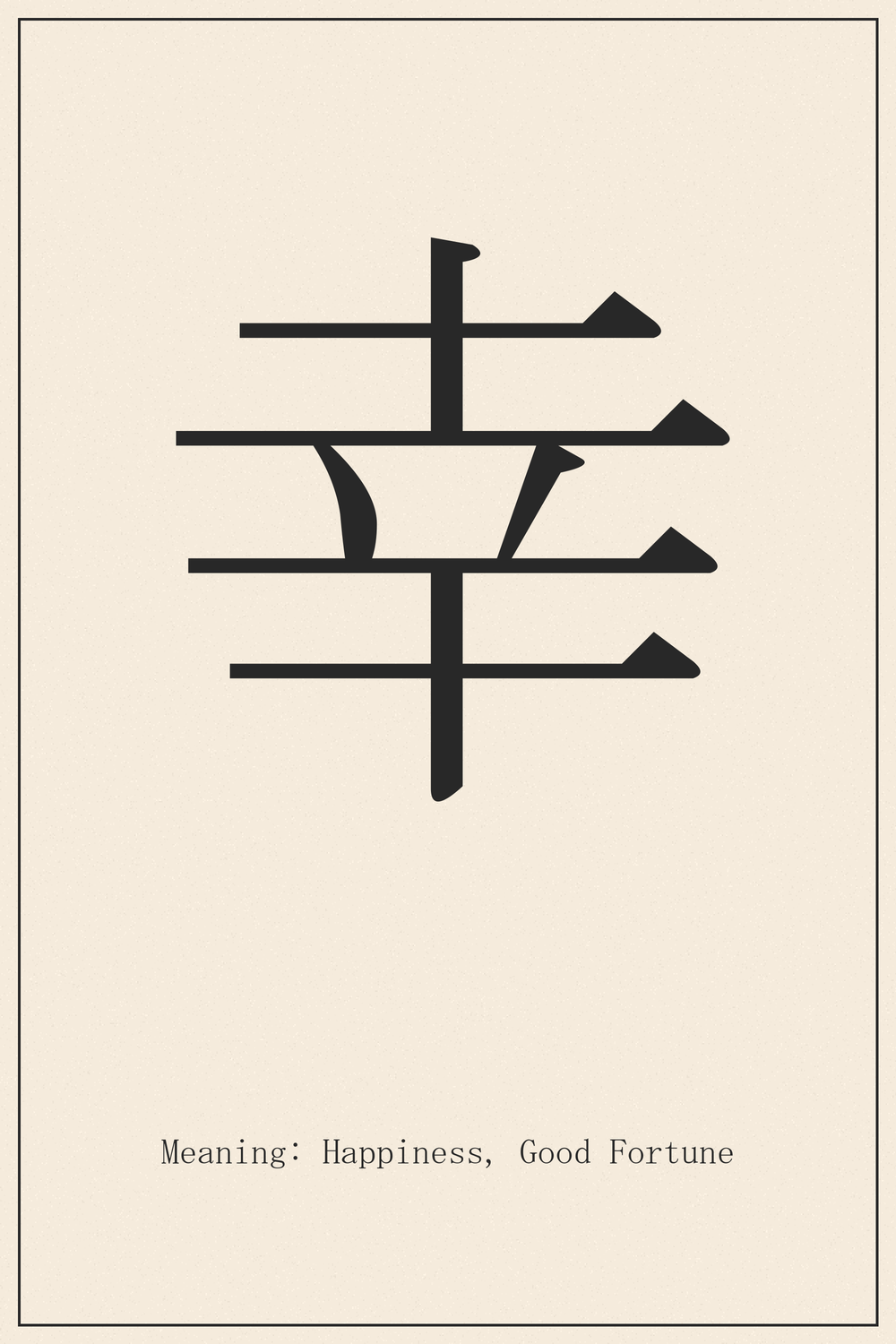
📝 Mincho Style
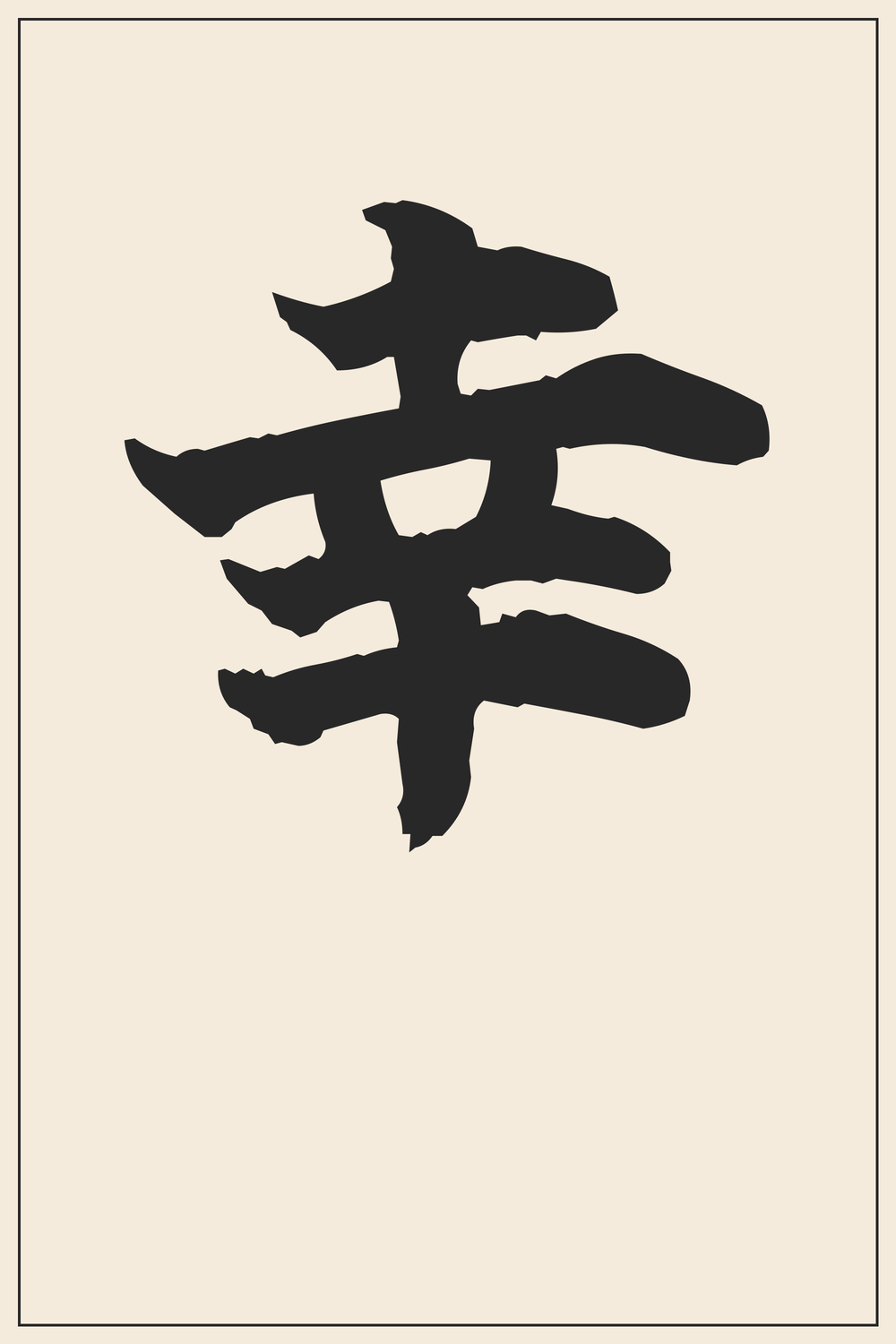
📜 Vertical Writing
⚡ Quick Facts
From Shackles to Salvation
Oracle bone inscriptions—the oldest Chinese writing system, carved on turtle shells and ox bones around 1200 BCE—show 幸 as unmistakably a restraining device. Two hands positioned symmetrically, locked together by binding mechanism. Some scholars interpret it as handcuffs; others suggest shackles or stocks. The specific device matters less than what it represented: confinement, punishment, loss of freedom.
By the time of bronze inscriptions and seal script (around 200 BCE), the character evolved slightly but maintained its core imagery. The shape became more stylized, but the essence remained—restraint applied to criminals. Yet somewhere in that evolutionary process, the meaning flipped completely. What depicted punishment came to represent its avoidance, its lightness, the relief of escaping worse fate.
This semantic reversal reflects ancient Chinese judicial philosophy. Severe crimes warranted severe punishments—amputation of feet or hands, branding, castration, execution. Being merely restrained temporarily—shackled but not mutilated, imprisoned but not killed—meant the authorities showed mercy. You avoided catastrophe. That avoidance, that narrow escape from irrevocable harm, WAS fortune. Happiness became defined not as pure joy but as relief from suffering, blessing measured against potential disaster.
The character 執 (shū/tori, “to grasp/seize/execute”) shares 幸’s handcuff component, depicting someone being forcibly restrained. Unlike 幸, which evolved toward positive meanings, 執 retained its coercive connotations—taking custody, exercising authority, holding firmly. The two characters branched from the same ancient image: one representing escaping restraint (幸), the other representing imposing it (執).
Shiawase vs. Ureshii
Japanese distinguishes between types of happiness through different vocabulary. 嬉しい (ureshii) describes momentary joy—opening a gift, hearing good news, tasting delicious food. It’s the spark, the burst, the immediate emotional high. This happiness spikes and fades quickly, tied to specific events or stimuli.
幸せ (shiawase), built from 幸, describes deeper contentment—the sustained state of wellbeing where life feels fundamentally right. It’s waking up grateful, feeling secure in relationships, experiencing harmony between circumstances and desires. Shiawase doesn’t spike dramatically; it glows steadily. It survives bad days because it’s rooted in structural satisfaction rather than momentary pleasure.
This distinction maps onto 幸’s etymology perfectly. The happiness of avoiding execution isn’t explosive joy—it’s profound relief, deep gratitude, quiet acknowledgment that things could be catastrophically worse. Shiawase carries that quality: appreciation for what you have measured against what you could have lost. It’s happiness grounded in perspective, in recognizing fortune through contrast with potential suffering.
Fortune measured against fate avoided—the essence of grateful happiness
Compound Words and Usage
The character 幸 anchors dozens of common Japanese words expressing fortune and contentment. 幸福 (kōfuku) combines 幸 with 福 (blessing/fortune) to create an emphatic “happiness/welfare.” 不幸 (fukō) adds the negation prefix 不 to mean “misfortune/unhappiness.” 幸運 (kōun) pairs fortune with luck to emphasize the role of chance in positive outcomes.
As an adverb, 幸い (saiwai) means “fortunately/luckily”—often starting sentences that acknowledge dodged disasters. 幸いにも怪我はなかった (saiwai ni mo kega wa nakatta, “Fortunately, no one was injured”). The phrasing carries implicit recognition that injury was possible, likely even, but fortune intervened. You got the handcuffs instead of the executioner’s blade.
幸せ (shiawase) evolved from the verb 仕合わせる (shiawaseru, “to arrange well/put together properly”). The etymology suggests happiness as harmonious alignment—circumstances fitting together correctly rather than pure euphoria. This connects to Japanese aesthetic concepts like 間 (ma, harmonious spacing) and 和 (wa, social harmony). Shiawase describes life arranged properly, pieces fitting together, nothing grating or misaligned.
Names and Blessings
幸 appears frequently in Japanese given names, especially for girls. 幸子 (Sachiko), 由紀 (Yuki, using alternate pronunciation), 美幸 (Miyuki), 幸恵 (Sachie), 幸代 (Sachiyo)—parents embed fortune directly into their children’s identities, hoping the character’s blessing manifests in their lives. The name becomes prayer and prophecy simultaneously.
Business names incorporate 幸 signaling positive associations. Restaurants promise 幸せな食事 (shiawase na shokuji, “happy meals”). Wedding companies market 幸せをお届けします (shiawase wo otodoke shimasu, “We deliver happiness”). The character functions as shorthand guarantee that this establishment deals in good fortune, that engaging their services might transfer blessing to you.
New Year’s traditions saturate with 幸. Cards feature 幸多き年 (sachi ōki toshi, “a year abundant with fortune”). Decorations include the character prominently displayed. The first shrine visit (初詣, hatsumōde) involves purchasing good-luck charms (お守り, omamori) often inscribed with 幸. The character becomes tangible object, portable blessing, physical manifestation of hope for the coming year.
When the Japanese Emperor travels, the formal term is 行幸 (gyōkō)—literally “fortunate going,” suggesting the emperor’s presence brings blessing to places visited. Empress travel uses 行啓 (gyōkei) with similar connotations. The royal family’s movement itself becomes fortune manifested, their physical presence conferring luck on locations they grace.
🎨 Tattoo Design Ideas
- ✨ Traditional Brushwork – Single character in flowing calligraphy captures 幸’s essence through confident, graceful strokes. The brushwork should feel joyful and light—positive energy made visible. Perfect for medium placements (4-6 inches) on shoulder blade, forearm, or upper back where the character stands alone, needing no context.
- ✨ Minimalist Modern Line – Clean, precise strokes without decorative flourish for contemporary aesthetic. Despite traditional meaning, modern execution creates sophisticated statement. Ideal for smaller placements (3-5 inches) on wrist, ankle, or behind ear where simplicity amplifies impact.
- ✨ Circular Seal Design – Place 幸 within traditional Japanese seal (hanko) format—character enclosed in circular red border suggesting official blessing, stamped fortune. This format honors how seals convey authority and authenticity in Japanese culture. The circle creates contained, unified composition.
- ✨ Floral Integration – Pair 幸 with cherry blossoms, plum blossoms, or other auspicious flowers. Keep floral elements delicate and minimalist—thin line work suggesting petals rather than detailed illustration. The character dominates; flowers provide cultural context and seasonal beauty.
- ✨ With Personal Element – Combine 幸 with birthdates, initials, or other personally significant symbols acknowledging specific sources of happiness. This personalizes the universal concept, anchoring fortune to individual life story. Keep additional elements subtle so 幸 remains focal point.
- ✨ Vertical Scroll Format – Present 幸 in traditional vertical scroll (kakejiku) composition with minimal decorative borders above and below. This format honors Japanese hanging scroll aesthetics where single powerful character becomes meditation object. Works beautifully along spine, forearm, or outer thigh.
Who Chooses This Tattoo
Survivors of trauma, illness, or near-death experiences choose 幸 marking their continued existence as fortune. They’ve looked death or disaster in the eye and walked away intact. The character becomes permanent acknowledgment that they received metaphorical handcuffs instead of execution—restrained perhaps, scarred maybe, but alive. Their happiness measures itself against what they avoided.
People celebrating significant life blessings—marriages, births, recoveries, achievements—select 幸 honoring fortune received. They recognize circumstances aligned favorably, that gratitude matters, that acknowledging luck protects against taking good things for granted. The tattoo becomes visible reminder during difficult times that happiness exists, that they’ve experienced it, that it can return.
Those drawn to Japanese aesthetic and philosophy wear 幸 connecting to cultural values around contentment, harmony, and grateful acceptance. They appreciate how Japanese distinguishes between fleeting joy and sustained wellbeing, how happiness comes through perspective and proper arrangement rather than constant excitement. The character becomes philosophical statement about what happiness means and how to cultivate it.
幸 works beautifully as tattoo because it’s simultaneously simple and profound. Non-Japanese speakers recognize it as aesthetically pleasing single character. Japanese speakers read it instantly as happiness/fortune. The meaning translates universally—everyone understands the concept of luck and contentment. You’re not explaining obscure cultural reference; you’re displaying human universal in elegant form.
Why This Character Endures
Happiness defined through contrast with suffering contains profound psychological truth. Pure joy without context becomes difficult to sustain or recognize. We understand happiness by measuring it against alternatives—pain avoided, disaster escaped, loss prevented. The person who survives cancer appreciates health differently than someone who’s never been sick. The refugee who reaches safety values peace more intensely than those born into it.
幸’s etymology captures this reality. Happiness isn’t absence of restraint—it’s receiving lighter restraint than you might have. Fortune isn’t perfect circumstances—it’s circumstances that could be catastrophically worse but aren’t. This perspective shift—from demanding perfection to appreciating what you have—forms the foundation of gratitude practices across philosophical traditions.
The character endures because humans keep needing reminders that happiness lives in perspective, that fortune measures itself against what didn’t happen, that contentment comes through recognizing when life hands you handcuffs instead of executioner’s blade. Getting 幸 tattooed becomes permanent anchor to that truth—visible reminder that you’re fortunate, that recognizing fortune matters, that happiness is both blessing received and disaster avoided. That wisdom, carved from ancient punishment imagery into modern celebration, remains worth carrying permanently.
Comments