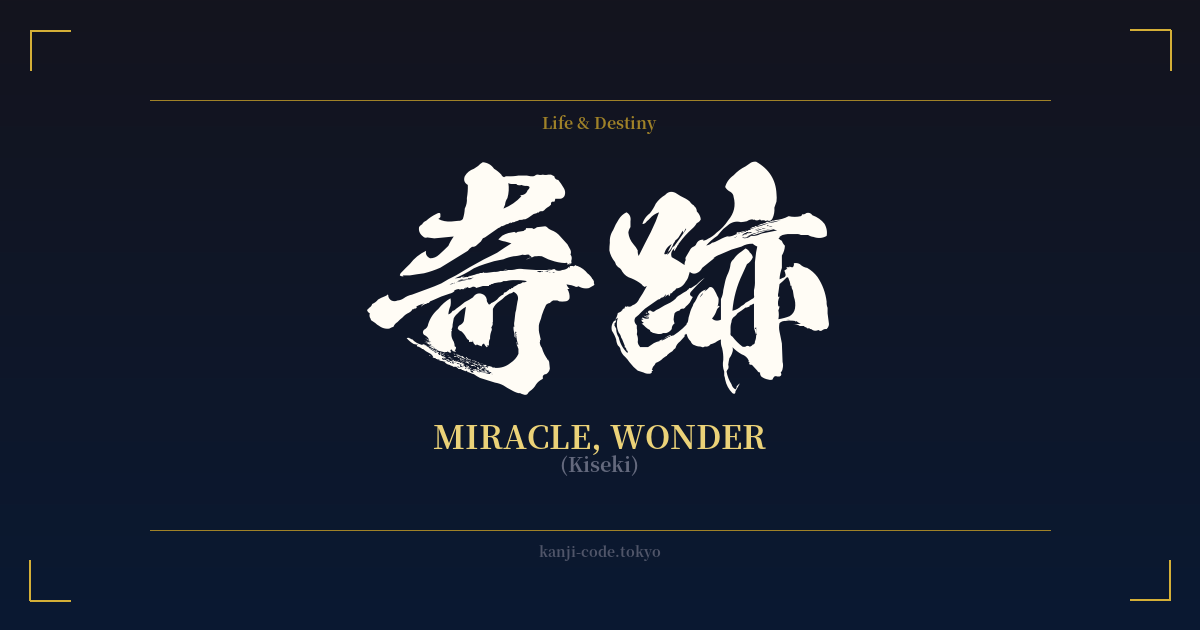
✍️ 奇跡 (Kiseki) — Cultural Context
奇跡 (Kiseki) is the Japanese word for 'miracle' or 'wonder,' but its construction offers a more poetic and tangible insight into how the culture perceives such an event. The word is a beautiful combination of two distinct kanji: 奇 (ki), meaning 'strange' or 'rare,' and 跡 (seki), meaning 'trace' or 'footprint.' Taken together, 奇跡 literally translates to 'the trace of something rare'—the tangible evidence of an event that defies logic and expectation.
This etymology frames a miracle not just as a divine act, but as an observable, albeit extraordinary, phenomenon. It's the footprint left by the impossible. This concept is less tied to the strict, deity-driven miracles of Western religions and is applied more broadly in Japanese society. A 'kiseki' can be the miraculous survival from a terminal illness, an impossible comeback victory in a baseball game, or the serendipitous meeting of two people against all odds.
In Japanese culture, which is deeply rooted in the observation of nature and the acceptance of impermanence (mono no aware), a miracle is a profound disruption of the natural order. It's a moment that stands out against the backdrop of life's predictable flow. This makes the word incredibly powerful and emotionally resonant. It speaks to hope, resilience, and the belief that even in a world governed by rules, extraordinary things can and do happen.
The word's popularity has soared in modern times, largely through its use in media. The band GReeeeN's 2008 song "Kiseki" became a cultural phenomenon, cementing the word in the hearts of a generation as a symbol of love and precious encounters. It is a frequent theme in anime and manga, often marking the climax where a protagonist overcomes insurmountable odds through sheer will and a bit of impossible luck. This has made 奇跡 a familiar and cherished word, representing both grand, life-altering events and the small, personal wonders that make life meaningful.
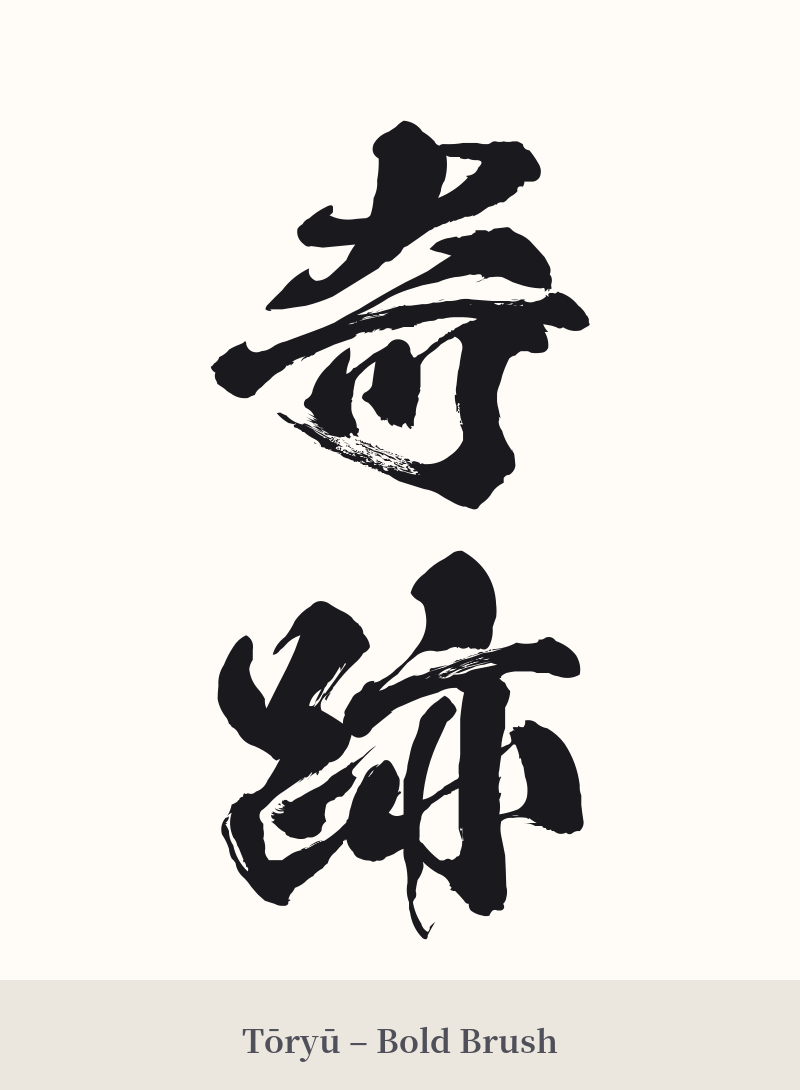
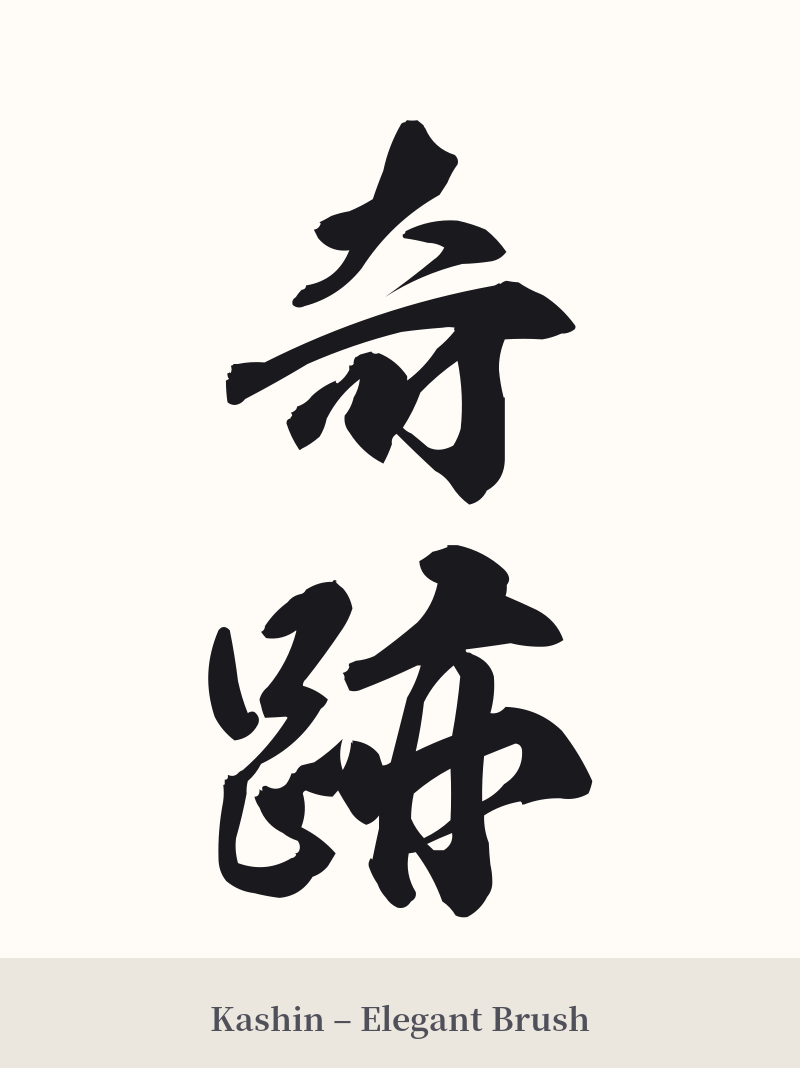
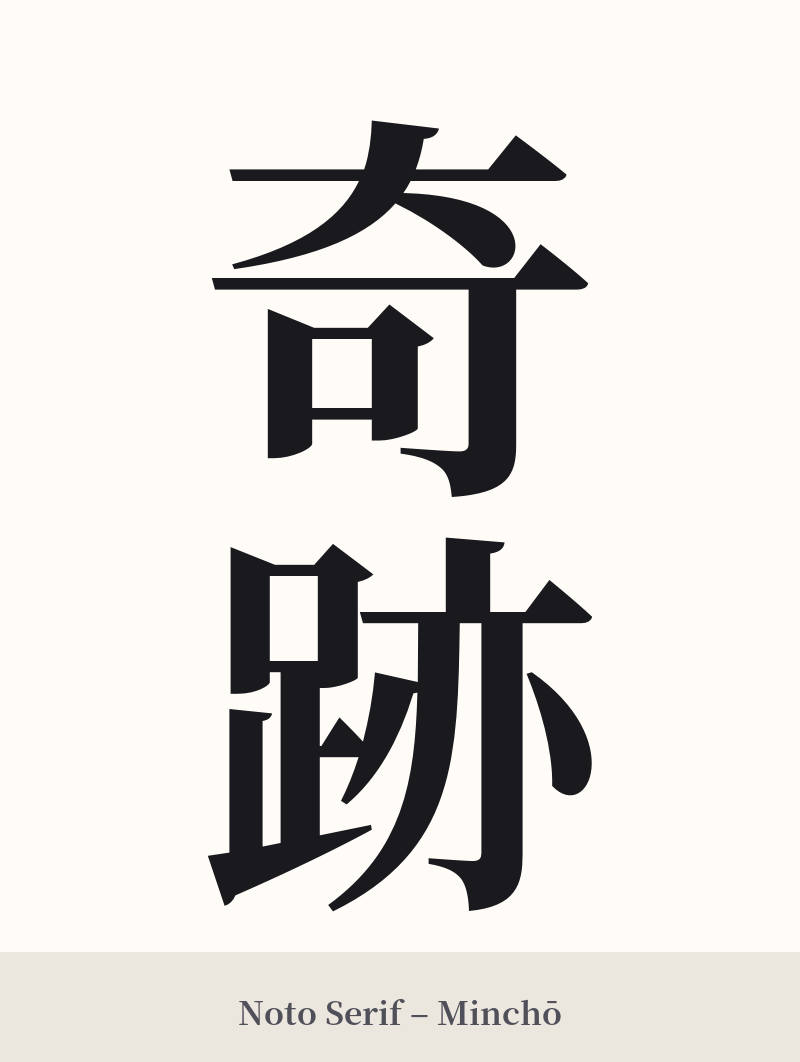
🖌️ Font Styles for 奇跡
The same kanji can look dramatically different depending on the calligraphy style. Choose a font that matches the mood you want for your tattoo or design.
🎨 Tattoo Suitability
📐 Tattoo Design Guide
When designing a tattoo for 奇跡 (Kiseki), the visual storytelling can be as powerful as the word itself. The two-character structure offers great flexibility for placement and style.
– Placement: A vertical orientation is classic and works beautifully along the spine, forearm, or calf, emphasizing the flow of the characters. For a horizontal design, the chest, upper back, or across the ribs are strong choices, creating a sense of stability and presence.
– Font Style: The choice of font can dramatically alter the feeling. A dynamic, semi-cursive script (gyōsho) can capture the energy and suddenness of a miracle. A traditional, angular block script (kaisho) lends the design a sense of weight and permanence, as if carving the event in stone. For a more modern take, a minimalist font with clean lines can feel personal and understated.
– Visual Tips: Consider the spacing between 奇 and 跡. A tight composition suggests a single, unified event, while slightly more space can allow each character's meaning—'rare' and 'trace'—to be contemplated individually. While the word is powerful on its own, you could subtly incorporate a simple element like a single falling cherry blossom petal to symbolize a beautiful, fleeting miracle, but be careful not to overcrowd the kanji.
Comments