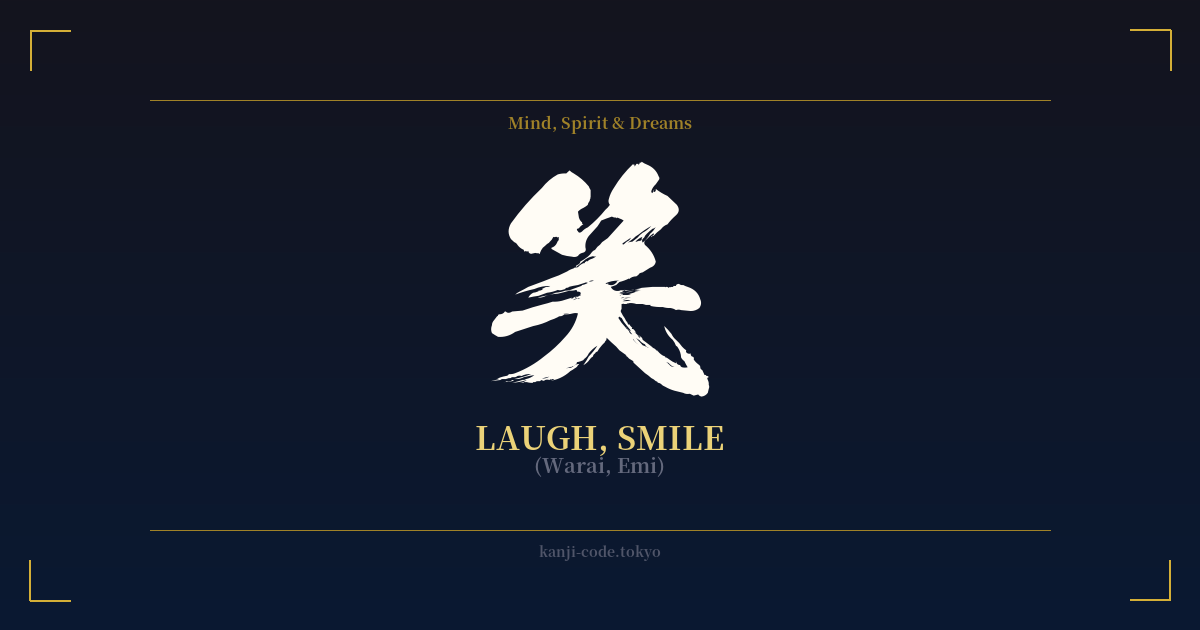
✍️ 笑 (Warai, Emi) — Cultural Context
The kanji 笑 (warai/emi) is a beautiful and expressive character that captures one of humanity's most universal emotions: joy expressed through laughter or a smile. Its origins are wonderfully illustrative. The top radical, 竹 (take), represents bamboo. In its ancient form, it depicted bamboo stalks swaying in the wind, evoking the sound and motion associated with laughter. The bottom component, 夭 (yō), is a pictogram of a person bending over, reminiscent of someone doubling over in a fit of laughter. Together, they create a vivid image of uninhibited joy.
In Japanese culture, laughter is not just an emotion; it's an invitation for good fortune. This is perfectly encapsulated in the famous proverb, 「笑う門には福来る」(Warau kado ni wa fuku kitaru), which translates to "Fortune comes to a laughing gate." This belief suggests that a household filled with laughter and positivity will attract happiness, prosperity, and good luck. It's a philosophy that encourages maintaining a cheerful disposition even in the face of hardship.
The Japanese language makes a subtle but important distinction in how this kanji is read, which reflects different types of joy. When read as 'warai' (笑い), it generally refers to audible laughter, from a chuckle to a hearty laugh. When read as 'emi' (笑み), it signifies a gentle, quiet smile. This nuance is crucial; an 'emi' is almost always seen as warm and positive, while 'warai' can, in some contexts, imply mockery or scorn (e.g., laughing at someone). However, the single character 笑 on its own is typically embraced for its positive connotations.
From the serene smile of Buddhist statues, which signifies enlightenment and inner peace, to the modern-day use of (笑) in text messages as the equivalent of 'lol,' this kanji permeates Japanese culture. It represents the full spectrum of happiness, from quiet contentment to explosive mirth. It serves as a reminder of the power of joy, its ability to connect people, and its role as a beacon for good things to come.
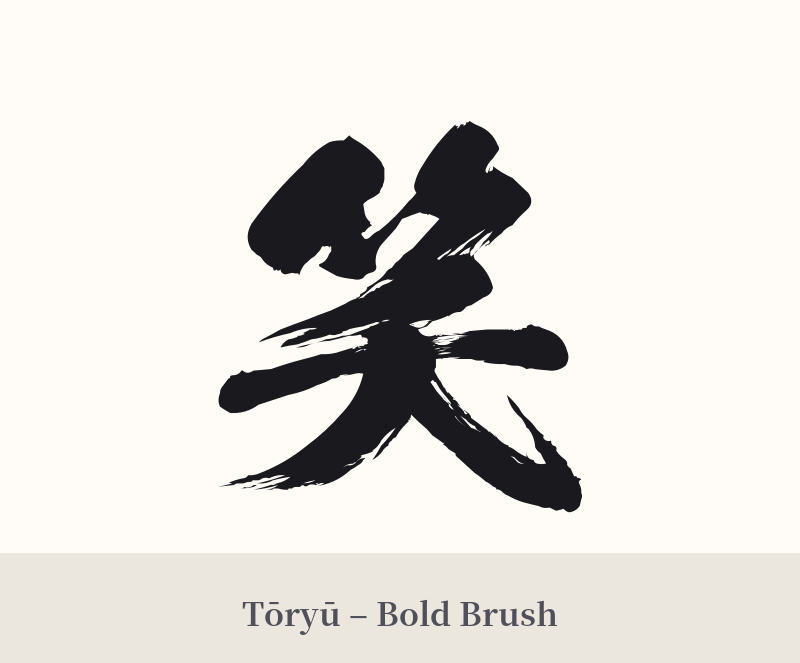
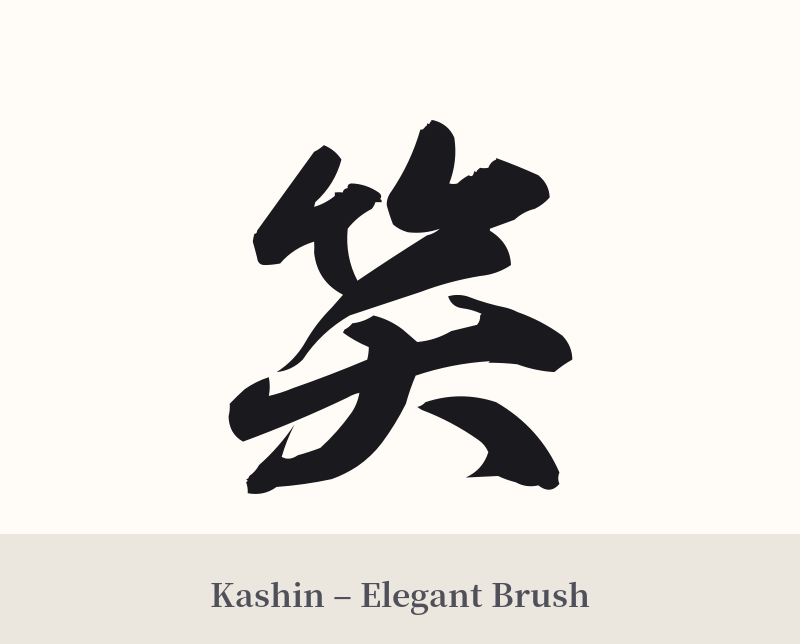
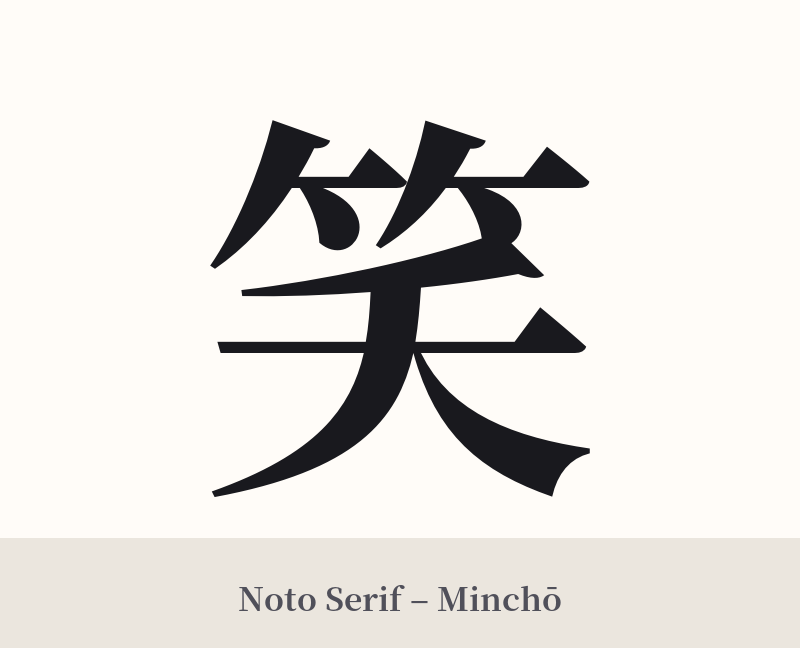
🖌️ Font Styles for 笑
The same kanji can look dramatically different depending on the calligraphy style. Choose a font that matches the mood you want for your tattoo or design.
🎨 Tattoo Suitability
📐 Tattoo Design Guide
The kanji 笑 is versatile and works well in various tattoo designs and placements.
– Placement: For a small, personal reminder to smile, consider the inner wrist, behind the ear, on the ankle, or over the heart. Its balanced shape also makes it a strong centerpiece for a larger design on the forearm, calf, or shoulder blade.
– Style: The style can dramatically change the feeling of the tattoo. A flowing, cursive script (gyōsho or sōsho) can emphasize the gentle, smiling aspect (emi). A bold, angular, or blocky font (kaisho) can convey a more powerful, hearty laugh (warai).
– Visual Tips: Consider pairing 笑 with other elements to add layers of meaning. Combining it with a cherry blossom (sakura) can represent the beautiful, fleeting moments of joy. Placing it inside an Ensō circle can symbolize the idea that happiness and laughter are integral to enlightenment and a complete life. A watercolor splash effect behind the kanji can give it a modern, expressive feel.
Comments