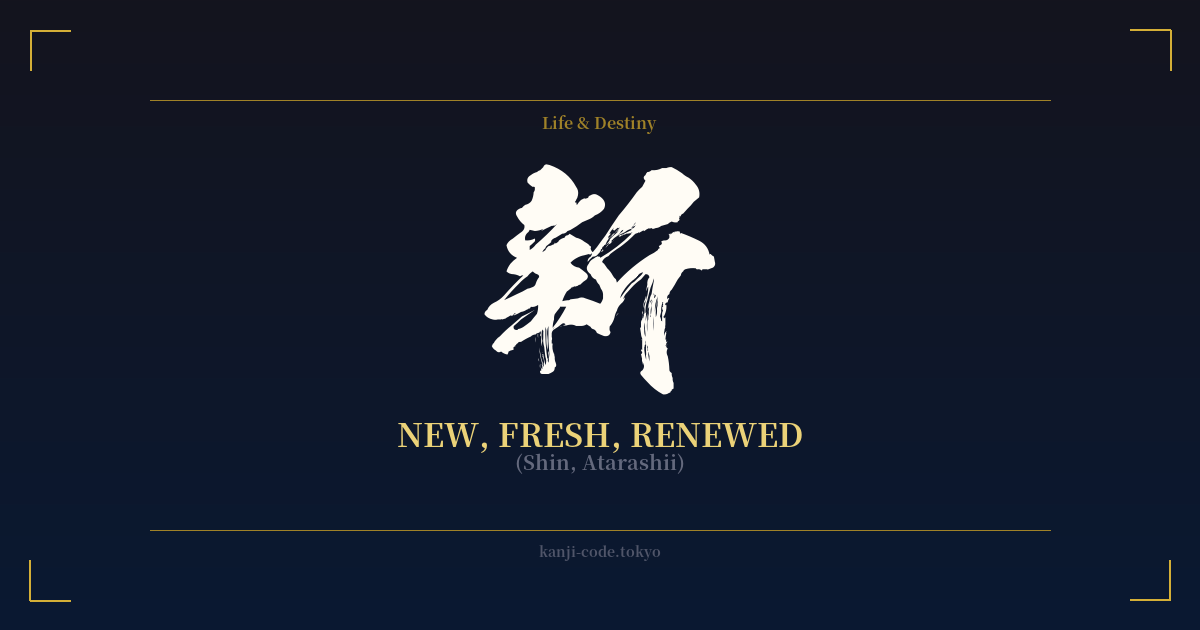
✍️ 新 (Shin, Atarashii) — Cultural Context
The kanji 新 (shin, atarashii) is one of the most fundamental characters in the Japanese language, yet its simplicity belies a profound cultural and philosophical depth. At its core, it means 'new,' but it encompasses a spectrum of concepts from freshness and the beginning of a cycle to renewal and radical innovation.
The character's etymology offers a beautiful visual story. It is a combination of radicals: 立 (stand), 木 (tree), and 斤 (axe). Together, they paint a picture of an axe striking a standing tree to gather fresh wood. This origin story isn't just about lumber; it's a powerful metaphor for actively creating something new from the existing world, a deliberate act of renewal.
In Japanese culture, the concept of 'new' is deeply cherished and ritualized. The most significant celebration is the New Year, or 新年 (Shinnen). This is a time for 'hatsumōde,' the first shrine visit of the year, to pray for good fortune and a fresh start. It involves cleansing the home ('ōsōji'), settling old debts, and renewing relationships. This annual cycle of renewal is a cornerstone of Japanese life, and 新 is its emblem.
This idea of cyclical renewal has roots in Shinto, Japan's indigenous religion. The most famous example is the Ise Grand Shrine (Ise Jingū), which is completely rebuilt every 20 years in a practice known as 'Shikinen Sengū'. This tradition isn't about preserving a building but about transferring knowledge, purifying the sacred space, and ritually renewing the bond between the deities and the people. The spirit is what matters, and it is made 'new' again and again.
Beyond tradition, 新 is the driving force of modernity and progress. The Shinkansen (新幹線), or 'bullet train,' literally translates to 'New Trunk Line,' a name that perfectly captured the post-war spirit of innovation that redefined Japan. The Meiji Restoration, a pivotal period in Japanese history, is known as the 明治維新 (Meiji Ishin), where 'Ishin' means 'renewal' or 'renovation,' signifying a complete overhaul of the nation's political and social structures.
To embrace the kanji 新 is to embrace the philosophy of beginnings. It can represent a new chapter in life, the courage to start over, the freshness of a new idea, or the constant, quiet process of self-improvement. It is a symbol not of what has been, but of what is yet to come.
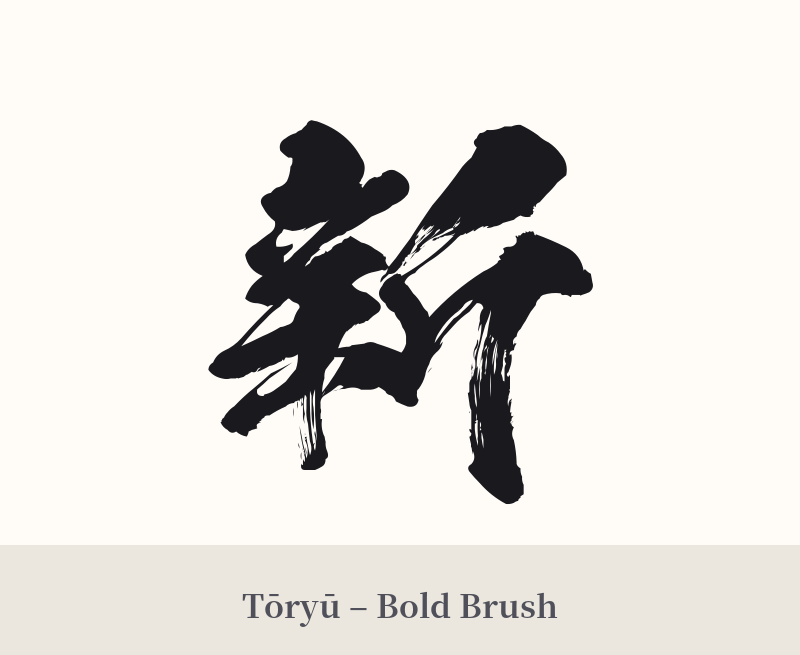
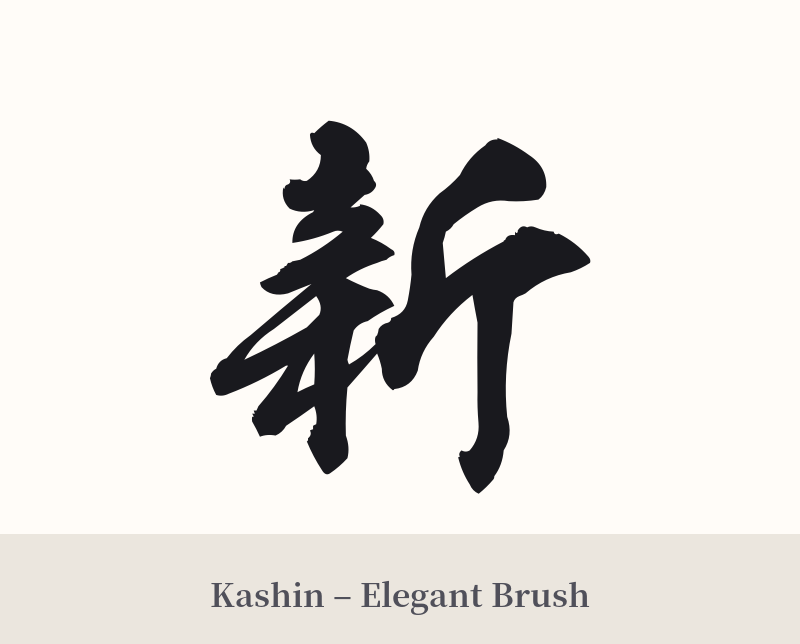
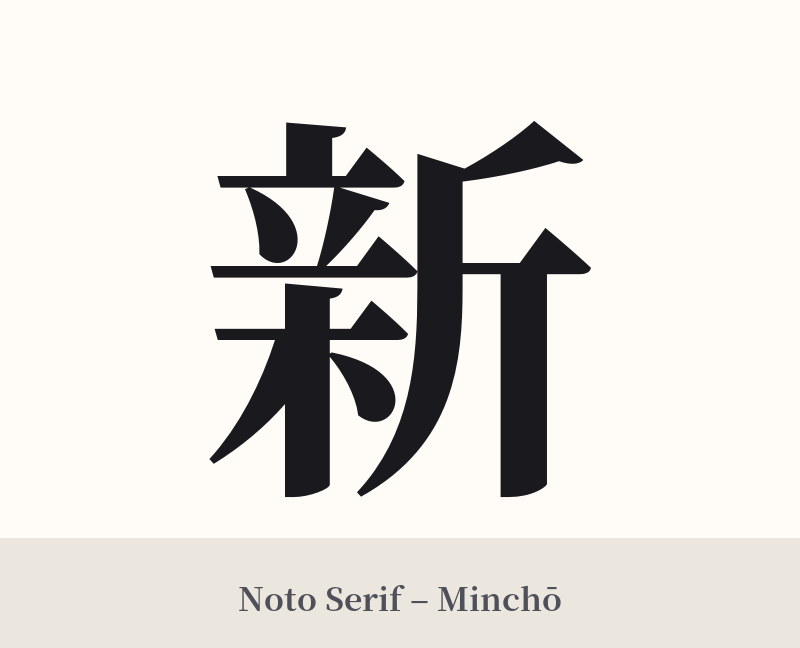
🖌️ Font Styles for 新
The same kanji can look dramatically different depending on the calligraphy style. Choose a font that matches the mood you want for your tattoo or design.
🎨 Tattoo Suitability
📐 Tattoo Design Guide
The kanji 新 offers great versatility for a tattoo design, representing a clean slate or a new chapter. Its balanced structure allows it to work well in various placements and styles.
– Placement: For a personal and subtle reminder, consider the inner wrist, behind the ear, or on the ankle. For a more declarative statement about a major life change, a larger, more prominent placement on the forearm, shoulder blade, or center of the back can be very powerful.
– Font Style: A dynamic, cursive script like Gyōsho or Sōsho can imbue the character with a sense of energy, flow, and forward momentum. Conversely, a bold and stable Kaisho (block) style can represent a solid new foundation, emphasizing the stability of the new beginning.
– Visual Complements: While it stands strong on its own, 新 can be paired with other imagery to deepen its meaning. Consider incorporating it with a blooming lotus flower (purity and rebirth), a phoenix (rising from ashes), or the 'ensō' circle (the void and enlightenment), which beautifully complements the idea of starting from a new, clear state.
Comments