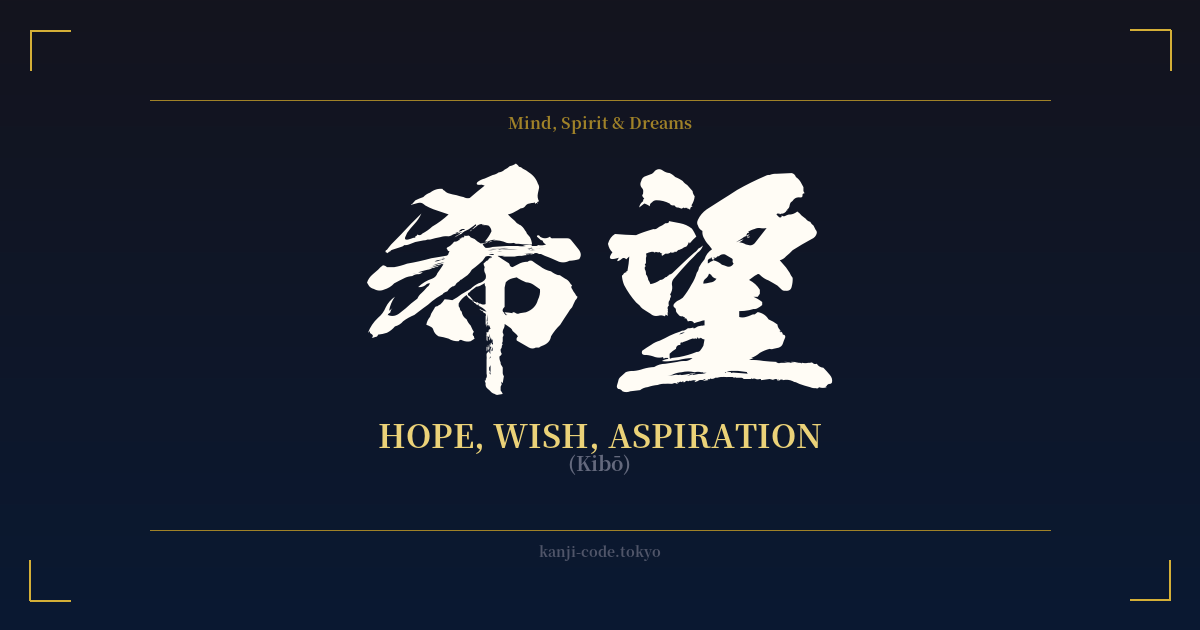
✍️ 希望 (Kibō) — Cultural Context
希望 (Kibō) is one of the most powerful and resonant words in the Japanese language, translating to "hope," "wish," or "aspiration." However, its meaning runs deeper than a simple desire. Kibō embodies a forward-looking optimism, a sense of expectation for a better future that one actively works toward. It is not a passive, idle wish, but the very fuel for perseverance and resilience.
In Japanese culture, which places a high value on endurance (gaman) and doing one's best (ganbaru), hope is the silent partner to effort. It is the belief that through dedication and hard work, a positive outcome is possible. This concept is woven into the fabric of society, often invoked during times of hardship. After national tragedies, such as the Great Hanshin Earthquake or the 2011 Tōhoku earthquake and tsunami, the word 希望 became a national symbol of recovery, resilience, and the collective will to rebuild. It appeared on banners, in songs, and in speeches, uniting people with a shared sense of purpose and a vision for a brighter tomorrow.
The etymology of the word itself offers a beautiful insight. The first character, 希 (ki), means "rare" and also "to hope." The second, 望 (bō), means "to look out for," "to expect," or "ambition," and is visually derived from a person standing on their toes (or a high place) to gaze at the moon. Together, 希望 paints a poetic picture: to look out for something precious and rare. It’s the act of gazing toward the horizon, searching for a glimmer of light that is both cherished and ardently sought.
While often used interchangeably in English, it’s important to distinguish Kibō from similar Japanese concepts. A 願い (negai) is more of a personal wish or prayer, often made at a shrine. A 夢 (yume) is a dream, which can range from an aspiration to a fantasy. Kibō sits in a more grounded space—it is the tangible, actionable belief in the potential for good, a guiding light that gives strength to face challenges.
🖌️ Font Styles for 希望
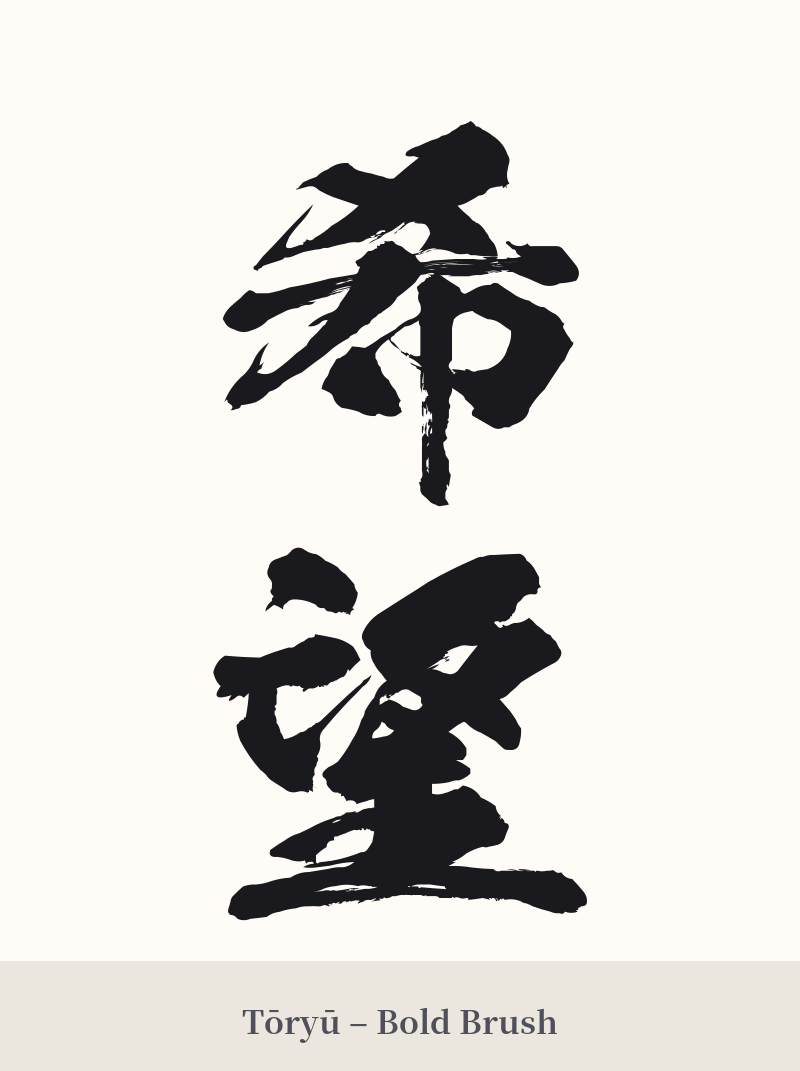
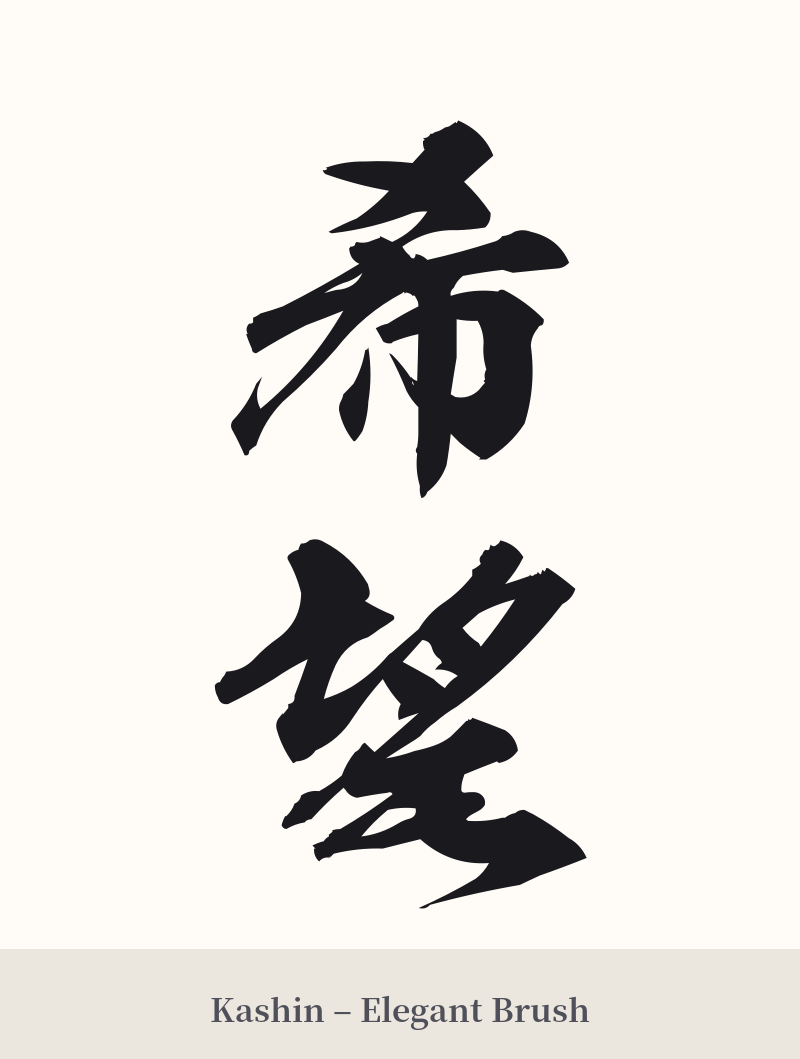
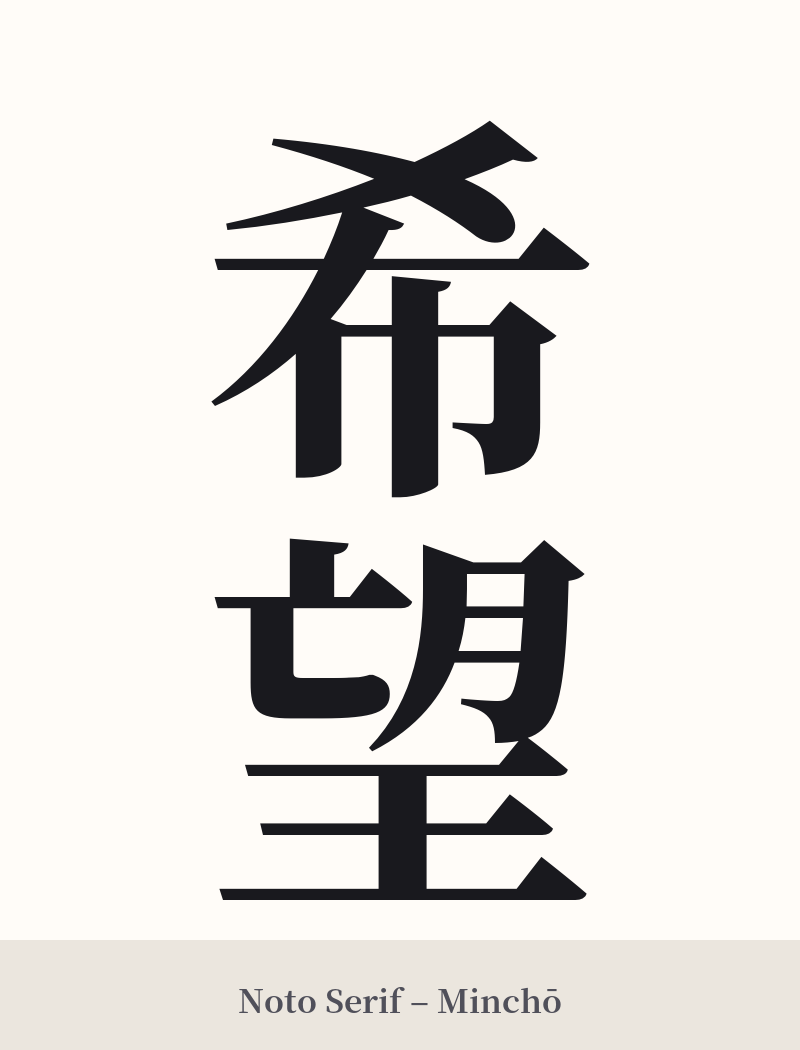
The same kanji can look dramatically different depending on the calligraphy style. Choose a font that matches the mood you want for your tattoo or design.
🎨 Tattoo Suitability
📐 Tattoo Design Guide
The two characters of 希望 offer a balanced and aesthetically pleasing design, suitable for various tattoo styles and placements.
– Placement: A vertical orientation is classic and works beautifully along the spine, forearm, or calf, echoing traditional Japanese calligraphy scrolls. For a more modern look, a horizontal placement fits well across the chest, back of the neck, or inner bicep.
– Font Style: The choice of font dramatically affects the feeling of the tattoo. A dynamic, semi-cursive script like Gyōsho can convey emotion and passion. For a bold and powerful statement, a thick, expressive brushstroke style (like that used in Zen calligraphy) is ideal. Conversely, a clean and precise Kaisho or Minchō font lends an air of dignity and timelessness.
– Visual Embellishments: While 希望 stands strongly on its own, it can be paired with other symbolic imagery. Consider incorporating it with a single cherry blossom petal to represent the beauty found in life's transient moments, or with an enso circle to symbolize enlightenment and the universe. Placing the kanji within a subtle watercolor splash of a hopeful color, like gold or sky blue, can also add a personal and artistic touch without overpowering the characters.
Comments