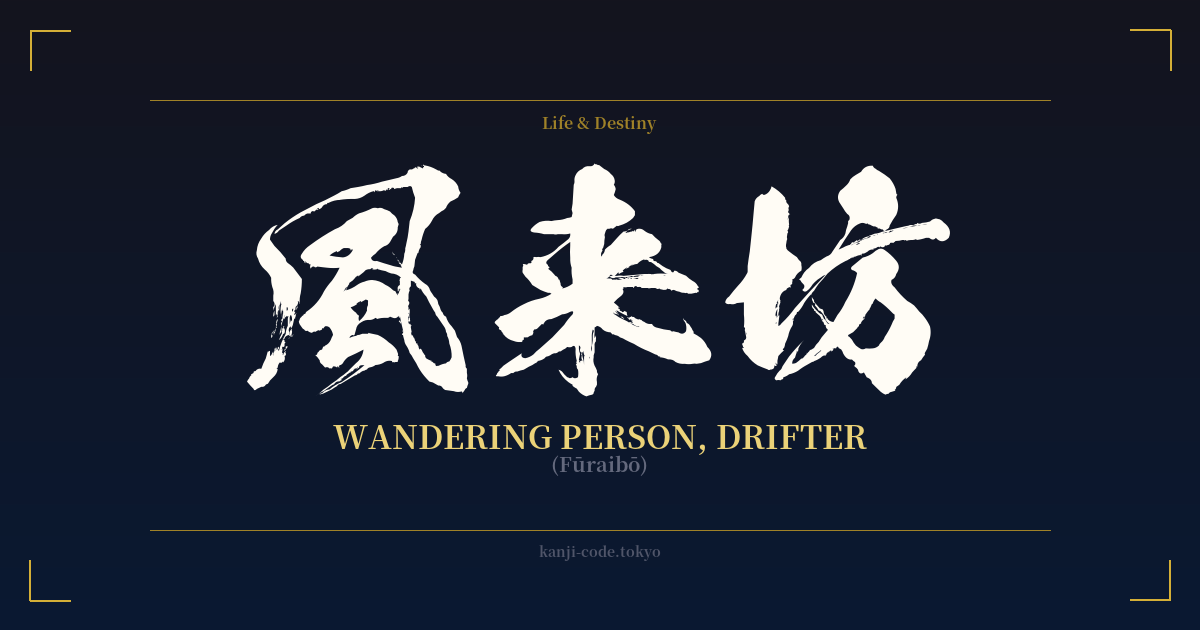
✍️ 風来坊 (Fūraibō) — Cultural Context
風来坊 (Fūraibō) is a wonderfully evocative Japanese word that paints a vivid picture with just three characters. It refers to a wanderer, a drifter, or a vagabond—someone who lives an untethered life, coming and going as they please, much like the wind itself.
Literally broken down, the kanji are 風 (wind), 来 (come), and 坊 (boy/person). Together, they form the image of a 'person who comes with the wind.' This isn't just about travel; it's about a state of being. The Fūraibō is a person who operates outside the strict social structures and expectations of Japanese society, choosing freedom and spontaneity over stability and responsibility.
The term carries a fascinating duality. On one hand, it's romantic and admirable. It evokes the image of a free spirit, an artist, a poet, or a philosopher who finds wisdom on the road, unburdened by material possessions or social obligations. The legendary haiku master Matsuo Bashō, who journeyed across Japan on foot, could be seen as an idealized Fūraibō, transforming his wanderings into timeless art.
On the other hand, Fūraibō can have a slightly pejorative, or at least cautionary, tone. It can describe someone who is unreliable, flighty, and unable to hold down a job or maintain stable relationships. They might be seen as aimless and irresponsible, drifting through life without purpose. The beloved character Tora-san, from the long-running film series 'Otoko wa Tsurai yo' ('It's Tough Being a Man'), is the quintessential Fūraibō—charming and kind-hearted, but constantly breaking his family's hearts by disappearing again on another journey.
This duality is what makes the word so compelling. It's not simply 'traveler' (旅人, Tabibito) or 'masterless samurai' (浪人, Rōnin). A traveler has a destination, and a rōnin is defined by a loss of station and duty. The Fūraibō, however, is defined by a lack of attachment itself. Their journey is the destination, and their identity is rooted in their very rootlessness.
Choosing this word is to embrace that complexity. It's an acknowledgment that true freedom often comes at the cost of conventional success and stability. It represents a philosophy of life that values experience over ownership, and the journey over the arrival.
🖌️ Font Styles for 風来坊
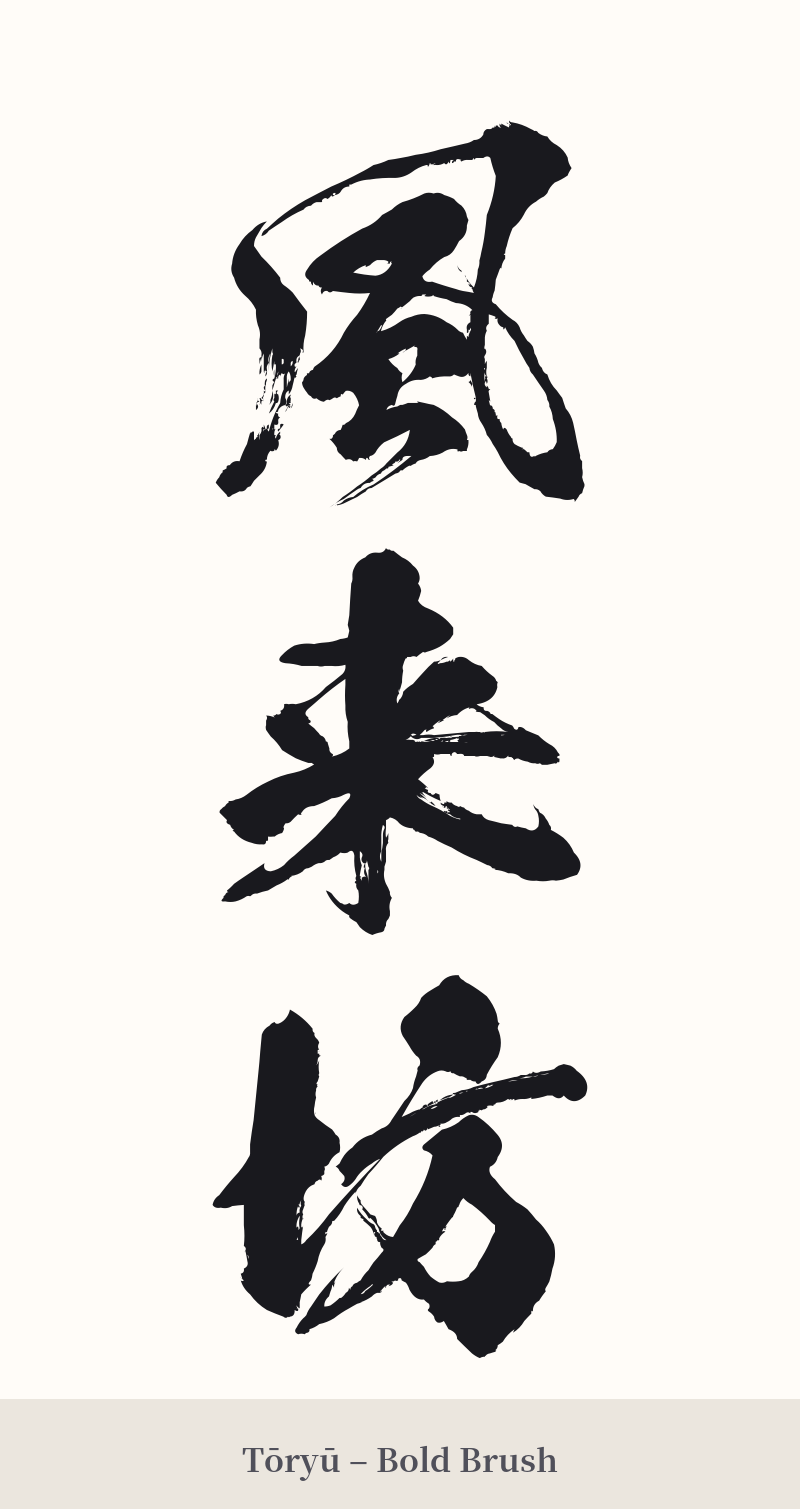
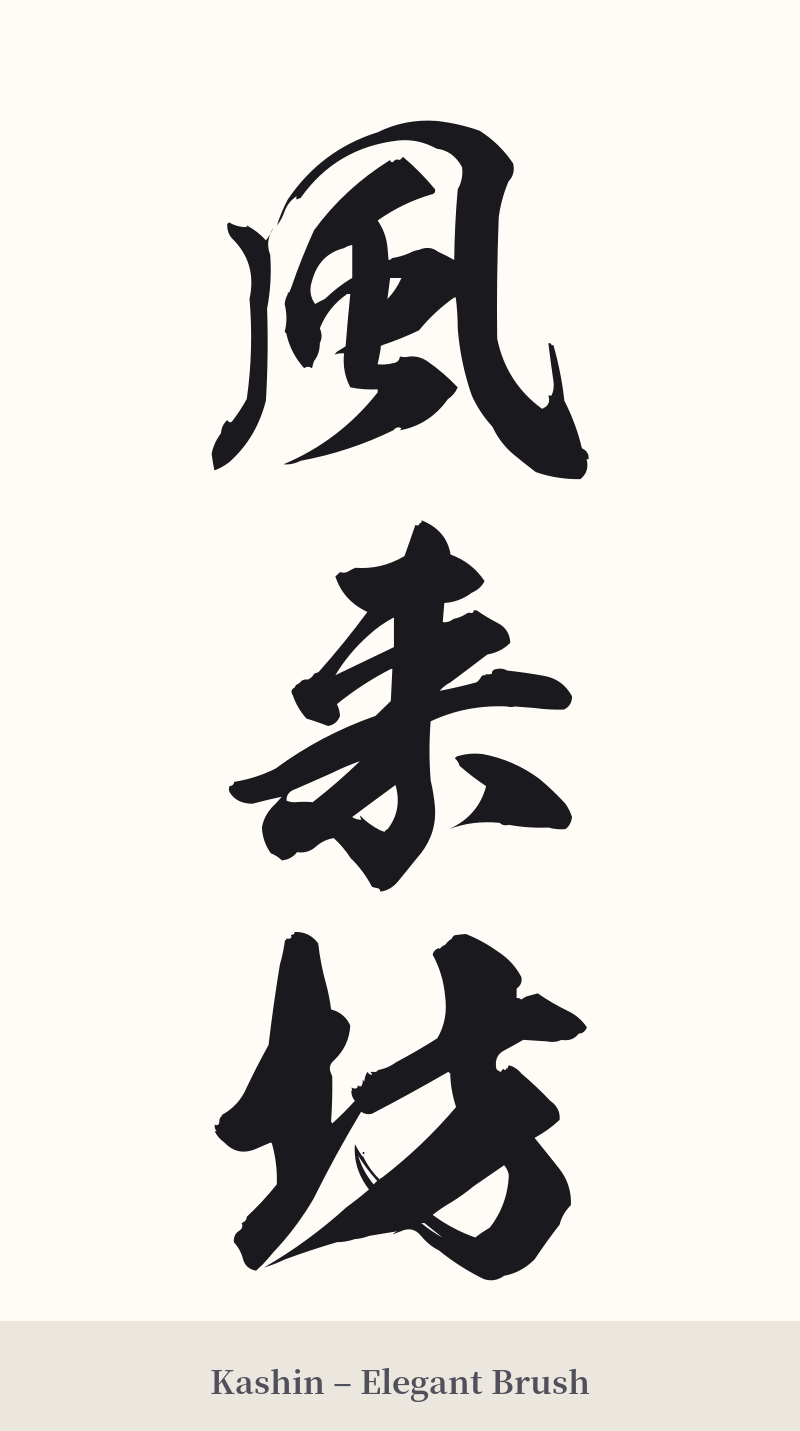
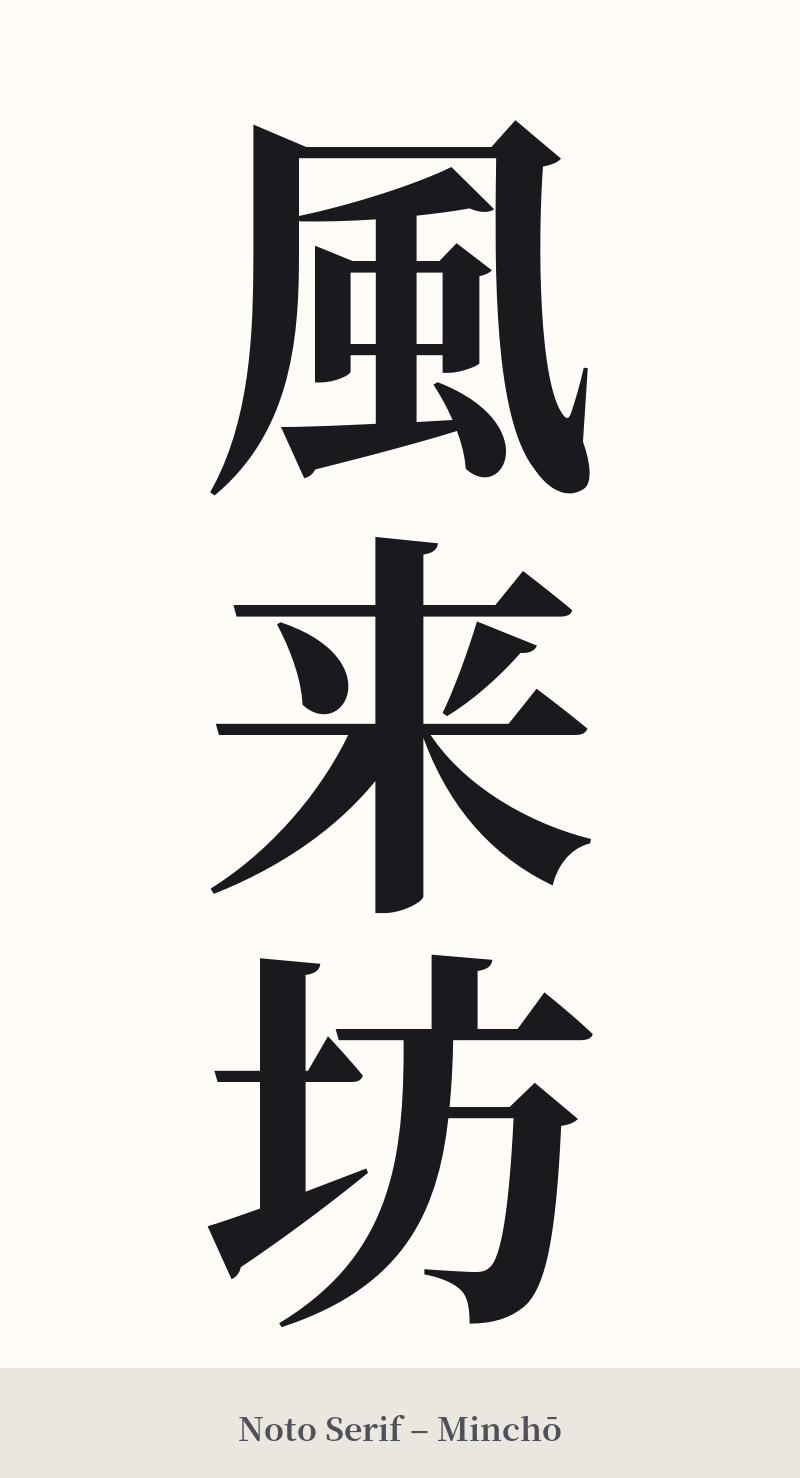
The same kanji can look dramatically different depending on the calligraphy style. Choose a font that matches the mood you want for your tattoo or design.
🎨 Tattoo Suitability
📐 Tattoo Design Guide
The three-character structure of 風来坊 lends itself beautifully to tattoo design, offering flexibility in both placement and style.
– Placement: A vertical orientation is highly recommended. Placing it along the forearm, the calf, or down the spine emphasizes the sense of flow and movement inherent in the word's meaning. A horizontal placement across the chest or upper back can also create a powerful, grounded statement.
– Font Style: The font choice can dramatically alter the feel. For a design that emphasizes the 'wind' and 'freedom' aspect, a cursive (草書, sōsho) or semi-cursive (行書, gyōsho) script is perfect. These flowing, dynamic styles mimic the unpredictable path of a wanderer. Conversely, a bold, angular kaisho (block script) can suggest a more deliberate and resolute choice to live this way—a wanderer with a strong will.
– Visual Embellishments: Consider integrating subtle imagery to enhance the theme. Wisps of wind, a few scattered maple leaves (a classic symbol of passage and time in Japan), or a simple enso circle around the kanji can tie the design to its philosophical roots. Avoid cluttering the characters, allowing their inherent beauty to remain the focus.
Comments