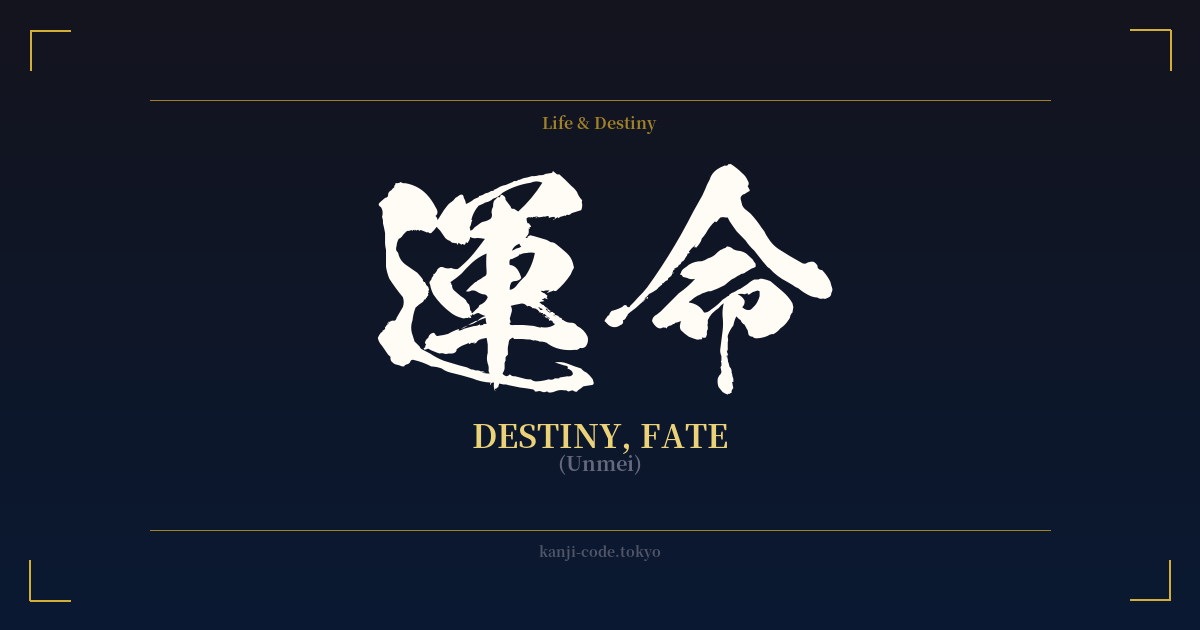
✍️ 運命 (Unmei) — Cultural Context
The Japanese word 運命 (Unmei) translates to "destiny" or "fate," but its meaning is far more nuanced and dynamic than a simple, unchangeable future. To truly understand it, we must look at the characters themselves: 運 (un) means to carry, transport, or luck, while 命 (mei) means life or command. Together, they create the concept of "life's transport" or "the movement of life." This implies not a static endpoint, but a journey with its own momentum.
In Japanese philosophy, Unmei is often contrasted with a similar term, 宿命 (shukumei). Shukumei refers to a predetermined, inescapable fate, often tied to one's past lives and karma—a destiny that is lodged (宿) in your life (命). Unmei, on the other hand, feels more like a flowing river. The general direction of the current is set, but your choices and effort (努力, doryoku) determine how you navigate it. You can struggle against the current, or you can use your skill and will to steer your course within its flow.
This idea of an intertwined, yet navigable destiny is beautifully captured in the famous East Asian belief of the "red string of fate" (運命の赤い糸, unmei no akai ito). This invisible string is said to tie two people together who are destined to meet. The string may tangle and stretch, but it will never break. Their Unmei is to connect, but their individual life choices will determine when and how that meeting happens. It's a perfect metaphor for the Japanese concept of fate: a powerful force that guides, but does not entirely control.
This theme is a cornerstone of Japanese storytelling, from classic literature to modern anime and video games. Characters often grapple with their Unmei, questioning whether to accept it, defy it, or forge a new path altogether. They are not passive victims of fate but active participants in a grand, unfolding narrative. This makes Unmei a powerful concept that acknowledges the great forces beyond our control while still celebrating the significance of human agency and spirit.
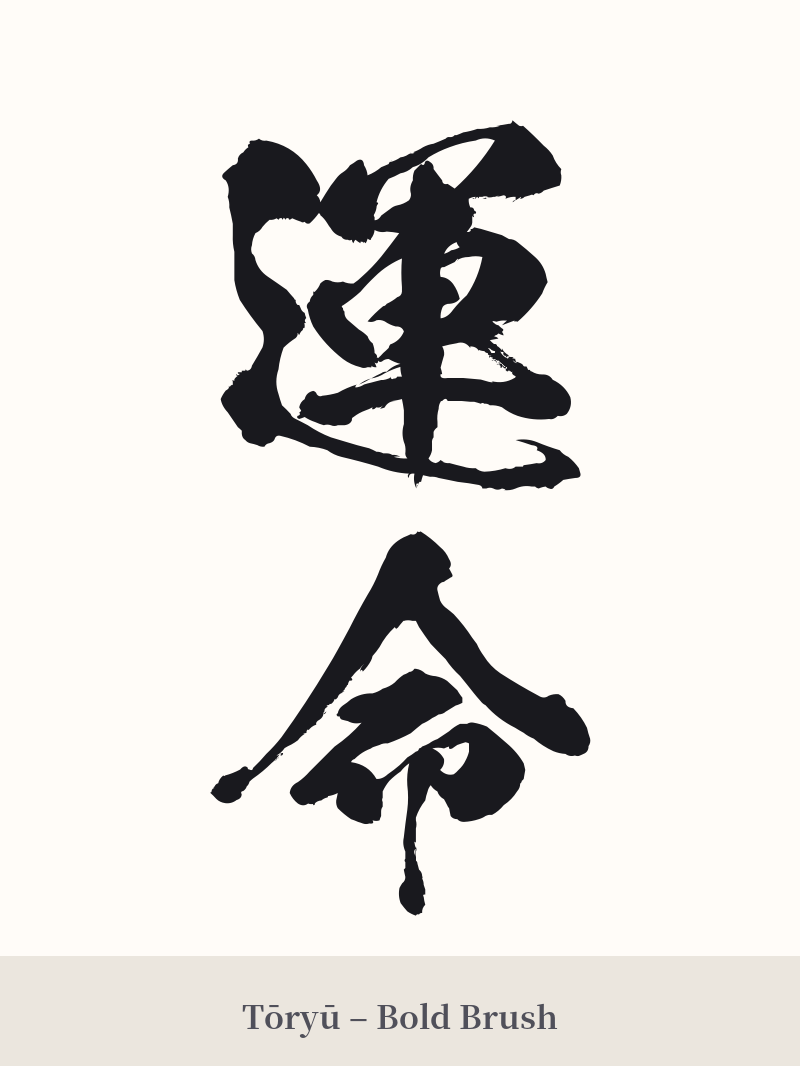
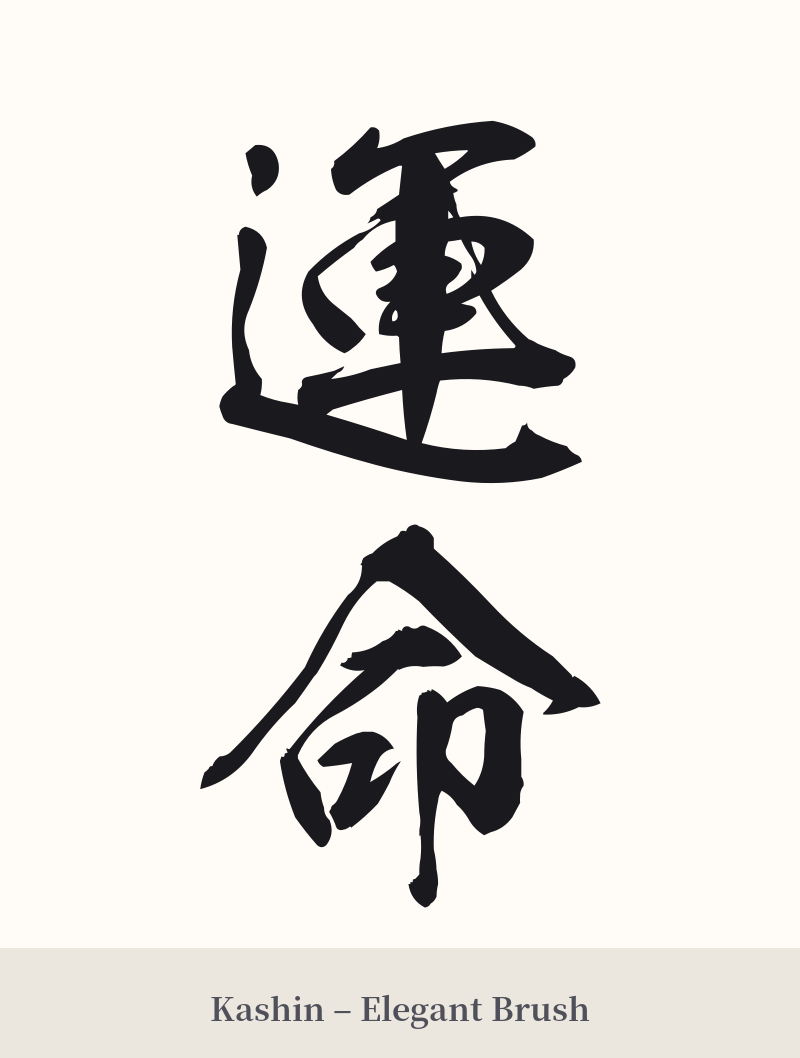
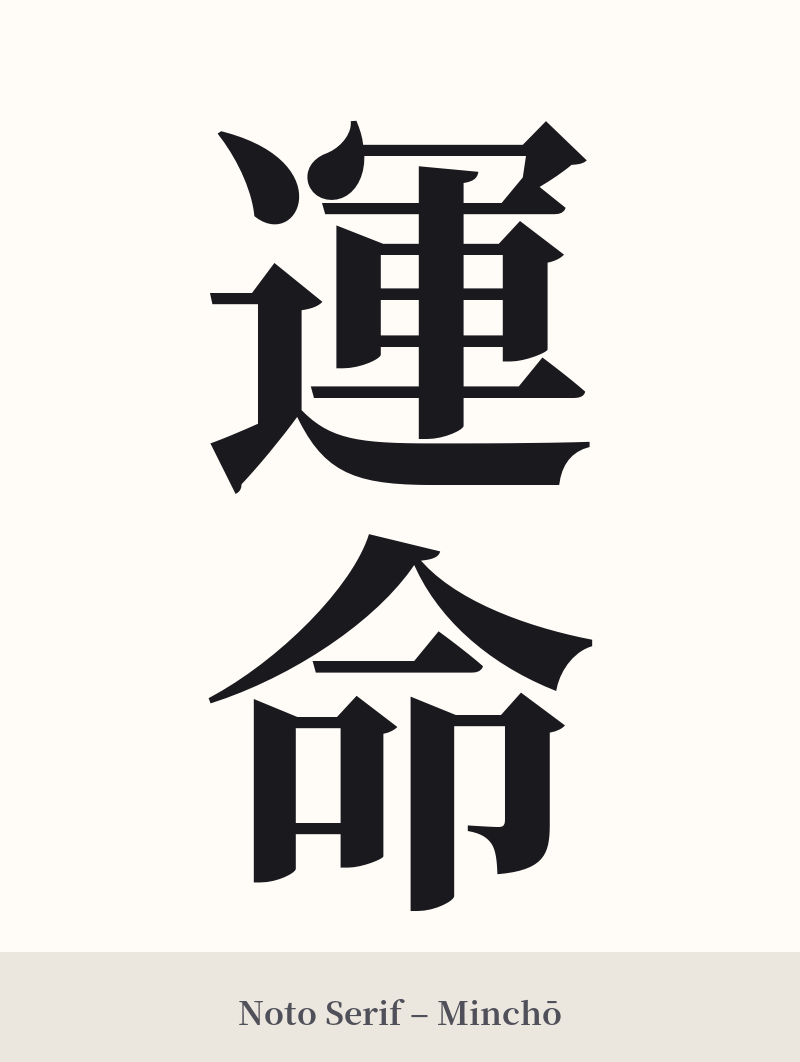
🖌️ Font Styles for 運命
The same kanji can look dramatically different depending on the calligraphy style. Choose a font that matches the mood you want for your tattoo or design.
🎨 Tattoo Suitability
📐 Tattoo Design Guide
運命 is a visually strong and balanced word that works well for tattoo designs. Its profound meaning offers a lot of creative potential.
– Placement: A vertical orientation is classic and elegant for two-character compounds. This looks particularly striking along the spine, forearm, or calf. For a horizontal design, the chest, upper back, or across the clavicle are excellent placements.
– Font Styles: The choice of script can dramatically alter the feeling of the tattoo. A dynamic, flowing semi-cursive (gyōsho) or cursive (sōsho) script can emphasize the "movement" (運) in Unmei. For a statement that feels more solid and resolute, a standard block script (kaisho) is a powerful choice.
– Visual Elements: Consider incorporating imagery that complements the theme of destiny. A red thread weaving through or around the kanji can symbolize the 'unmei no akai ito'. Other ideas include a compass, a flowing river, or celestial elements like stars or a moon to represent the larger forces at play.
Comments