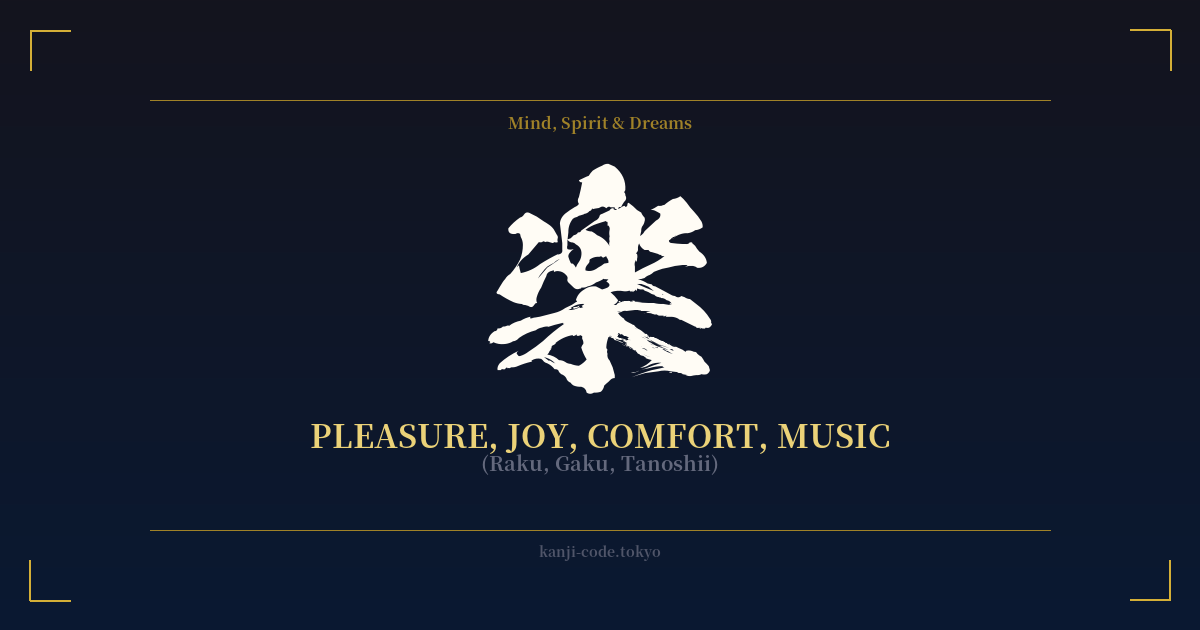
✍️ 楽 (Raku, Gaku, Tanoshii) — Cultural Context
The kanji 楽 is a beautiful and multifaceted character that encapsulates some of life's most cherished experiences: joy, pleasure, comfort, and music. Its versatility is a testament to the deep-seated connection between these concepts in Japanese culture.
The character's origin is believed to depict a ritual object. Ancient forms show a pictograph of a drum with bells or other ornaments, set upon a wooden stand (木). The act of playing this instrument produced music, which in turn brought pleasure and joy to the listeners. This etymological root elegantly ties together the character's two primary readings and meanings: 'gaku' (楽) for music and 'raku' (楽) for pleasure or ease.
As 'gaku,' it is the cornerstone of the word for music, 音楽 (ongaku), which literally translates to 'sound-music/pleasure.' It's also found in the term for traditional Japanese imperial court music, 雅楽 (gagaku), highlighting its long association with refined artistic expression.
As 'raku,' the character embodies a state of being free from hardship and stress. It signifies comfort, ease, and a general sense of well-being. This is powerfully illustrated by its relationship with its antonym, 苦 (ku), which means suffering or hardship. The compound word 苦楽 (kuraku) means 'pleasures and pains' or 'joys and sorrows,' representing the full spectrum of human experience. To wish someone a 'raku' life is to wish them a life of ease and contentment.
This sense of ease extends into everyday language. The adjective 楽しい (tanoshii) means 'fun' or 'enjoyable,' capturing a lighthearted, active form of joy. A phrase like 気軽に (kigaru ni), which uses the 'ki' from 'kimochi' (feeling) and 'raku' (here read as 'karu'), means 'casually' or 'feel free to,' inviting a relaxed and easy approach. When someone says 楽しみにしています (tanoshimi ni shiteimasu), they are expressing eager anticipation for a fun event.
In a broader philosophical sense, particularly influenced by Buddhism, 'raku' can represent a state of tranquility and mental comfort, a release from the burdens of worldly desires. It’s not just about hedonistic pleasure but a deeper, more serene state of contentment. Choosing 楽 is to embrace a philosophy of finding joy, appreciating art, and seeking comfort in a complex world.
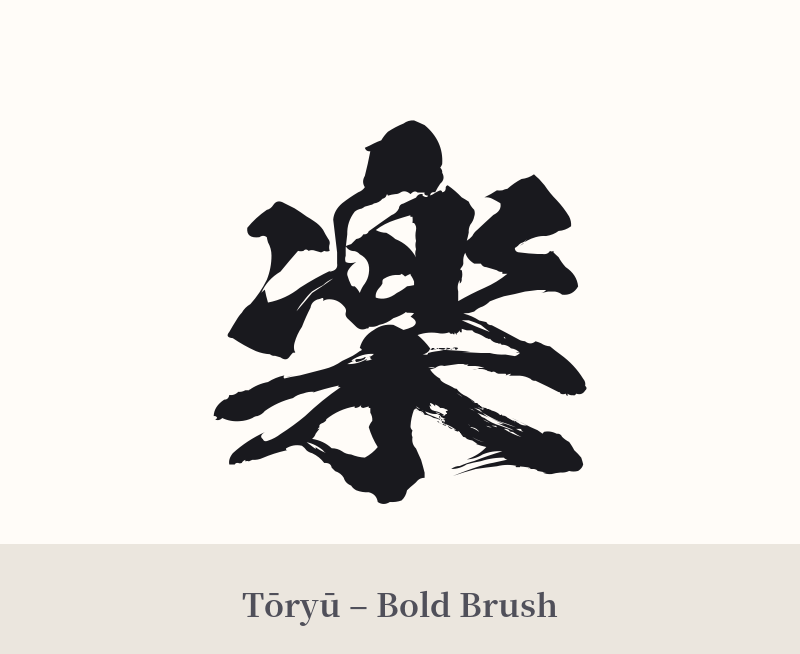
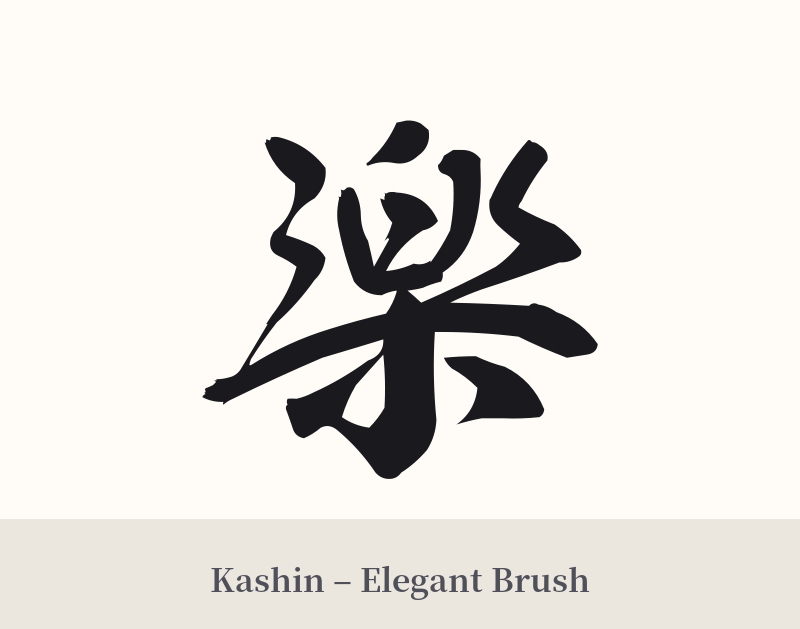
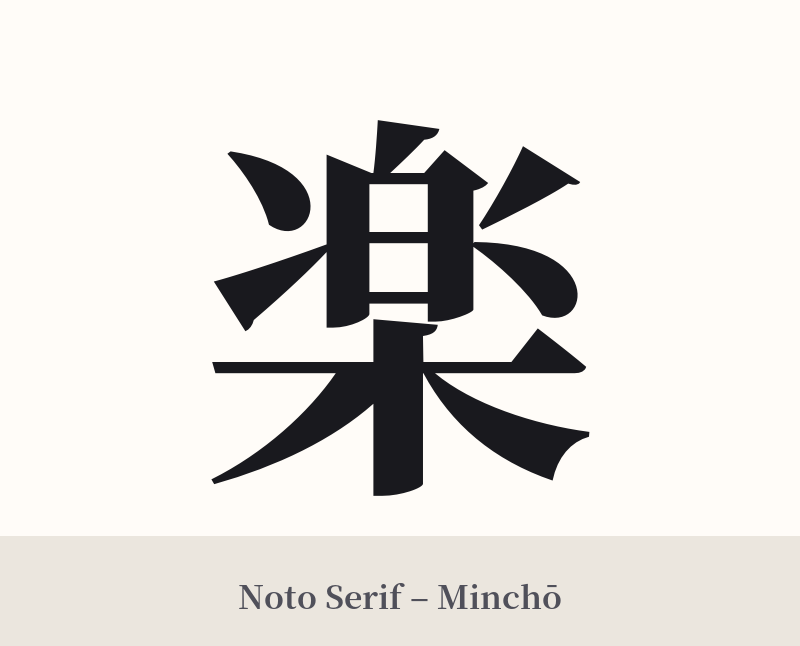
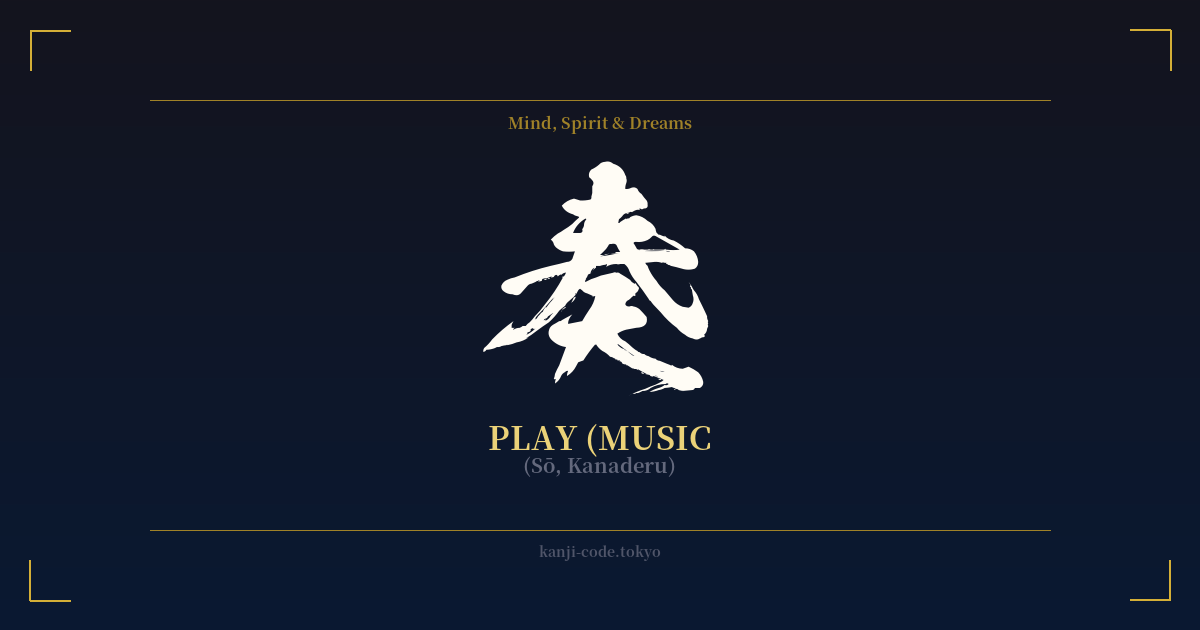
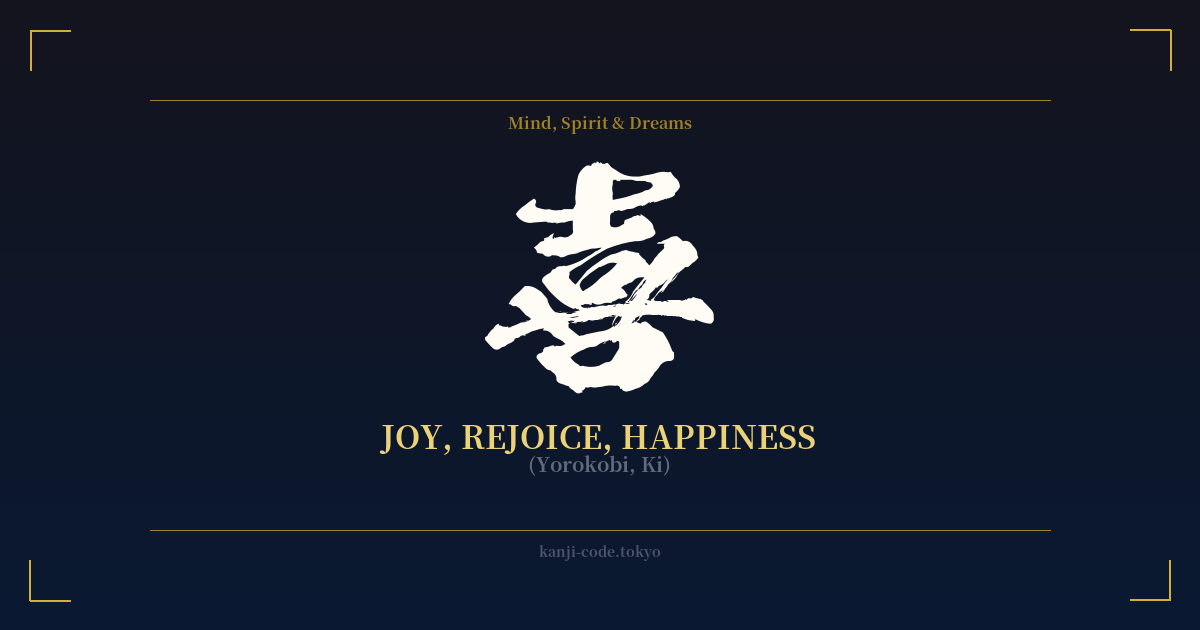
🖌️ Font Styles for 楽
The same kanji can look dramatically different depending on the calligraphy style. Choose a font that matches the mood you want for your tattoo or design.
🎨 Tattoo Suitability
📐 Tattoo Design Guide
The kanji 楽 offers wonderful flexibility for a tattoo design, thanks to its positive meaning and balanced form.
– Placement Suggestions: For a single character, consider areas where it can be appreciated, like the inner forearm, the back of the neck, behind the ear, or on the calf. Its vertical balance also makes it suitable for the spine or along a limb.
– Font Style Recommendations: A standard block script (Kaisho) gives it a strong, clear, and timeless look. For a more artistic and fluid feel, a semi-cursive style (Gyosho) can beautifully capture the sense of 'joy' or the flow of 'music.' A minimalist, single-brushstroke style can emphasize the concept of 'ease' (raku).
– Visual Tips: To emphasize a specific meaning, you can incorporate other elements. For 'music' (gaku), consider integrating subtle musical notes or a flowing G-clef into the design. For 'pleasure' or 'joy' (raku), you could place it within an Enso circle to symbolize enlightenment and serenity, or pair it with natural imagery like a blooming lotus or cherry blossoms.
Comments