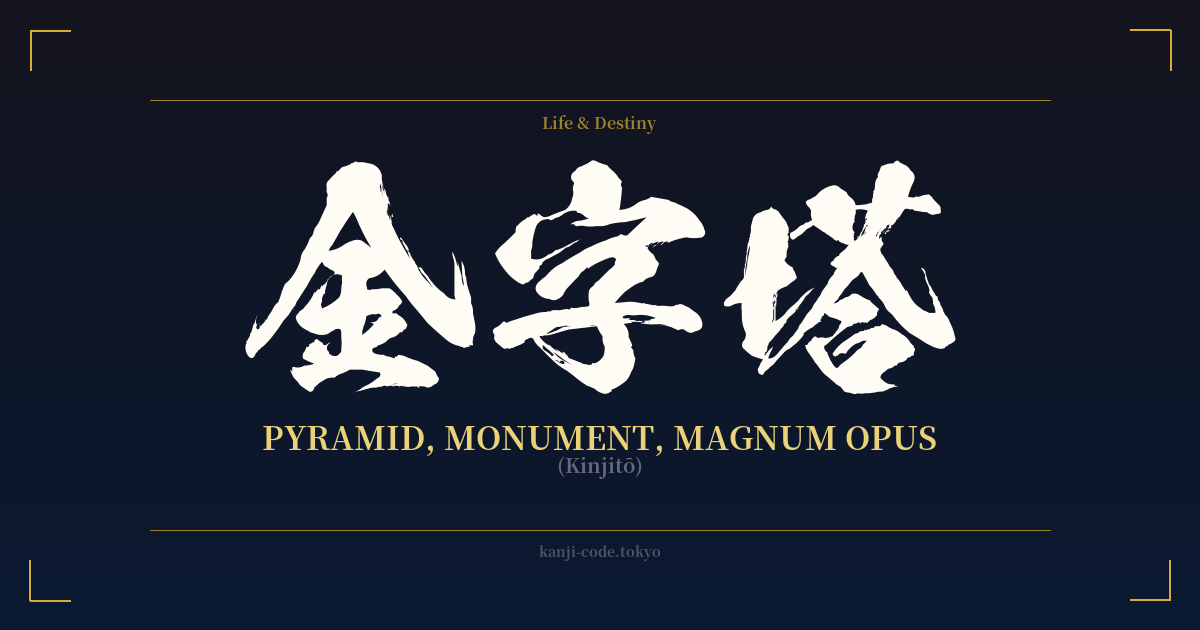
✍️ 金字塔 (Kinjitō) — Cultural Context
At first glance, 金字塔 (Kinjitō) presents a linguistic puzzle. The characters translate literally to 金 (kin – gold), 字 (ji – character/letter), and 塔 (tō – tower). How does a "gold character tower" come to mean "pyramid" and, by extension, a "monumental achievement"?
The answer lies in a fascinating story of cultural exchange and linguistic creativity from Japan's Meiji Era (1868-1912). As Japan opened to the West, it needed to translate a flood of new concepts. The ancient Egyptian pyramids were one such concept. The word 'pyramid' was transliterated into Japanese using ateji, where kanji are used for their phonetic value.
The character 金, which means 'gold,' also has a shape that can be seen as triangular, much like the kanji for 'person' (人). This visual association was combined with the character 字 (ji), used purely for its sound to approximate the 'py' or 'pi' sound. Finally, 塔 (tō), meaning tower, was added to complete the image of a massive, towering structure. Thus, 金字塔 was born as the Japanese word for pyramid.
However, the story of 金字塔 doesn't end there. The pyramids of Giza are not just triangular structures; they are enduring symbols of human ingenuity, ambition, and legacy that have stood for millennia. This powerful symbolism was not lost on the Japanese. Over time, the word evolved beyond its literal architectural meaning.
Today, the primary meaning of 金字塔 is figurative. It refers to a monumental work, a magnum opus, or an unparalleled achievement that stands the test of time. A scientist's groundbreaking theory, an author's defining novel, or a musician's legendary album can all be described as a 金字塔. It signifies the pinnacle of one's work, a creation that will be remembered as their greatest contribution.
To call something a 金字塔 is to bestow upon it the highest praise, equating it with the timeless, awe-inspiring permanence of the great pyramids themselves. It speaks to a deep cultural appreciation for dedication, mastery, and the creation of a lasting legacy.
🖌️ Font Styles for 金字塔
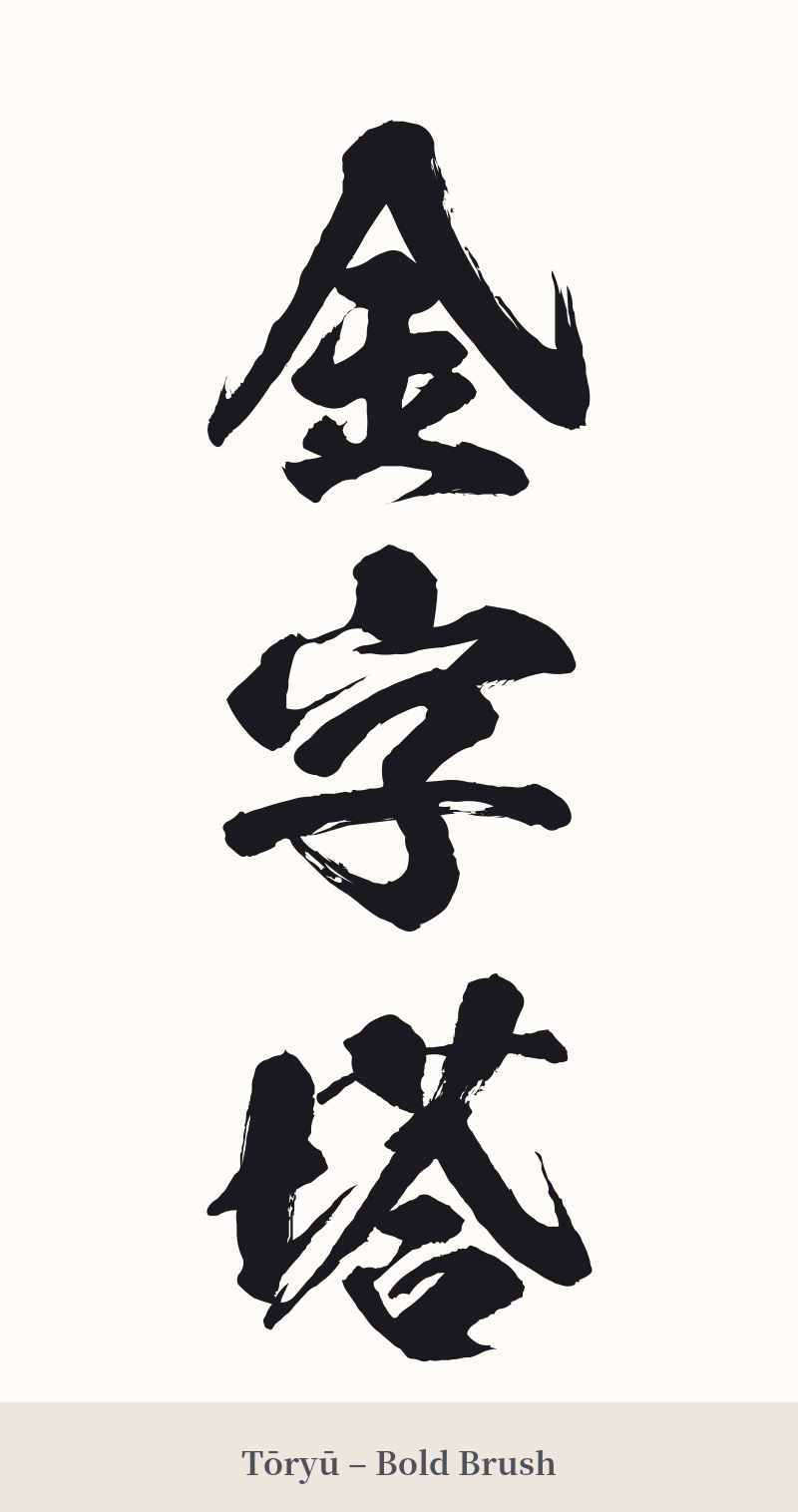
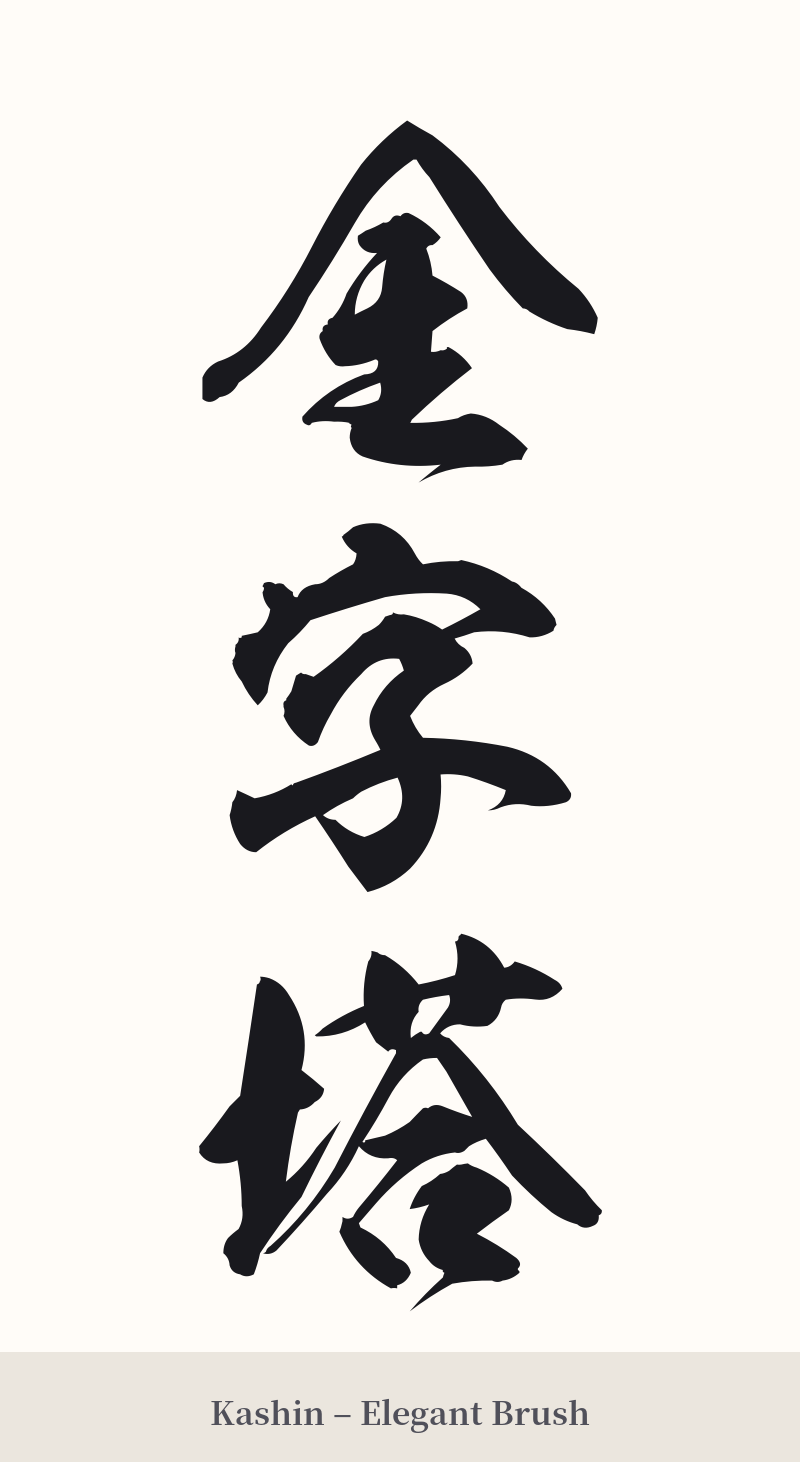
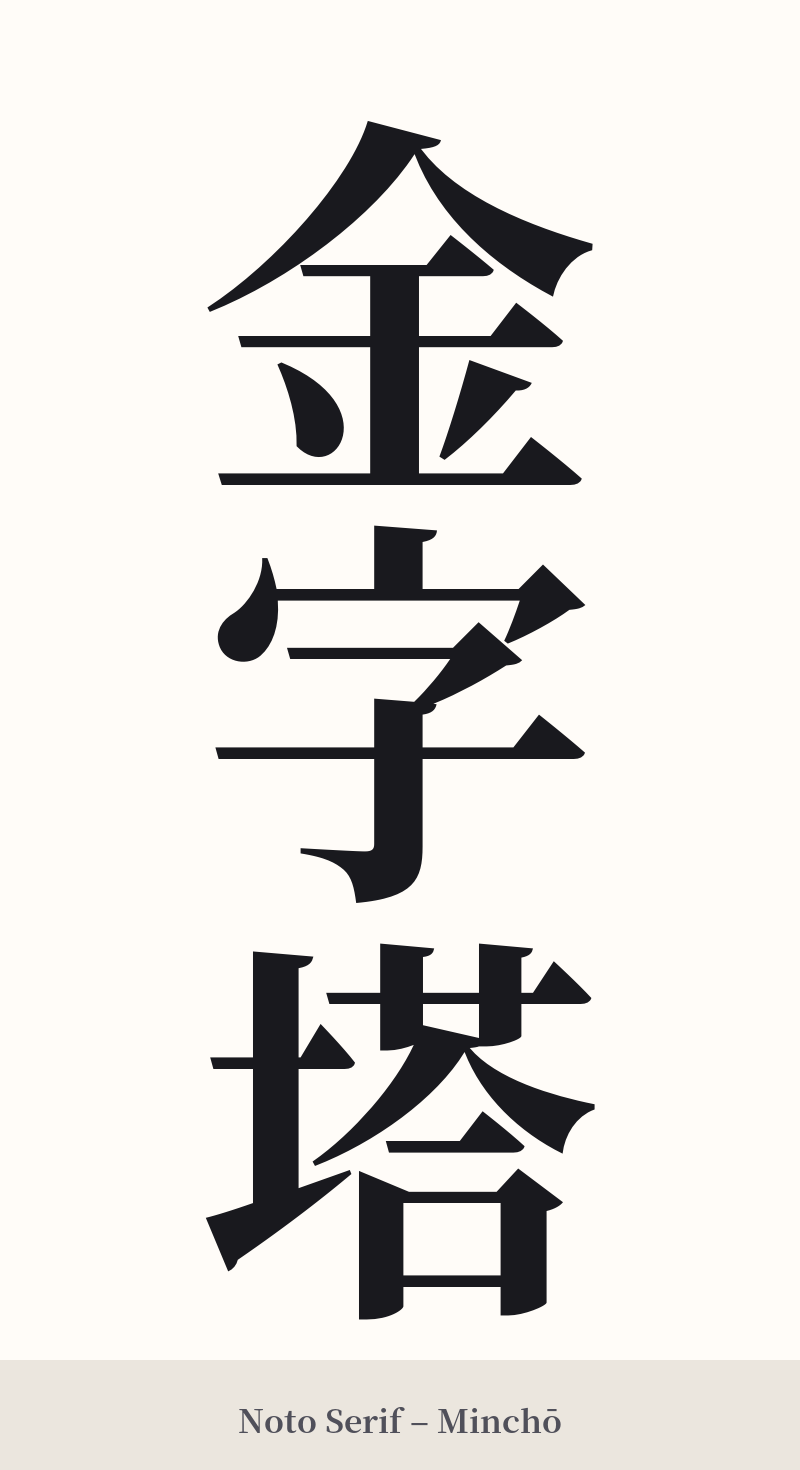
The same kanji can look dramatically different depending on the calligraphy style. Choose a font that matches the mood you want for your tattoo or design.
🎨 Tattoo Suitability
📐 Tattoo Design Guide
For a word with such monumental meaning, the design should convey strength and permanence.
– Placement: A vertical orientation is classic for three-character kanji and works exceptionally well along the spine, forearm, or calf. This arrangement emphasizes the 'towering' nature of the word. A horizontal placement can also be powerful across the chest or upper back.
– Font Style: A bold, semi-cursive calligraphy style (Gyosho) can capture both the artistic and enduring qualities of a 'magnum opus.' For a more formal and solid look, a standard block script (Kaisho) is an excellent choice, reinforcing the architectural, stable feeling of a pyramid.
– Visual Tips: Ensure the artist gives each character enough space to be legible, especially the final character, 塔 (tō), which has 12 strokes. Avoid shrinking the design too small, as the details can become blurred. Consider incorporating a subtle element related to your personal 'magnum opus'—a faint musical staff, a compass rose, or a specific geometric pattern—woven into the background or near the kanji.
Comments