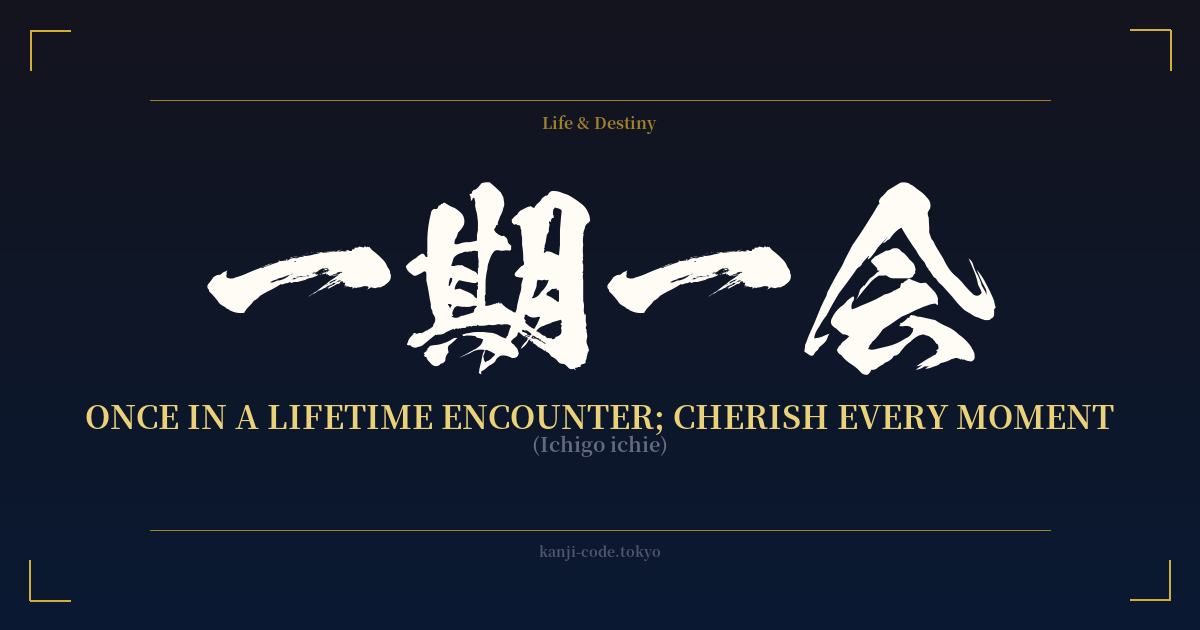
✍️ 一期一会 (Ichigo ichie) — Cultural Context
一期一会 (Ichigo ichie) is a four-character Japanese idiom that translates literally to 'one time, one meeting.' However, this simple translation barely scratches the surface of its profound philosophical weight. At its core, Ichigo Ichie is a call to recognize and cherish the unique, unrepeatable nature of every moment and every encounter.
The concept has its roots in the traditional Japanese tea ceremony, or 'Sadō' (The Way of Tea). It is most famously attributed to the 16th-century tea master Sen no Rikyū. He taught that every tea gathering is a singular event that can never be replicated. The host, the guests, the season, the utensils, even the conversation—all these elements converge in a unique combination for that specific moment in time. Therefore, both host and guest should act with the utmost sincerity, respect, and attention, as if it were their first and last meeting.
This principle extends far beyond the tearoom. It has permeated Japanese culture as a kind of secular Zen wisdom, a reminder to live in the present. It’s an antidote to the modern tendency to be distracted, to put off true engagement for a 'later' that may never come. It encourages you to listen deeply when a friend is talking, to savor a meal without scrolling on your phone, and to appreciate the beauty of a sunset, because that exact configuration of clouds, light, and feeling will never occur again.
Unlike the Western 'Carpe Diem' (Seize the Day), which can have an active, almost urgent connotation, Ichigo Ichie is quieter and more contemplative. It is less about seizing and more about receiving. It's about mindfulness and gratitude for the connections and experiences that life presents, understanding that they are all transient. It's a philosophy that finds beauty in the fleeting nature of existence itself, urging us to be fully present for the one-time, one-meeting that is this very moment.
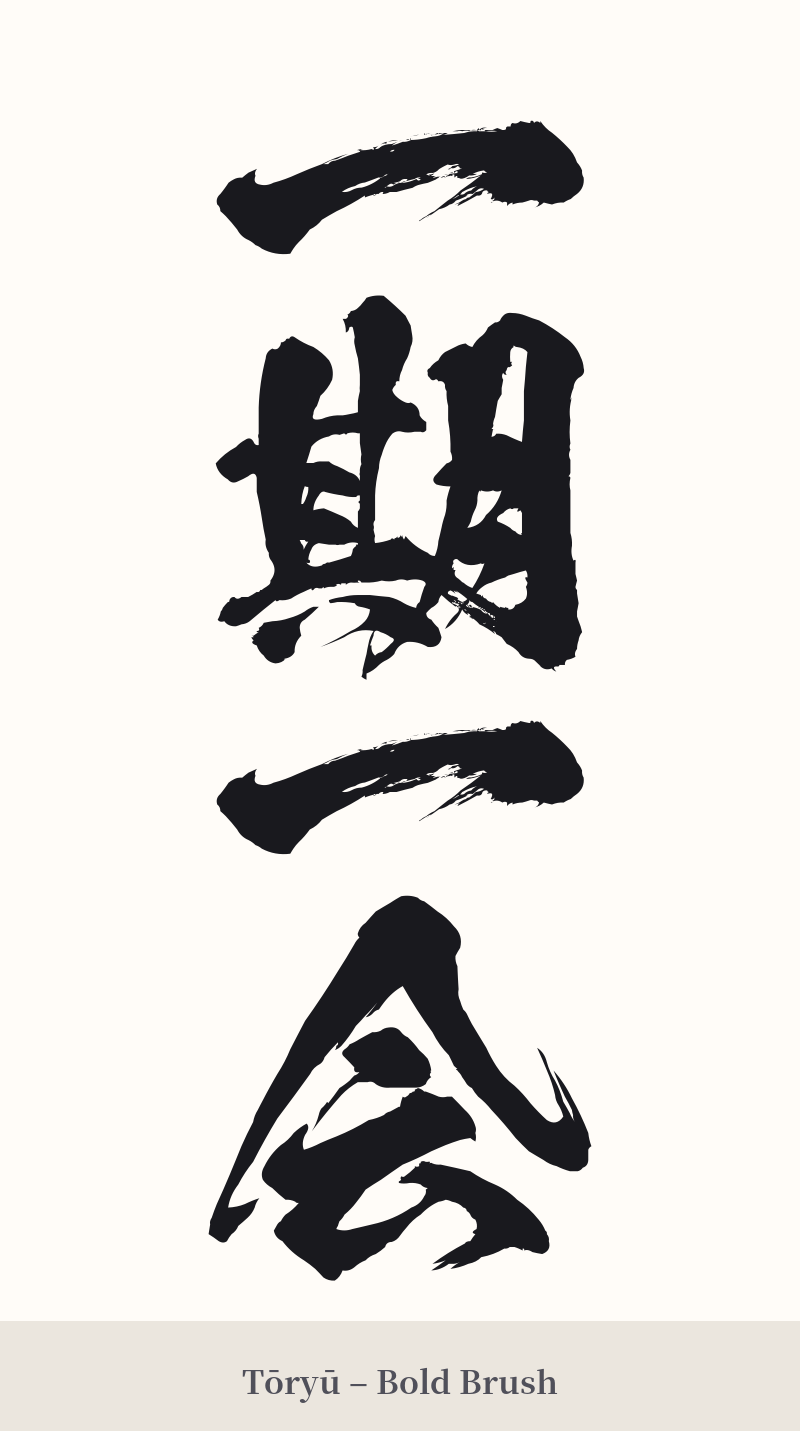
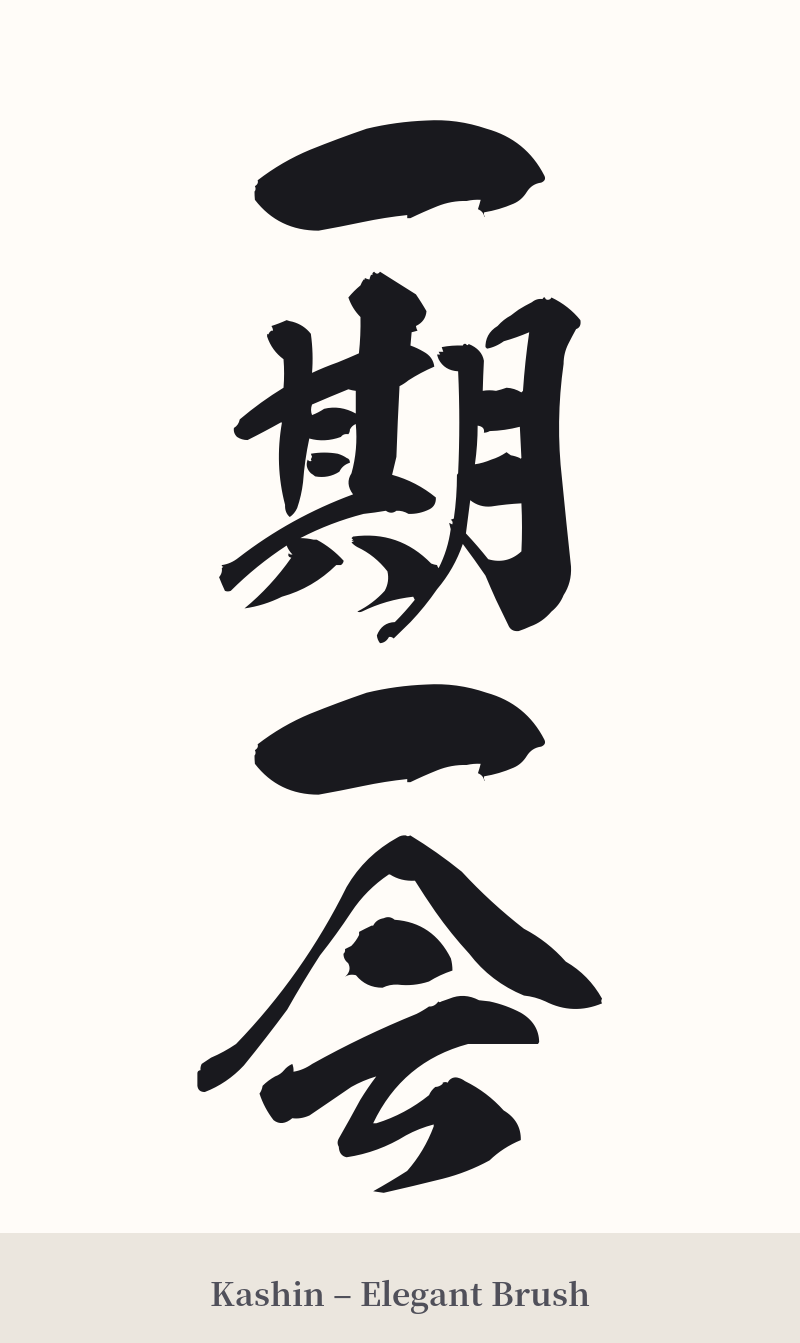
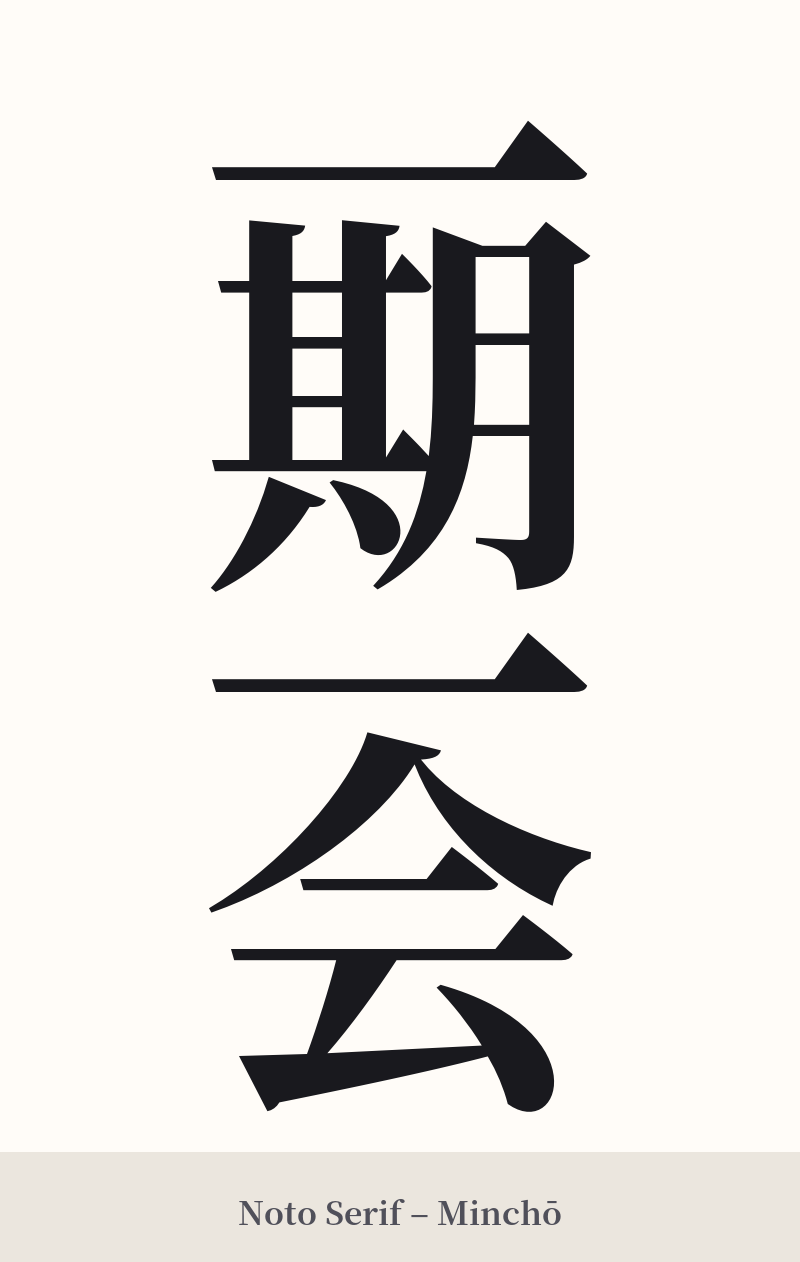
🖌️ Font Styles for 一期一会
The same kanji can look dramatically different depending on the calligraphy style. Choose a font that matches the mood you want for your tattoo or design.
🎨 Tattoo Suitability
📐 Tattoo Design Guide
The phrase 一期一会 offers beautiful and classic design possibilities. Its four-character structure is ideal for a variety of tattoo placements.
– Placement: A vertical alignment is the most traditional and aesthetically pleasing presentation. It works exceptionally well along the spine, the forearm, the side of the ribs, or the calf. A horizontal layout can also be effective across the chest, upper back, or collarbone.
– Font Style: To honor its traditional roots, consider a calligraphic script. A flowing, semi-cursive 'Gyosho' style can convey elegance and movement, while a formal 'Kaisho' block script offers a sense of stability and clarity. For a more modern take, a clean, minimalist Mincho or Gothic font can also work, focusing solely on the characters' forms.
– Visual Tips: While the kanji are powerful on their own, you could subtly incorporate related imagery. A single cherry blossom petal, a simple enso (Zen circle), or a minimalist outline of a tea bowl can be placed near the kanji to visually echo the themes of transience and the tea ceremony.
Comments