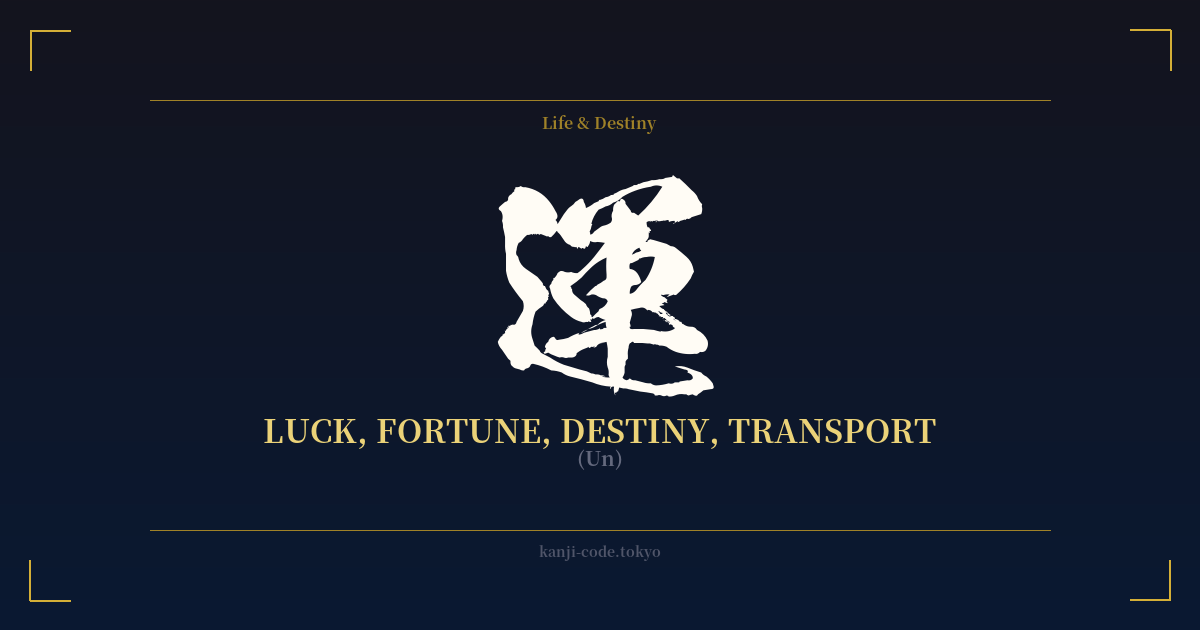
✍️ 運 (Un) — Cultural Context
The kanji 運 (un) is a cornerstone of Japanese philosophy, encapsulating concepts of luck, fortune, and the overarching flow of destiny. Its origins offer a fascinating glimpse into this multifaceted meaning. The character is a combination of the radical 辶 (shinnyō), which signifies movement or walking, and 軍 (gun), meaning army. Historically, it depicted the transport of military supplies. The success or failure of a campaign—its very fortune—depended on this logistical movement, linking the physical act of 'carrying' with the abstract outcome of 'fate.'
This duality persists in modern Japanese. On one hand, 運 is a key part of practical, everyday words related to movement: 運転 (unten) is 'driving,' 運送 (unsō) is 'transport,' and 運動 (undō) is 'exercise' or 'motion.' This is the literal, physical interpretation of the character.
On the other hand, and more profoundly, 運 governs the realm of the intangible. It forms the basis for words that touch upon life's biggest questions. 幸運 (kōun) means 'good luck' or 'good fortune,' a welcome turn of events. 運命 (unmei), combining 'luck' with 'life,' translates to 'destiny' or 'fate'—the path one's life is carried along. This isn't just about random chance; it implies a current or a force that guides events, something you can either ride or struggle against.
In Japanese culture, interacting with one's 'un' is a common practice. People visit shrines to draw omikuji, paper fortunes that predict their luck in various aspects of life. They buy omamori, protective amulets designed to improve fortune (開運, kaiun) or ensure victory (勝運, shōun). The phrase 運を天に任せる (un o ten ni makaseru) means 'to entrust one's fortune to the heavens,' acknowledging a power beyond oneself. Yet, there's also a sense of agency. One can work to improve their luck or, as the saying goes, 運を掴む (un o tsukamu), 'to seize luck.'
Therefore, 運 is not a passive concept. It represents the dynamic interplay between circumstance and personal journey. It is the fortune you are given, the path you are carried on, and the luck you have the chance to grasp. It speaks to a worldview where fate is a powerful river, but with effort and awareness, you can learn to navigate its currents.
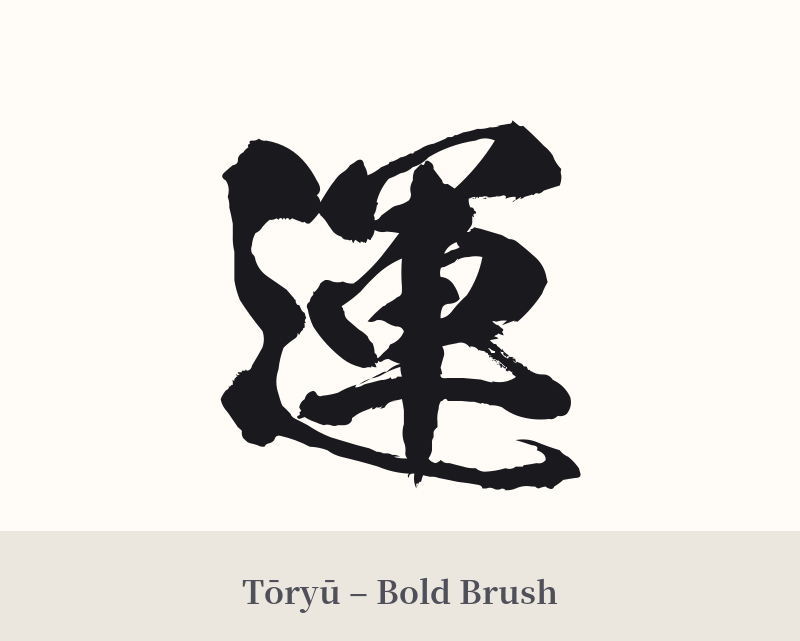
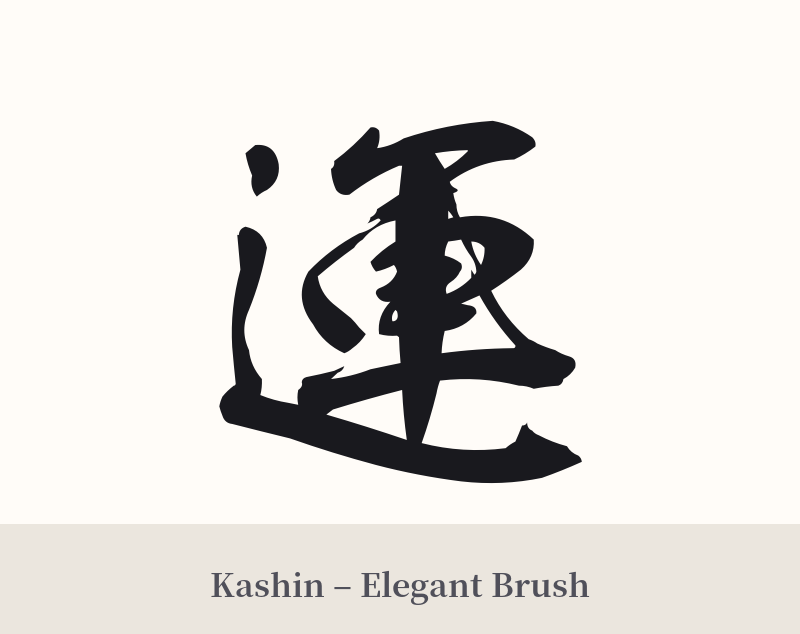
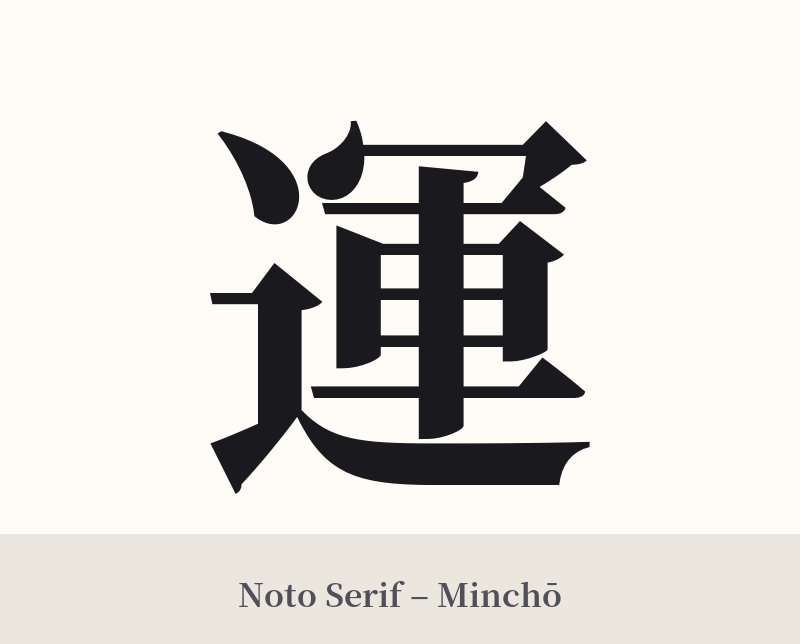
🖌️ Font Styles for 運
The same kanji can look dramatically different depending on the calligraphy style. Choose a font that matches the mood you want for your tattoo or design.
🎨 Tattoo Suitability
📐 Tattoo Design Guide
The kanji 運 is a versatile and powerful choice for a tattoo, suitable for various styles and placements.
– Placement Suggestions: For a subtle yet constant reminder, consider the inner wrist, forearm, or behind the ear. For a more prominent statement piece, the back of the shoulder, calf, or center of the upper back provides a great canvas. Its balanced shape works well both vertically and horizontally.
– Font Style Recommendations: A traditional calligraphy style like Gyosho (semi-cursive) or Kaisho (block script) emphasizes its deep cultural roots and philosophical weight. For a more modern or minimalist aesthetic, a clean Mincho or Gothic font can create a sharp, elegant look.
– Complementary Imagery: To enhance its meaning, consider pairing 運 with other Japanese motifs. A koi fish swimming upstream symbolizes perseverance leading to good fortune. Cherry blossoms can represent the beautiful but transient nature of luck. Incorporating it within an Enso circle can symbolize the entirety of one's destiny and the universe.
Comments