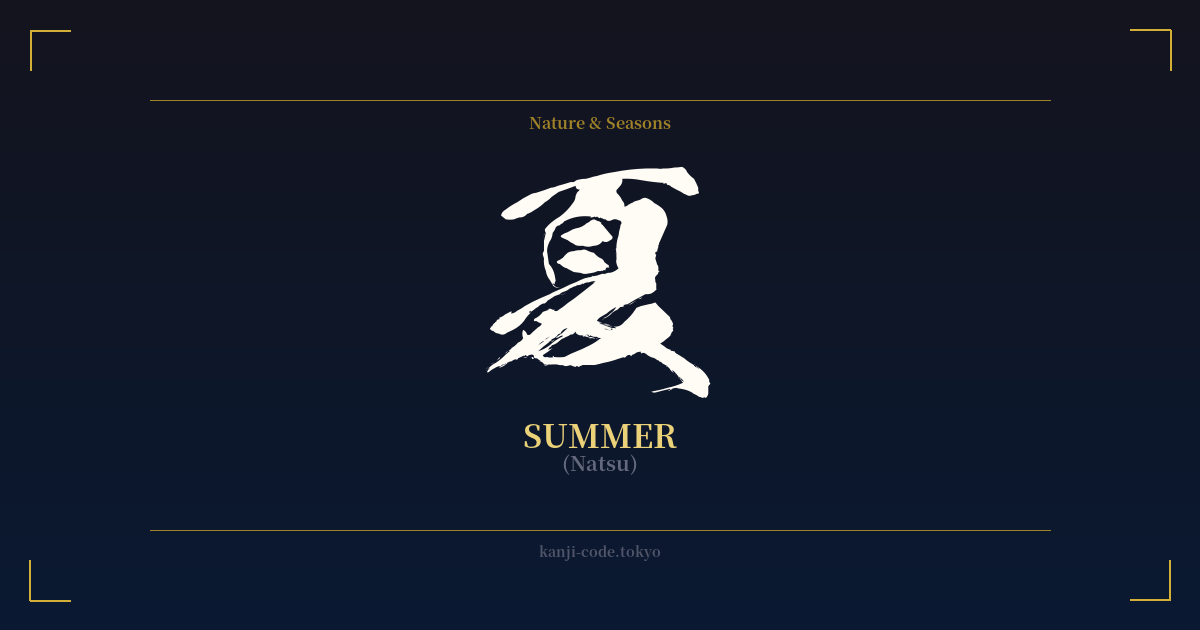
✍️ 夏 (Natsu) — Cultural Context
The kanji 夏 (Natsu) is more than just a word for a season; it’s a vessel for some of Japan’s most vibrant cultural experiences. Its character is a powerful symbol of energy, growth, and the beautiful, fleeting moments of life at its peak.
The origins of the character are thought to depict a person, perhaps wearing a ritual mask and costume. This ancient image connects to early agricultural ceremonies and dances performed to pray for abundance during the warmest, most vital time of the year. This sense of lively, communal activity remains at the heart of what summer means in Japan.
When Japanese people think of summer, they envision a season bursting with sound, color, and sensation. It’s the season of matsuri (festivals), where streets come alive with parades, paper lanterns, and the sizzle of food stalls selling yakisoba and takoyaki. People don traditional yukata (light cotton kimono), adding to the festive, nostalgic atmosphere.
Summer is also synonymous with hanabi (fireworks). Grand fireworks displays are held across the country, lighting up the night sky. These spectacular but brief explosions are a powerful metaphor for mono no aware—the gentle sadness and appreciation for the transient nature of beauty. Just as a firework blooms and fades, so too does the intensity of summer, making its moments all the more precious.
The season is marked by distinct natural sounds and tastes. The constant, humming chorus of cicadas (semi) is the quintessential soundtrack to a Japanese summer day. The cooling chime of a fūrin (wind chime) offers a moment of auditory relief from the heat. It’s the taste of sweet, cold watermelon (suika) and shaved ice (kakigōri) that provides a refreshing escape from the humidity (mushiatsui).
Beyond the celebrations, summer also holds a deep spiritual significance. August is the time for Obon, a festival to honor the spirits of one's ancestors. Families return to their hometowns, clean their ancestors' graves, and light lanterns to guide the spirits back home. This blend of lively celebration and quiet reverence gives the Japanese summer a unique and profound depth.
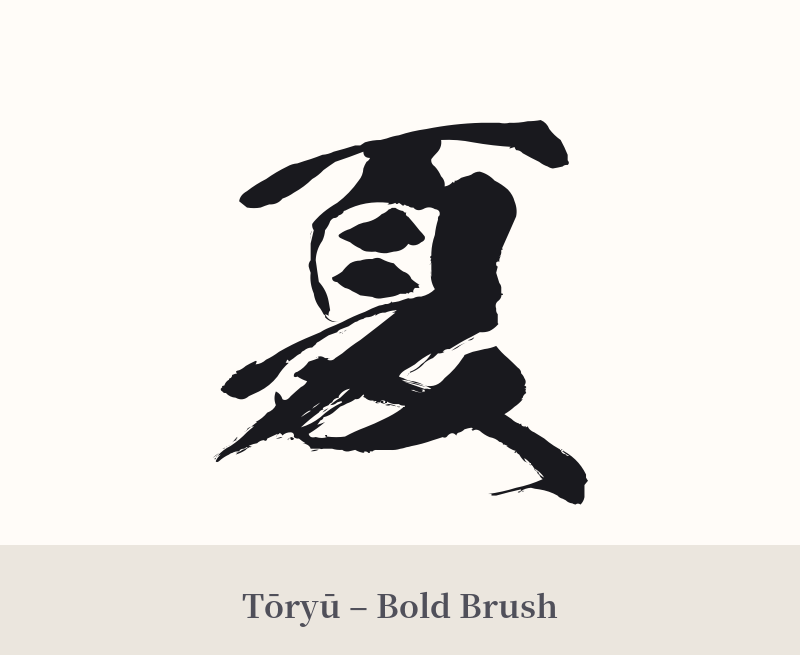
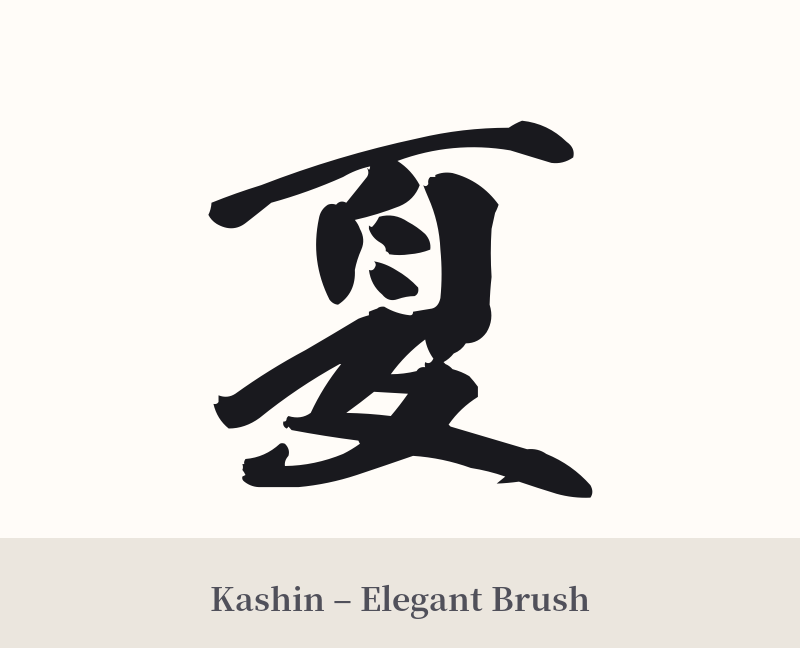
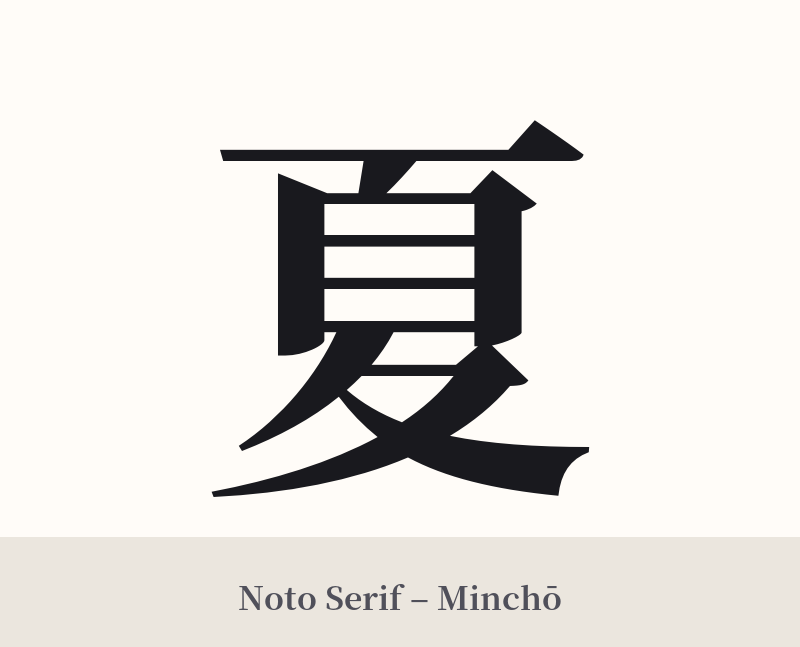
🖌️ Font Styles for 夏
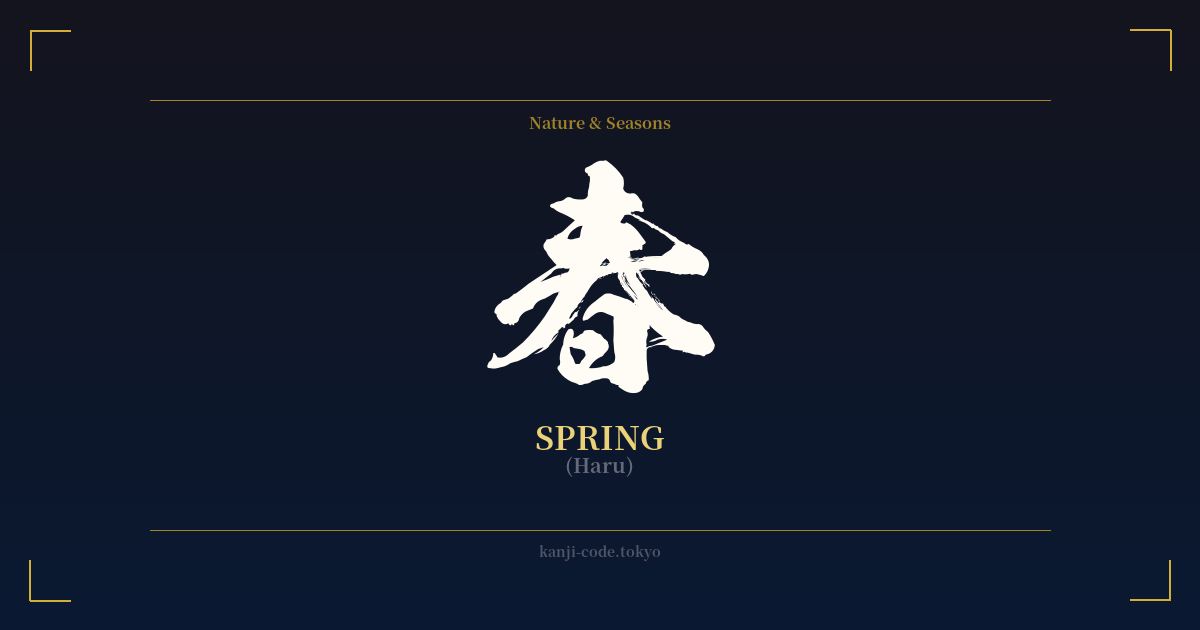
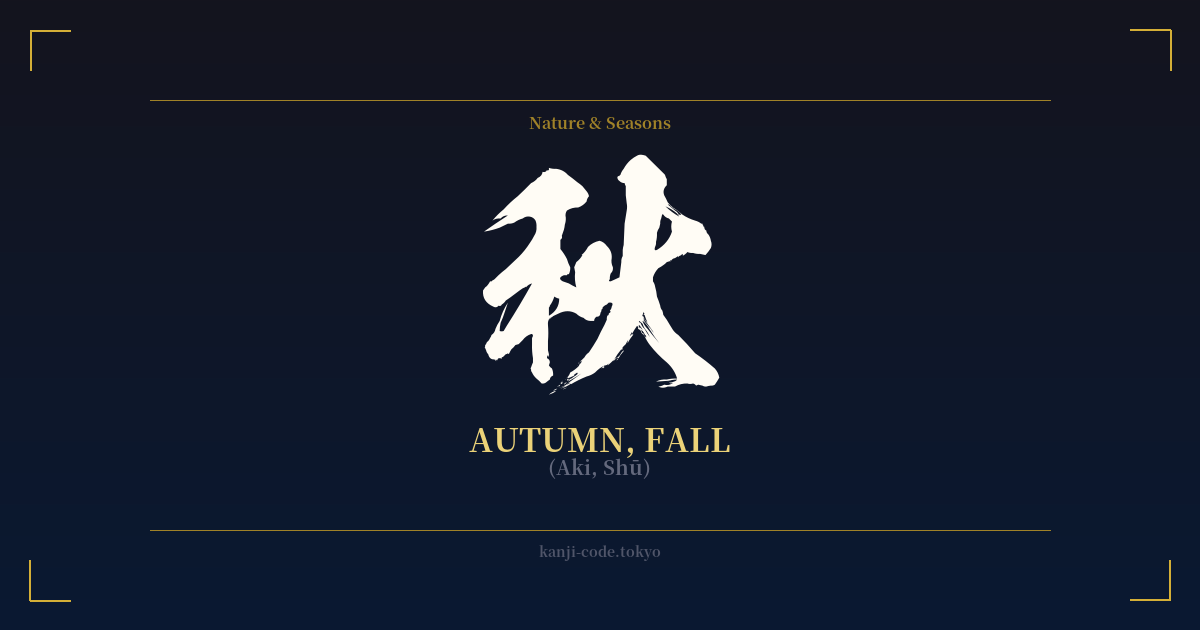
The same kanji can look dramatically different depending on the calligraphy style. Choose a font that matches the mood you want for your tattoo or design.
🎨 Tattoo Suitability
📐 Tattoo Design Guide
The kanji 夏 (Natsu) offers a lot of versatility for a tattoo design, evoking feelings of warmth, energy, and nostalgia.
– Placement: For a small, subtle design, the wrist, ankle, or behind the ear works well. For a more prominent piece that allows for calligraphic flair, consider the forearm, calf, or shoulder blade. A vertical placement on the spine can also be very elegant.
– Font Style: An energetic, semi-cursive (gyōsho) or cursive (sōsho) calligraphy style can capture the lively spirit of summer festivals. A bold, standard script (kaisho) provides a strong, clear statement. For a more modern or minimalist take, a clean, geometric font can also be effective.
– Visual Tips: Consider incorporating other elements to enhance the theme. A few subtle firefly lights glowing around the character, a stylized firework burst integrated into a stroke, or a small fūrin (wind chime) hanging from the bottom of the kanji can add a personal and unique touch. Using a splash of color, like a warm orange or a deep night-sky blue, can also bring the design to life.
Comments