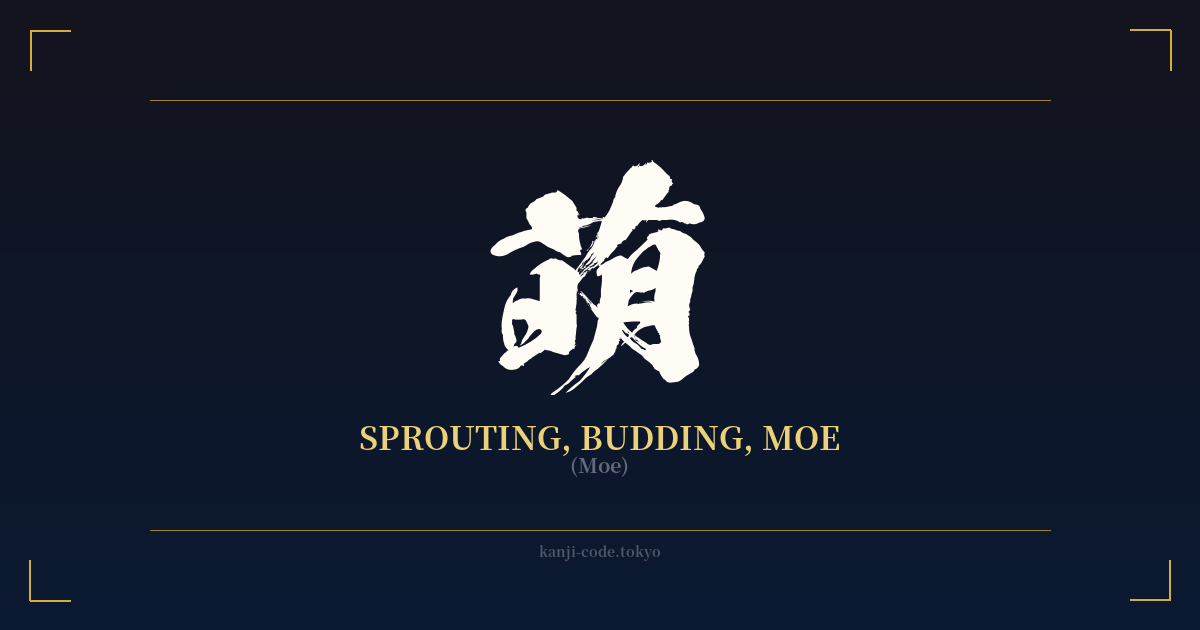
✍️ 萌 (Moe) — Cultural Context
The kanji 萌 (moe) is a fascinating character that perfectly illustrates how language evolves. It holds a dual identity: one ancient and poetic, the other hyper-modern and tied to a global subculture.
Originally, 萌 depicts the simple, beautiful act of a plant sprouting. The character itself is a combination of the 'grass' radical (艹) on top and the character for 'bright' (明) on the bottom. This paints a vivid picture of new plant life pushing its way out of the soil, reaching for the bright sunlight. In classical Japanese literature and everyday language, it signifies budding, sprouting, and the very beginning of something new. It carries connotations of nascent potential, freshness, and the promise of spring.
This naturalistic meaning evokes feelings of hope and new beginnings. You might see it in words like 萌芽 (hōga), meaning 'bud' or 'sprout,' which can be used both literally for plants and metaphorically for the germination of an idea or a movement. It’s a character deeply rooted in the natural world and the changing of seasons, a core theme in Japanese aesthetics.
However, in the late 20th and early 21st centuries, 萌 underwent a radical transformation in meaning. Within the worlds of anime, manga, and video games, it became the label for a specific, intense feeling of affection. 'Moe' describes the overwhelming emotional response—a kind of protective, heart-warming adoration—that a fan feels towards a particular character, usually one embodying innocence, purity, or a charming vulnerability.
The linguistic link is clever. This feeling isn't just 'liking' a character; it's a feeling that 'sprouts' or 'buds' inside the viewer, just like a young plant. The original meaning of the kanji was repurposed to describe an internal, emotional germination. This new definition exploded in popularity, becoming a cornerstone of otaku (geek) culture and a major driving force in character design and marketing.
Today, the 'moe' meaning often overshadows its classical origin in popular contexts. Mentioning 萌 to a younger Japanese person will almost certainly bring to mind images of cute anime characters before it brings to mind a sprouting bamboo shoot. This makes 萌 a character of two worlds: one of quiet, natural beauty and another of vibrant, and sometimes controversial, pop culture.
🖌️ Font Styles for 萌
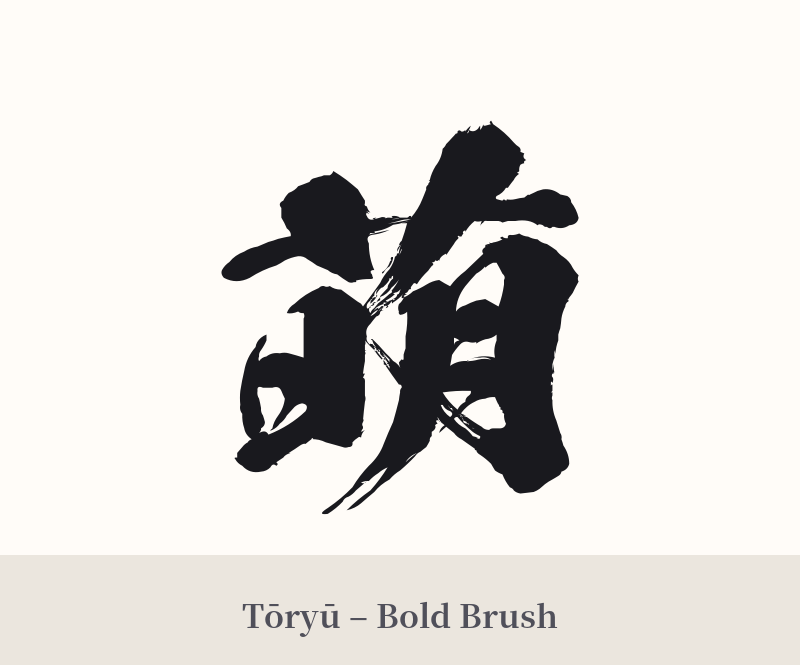
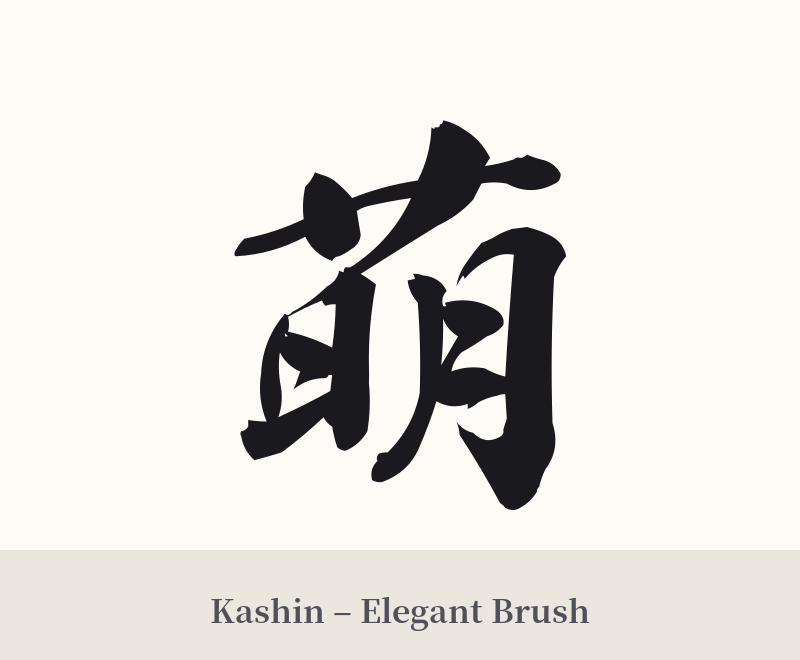
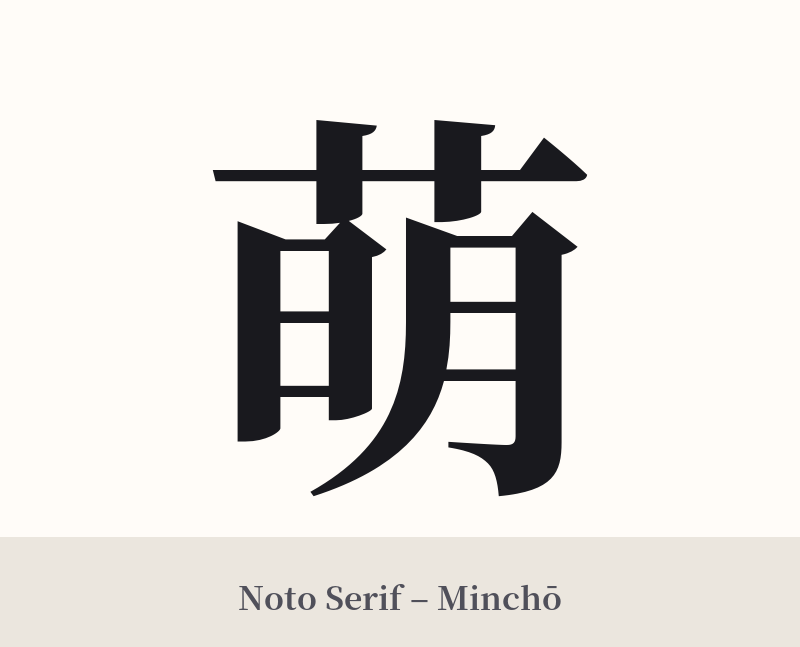
The same kanji can look dramatically different depending on the calligraphy style. Choose a font that matches the mood you want for your tattoo or design.
🎨 Tattoo Suitability
📐 Tattoo Design Guide
Designing a tattoo with 萌 requires a conscious choice between its two distinct meanings: natural sprouting or pop-culture affection.
– Placement: For the 'natural' meaning, delicate placements work well. Consider the wrist, inner ankle, or behind the ear to evoke a sense of something small and new. For the 'moe' meaning, a more visible area like the forearm or calf might be chosen to make a bolder statement about one's interests.
– Font Style: To emphasize the 'sprouting' origin, a flowing, organic script style like Gyosho (semi-cursive) or a delicate Mincho (serif) font is ideal. To embrace the modern 'moe' culture, a bold, graphic, or even pixelated font could be used, reflecting its digital and anime roots.
– Visual Additions: To reinforce the nature theme and avoid the pop-culture association, pair the kanji with imagery like a small green sprout, a single leaf, or a vine wrapping around it. Conversely, if you want to lean into the 'moe' theme, using bright, poppy colors or surrounding it with elements from a favorite anime could be an option.
Comments