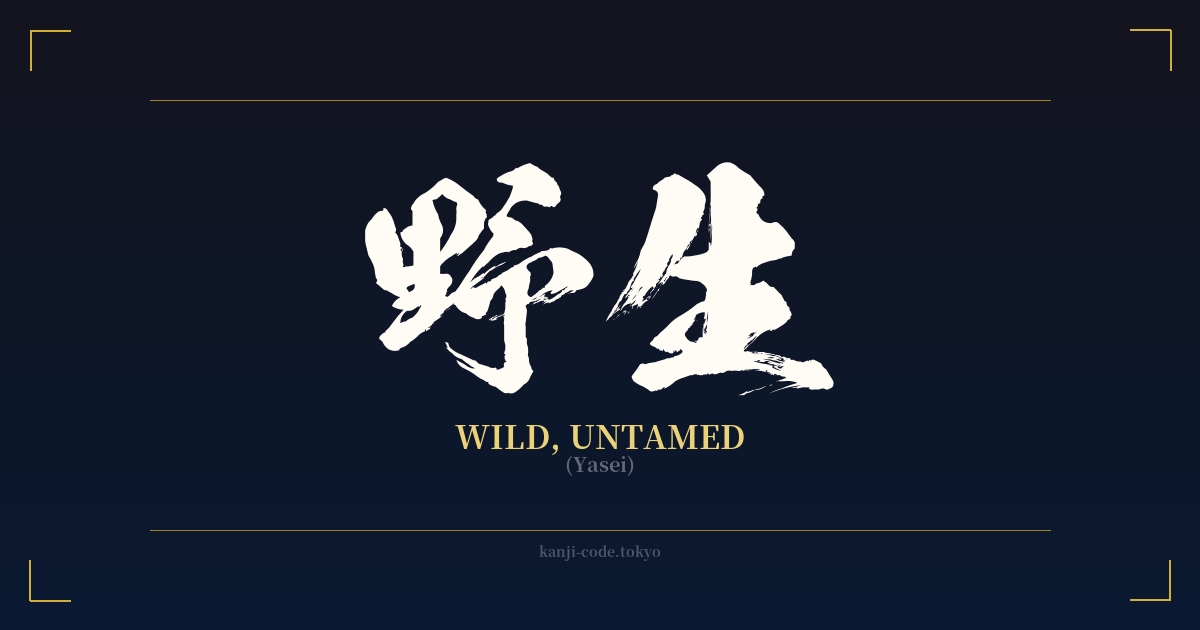
✍️ 野生 (Yasei) — Cultural Context
野生 (yasei) is the Japanese word for 'wild' or 'untamed,' literally translating to 'field life.' This simple combination of characters opens up a profound connection to Japanese philosophy, particularly its reverence for the natural world. It represents everything that exists outside the sphere of human influence—raw, unfiltered, and governed by the laws of nature itself.
In the Shinto tradition, the indigenous faith of Japan, nature is sacred. Mountains, forests, rivers, and even ancient trees are believed to be inhabited by kami (gods or spirits). The 'yasei' world, the untamed wilderness, is not a place to be conquered but a realm of divine power and purity. It stands in stark contrast to the cultivated rice paddy or the structured city, representing a state of primal authenticity.
This concept is most commonly applied to the natural world. 野生動物 (yasei dōbutsu) means 'wild animals,' and 野生植物 (yasei shokubutsu) refers to 'wild plants.' It signifies a being that has not been domesticated or cultivated, retaining its original instincts and characteristics. This is a crucial distinction in a culture that values both meticulous cultivation (like in bonsai or ikebana) and the raw beauty of the untouched.
Metaphorically, 野生 extends to human character. A person described as having a 'yasei' quality possesses a kind of untamed spirit, raw intuition, or primal energy. They might be impulsive, free-spirited, and guided more by instinct than by social convention. The term 野生の勘 (yasei no kan) translates to 'wild intuition' or a 'gut feeling,' a sixth sense that operates beyond the reach of logic. This is often seen as a powerful, admirable trait, suggesting a deep connection to one's true self.
In modern Japanese pop culture, from anime to video games, characters embodying the 'yasei' spirit are common. They are often the wildcards, the powerful warriors who fight with instinct, or the free spirits who challenge the established order. They remind us of the power that lies in embracing our own nature, free from the constraints of society. Therefore, 野生 is more than just 'wild'; it is a celebration of freedom, instinct, and the authentic, untamed life force that flows through all of creation.
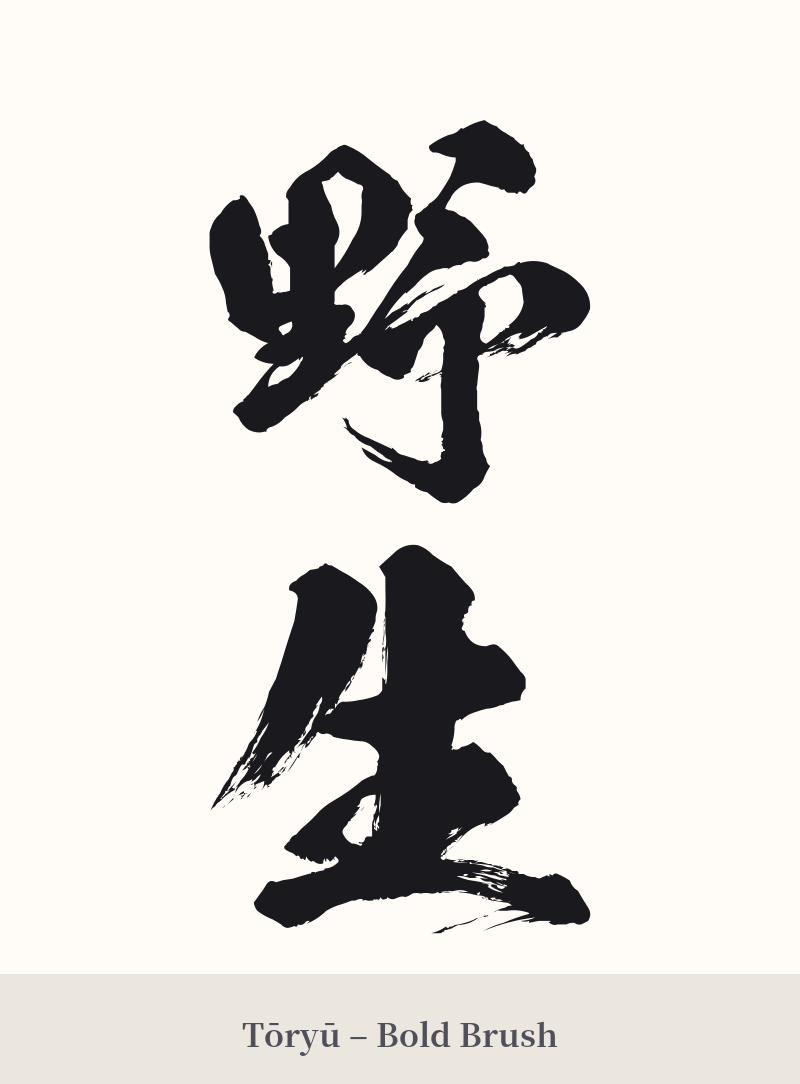
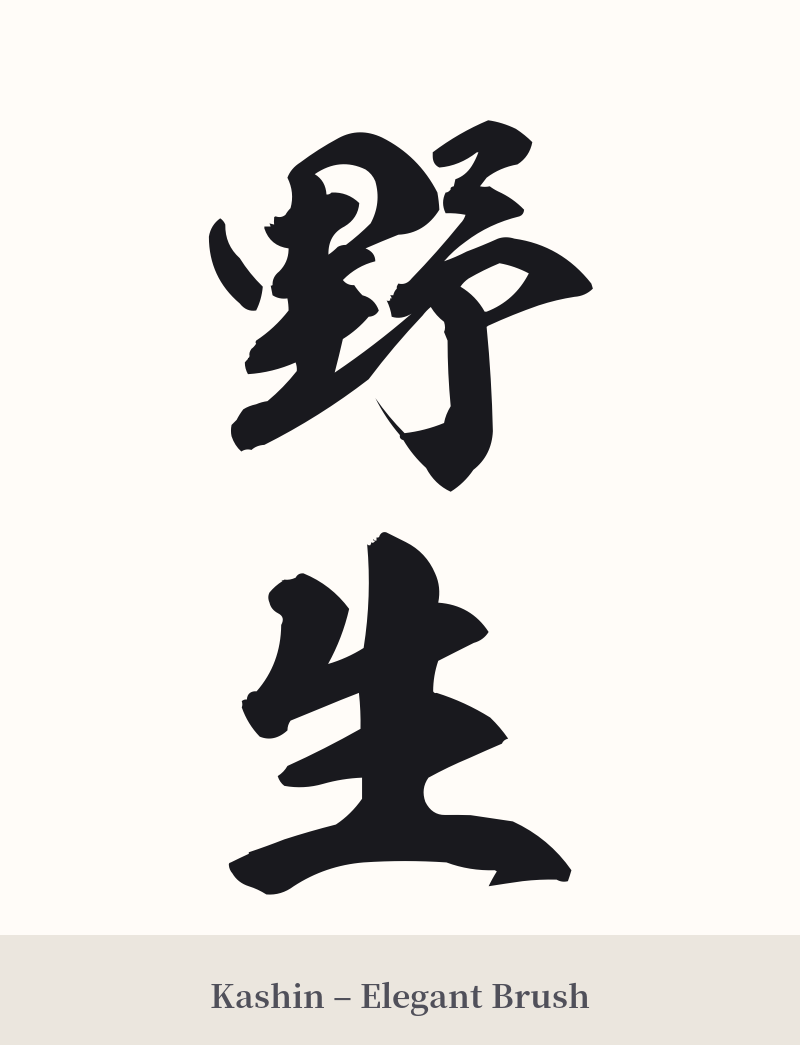
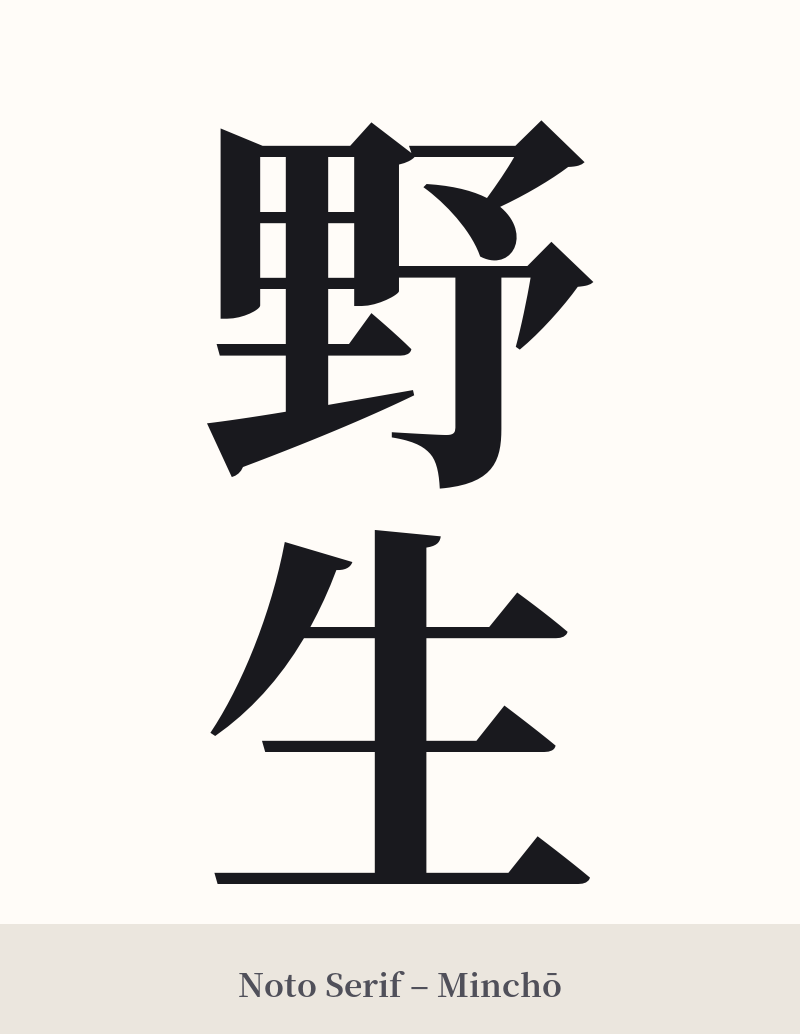
🖌️ Font Styles for 野生
The same kanji can look dramatically different depending on the calligraphy style. Choose a font that matches the mood you want for your tattoo or design.
🎨 Tattoo Suitability
📐 Tattoo Design Guide
The kanji 野生 offers a powerful and aesthetically pleasing option for a tattoo. Its meaning of 'wild' and 'untamed' lends itself to dynamic and expressive designs.
– Placement: A vertical alignment works beautifully on the forearm, calf, or along the spine, creating a sense of natural flow. For a bolder statement, a horizontal placement across the chest, upper back, or collarbone is very effective.
– Font Style: To capture the 'wild' essence, a semi-cursive (gyōsho) or cursive (sōsho) brush script is an excellent choice. The fluid, energetic strokes can mimic the movement of wind or a wild animal. For a more grounded and powerful look, a thick, blocky Kaisho font can emphasize the strength and stability of nature.
– Visual Elements: Consider pairing 野生 with imagery that reinforces its meaning. A background of a misty forest, mountain peaks, a crashing wave, or the silhouette of a wolf or tiger can create a complete and compelling scene. Integrating it with organic elements like bamboo stalks or cherry blossom branches can also add a layer of classic Japanese beauty.
Comments