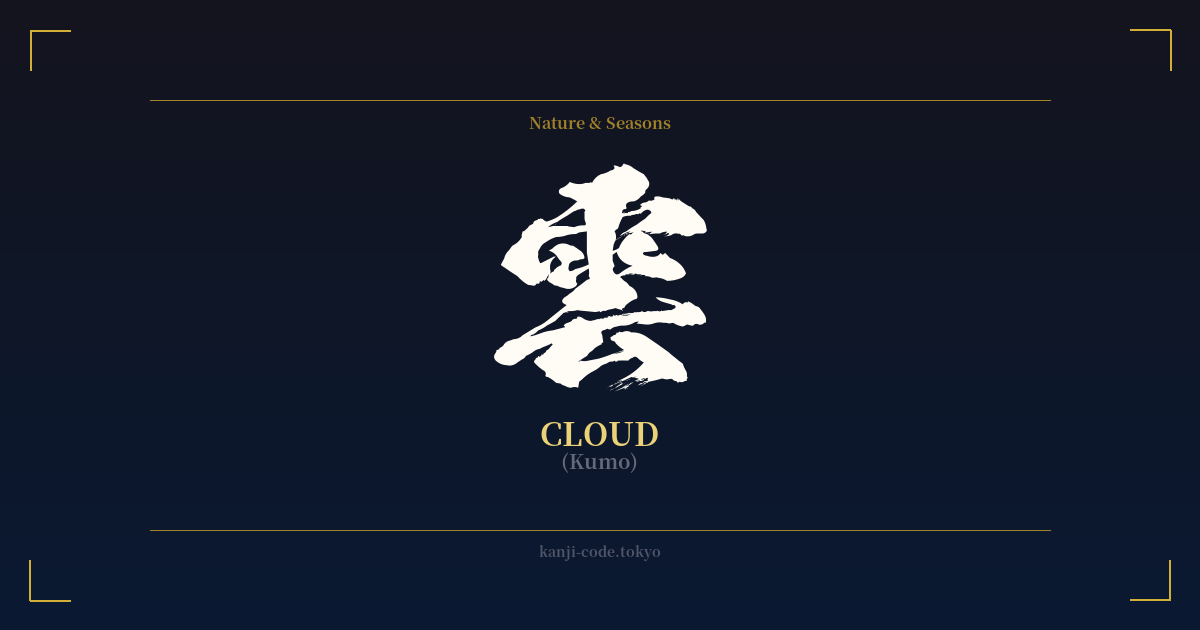
✍️ 雲 (Kumo) — Cultural Context
In Japan, a cloud is never just a cloud. The kanji 雲 (kumo) is a powerful symbol woven deep into the fabric of Japanese culture, art, and philosophy, representing concepts far beyond its simple meteorological meaning.
Originally, the character is a combination of the radical 雨 (ame), meaning 'rain', at the top, and a phonetic component, 云, at the bottom. Interestingly, 云 itself was an ancient pictograph of a swirling cloud. Over time, the 'rain' radical was added to clarify the meaning, creating the character we know today—a perfect visual representation of moisture gathering in the sky.
Culturally, clouds are most famously linked to the Buddhist concept of impermanence (無常, mujō). Like a cloud that forms, drifts, and dissipates without a trace, life itself is seen as transient and ever-changing. This idea is central to the 'floating world' (浮世, ukiyo) aesthetic of the Edo period, where life's fleeting pleasures were to be appreciated in the moment.
Beyond transience, clouds are also a symbol of the divine and the celestial. In traditional Japanese art, gods, immortals, and mythical creatures like dragons are often depicted riding on or emerging from stylized clouds. These auspicious clouds, known as 瑞雲 (zuiun), are considered a sign of good fortune and a connection to the heavens. They act as a bridge between the mortal world and the sacred realm.
This symbolism extended to the samurai class, who sometimes incorporated cloud motifs into their family crests (kamon). For a warrior, a cloud could represent a lofty, unattainable ideal or the ambition to rise above the mundane world. The expression 'a man above the clouds' (雲の上の人, kumo no ue no hito) refers to someone of a high, almost unreachable status.
From haiku poetry capturing a fleeting moment to the stylized clouds separating scenes in ukiyo-e woodblock prints, 雲 (kumo) is a versatile and evocative symbol. It embodies a quintessential Japanese aesthetic: finding profound beauty in the simple, the natural, and the transient.
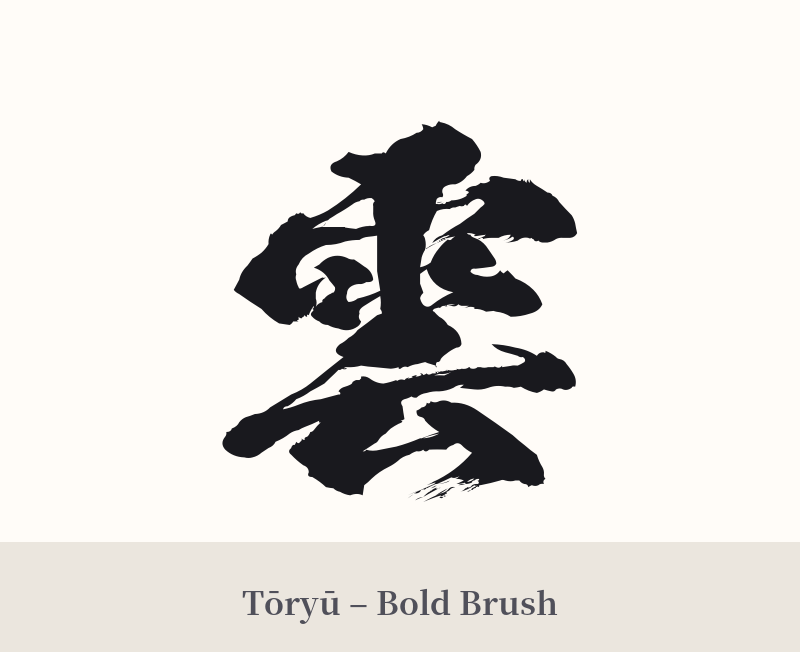
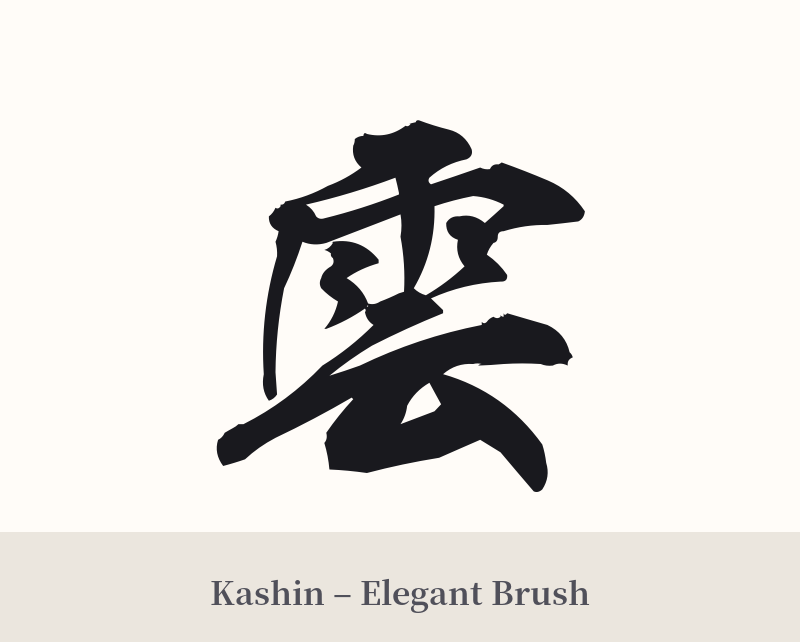
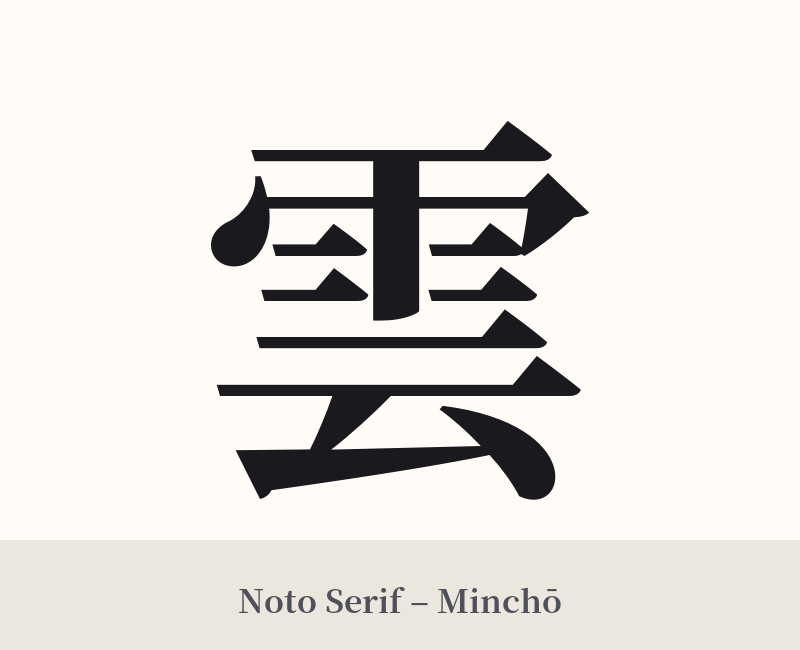
🖌️ Font Styles for 雲
The same kanji can look dramatically different depending on the calligraphy style. Choose a font that matches the mood you want for your tattoo or design.
🎨 Tattoo Suitability
📐 Tattoo Design Guide
The kanji 雲 (kumo) offers a wealth of design possibilities due to its balanced form and rich symbolism.
– Placement: Consider areas that suggest floating or movement, such as the shoulder blade, forearm, or calf. The back of the neck is another excellent spot, symbolizing a connection to higher thoughts or realms.
– Font Style: For a traditional feel, a flowing, semi-cursive calligraphy (gyōsho) style can mimic the soft, drifting nature of a cloud. For a more modern and stark look, a clean, architectural Mincho or Gothic font can provide a strong contrast.
– Visual Elements: This kanji pairs beautifully with other Japanese motifs. You can have it emerge from traditional Japanese cloud patterns (kasumi), place it alongside a dragon (龍) or a moon (月), or have it float above a mountain (山). It can also serve as a background element, partially obscured, to create a sense of depth and mystery.
Comments