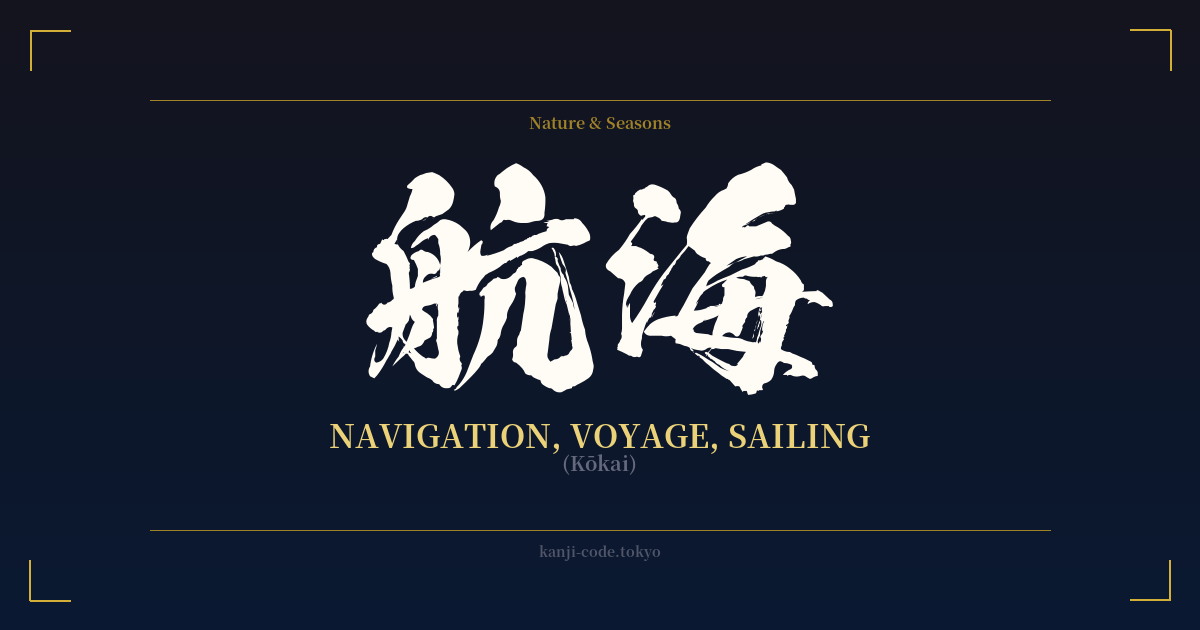
✍️ 航海 (Kōkai) — Cultural Context
航海 (Kōkai) literally translates to “sailing the sea.” It is a word deeply embedded in the identity of Japan, an island nation whose history, culture, and survival have always been intrinsically linked to the vast oceans surrounding it. From the earliest seafaring traders and fishermen to the complex naval strategies of feudal lords, the concept of Kōkai is a cornerstone of the Japanese experience.
The term evokes the spirit of adventure and the courage to face the unknown. Historically, it is most famously associated with the 大航海時代 (Dai-kōkai-jidai), Japan’s “Age of Great Navigation.” This period saw Japanese ships, known as Red Seal Ships (朱印船, Shuinsen), venture across Southeast Asia for trade, a brief but vibrant era of international exchange before the nation entered its long period of self-imposed isolation, Sakoku.
Beyond its literal meaning, 航海 is a powerful and widely used metaphor. It represents the journey of life itself—a personal voyage filled with unpredictable currents, storms, and the hope of discovering new horizons. To embark on a Kōkai is to set a course, navigate by one’s own stars, and persevere through adversity. This makes it a popular theme in literature, film, and art, symbolizing personal growth, ambition, and the relentless pursuit of a goal.
In modern Japan, you might hear Kōkai used to describe navigating the complexities of the business world or charting a new path in one's career. The popular manga and anime series One Piece is a perfect modern embodiment of Kōkai, a grand, epic tale of a pirate crew's voyage across the seas in search of treasure and freedom. This has cemented the word’s adventurous and romantic connotations for a new generation.
Ultimately, 航海 captures a universal human desire: the drive to explore, to overcome, and to find one's own way across the great, mysterious sea of existence. It is not just about travel; it is about the transformation that occurs during the journey.
🖌️ Font Styles for 航海
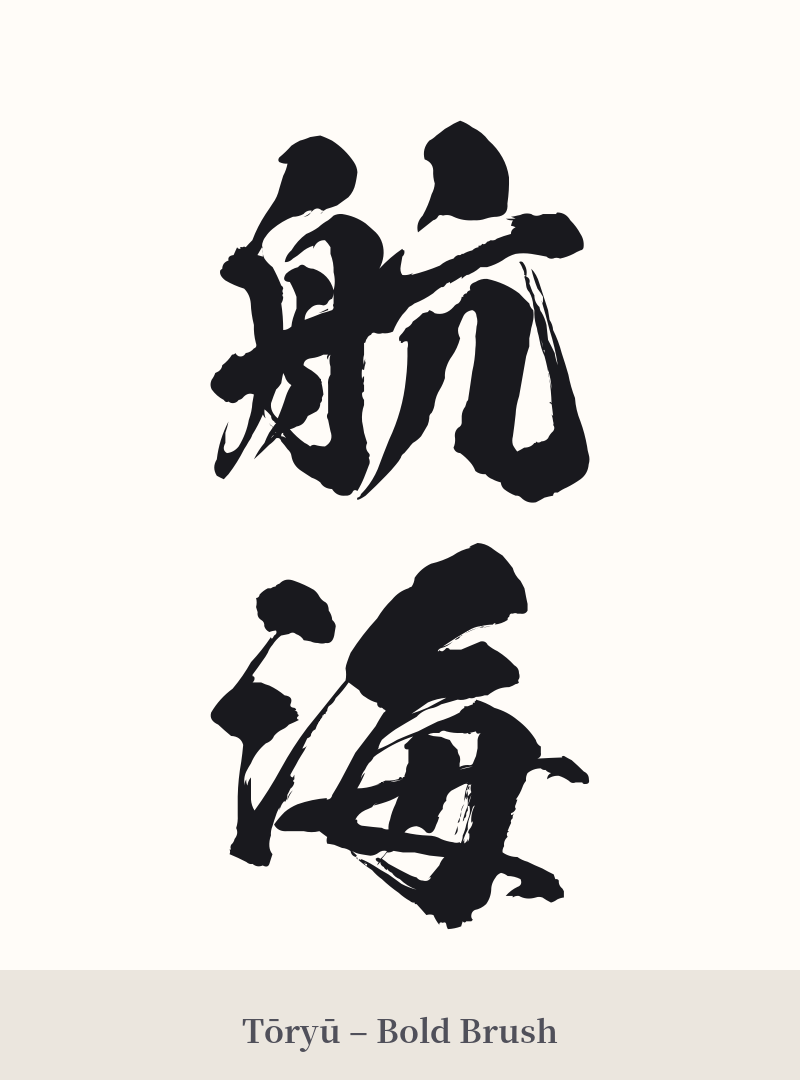
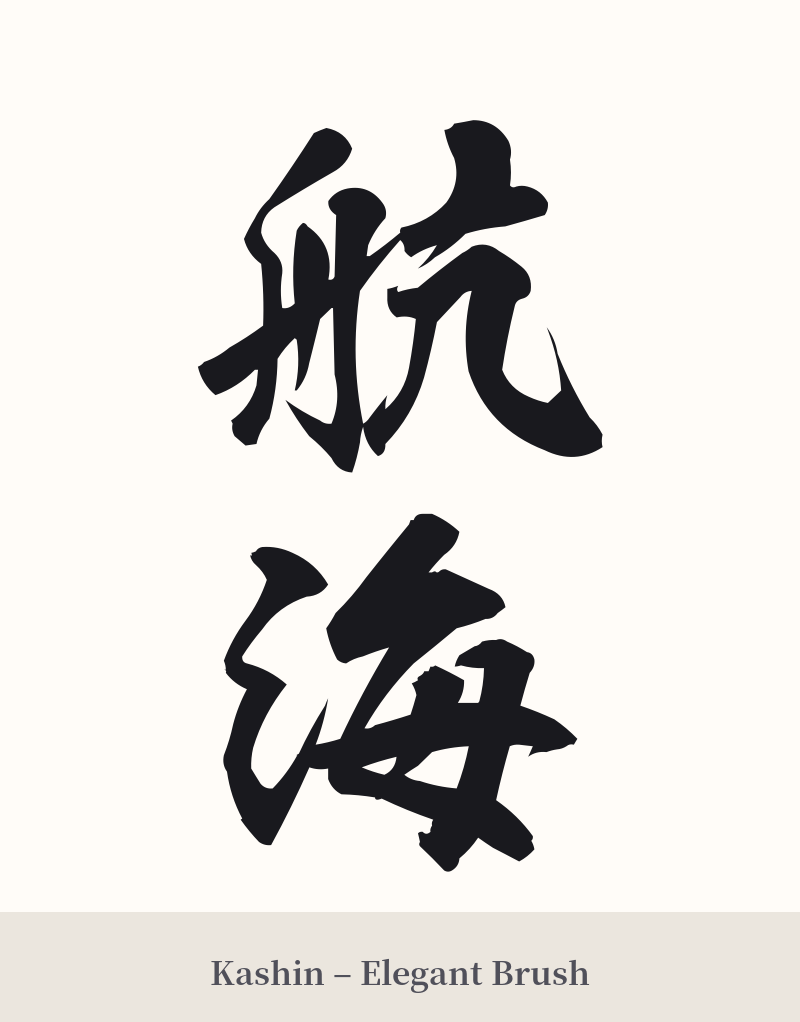
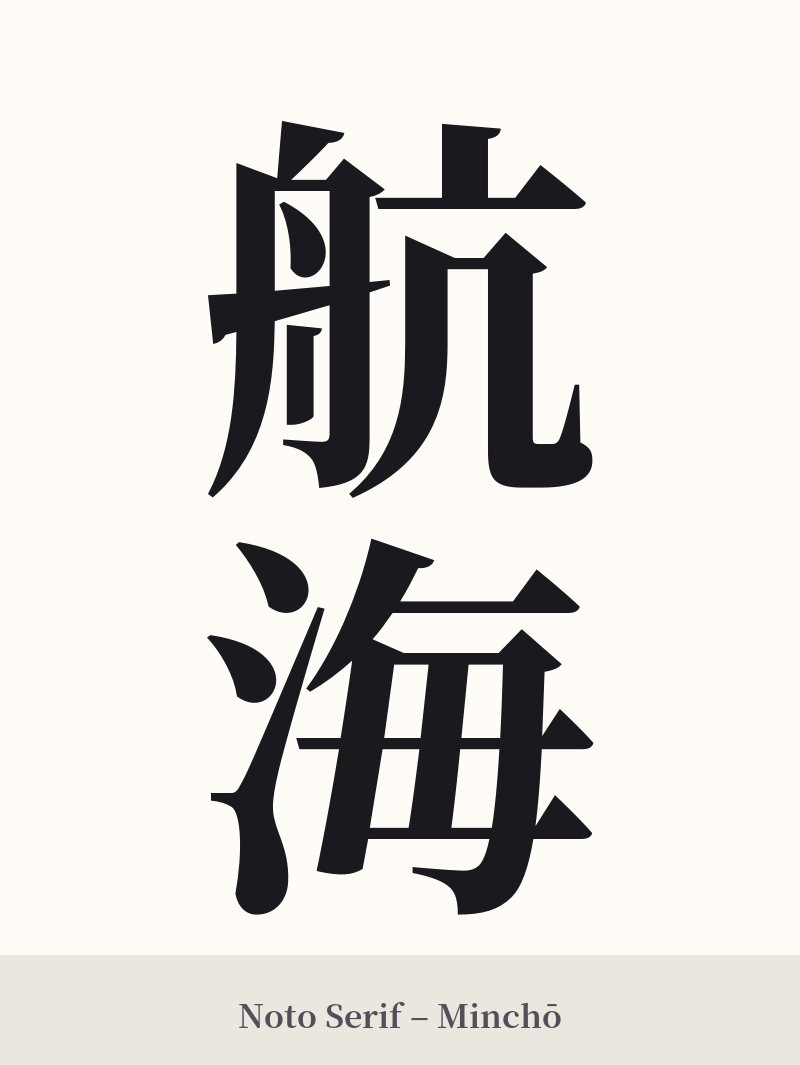
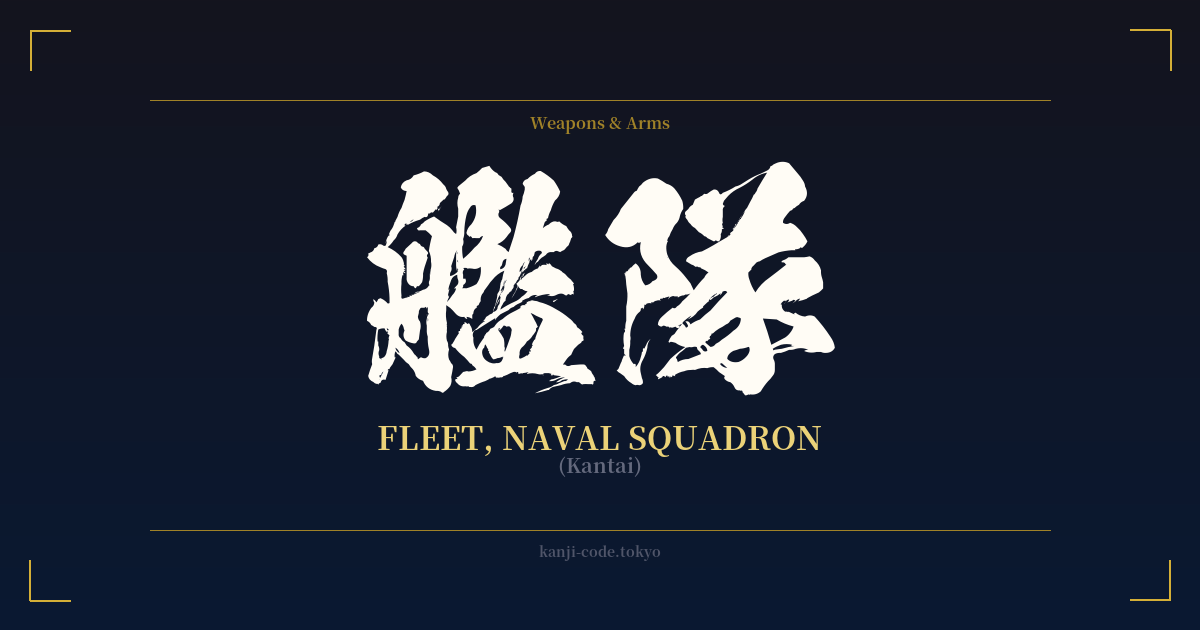
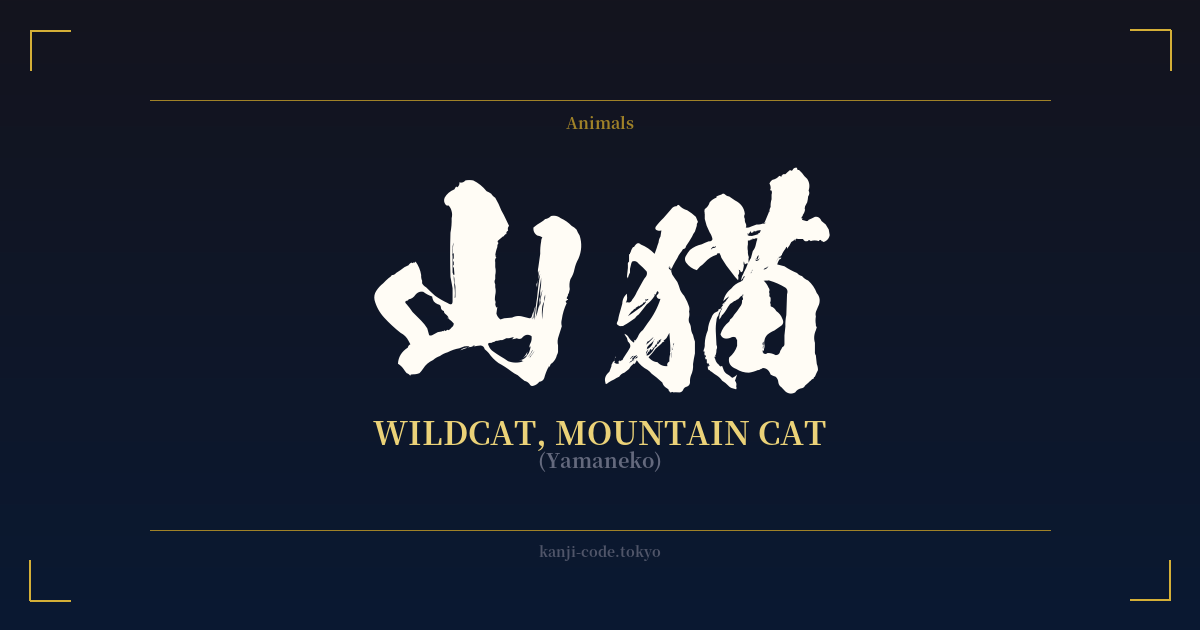
The same kanji can look dramatically different depending on the calligraphy style. Choose a font that matches the mood you want for your tattoo or design.
🎨 Tattoo Suitability
📐 Tattoo Design Guide
航海 offers a balanced and meaningful design for a tattoo, suitable for various placements and styles.
– Placement Suggestions: For a vertical arrangement, it works well along the forearm, the calf, or down the spine. A horizontal layout is powerful across the chest, upper back, or on the inner bicep.
– Font Styles: A strong, crisp Kaisho (block script) emphasizes the determination and stability required for a long voyage. For a more fluid feel, a Gyosho (semi-cursive) style can evoke the movement of waves and wind, adding a dynamic quality to the design.
– Visual Tips: To enhance the theme, consider integrating the kanji with other maritime imagery. Subtle additions like a navigator's compass, a traditional ship's wheel, a constellation used for sailing, or stylized waves inspired by classic ukiyo-e prints can create a more personal and visually rich piece.
Comments