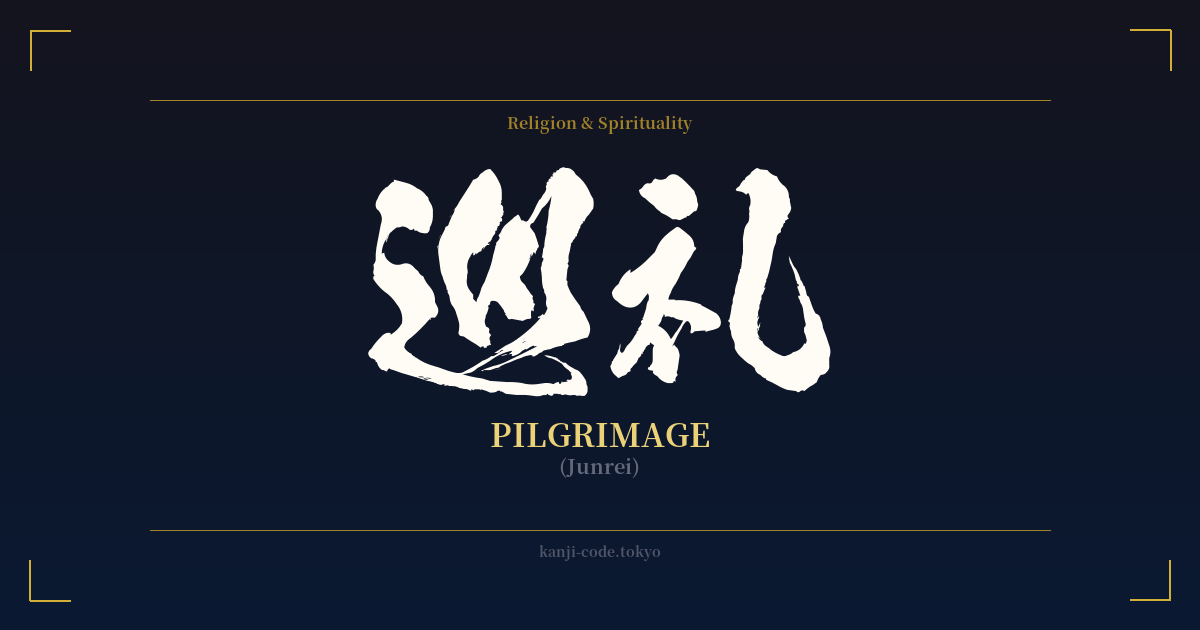
✍️ 巡礼 (Junrei) — Cultural Context
The word 巡礼 (Junrei) translates to 'pilgrimage,' but its meaning in Japanese culture runs far deeper than a simple journey. It represents a sacred quest, a path of devotion, and a journey of transformation that is etched into the very landscape and spiritual consciousness of Japan.
Historically, pilgrimage in Japan has been a cornerstone of religious practice, particularly within Buddhism and Shintoism. The most famous of these is the Shikoku Henro, or the 88 Temple Pilgrimage, a grueling 1,200-kilometer circular route on the island of Shikoku. Pilgrims, known as o-henro-san, traditionally don white clothing (byakue), a conical sedge hat (sugegasa), and carry a walking staff (kongōzue), said to embody the great monk Kōbō Daishi, who guides them on their journey. This physical trek is a metaphor for the spiritual journey towards enlightenment, with each temple stop marking a step in cleansing worldly passions.
Another renowned pilgrimage route is the Kumano Kodō, a series of ancient trails winding through the mountainous Kii Peninsula. For over a thousand years, everyone from emperors to commoners has walked these paths to reach the three grand shrines of Kumano: Hongu Taisha, Hayatama Taisha, and Nachi Taisha. The journey itself, through dense forests and over rugged peaks, is considered an integral part of the purification process.
The kanji themselves perfectly encapsulate this concept. 巡 (Jun) means 'to go around' or 'patrol,' depicting the physical act of making a circuit of sacred sites. 礼 (Rei) means 'ceremony,' 'bow,' or 'thanks,' signifying the reverence, gratitude, and respect paid at each location. Together, 巡礼 is not just wandering; it is 'going around to show reverence.'
In modern times, the concept of Junrei has expanded. While the traditional religious pilgrimages are more popular than ever, the term is also used for secular quests. 'Seichi Junrei' (聖地巡礼), or 'pilgrimage to a sacred place,' now popularly refers to fans visiting real-world locations featured in their favorite anime, manga, or video games. This modern usage demonstrates the enduring power of the pilgrimage concept: a journey to a place of personal significance, seeking a deeper connection with something one holds dear.
🖌️ Font Styles for 巡礼
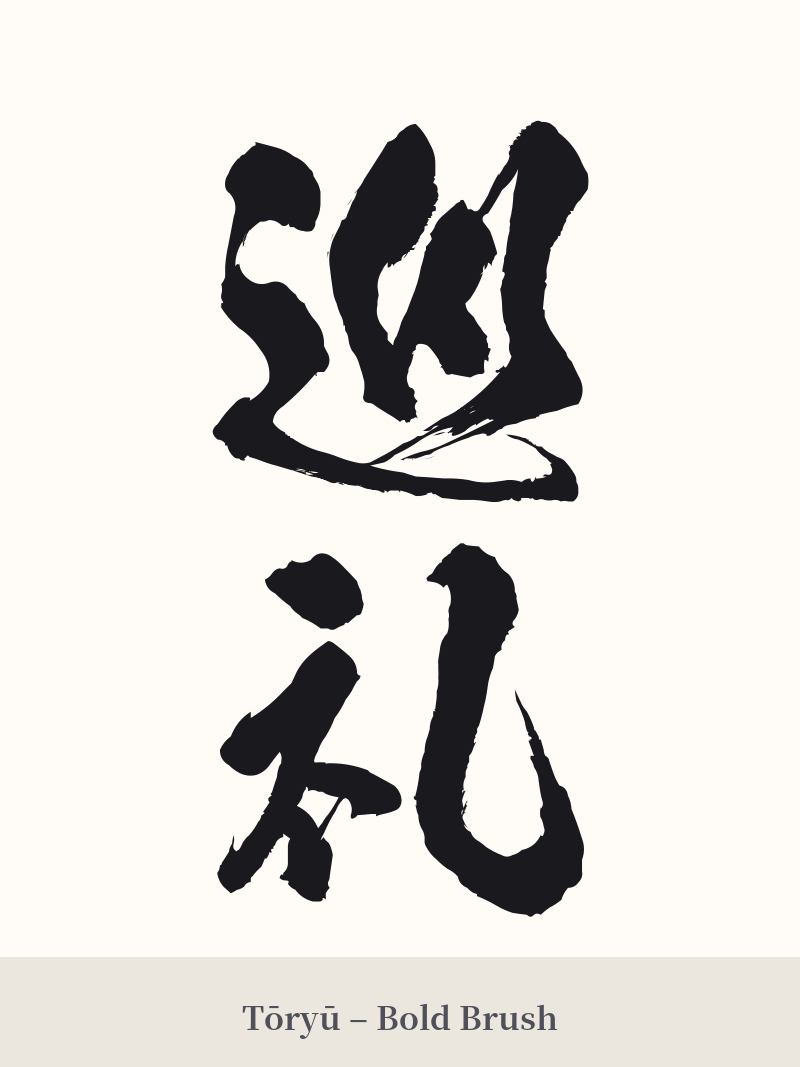
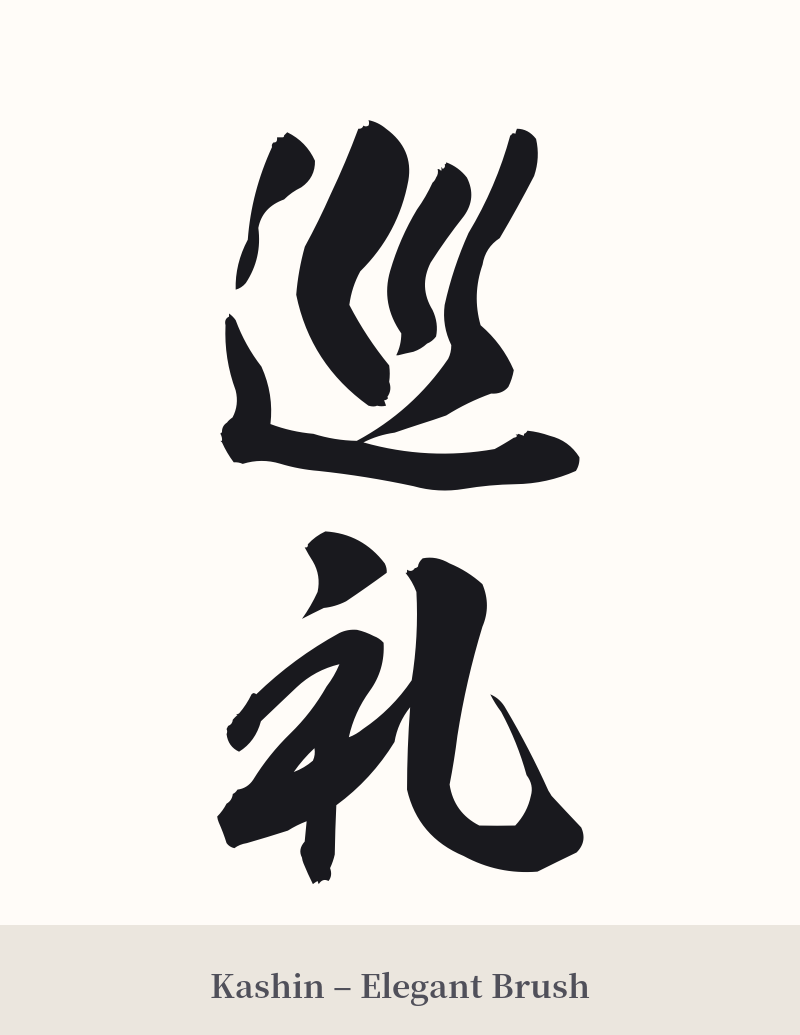
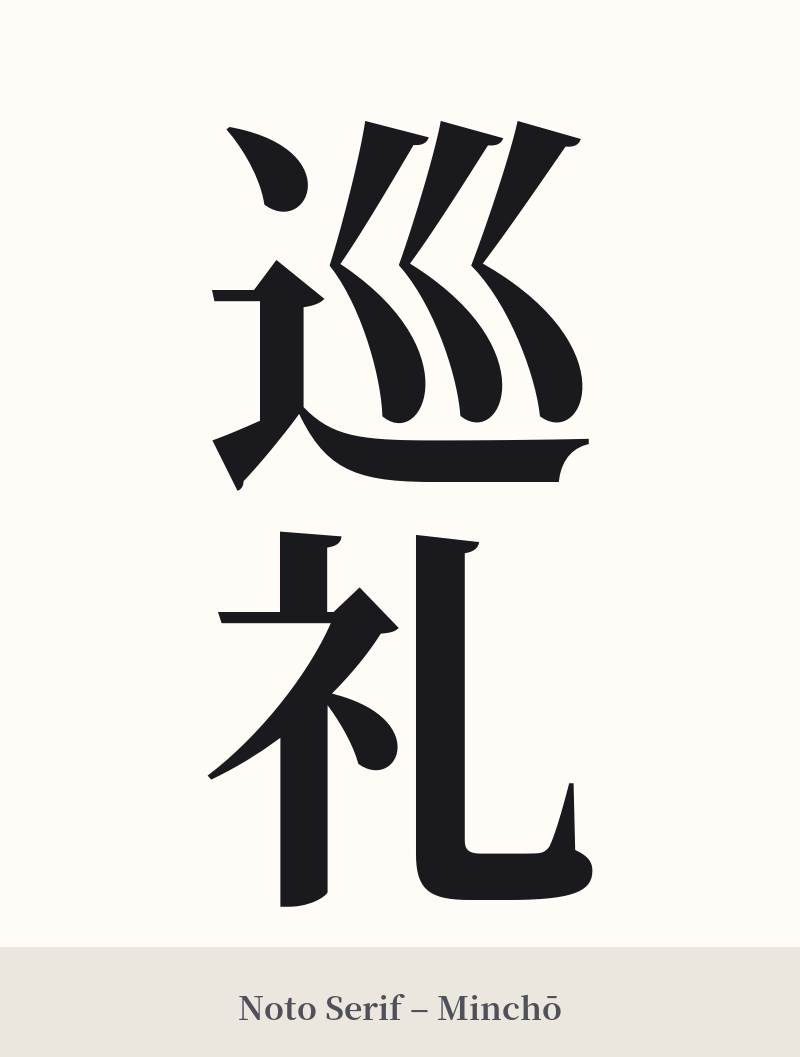
The same kanji can look dramatically different depending on the calligraphy style. Choose a font that matches the mood you want for your tattoo or design.
🎨 Tattoo Suitability
📐 Tattoo Design Guide
A 巡礼 (Junrei) tattoo is about representing a journey, so placement and style should reflect this narrative.
– Placement: Vertical arrangements work exceptionally well. Placed along the spine, forearm, or calf, it can symbolize the path you walk. A horizontal placement across the chest or upper back can also be powerful, representing the journey's breadth.
– Font Style: A traditional, flowing script like Gyosho (semi-cursive) or Sosho (cursive) can evoke the movement and long history of pilgrimage. For a more stoic and grounded feel, a bold Kaisho (block) script is an excellent choice. A minimalist Mincho style can suit a more modern, personal interpretation of the journey.
– Visual Tips: Consider integrating the kanji with other symbolic imagery. It could be designed to look like a goshuin (a red temple stamp), incorporating the characters within a stamped frame. You could also pair it with a simple line drawing of a torii gate, a lotus flower, or a winding path to enhance the theme of the journey.
Comments