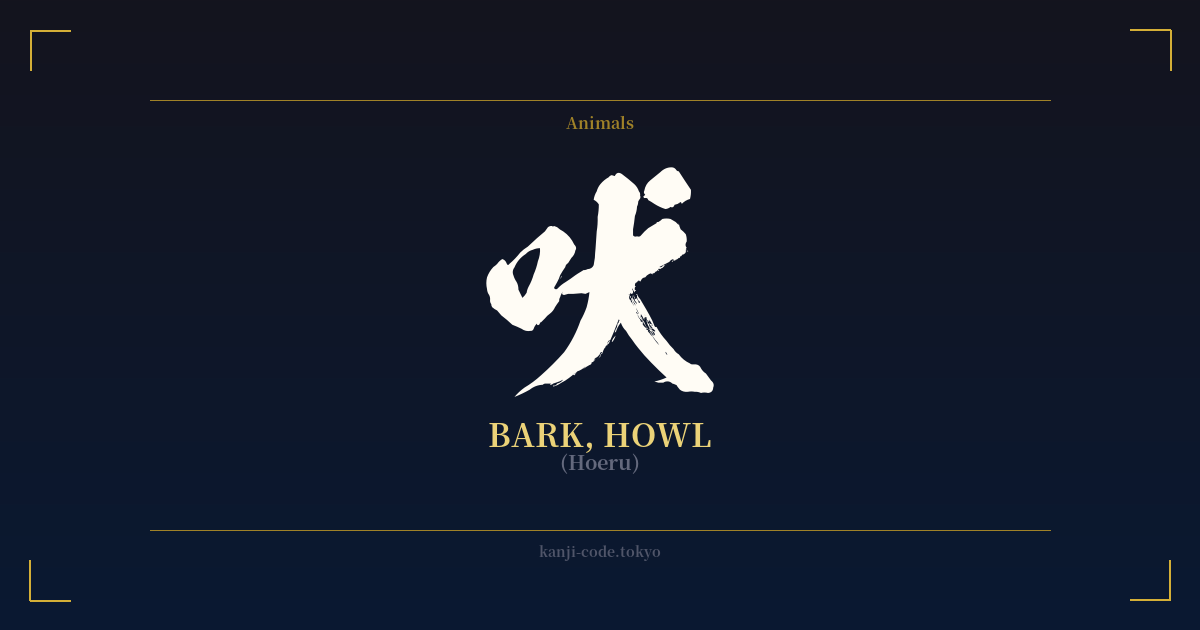
✍️ 吠 (Hoeru) — Cultural Context
The kanji 吠 (hoeru) is a powerful and direct character that captures the raw, primal sound of an animal's cry. Its origin is beautifully transparent: it is a combination of the radical 口 (kuchi), meaning 'mouth,' and the character 犬 (inu), meaning 'dog.' Together, they form a vivid image of a dog letting out a sound from its mouth, perfectly encapsulating the act of barking.
In Japanese, the verb 吠える (hoeru) is most commonly used to describe a dog's bark. However, its meaning extends to the deeper, more resonant cries of other animals, such as the howl of a wolf (狼が吠える – ōkami ga hoeru) or the roar of a lion (ライオンが吠える – raion ga hoeru). This versatility gives the character a wild, untamed quality that transcends a simple domestic sound.
Beyond its literal use, 吠 carries significant metaphorical weight. It can be used to describe a person yelling, shouting, or bellowing in anger or frustration. In this context, it often has a slightly negative or crude connotation, implying a loss of control and a descent into more animalistic expression. It’s the sound of an impassioned, unfiltered outburst rather than a reasoned argument.
One of the most evocative cultural phrases using this kanji is 「負け犬の遠吠え」(makeinu no tōboe), which translates to 'the distant howl of a losing dog.' This idiom describes someone who complains, boasts, or makes empty threats from a safe distance after having already been defeated. It paints a picture of impotent defiance, a cry that has lost its power, highlighting the nuanced emotional range the character can represent—from a fierce roar of dominance to a pathetic whimper of loss.
In literature and media, 吠 is used to set a mood of wildness, danger, or loneliness. A lone howl can signify isolation in a vast wilderness, while a chorus of barks can signal impending conflict. It is a character of action and sound, evoking an immediate, sensory experience for the reader or viewer, making it a dynamic element in storytelling.
🖌️ Font Styles for 吠
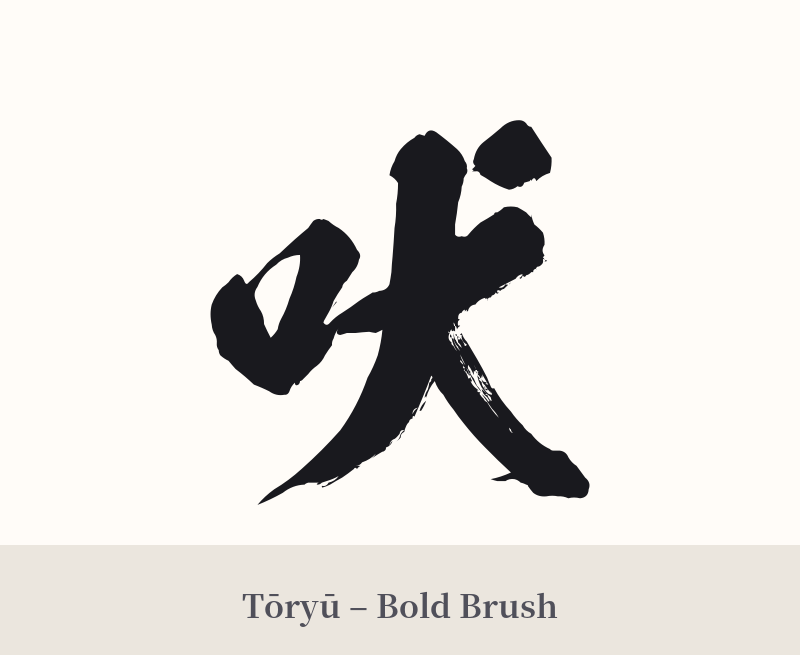
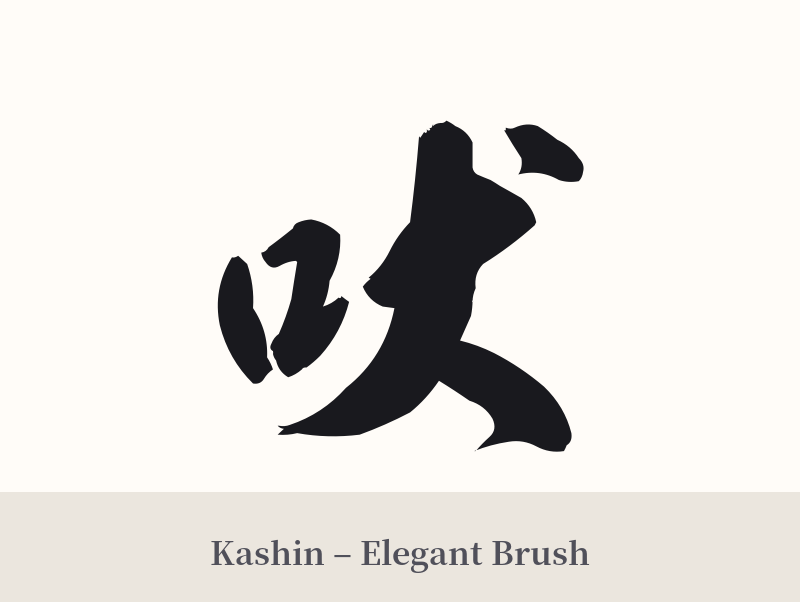
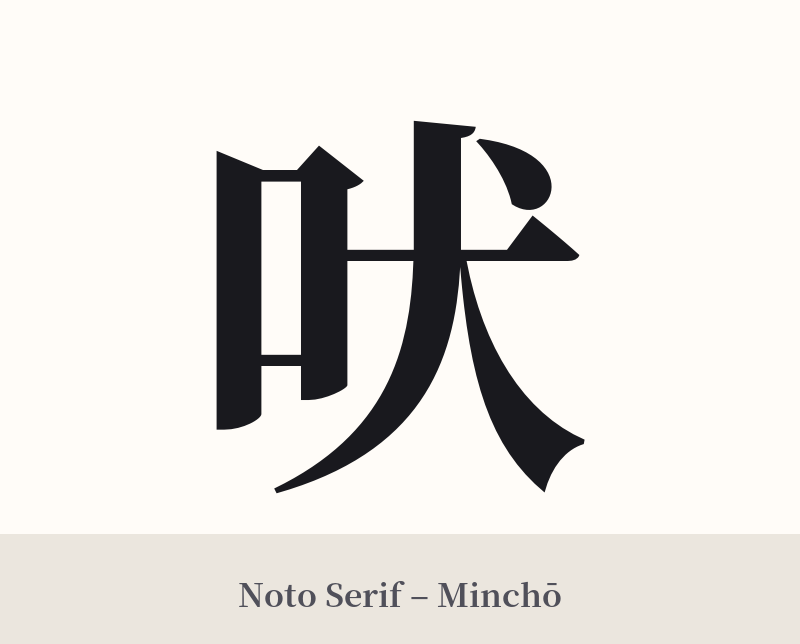
The same kanji can look dramatically different depending on the calligraphy style. Choose a font that matches the mood you want for your tattoo or design.
🎨 Tattoo Suitability
📐 Tattoo Design Guide
A tattoo of 吠 is a bold statement that relies on style and context to convey its intended meaning. It's less about quiet contemplation and more about raw, expressive energy.
– Placement: Consider areas that emphasize action or voice. The forearm, calf, or ribs are excellent choices, allowing the character to feel dynamic. For a more subtle and personal take, a small version behind the ear or on the wrist could symbolize a hidden or internal 'roar.'
– Font Style: The font is crucial for 吠. A rough, energetic semi-cursive (gyōsho) or fully cursive (sōsho) script can mimic the untamed flow of a howl. A bold, angular block script (kaisho) with sharp edges can capture the abruptness of a bark. Avoid overly delicate or clean fonts, which would clash with the character's primal nature.
– Visual Tips: Because its meaning is so literal, 吠 benefits greatly from being paired with other imagery. Consider integrating it with a design of a wolf, a mythical kitsune, a roaring beast, or even abstract sound waves emanating from the character itself. This provides the necessary context and transforms it from a simple word into a complete artistic concept.
Comments