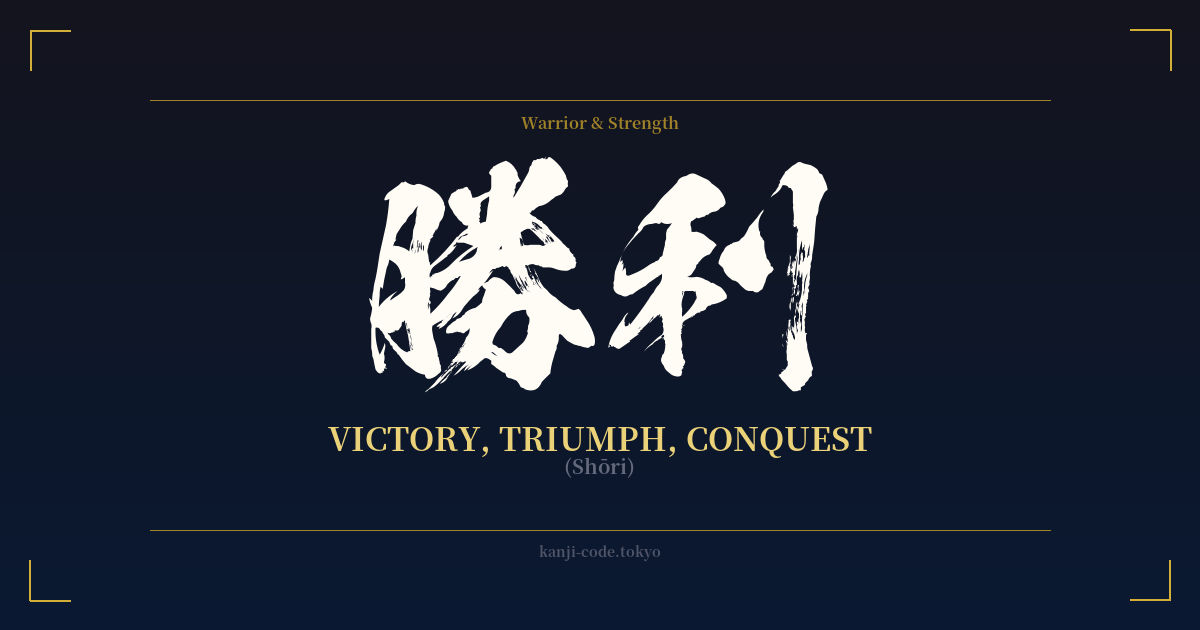
✍️ 勝利 (Shōri) — Cultural Context
勝利 (Shōri) is the Japanese word for 'victory,' but its meaning extends far beyond the simple act of winning. It embodies the concept of a hard-won triumph, the culmination of struggle, strategy, and unwavering spirit. This is not a term for a minor win; it signifies a significant conquest, whether on the battlefield, in a sports arena, or within the landscape of one's own personal challenges.
Historically, the idea of Shōri is deeply intertwined with the ethos of the samurai and the code of Bushido. For a warrior, victory was not merely about survival but about honor, skill, and proving the superiority of one's training and resolve. It was an outcome achieved through meticulous preparation and flawless execution. This concept implies that true victory is earned through merit and effort, not granted by luck. It’s the result of a process, often arduous and fraught with difficulty.
The kanji themselves reveal a deeper layer of meaning. The first character, 勝 (shō), means 'to win' or 'prevail.' It is the core concept of overcoming an opponent. The second character, 利 (ri), means 'advantage,' 'benefit,' or 'profit.' Together, they form a more nuanced idea: 'to prevail and gain the advantage.' This suggests a strategic victory, one that yields a tangible, positive result and secures a better position for the future. It’s not just about defeating an enemy, but about achieving a meaningful and beneficial outcome.
In modern Japan, Shōri remains a potent and widely used term. You'll hear it chanted by supporters at baseball games and soccer matches. Corporate teams use it as a motivational slogan, striving for victory in the marketplace. It's a cornerstone of storytelling in anime and manga, where protagonists often endure immense trials on their path to finally achieving Shōri against overwhelming odds.
For an individual, this word can represent a deeply personal journey. It can symbolize a triumph over illness, the overcoming of addiction, conquering self-doubt, or achieving a lifelong dream. It is a powerful declaration of resilience and strength. To embrace the concept of Shōri is to acknowledge the struggle as a necessary part of the win, making the eventual success all the more profound.
🖌️ Font Styles for 勝利
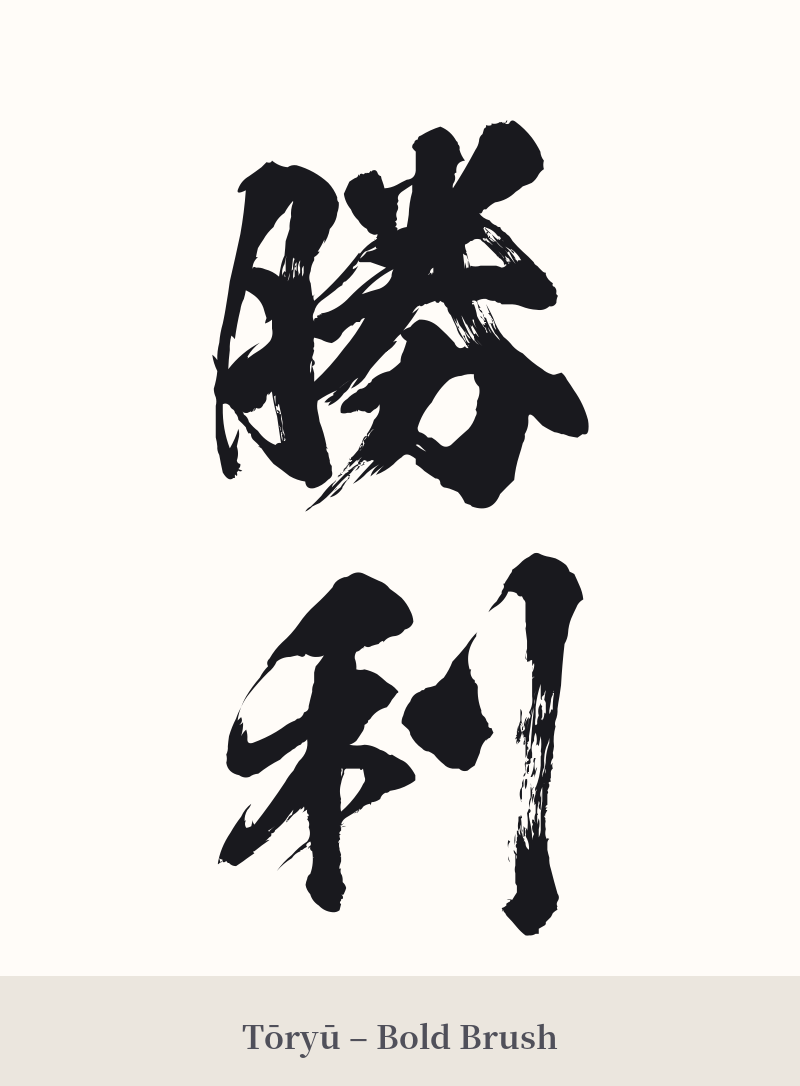
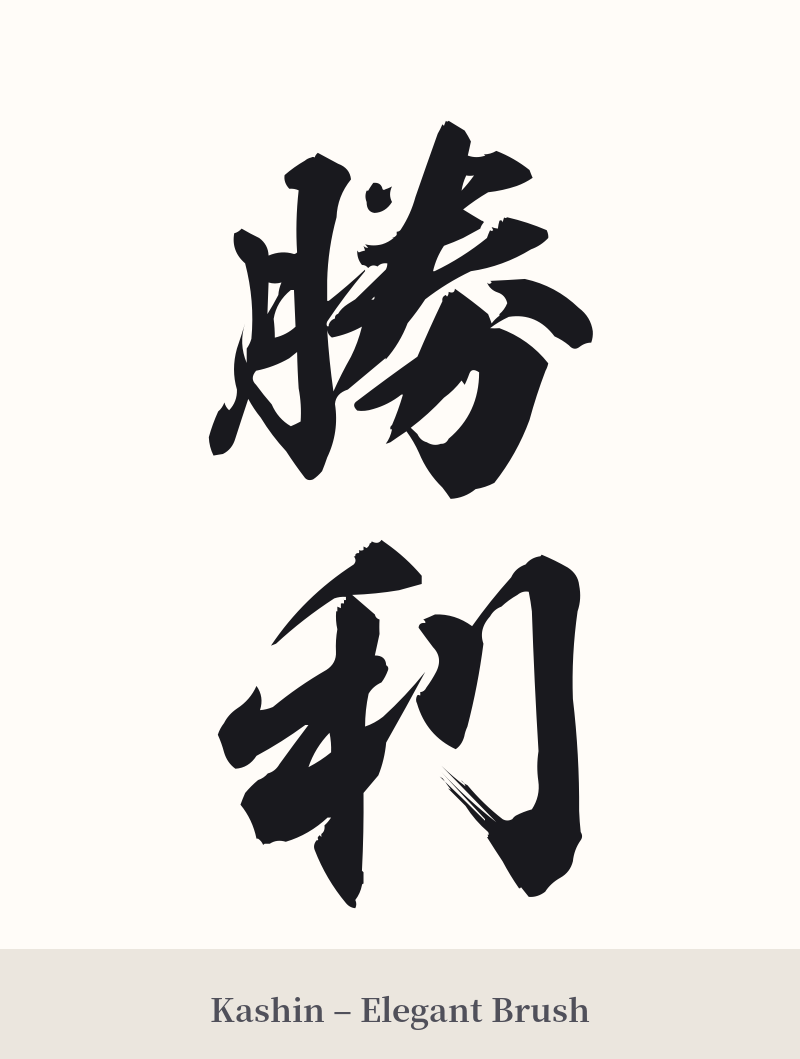
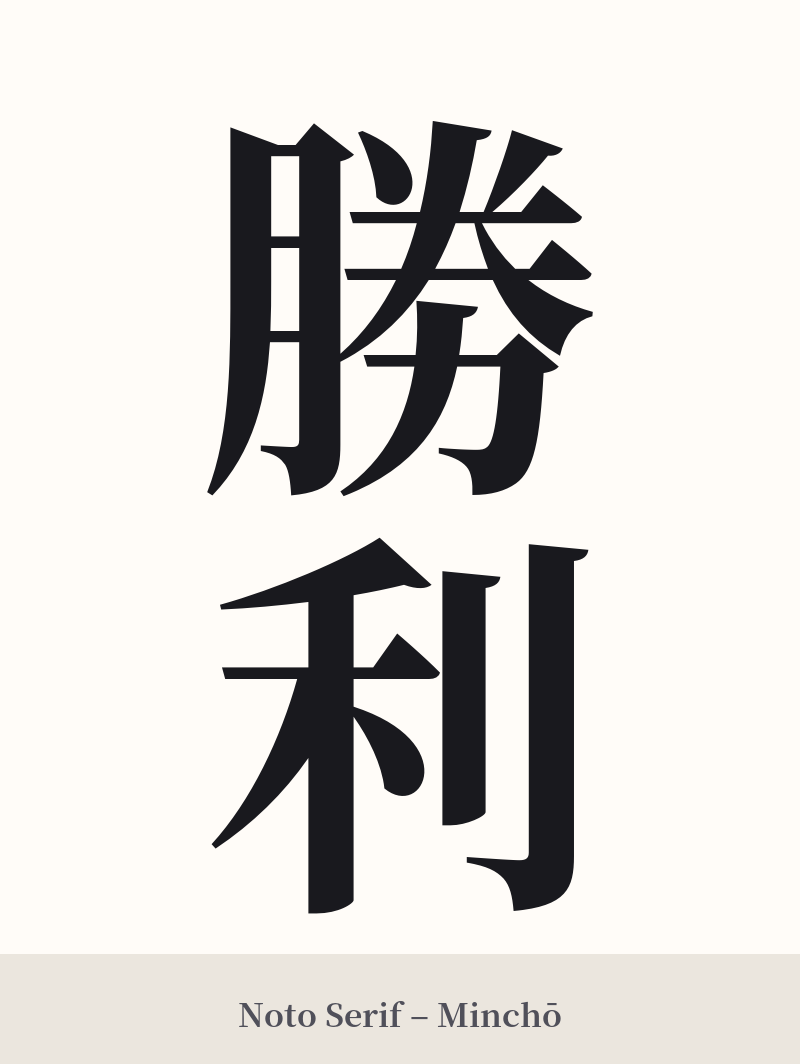
The same kanji can look dramatically different depending on the calligraphy style. Choose a font that matches the mood you want for your tattoo or design.
🎨 Tattoo Suitability
📐 Tattoo Design Guide
A 勝利 (Shōri) tattoo is a bold statement of triumph and resilience. Its design should reflect the power of its meaning.
– Placement: Vertical alignment is classic and powerful, looking excellent down the forearm, along the bicep, on the calf, or flanking the spine. Horizontal placement works well across the chest, upper back, or on the inner forearm.
– Font Style: The style of calligraphy can dramatically alter the feel. A dynamic, semi-cursive brush script (Gyōsho) can capture the energy and struggle of the fight. A bold, angular block script (Kaisho) can convey a sense of unshakable determination and finality.
– Visual Tips: To avoid a generic look, collaborate with your artist on a custom script. Consider integrating the kanji with other symbolic imagery, such as a koi fish swimming upstream (representing perseverance), a dragon (power and good fortune), or a subtle enso circle to symbolize the enlightenment that comes from the struggle. Ensure the characters have enough negative space between them to prevent blurring over time, especially for smaller tattoos.
Comments