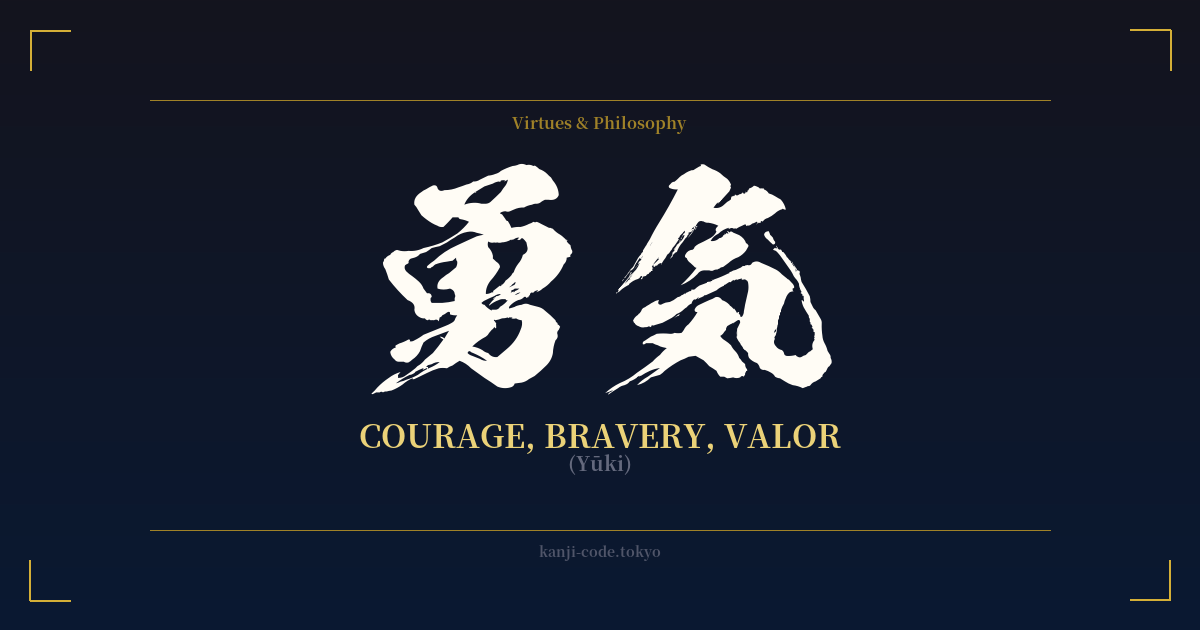
✍️ 勇気 (Yūki) — Cultural Context
勇気 (Yūki) is one of the most direct and powerful Japanese words for courage. It's a term that resonates deeply within Japanese culture, embodying not just the physical bravery of a warrior but also the moral and spiritual fortitude required to face any of life's challenges.
The word is a beautiful combination of two distinct kanji. The first, 勇 (yū), signifies bravery, heroism, and valor. It paints a picture of someone standing firm and resolute. The second character, 気 (ki), is a cornerstone of East Asian philosophy, representing spirit, energy, mind, and life force. When combined, 勇気 literally translates to a 'brave spirit' or 'courageous energy.'
This isn't just about a momentary act of boldness. Yūki implies an internal state of being. It's the courage you muster to speak the truth when it's difficult, the strength to persevere through illness or personal loss, and the resolve to start a new venture despite the risks. In Japanese, the common phrase is 「勇気を出す」(yūki o dasu), which means 'to bring out one's courage,' suggesting it's a power that resides within everyone, waiting to be summoned.
Historically, the concept of yūki was central to the samurai code of Bushido, where it was listed as one of the essential virtues. However, a samurai's courage was not reckless; it was tempered by righteousness (義, gi) and compassion (仁, jin). It was the courage to do the right thing, even at great personal cost. This nuanced understanding prevents yūki from being a purely aggressive or martial concept.
In modern Japan, yūki remains a cherished value. It's a word you'll hear in classrooms to encourage a shy student, in business meetings to inspire a team, and throughout countless anime, manga, and films. Characters often embark on journeys to find their yūki, making it a universally relatable theme of personal growth and empowerment. It represents the quiet, internal decision to face fear and act in spite of it, making it a timeless and deeply human concept.
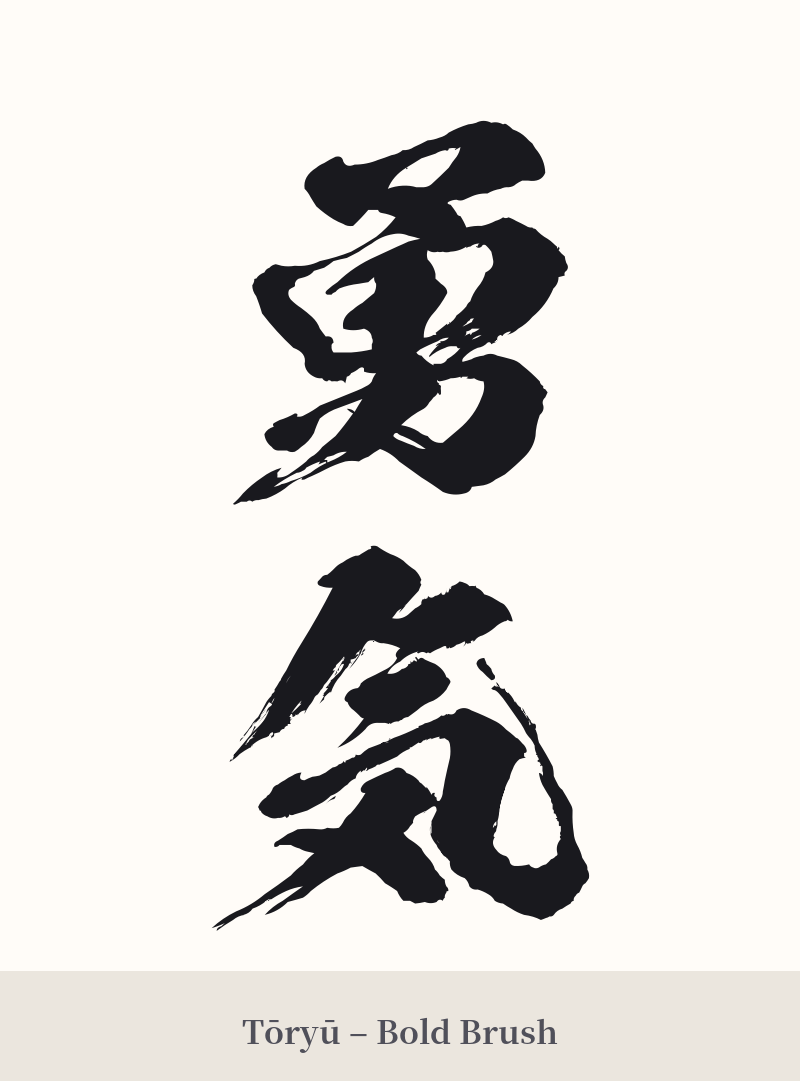
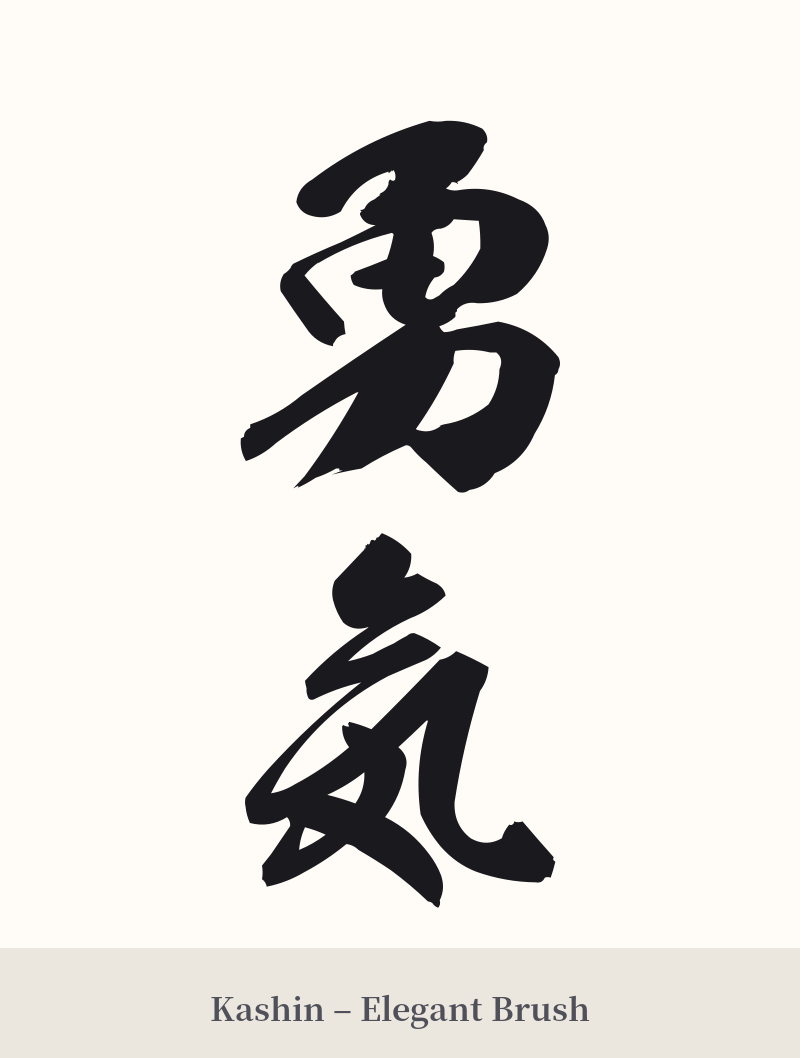
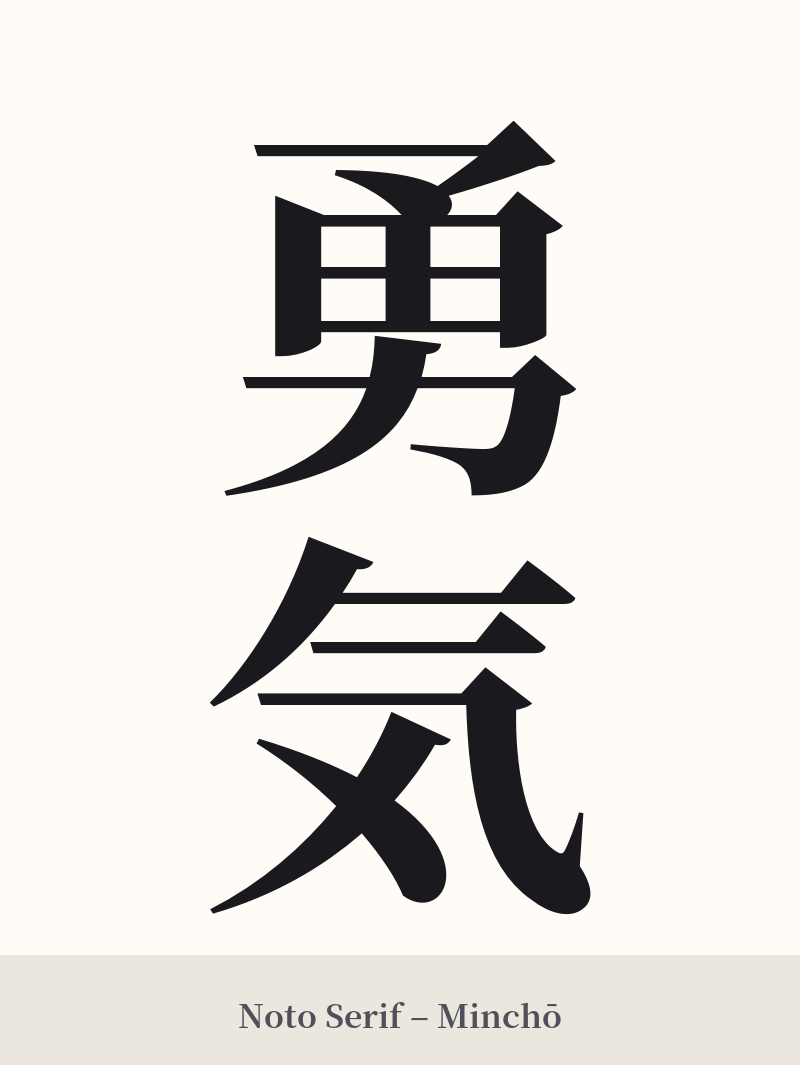
🖌️ Font Styles for 勇気
The same kanji can look dramatically different depending on the calligraphy style. Choose a font that matches the mood you want for your tattoo or design.
🎨 Tattoo Suitability
📐 Tattoo Design Guide
For a 勇気 (Yūki) tattoo, the design should reflect the strength and resolve inherent in the word.
– Placement: Vertical placement is classic for two-character kanji. The inner forearm, calf, or along the spine are excellent choices. For a more subtle design, the bicep or behind the ear can work well. Horizontally, it fits perfectly across the chest or on the upper back.
– Font Styles: A strong, clear script is often best. A standard Kaisho (block script) font emphasizes clarity and structure. For a more dynamic and powerful feel, a bold Gyosho (semi-cursive) or even a dramatic, artistic Sosho (cursive) can capture the 'spirit' and 'energy' of the 'Ki' character.
– Visual Elements: While 勇気 stands powerfully on its own, it can be integrated with other symbols. Consider pairing it with a dragon to represent strength and protection, a koi fish swimming upstream to symbolize perseverance, or a lotus flower to signify rising above adversity. The kanji could also be brushed within an Enso circle to represent the complete and powerful nature of inner courage.
Comments