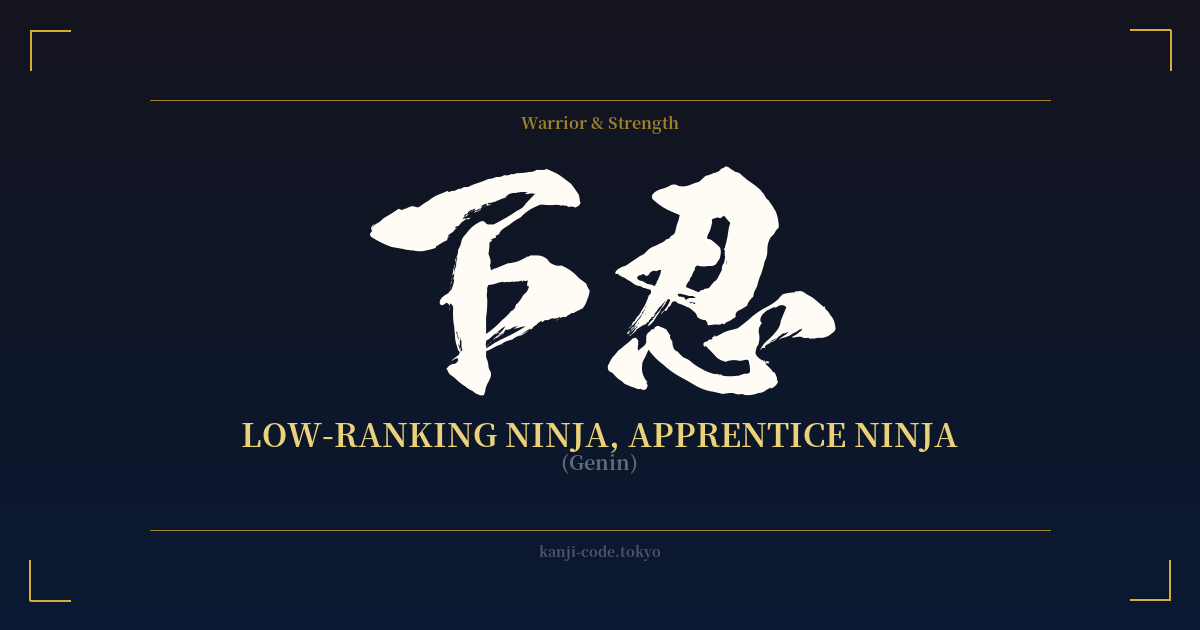
✍️ 下忍 (Genin) — Cultural Context
下忍 (Genin) translates to 'low-ranking ninja' or 'apprentice ninja.' While massively popularized by the global phenomenon Naruto, the term has roots in the real and imagined hierarchies of the shinobi, the covert agents and mercenaries of feudal Japan.
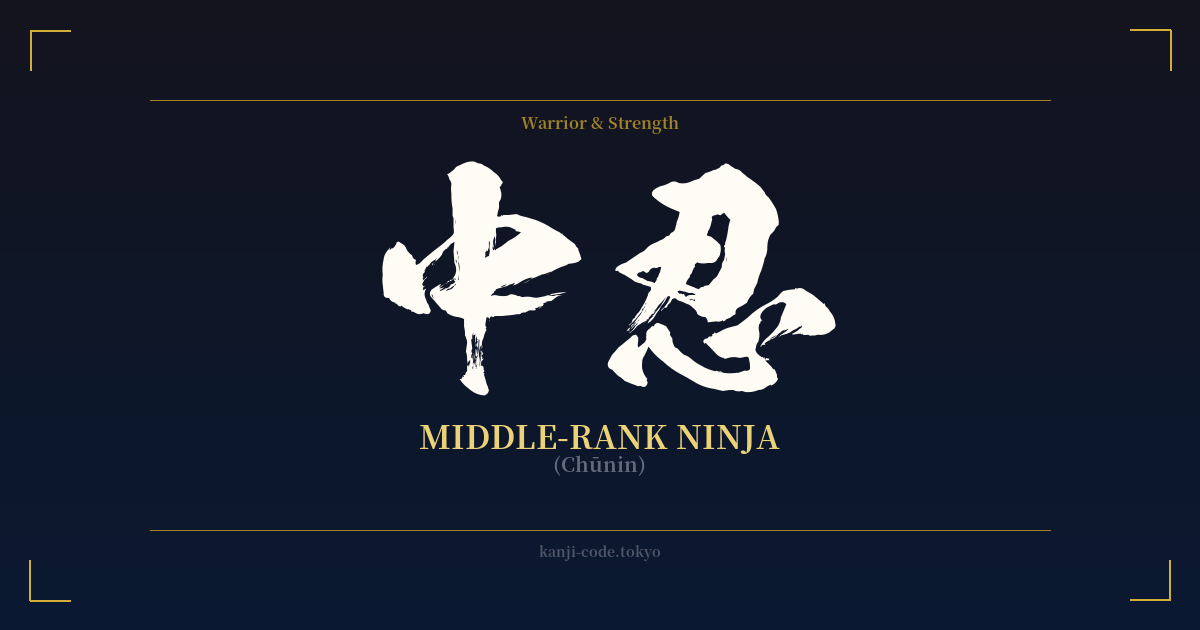
Historically, ninja clans were said to operate under a three-tiered command structure: Jōnin (上忍, high-ranking ninja), Chūnin (中忍, middle-ranking ninja), and Genin (下忍, low-ranking ninja). The Jōnin were the masterminds, the leaders who took on clients, planned operations, and rarely appeared in the field. The Chūnin acted as the bridge, relaying orders and leading teams.
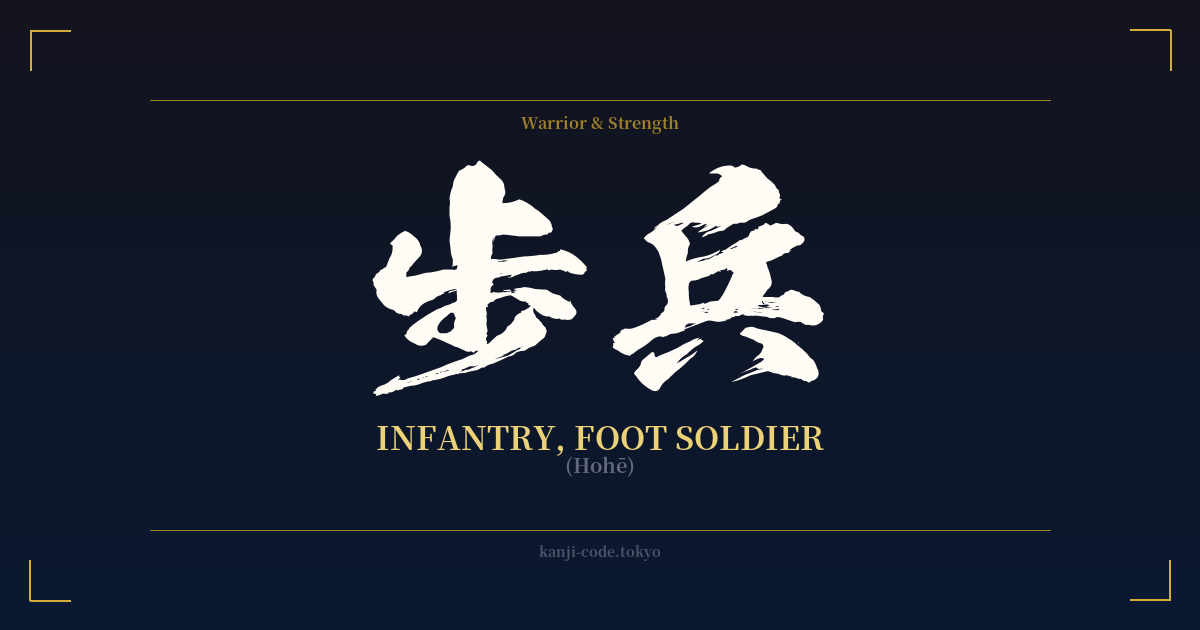
The Genin were the foot soldiers. They were the ones who carried out the actual missions—the infiltration, espionage, sabotage, and assassinations. They were considered the most expendable members of the clan, the operatives on the front lines who faced the greatest risk. The term itself reflects this status: 下 (ge) means 'low' or 'below,' and 忍 (nin) means 'to endure' or 'to conceal.' A Genin is literally a 'low person of stealth.'
In modern pop culture, particularly through Naruto, the perception of Genin has shifted. Here, Genin are young, newly graduated ninja who are just beginning their careers. They are full of raw potential, embarking on their first missions, learning to work in a team, and dreaming of becoming stronger. This interpretation focuses not on their expendability, but on their status as underdogs with everything to prove. It represents the starting point of a hero's journey, a phase of struggle, growth, and humble beginnings.
Therefore, the word Genin carries a dual meaning today. To some, it's a historical term for a low-level operative. To a massive global audience, it's a symbol of apprenticeship, potential, and the first step on a long path to mastery. It embodies the idea that greatness often starts from the bottom, forged in the fires of early trials and tribulations.
🖌️ Font Styles for 下忍
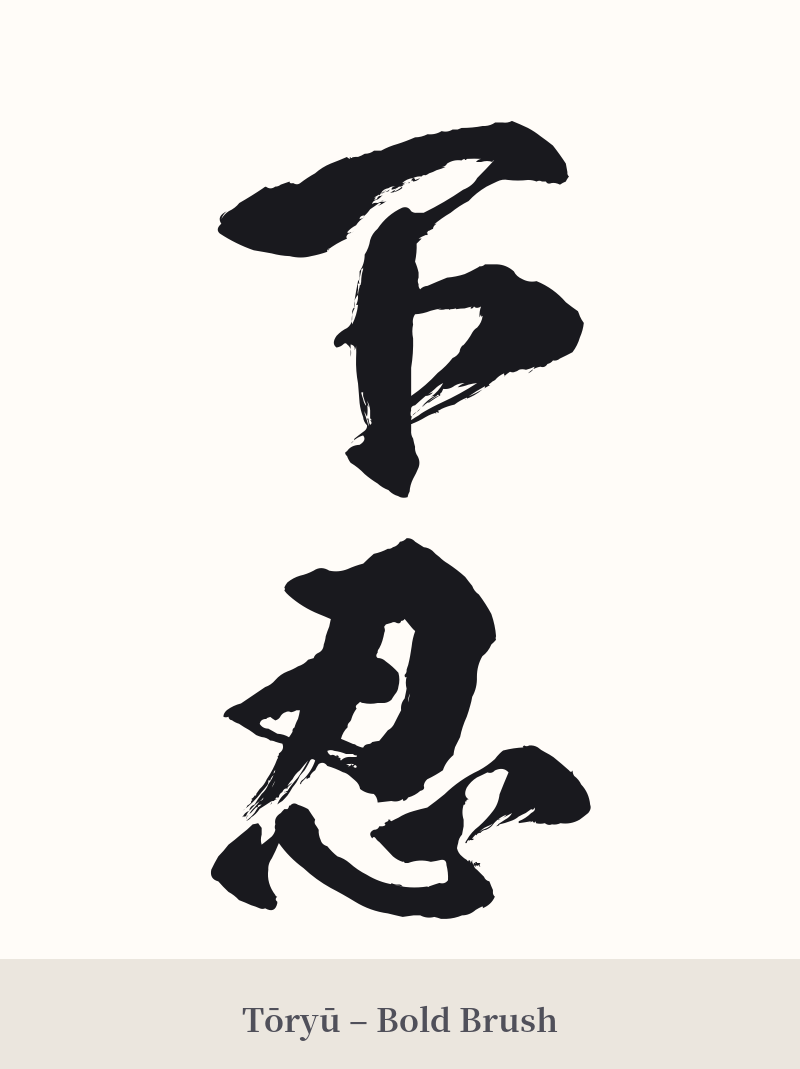
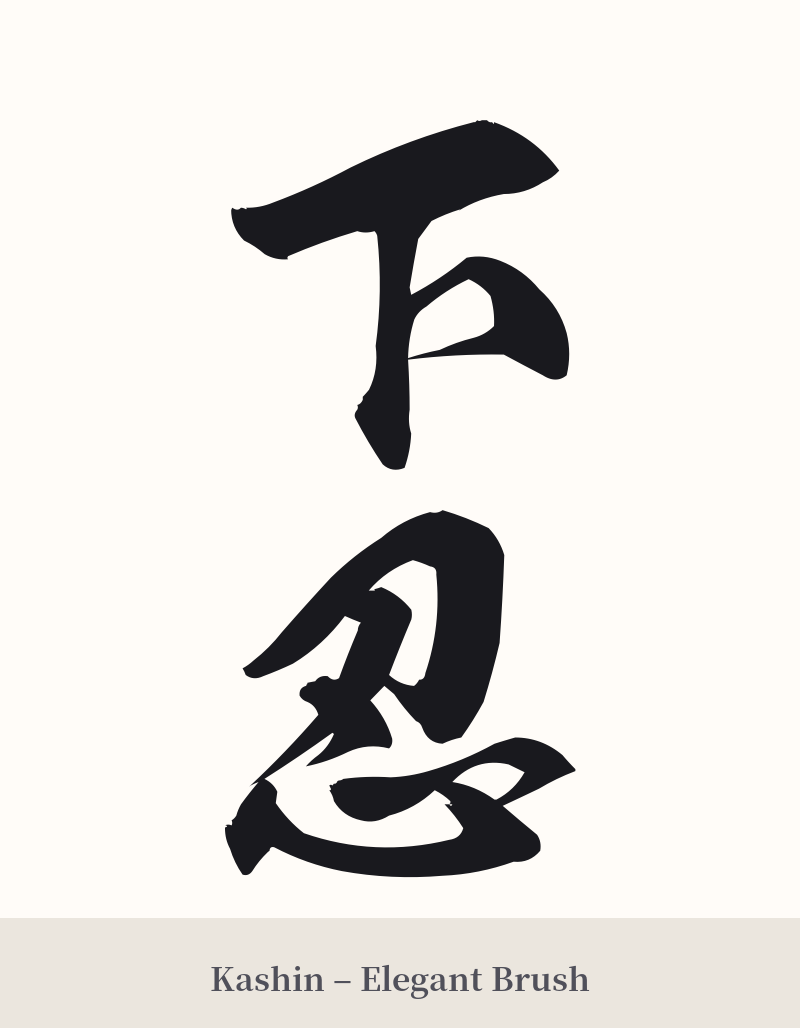
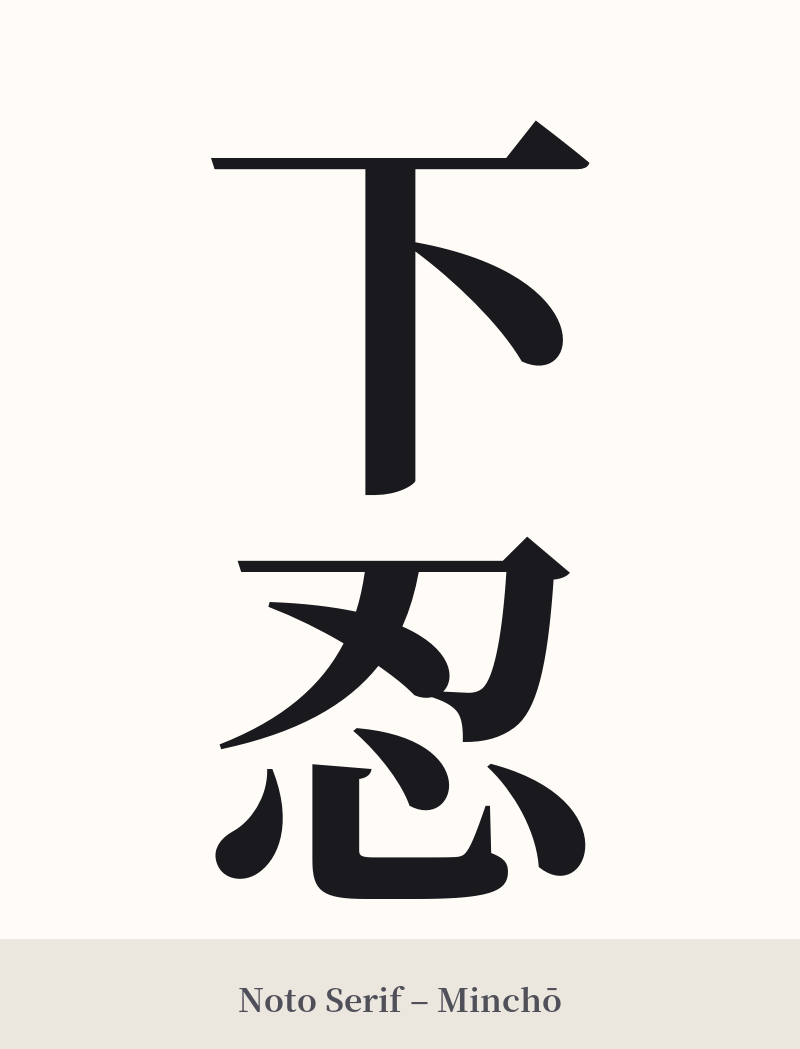
The same kanji can look dramatically different depending on the calligraphy style. Choose a font that matches the mood you want for your tattoo or design.
🎨 Tattoo Suitability
📐 Tattoo Design Guide
A tattoo of 下忍 (Genin) speaks to themes of apprenticeship, potential, and the underdog spirit. Here are some design considerations to make it impactful:
– Placement: A vertical alignment is traditional and visually appealing for two-character kanji. Consider the forearm, calf, or along the spine or ribs. These placements provide a natural canvas for the vertical script.
– Font Style: The choice of font can dramatically alter the feeling. A rough, semi-cursive style (Gyosho) can evoke the gritty, dangerous life of a ninja. In contrast, a clean, block-like script (Kaisho) can emphasize the 'official rank' aspect, as if it were a formal designation.
– Visual Elements: While the kanji can stand alone, it pairs well with ninja-related imagery. Consider incorporating elements like wisps of smoke, a shuriken, a kunai, or a cracked mask to frame the kanji and provide more context. Be careful not to overcrowd the design, letting the characters remain the focal point.
Comments