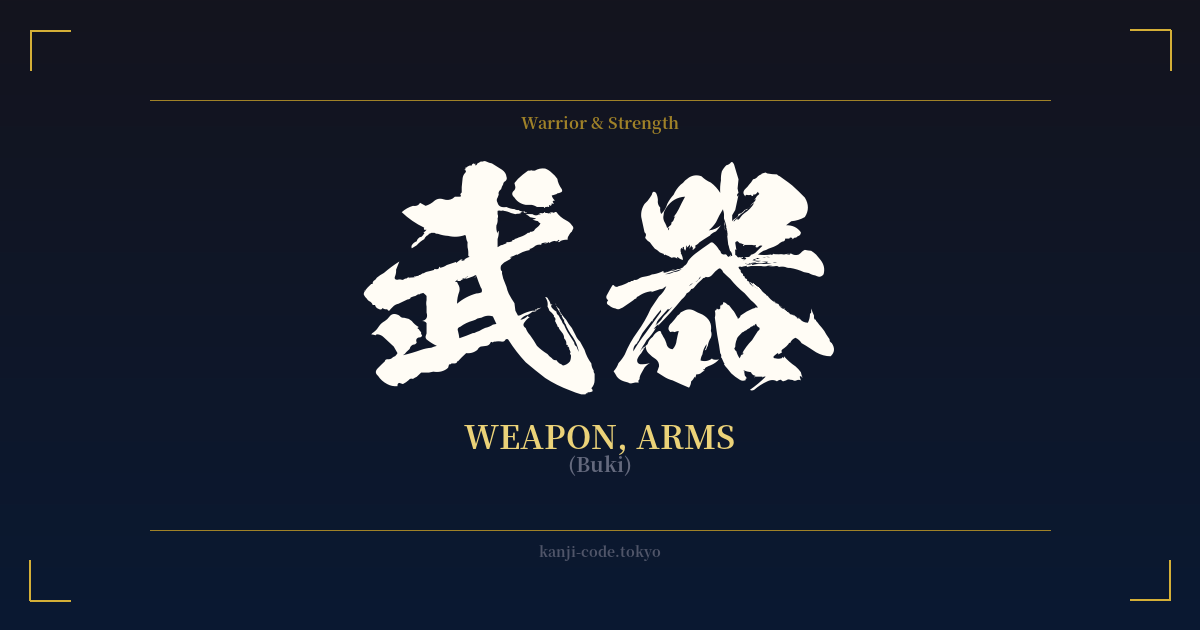
✍️ 武器 (Buki) — Cultural Context
武器 (Buki) is the Japanese word for 'weapon,' 'arms,' or 'ordnance.' It is a direct and powerful term that encompasses everything from a samurai's sword to a modern soldier's rifle. The word itself provides a clear insight into its meaning, combining two distinct kanji to form a new, specific concept.
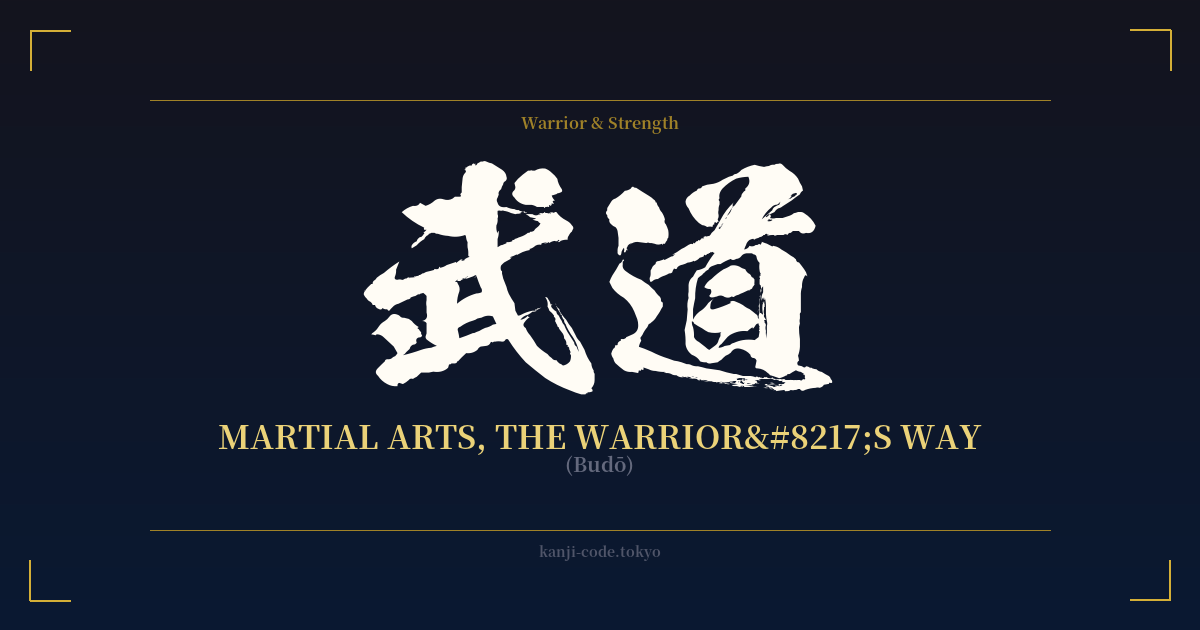
The first character, 武 (Bu), is central to warrior culture. It means 'martial,' 'military,' or 'warrior' and is the same character found in words like 武士道 (Bushidō), the way of the warrior. It evokes images of the samurai, discipline, and combat prowess. The second character, 器 (Ki), means 'tool,' 'implement,' or 'vessel.' When combined, 武器 literally translates to 'martial tool'—a beautifully concise and descriptive name.
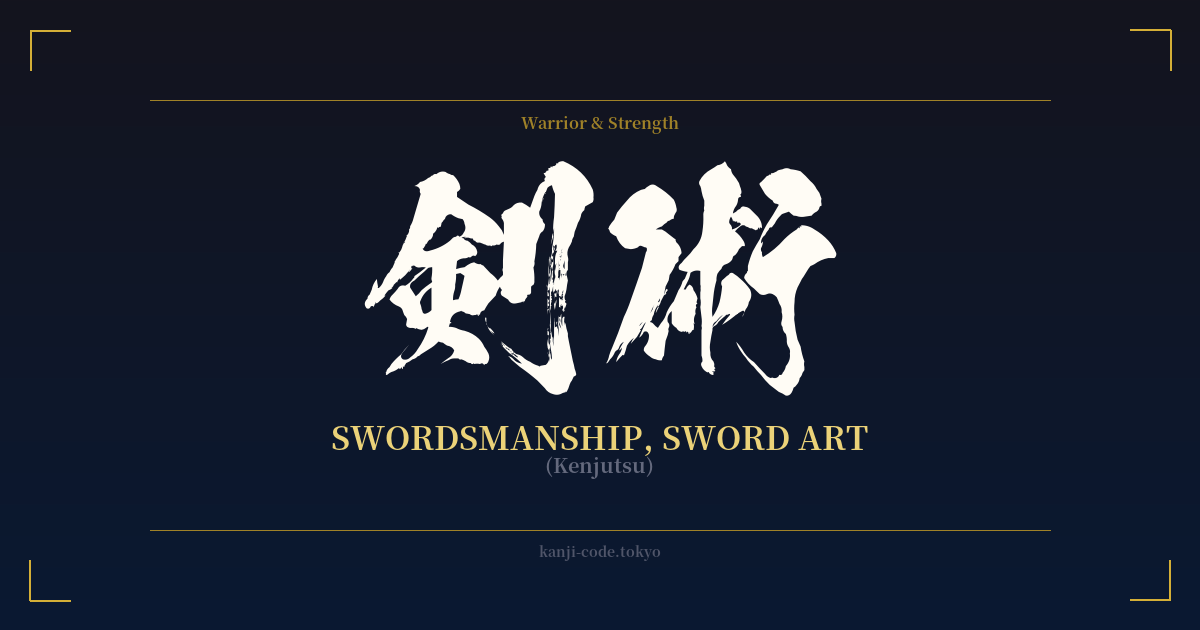
Historically, the concept of buki is deeply intertwined with the samurai class that ruled Japan for centuries. For a samurai, their buki were not just tools of war but extensions of their being and symbols of their status. The katana (sword), yari (spear), and yumi (bow) were the primary buki of the era, each requiring years of dedicated training to master. The relationship between a warrior and their weapon was considered sacred, a partnership forged in discipline and honed in battle.
This reverence for weapons is a core theme in Japanese martial arts (Budō). In disciplines like Kendo (the way of the sword) or Kyudo (the way of the bow), the buki is treated with utmost respect. It is not merely a piece of equipment but a conduit for the practitioner's spirit and focus. The goal is not simply to learn how to fight, but to cultivate inner strength, discipline, and an understanding of the profound responsibility that comes with wielding a weapon.
In modern Japan, while the days of the samurai are long past, the word 武器 continues to resonate. It appears frequently in popular culture—manga, anime, and video games are filled with legendary heroes and their signature buki. From magical swords to advanced mecha, these fictional weapons carry on the tradition of being more than just objects; they are symbols of their wielder's power, identity, and destiny. This has made the term familiar to a global audience, who appreciate its strong, historical, and dramatic connotations.
🖌️ Font Styles for 武器
The same kanji can look dramatically different depending on the calligraphy style. Choose a font that matches the mood you want for your tattoo or design.
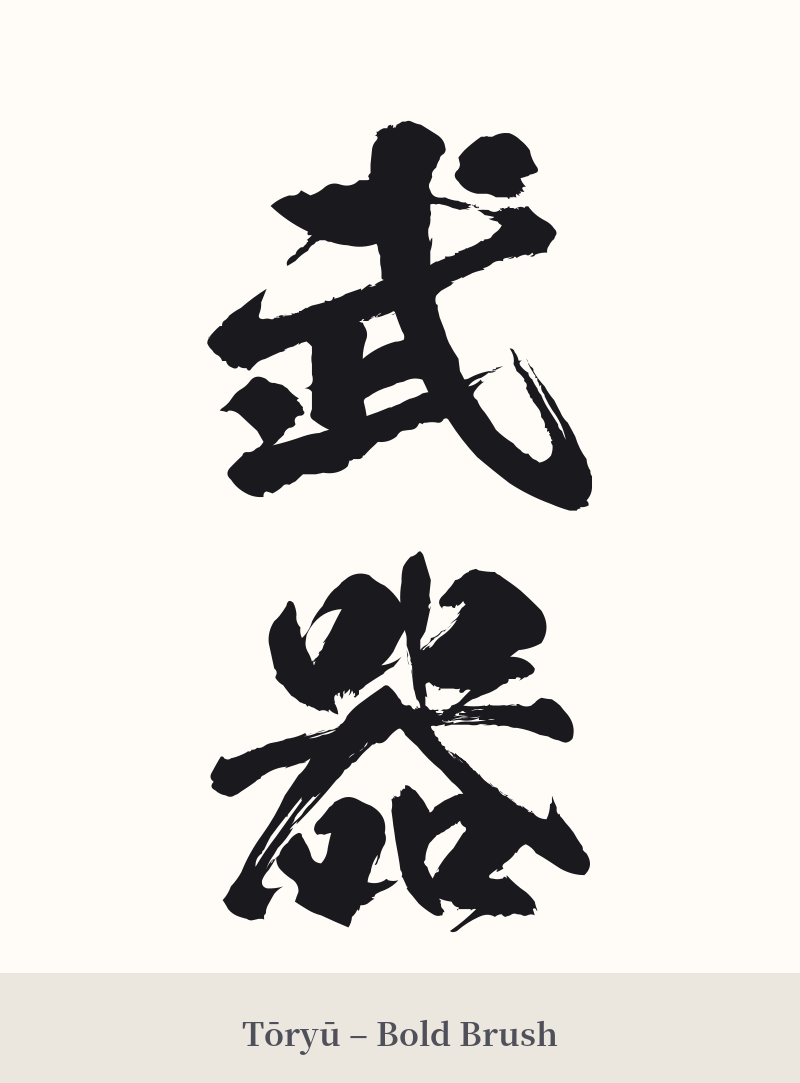
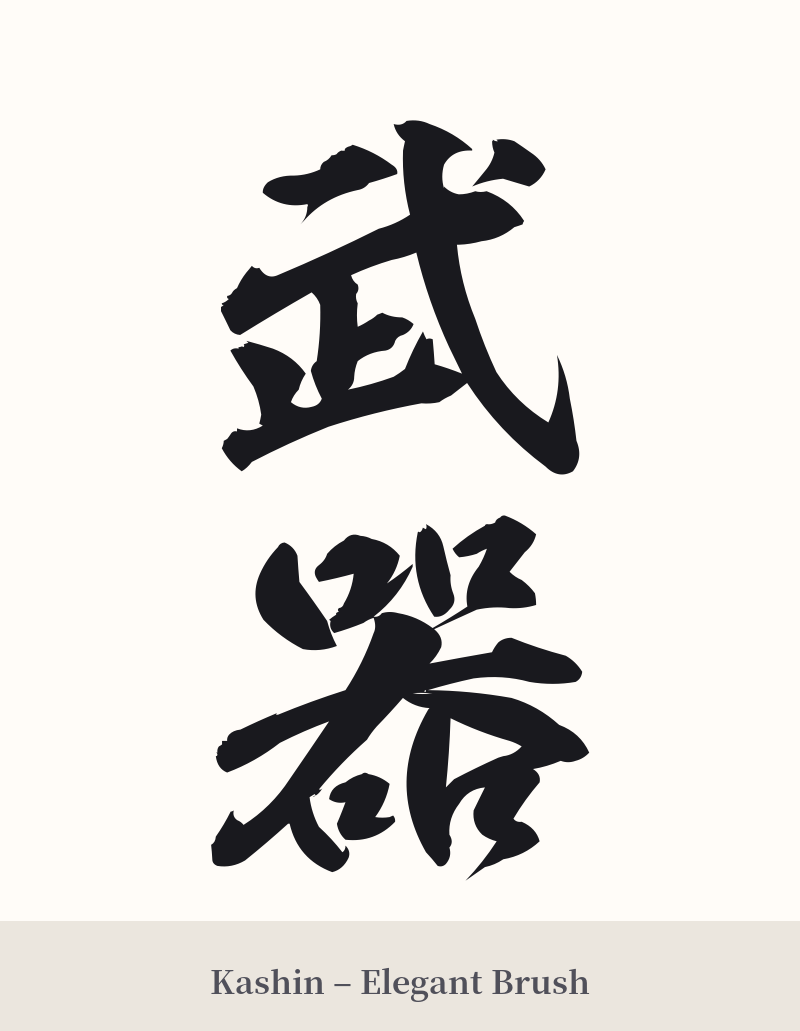
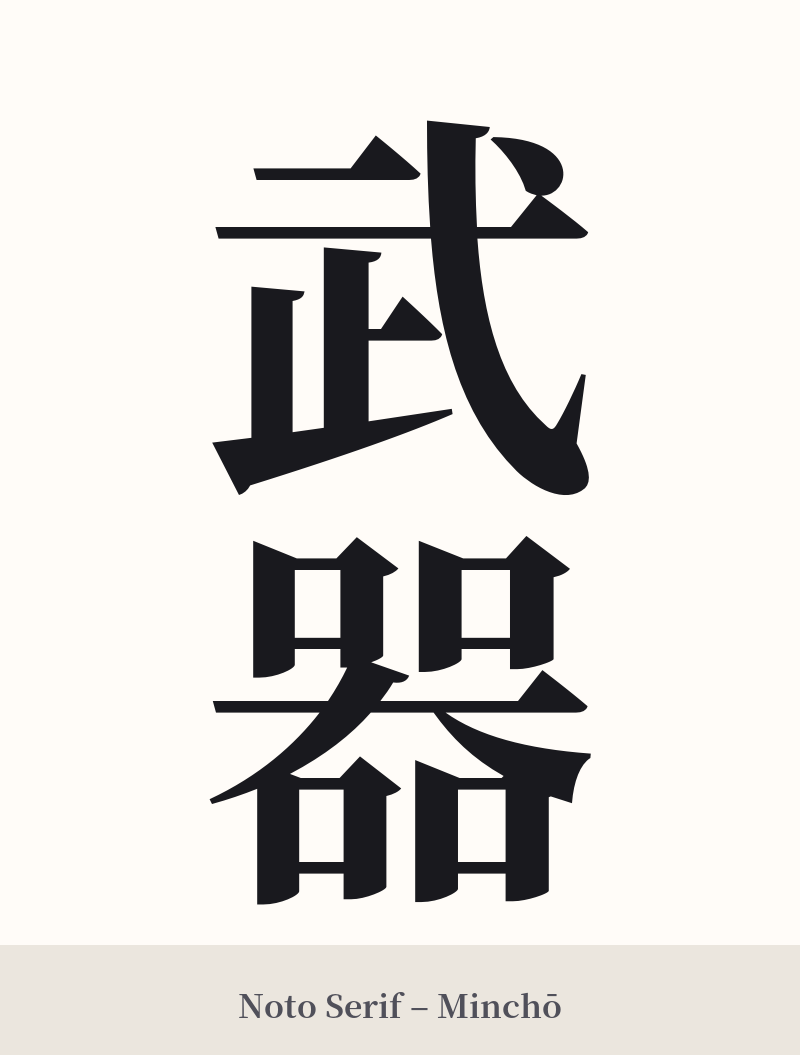
🎨 Tattoo Suitability
📐 Tattoo Design Guide
For a 武器 (Buki) tattoo, the design should reflect its inherent power and history. The two characters have a good balance, with the simpler 武 and the more complex 器 creating a visually interesting pair.
– Placement: This kanji works well in both vertical and horizontal orientations. A vertical placement along the forearm, calf, or spine emphasizes its traditional calligraphic roots. A horizontal placement across the chest or upper back can create a bold, powerful statement.
– Font Style: Strong, deliberate font styles are most appropriate. A crisp, angular Kaisho (block script) will look sharp and defined. For a more artistic and dynamic feel, a Gyosho (semi-cursive) or Sosho (cursive) style can evoke the fluid motion of a warrior in combat.
– Visual Tips: Consider incorporating the kanji into a larger piece. It could be paired with a classic Japanese motif like a dragon (Ryū), a roaring tiger (Tora), or an Oni mask to amplify the warrior theme. Another powerful idea is to have the kanji integrated with an image of a specific weapon, such as a katana or a naginata, to make the meaning even more explicit and personal.
Comments