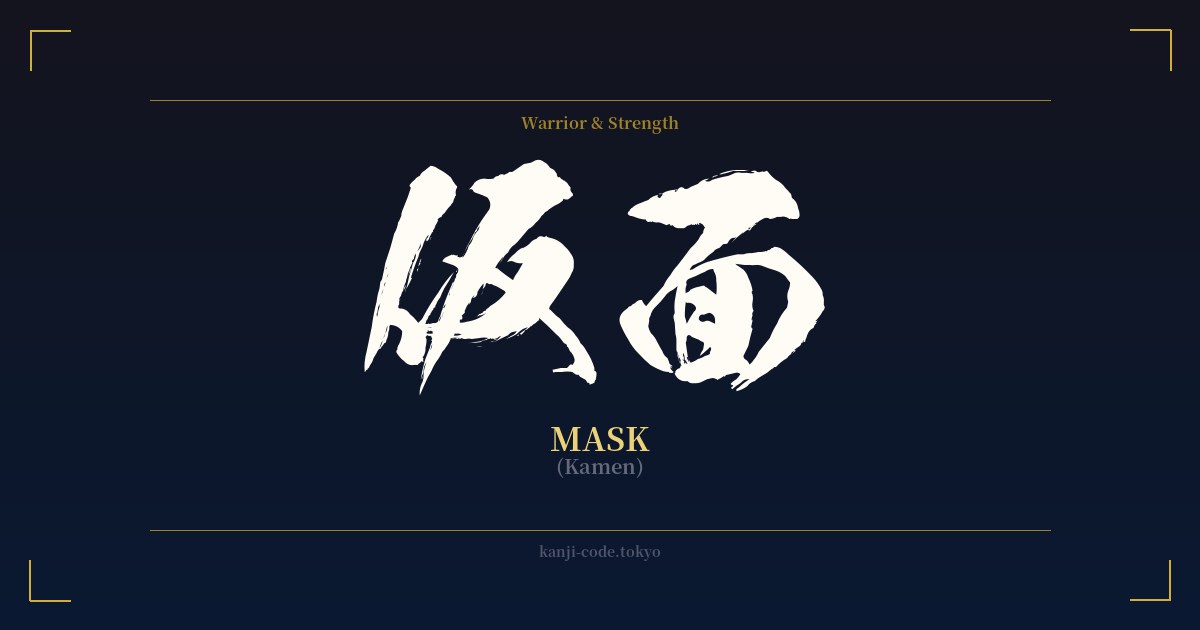
✍️ 仮面 (Kamen) — Cultural Context
The Japanese word 仮面 (Kamen) translates to 'mask,' but its meaning extends far beyond a simple object worn on the face. It embodies a rich cultural tapestry of transformation, hidden identity, spiritual power, and the delicate balance between one's inner self and public persona. The concept is deeply woven into Japan's history, arts, and social dynamics.
Historically, masks were integral to ancient religious rituals and agricultural ceremonies, used to channel deities or spirits. However, their most famous application is in traditional Japanese theater, particularly Noh (能) and Kyogen (狂言). In Noh, the highly stylized and expressive masks, known as nōmen, are not mere props; they are considered sacred objects capable of holding immense spiritual energy. Each mask represents a specific character archetype—a god, a demon, a warrior, an old man, or a beautiful woman. An actor's skill is measured by their ability to bring the mask to life, conveying a range of emotions through subtle movements and tilts of the head.
The iconic Hannya mask, with its sharp horns and sorrowful yet terrifying expression, represents a woman consumed by jealousy, while the Kitsune (fox) mask is tied to the mischievous and powerful fox spirits of folklore. These masks allow actors to transcend their own identity and fully embody another being, making the stage a realm of transformation.
Beyond the theater, masks are a vibrant part of Japanese festivals (matsuri). Comical Hyottoko and Okame masks bring laughter and good fortune, while fearsome Oni (demon) masks are used during Setsubun to ward off evil spirits. Even the samurai utilized masks in the form of menpō, facial armor designed not only for protection but also to intimidate their enemies on the battlefield, projecting an image of demonic fury.
In modern Japan, the concept of 'kamen' has found new life. The long-running tokusatsu series 'Kamen Rider' features heroes who don masks to transform and fight evil. In anime and manga, from the ANBU masks in 'Naruto' to the ghoulish masks in 'Tokyo Ghoul,' they are powerful symbols of a hidden nature, a secret power, or a dual identity. Metaphorically, the word is also linked to the social concept of 'honne and tatemae'—the distinction between one's true feelings (honne) and the public face (tatemae) one presents to maintain social harmony. To wear a 'kamen' can mean to navigate the complexities of society by carefully managing one's outward expression.
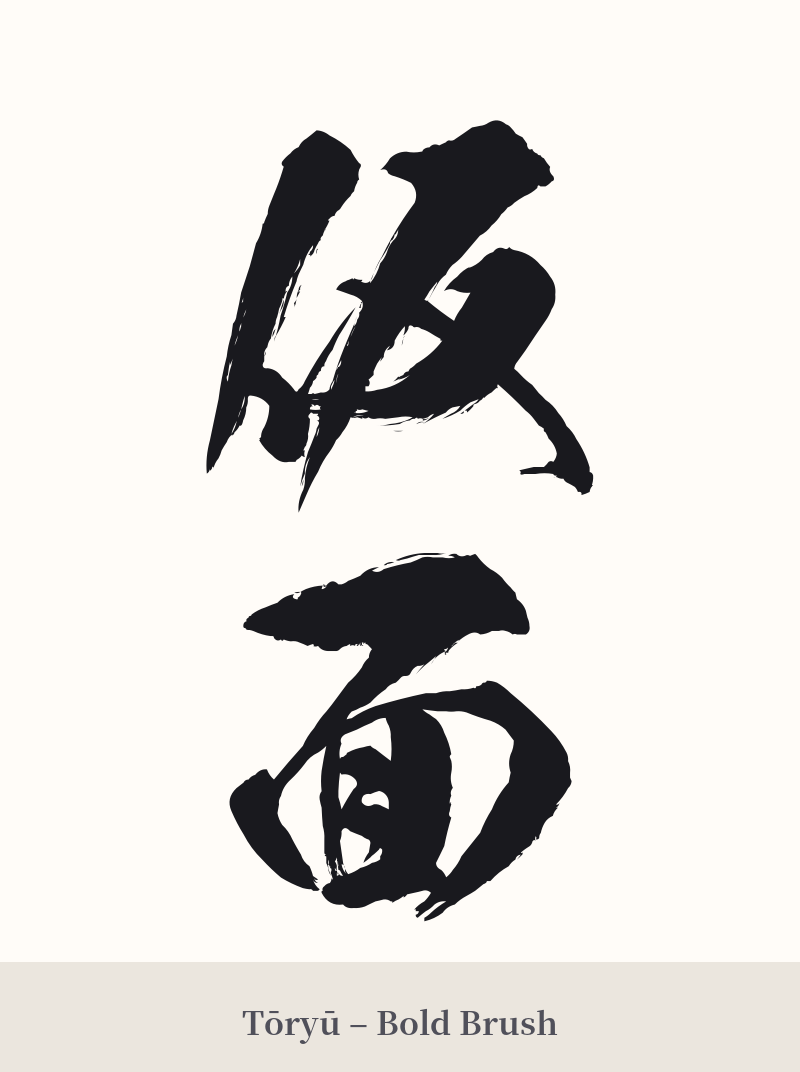
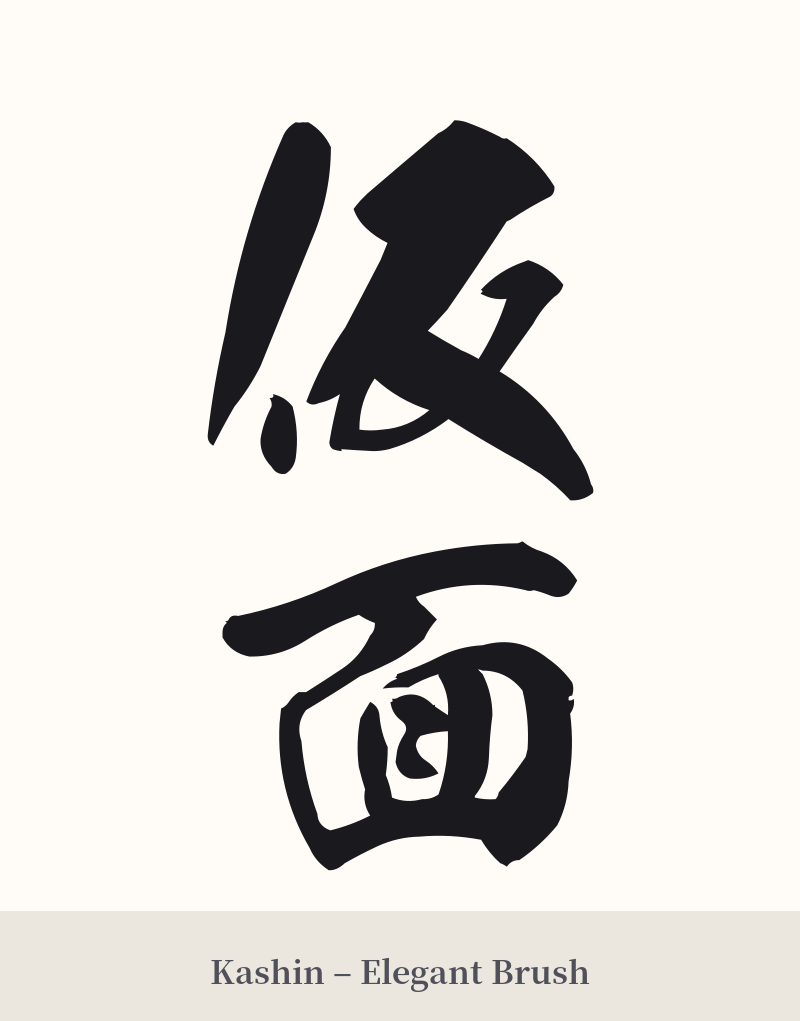
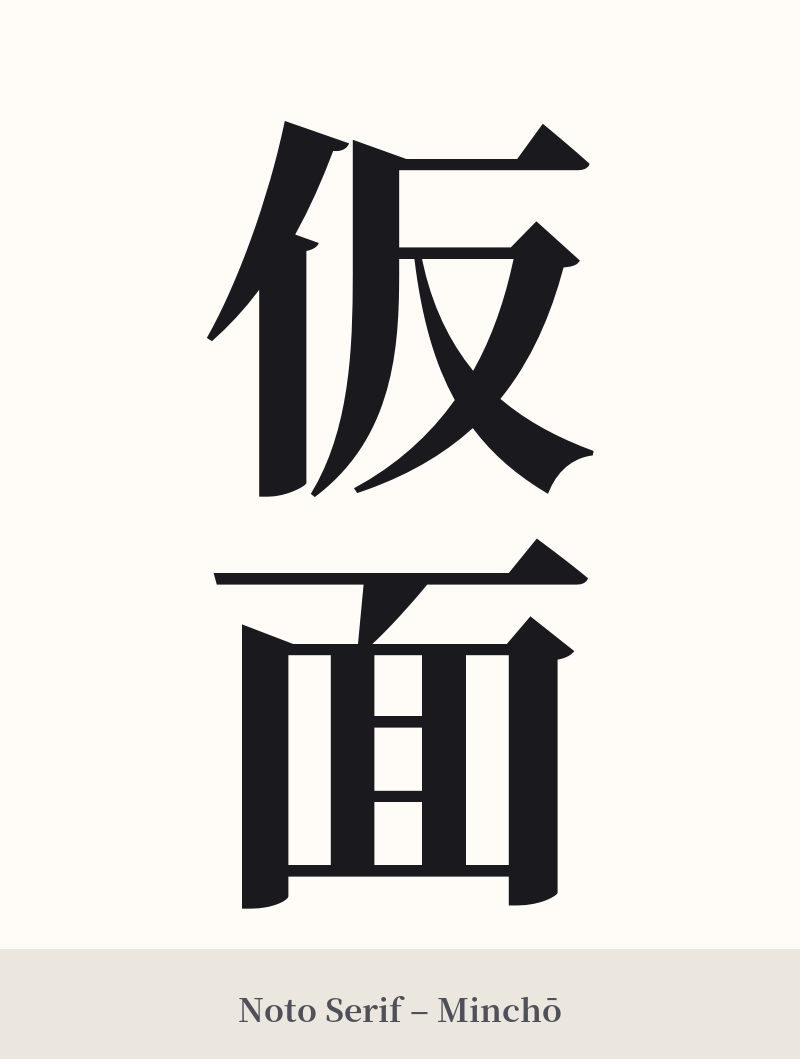
🖌️ Font Styles for 仮面
The same kanji can look dramatically different depending on the calligraphy style. Choose a font that matches the mood you want for your tattoo or design.
🎨 Tattoo Suitability
📐 Tattoo Design Guide
The word 仮面 (Kamen) offers excellent flexibility for a tattoo design. Its two characters are well-balanced, making it suitable for various placements and styles.
– Placement: A vertical arrangement works beautifully on the forearm, spine, calf, or alongside the bicep. For a horizontal design, it fits well across the chest, upper back, or below the collarbone.
– Font Style: The choice of calligraphy can dramatically alter the mood. A crisp, angular Kaisho (block) script can give it a modern, sharp, or stoic feel. For a more artistic or mysterious vibe, a flowing Gyōsho (semi-cursive) or Sosho (cursive) style would be more appropriate, suggesting movement and hidden depths.
– Visual Tips: Consider pairing the kanji with a visual element to add context. A popular choice is to have the kanji written alongside, above, or even integrated into a drawing of a specific Japanese mask, such as a Kitsune, Hannya, or Oni mask. This immediately clarifies the theme and creates a more dynamic and personalized piece.
Comments