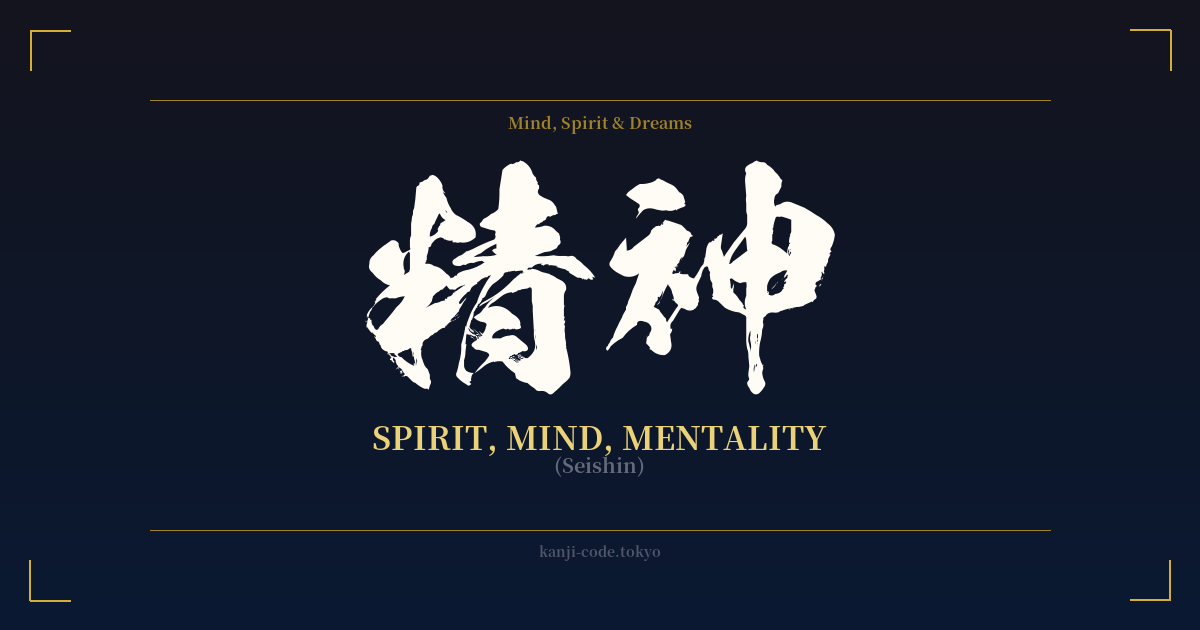
✍️ 精神 (Seishin) — Cultural Context
精神 (Seishin) is a cornerstone concept in Japanese thought, embodying the very essence of a person's inner world. While often translated as 'spirit' or 'mind,' its meaning is far more expansive, encompassing one's will, consciousness, psyche, and overall mentality. It's not a ghost or a supernatural entity, but the animating force and intellectual core of a living, thinking person.
This concept is deeply woven into the fabric of Japanese culture, particularly in contexts that demand immense mental fortitude. In the world of martial arts (Budo), practitioners strive to cultivate their seishin. It's the unwavering focus in a kendo match, the calm determination of a judoka, and the internal discipline that underpins physical technique. The term 精神力 (seishinryoku), meaning 'willpower' or 'mental strength,' is a highly valued trait, seen as the ability to persevere through pain, hardship, and self-doubt.
This emphasis on seishin extends beyond the dojo. It was a central tenet of the samurai code, Bushido, where a warrior's mental and spiritual state was as crucial as his skill with a sword. In modern Japan, this same spirit is invoked in business, sports, and education. The idea of enduring challenges and achieving goals through sheer force of will is a powerful cultural narrative, and seishin is its name.
It's useful to contrast seishin with similar-sounding words. For instance, 魂 (tamashii) refers to the 'soul,' often in a more spiritual or eternal sense—the part of a person that might exist after death. 心 (kokoro) means 'heart' or 'mind' but carries a stronger emotional and sentimental connotation. Seishin, by contrast, is more focused on the cognitive and volitional aspects of the self: the mind as a tool, a fortress, and a source of power. It represents the strength you draw from within to face the world.
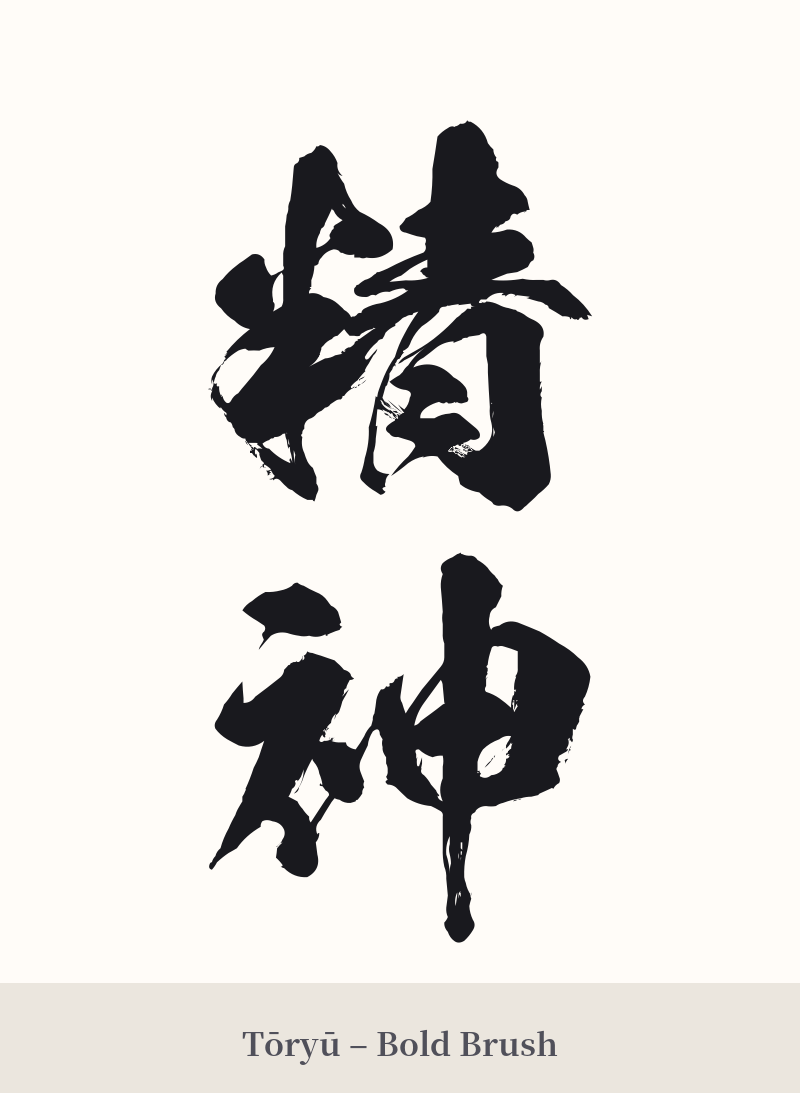
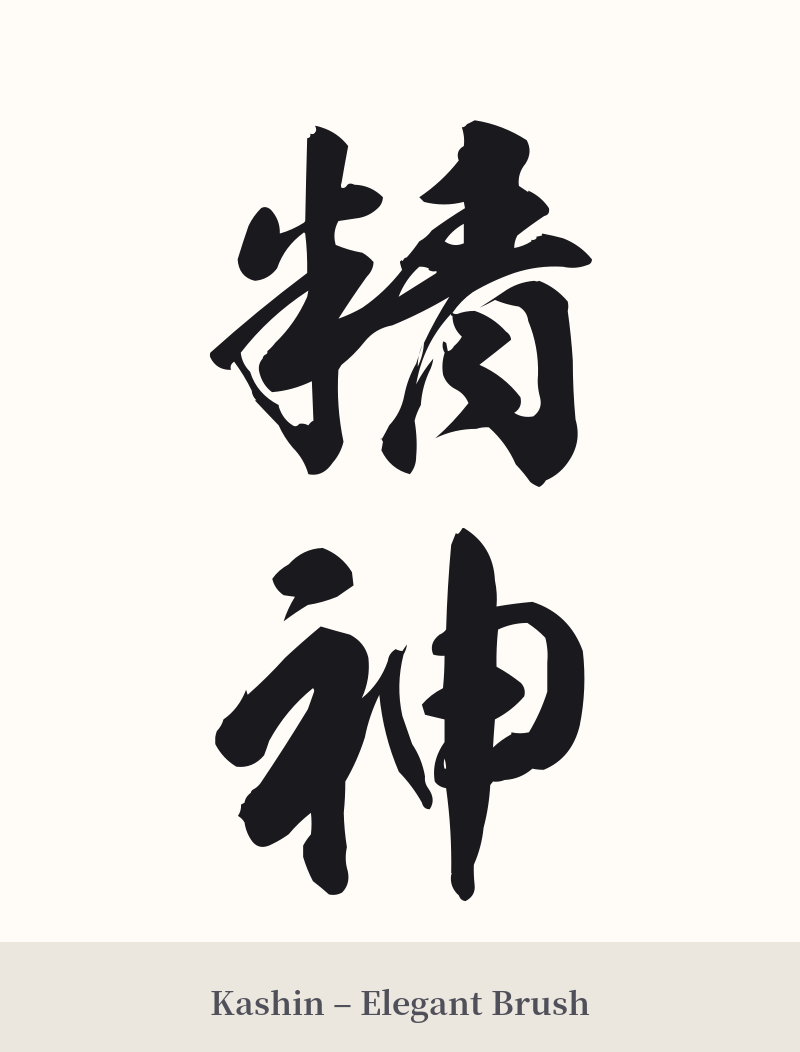
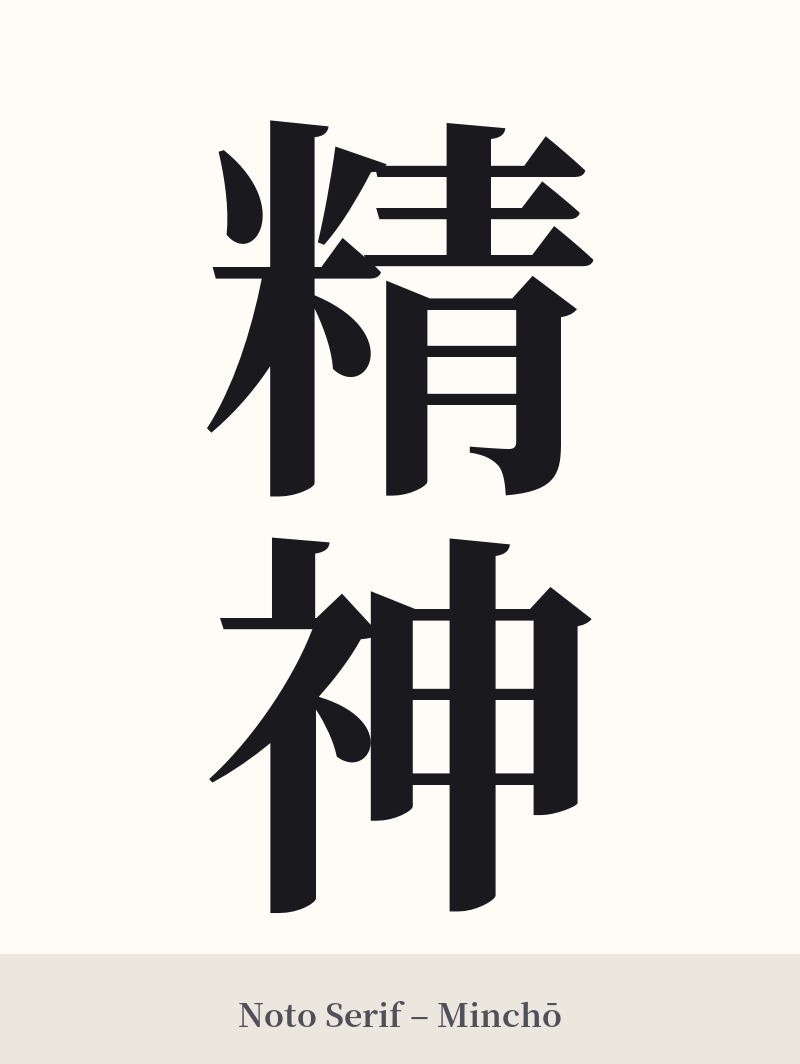
🖌️ Font Styles for 精神
The same kanji can look dramatically different depending on the calligraphy style. Choose a font that matches the mood you want for your tattoo or design.
🎨 Tattoo Suitability
📐 Tattoo Design Guide
For a 精神 tattoo, clarity and balance are key due to the complexity of the characters.
– Placement: This design works well in both vertical and horizontal layouts. A vertical placement on the forearm, calf, or along the spine has a classic, powerful look. For a horizontal design, the chest or upper back provides a stable canvas.
– Font Style: A strong, clear script like Kaisho (block style) will emphasize the structure and deliberate nature of the word. For a more fluid and dynamic feel, a Gyosho (semi-cursive) script can beautifully connect the strokes, but it requires an artist who truly understands Japanese calligraphy to maintain legibility.
– Visual Tips: The primary consideration is size. The character 精 has many strokes in a small space. Go larger than you might initially think to ensure the lines don't bleed together over the years. Discuss negative space with your artist to ensure the interior of the characters remains open and clear.
Comments