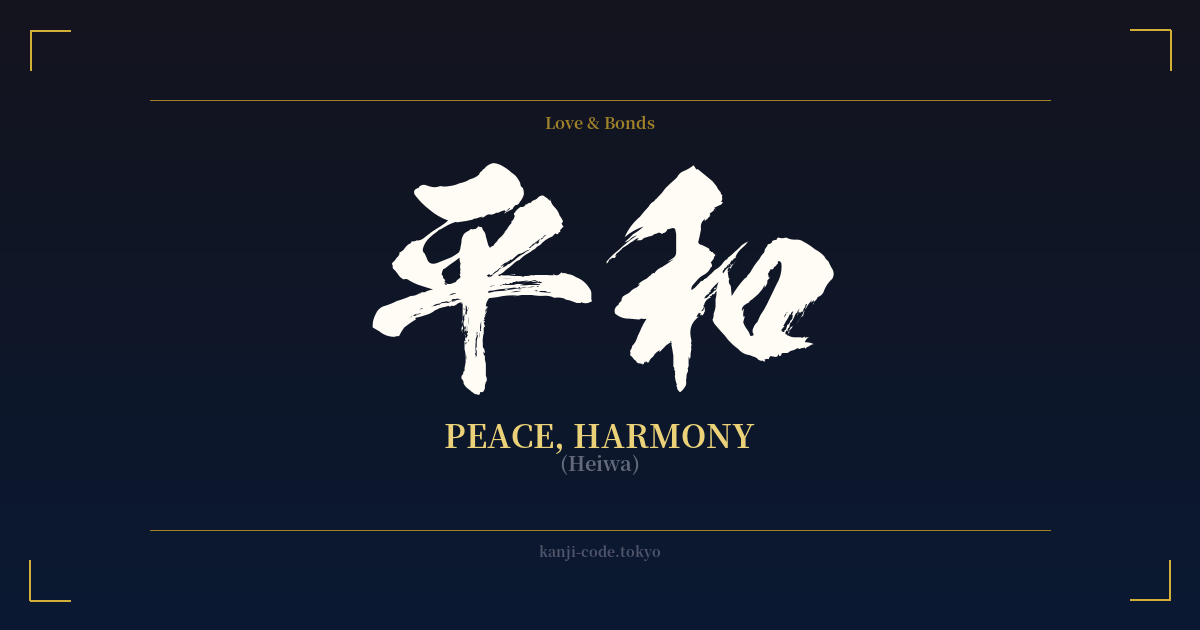
✍️ 平和 (Heiwa) — Cultural Context
In Japan, 平和 (Heiwa) is not merely a word; it is a foundational pillar of the modern national identity, a solemn vow forged in the ashes of war. Its significance is deeply woven into the country's psyche, representing both a painful memory and a hopeful aspiration.
The term gained its profound modern weight on August 15, 1945. In his historic radio address announcing Japan's surrender, Emperor Hirohito used the word 'heiwa' to frame the end of the conflict. For a nation that had endured years of total war and nuclear devastation, this word became the cornerstone of a new beginning, a collective pivot away from militarism and toward a future defined by peace.
This commitment was formalized in Article 9 of the post-war Japanese Constitution, often called the 'Peace Constitution' (平和憲法, Heiwa Kenpō). This clause famously renounces war as a sovereign right of the nation, a radical and enduring statement that has shaped Japan's domestic and foreign policy for decades. Because of this, Heiwa is more than just a passive absence of conflict; it is an active, constitutional principle.
The characters themselves tell a story of this ideal. The first kanji, 平 (hei), originates from pictographs of balanced scales or level ground, symbolizing equilibrium, calmness, and fairness. It's a peace born from stability, where no single element overpowers another.
The second kanji, 和 (wa), depicts a grain stalk and a mouth, suggesting people sharing a meal and speaking in accord. It represents harmony, cooperation, and the spirit of community. This character is so integral to the Japanese worldview that it is also used to refer to Japan itself (e.g., 和食, washoku – Japanese food).
Together, 平和 (Heiwa) describes a state where societal harmony (和) is built upon a foundation of balance and stability (平). It's a vision of peace that is both internal and external, personal and collective. You see this word on memorials in Hiroshima and Nagasaki, in the names of parks and schools, and as a constant prayer for a world free from the horrors of war.
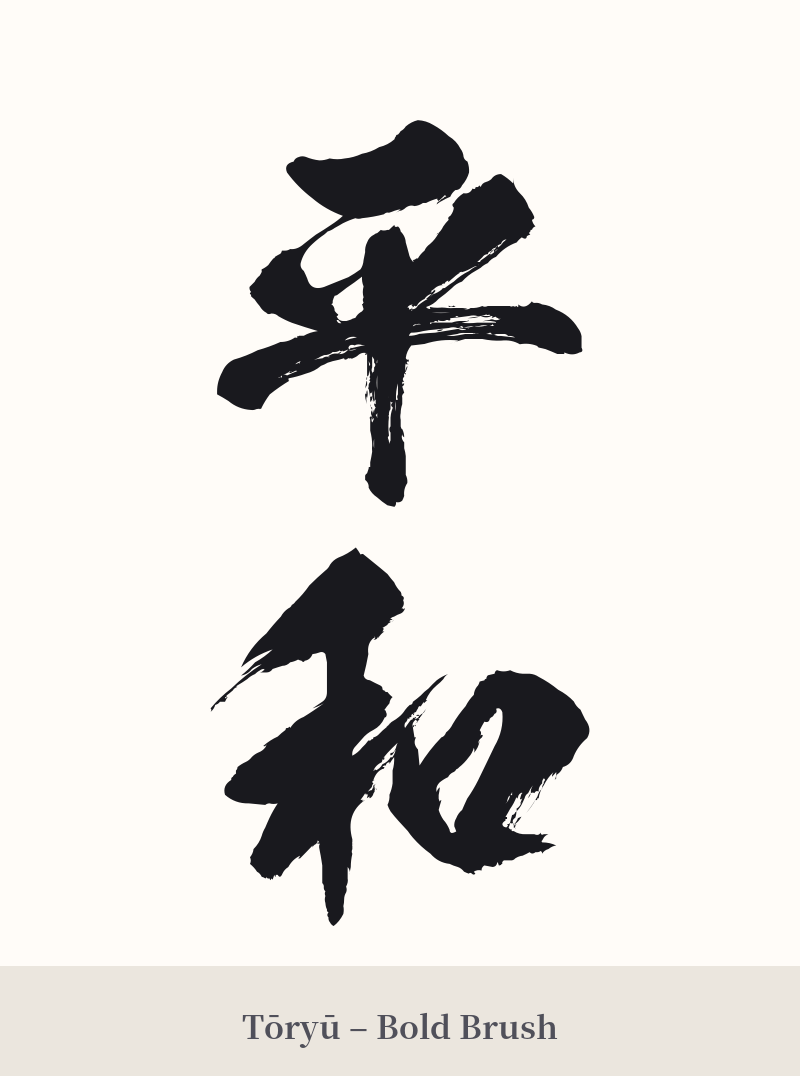
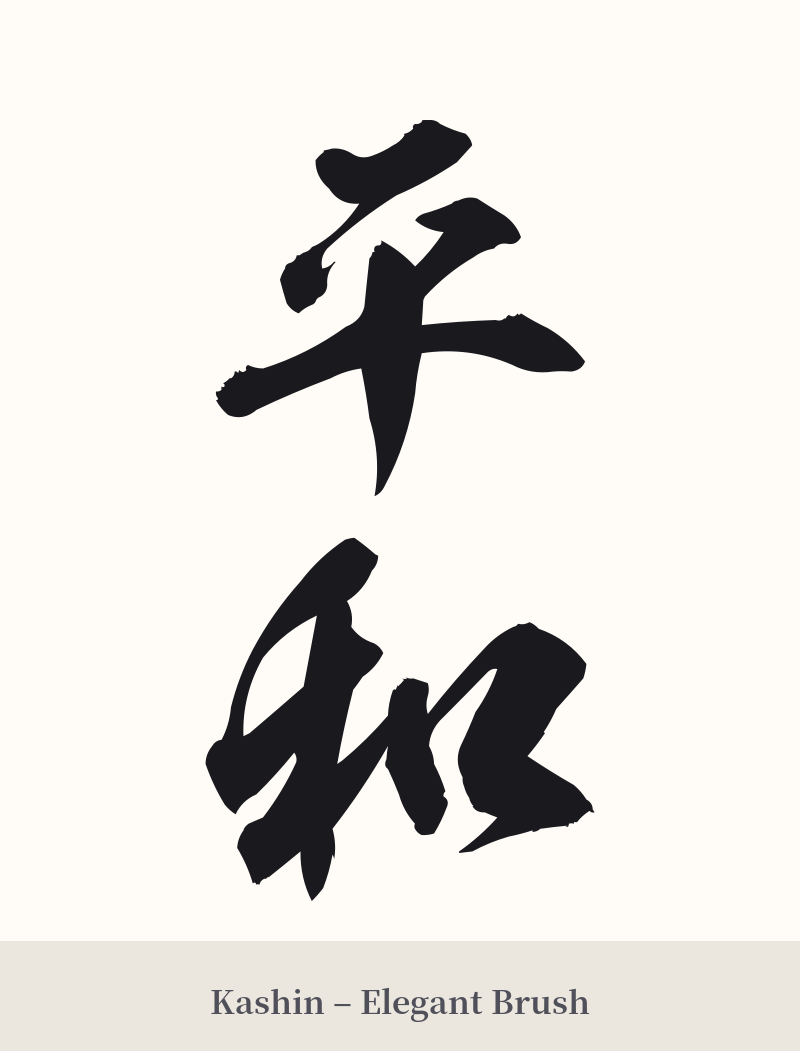
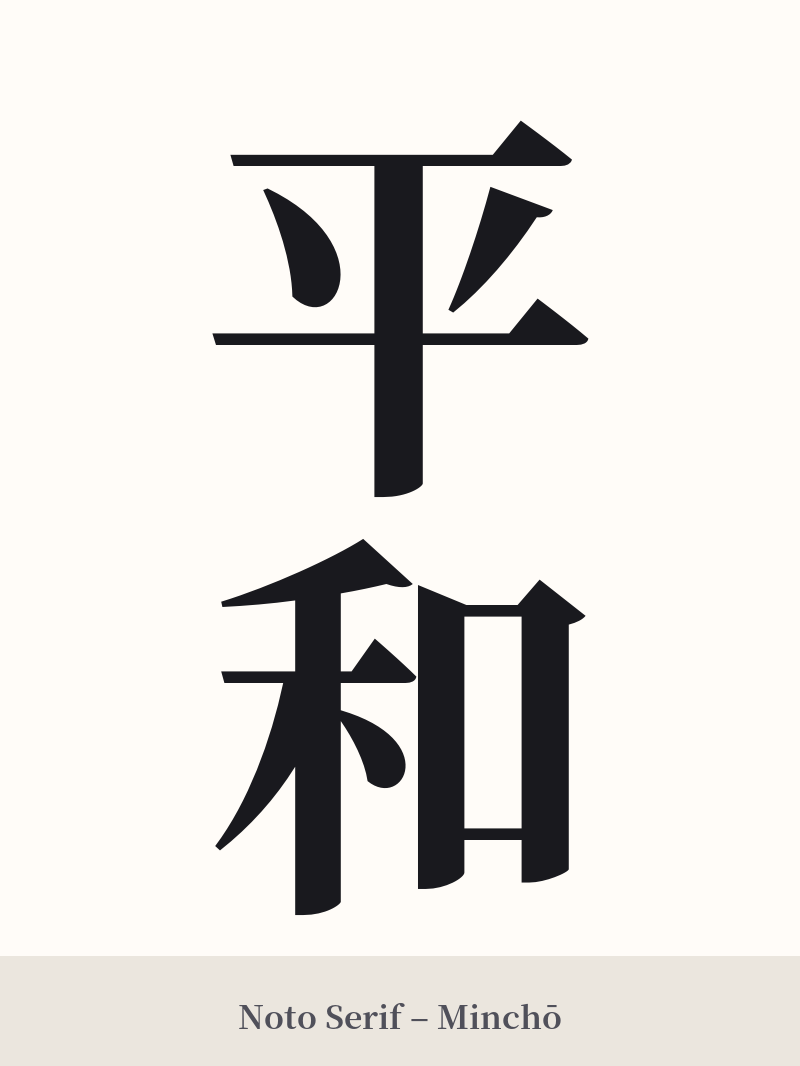
🖌️ Font Styles for 平和
The same kanji can look dramatically different depending on the calligraphy style. Choose a font that matches the mood you want for your tattoo or design.
🎨 Tattoo Suitability
📐 Tattoo Design Guide
The timeless meaning of 平和 (Heiwa) lends itself to a variety of tattoo designs, from bold statements to subtle reminders.
– Placement: Vertical orientation is traditional and works beautifully along the spine, forearm, or calf. A horizontal placement fits well across the chest, upper back, or below the collarbone. Its balanced nature makes it suitable for centered placements.
– Font Style: For a classic and artistic feel, a calligraphy style (書道, shodō) like Gyōsho (semi-cursive) or Sōsho (cursive) can add a sense of flow and personal expression. For a strong, clear, and dignified look, the Kaisho (block script) style is an excellent choice. A minimalist, thin-lined font can also give it a modern and clean aesthetic.
– Visual Elements: While 平和 is powerful enough to stand alone, it can be paired with complementary imagery. Consider incorporating it with a dove, an olive branch, or a lotus flower to reinforce the theme of peace and purity. However, avoid cluttering the design with unrelated 'Japanese-style' elements, as the kanji's directness is its greatest strength.
Comments