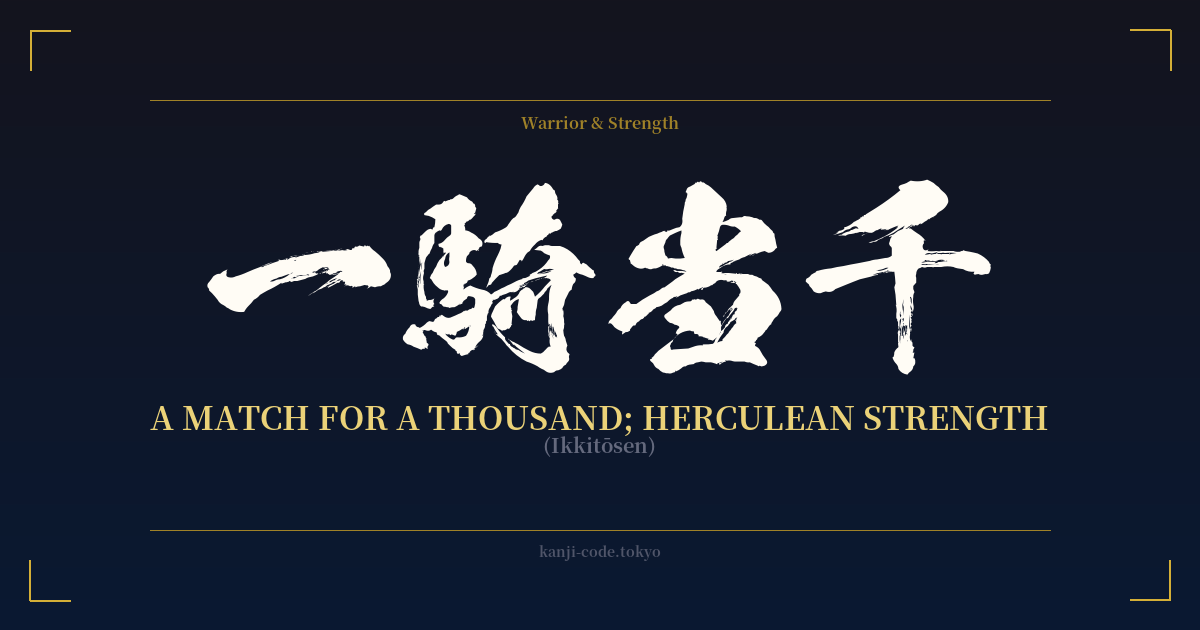
✍️ 一騎当千 (Ikkitōsen) — Cultural Context
一騎当千 (Ikkitōsen) is a powerful four-character idiom that literally translates to 'one horseman being a match for a thousand.' It paints a vivid picture of a lone, legendary warrior so skilled and formidable that they can single-handedly face and defeat an entire army. This is the essence of Herculean strength, not just in body, but in spirit and martial prowess.
The expression has its roots in ancient Chinese history and literature, particularly in epic tales describing near-mythical generals. Chronicles like the Records of the Grand Historian and the famous Romance of the Three Kingdoms are filled with accounts of heroes like Guan Yu or Zhang Fei, whose battlefield presence was said to be worth a thousand common soldiers. These stories cemented the ideal of the peerless warrior in East Asian culture.
When this concept arrived in Japan, it resonated deeply with the samurai class. The ideal of a single bushi, through mastery of the sword, strategy, and sheer willpower, turning the tide of a battle became a cornerstone of warrior folklore. It represents the pinnacle of individual achievement in a martial context, a testament to a lifetime of discipline and training. It’s the warrior who doesn't just fight, but dominates.
Over the centuries, the meaning of Ikkitōsen has expanded beyond the literal battlefield. Today, it is used to describe anyone who displays extraordinary ability and impact in their field. A brilliant programmer who can solve problems an entire team cannot might be called an Ikkitōsen engineer. A star athlete who carries their team to victory is an Ikkitōsen player. It signifies a level of talent and productivity that is orders of magnitude above the average.
This term is also a major fixture in modern Japanese pop culture. It's a core concept in video games like the Dynasty Warriors series, where the player character effortlessly defeats thousands of foes. There is also a well-known manga and anime franchise titled Ikkitousen, which re-imagines the heroes of the Three Kingdoms era as Japanese high school fighters. This modern association adds another layer to the word, linking it to themes of intense rivalry, stylized combat, and youthful power.
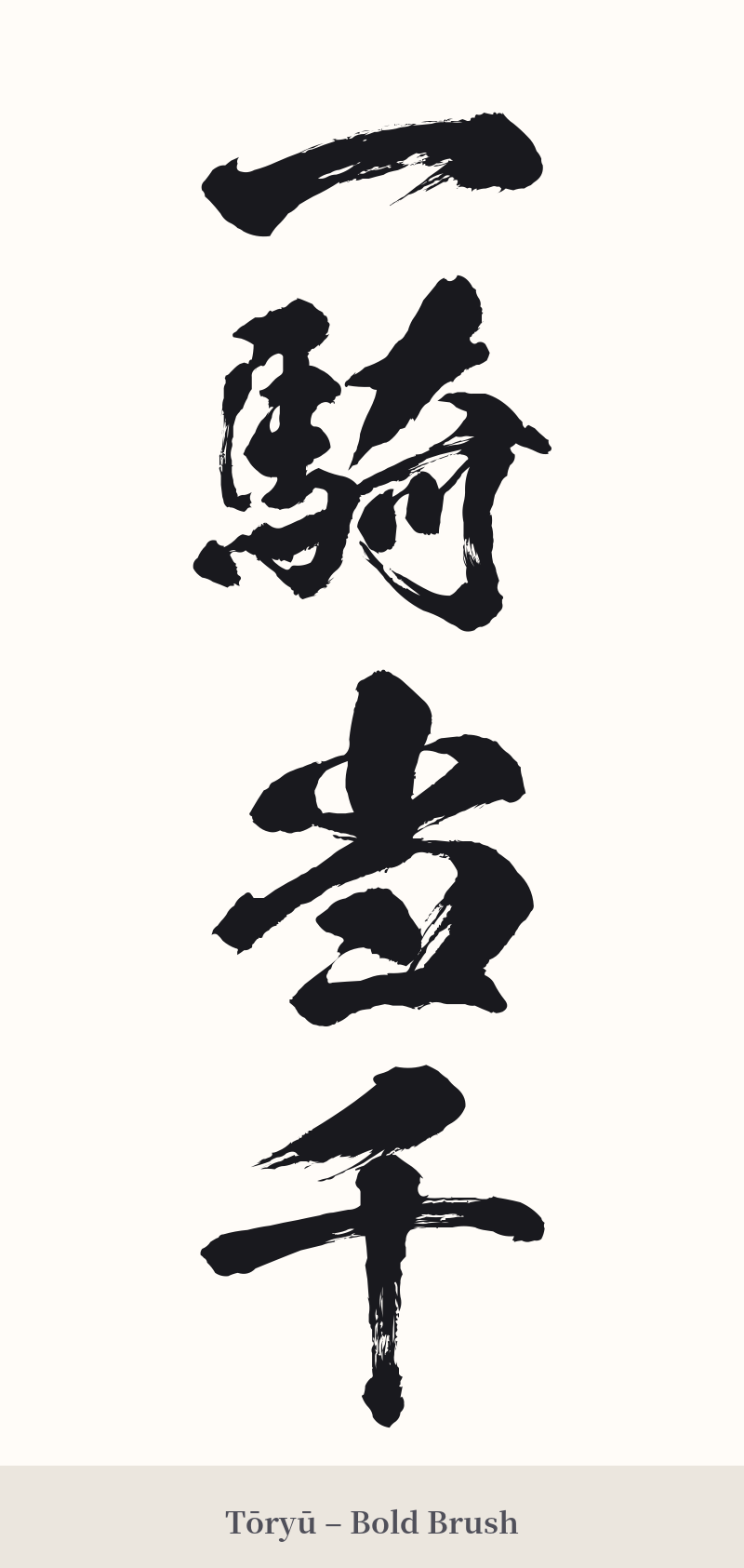
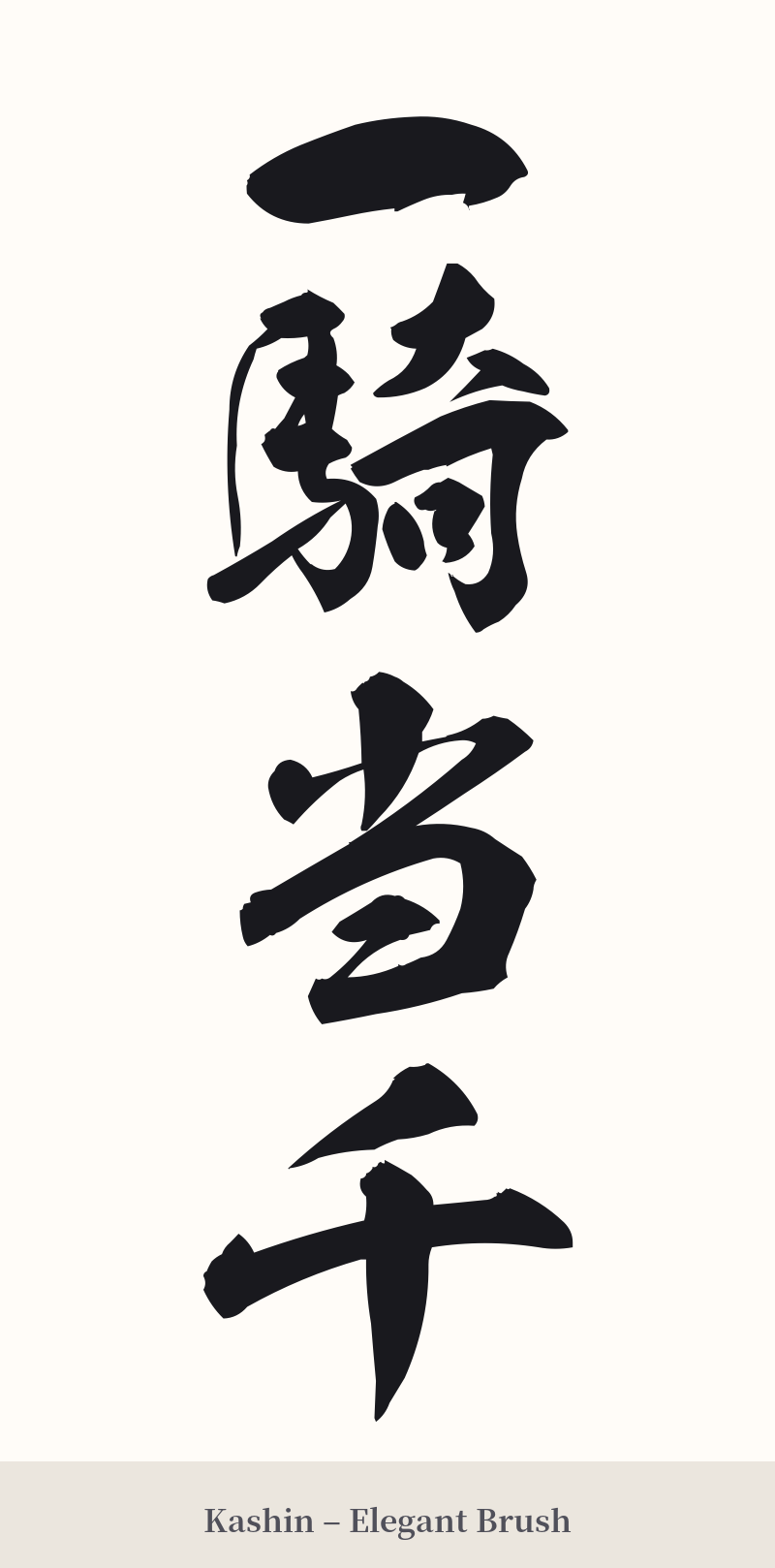
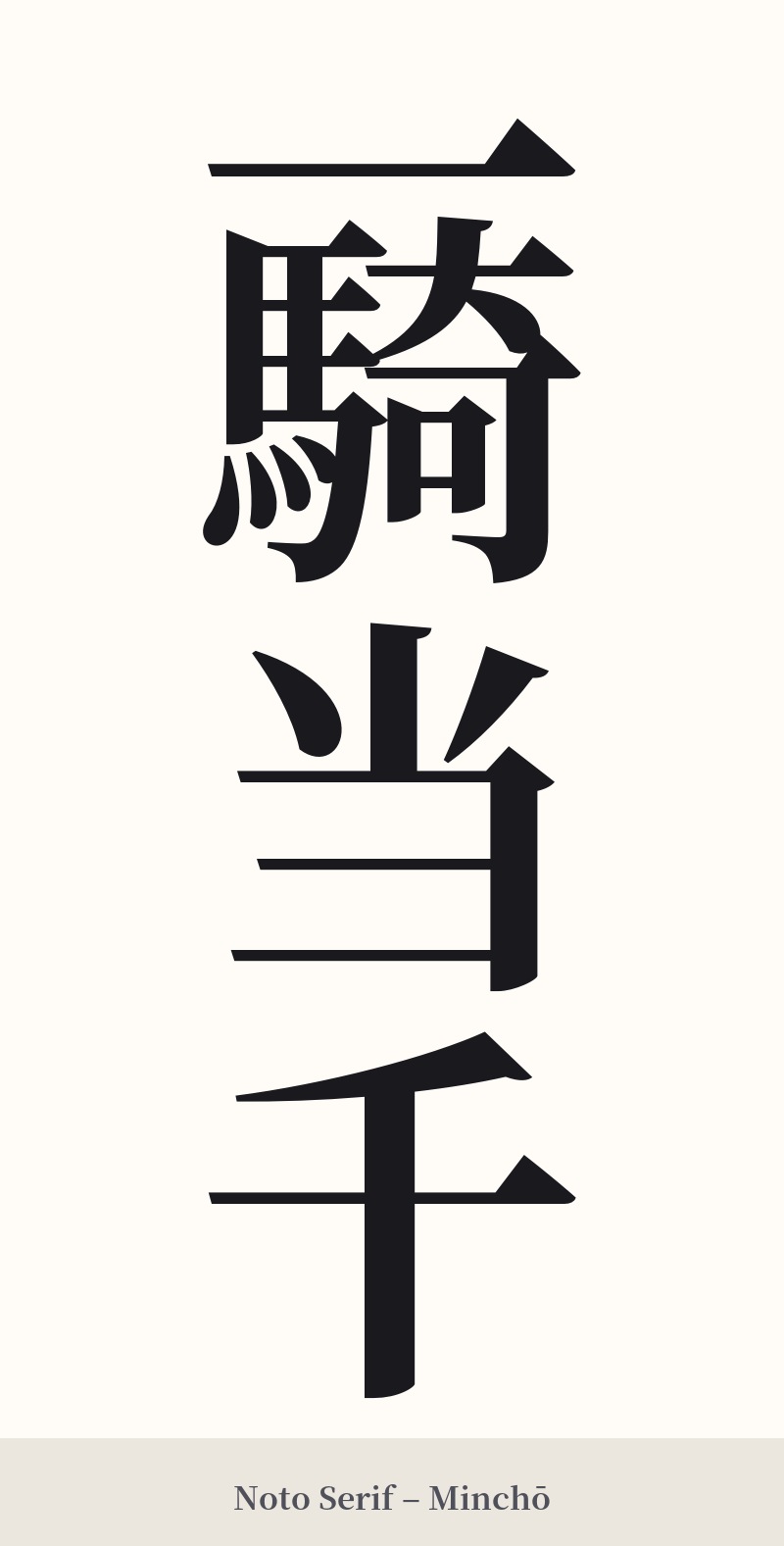
🖌️ Font Styles for 一騎当千
The same kanji can look dramatically different depending on the calligraphy style. Choose a font that matches the mood you want for your tattoo or design.
🎨 Tattoo Suitability
📐 Tattoo Design Guide
一騎当千 is a classic four-character idiom (yojijukugo) that lends itself beautifully to tattoo design, especially in a vertical orientation. Its powerful, warrior-centric meaning offers a lot of creative potential.
– Placement: A vertical alignment is traditional and visually striking. Consider placements like the spine, along the forearm, on the side of the ribs, or down the calf. For a horizontal design, the upper back or chest works well.
– Font Style: The font choice can dramatically alter the mood. For a dynamic and energetic feel, a semi-cursive (Gyōsho) or full cursive script (Sōsho) captures the flow of battle. For a more grounded, stable, and powerful statement, a bold block script (Kaisho) is an excellent choice.
– Visual Elements: While the four characters are powerful enough to stand alone, they can be enhanced with related imagery. Consider weaving the kanji into a design featuring a dragon, a tiger, or a samurai helmet (kabuto). A background of crashing waves or swirling wind can add to the dynamic energy. The contrast between the simple characters (一, 千) and the very complex one (騎) is a design element in itself that a good artist can leverage.
Comments