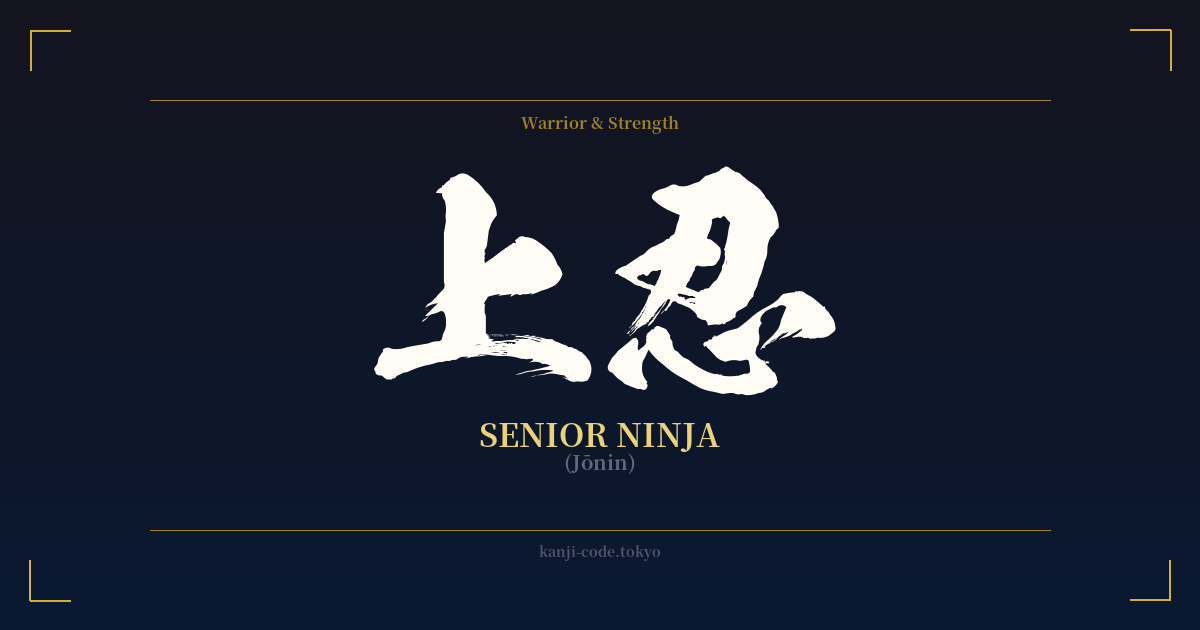
✍️ 上忍 (Jōnin) — Cultural Context
The term 上忍 (Jōnin) translates to 'senior ninja' or 'high ninja,' representing the highest and most respected rank within the traditional hierarchy of shinobi, the covert agents of feudal Japan. While modern pop culture often portrays ninja as black-clad assassins defined by their combat prowess, the historical role of the Jōnin was far more nuanced and strategic. They were the masterminds, the spymasters, and the commanders of their clans.
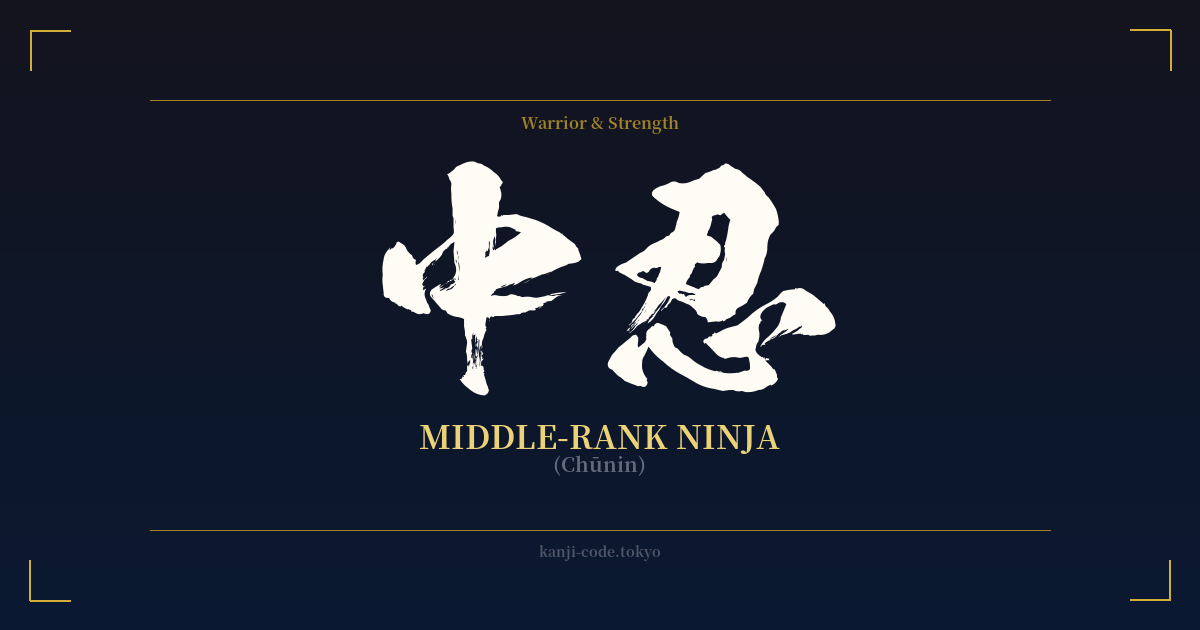
In the rigid structure of ninja clans, such as the famous Iga and Kōga, society was divided into three primary ranks: Jōnin (high-ranking), Chūnin (mid-ranking), and Genin (low-ranking). The Jōnin were at the apex of this pyramid. They were responsible for the clan's overall strategy, negotiating with feudal lords (daimyō), accepting missions, and deploying their agents. Their primary weapon was not a sword or shuriken, but information and influence.
A Jōnin would rarely carry out a mission themselves. Instead, they would analyze the intelligence, devise a plan, and delegate the execution to the Chūnin, who acted as field leaders, and the Genin, who were the boots on the ground. The Jōnin's identity was often a closely guarded secret, sometimes hidden behind the facade of being a respected member of society like a merchant, priest, or artist. This anonymity was crucial for their survival and the success of their intelligence networks.
The word itself encapsulates this role perfectly. '上' (jō) means 'up,' 'above,' or 'superior,' denoting their high rank and authority. '忍' (nin) is the character for 'endurance,' 'stealth,' and 'concealment'—the very essence of the shinobi arts. Together, 上忍 signifies one who has mastered the art of忍 (ninjutsu) to a superior level, not just in physical skill, but in strategy, deception, and leadership.
Today, the idea of the Jōnin has been heavily popularized by manga and anime, most notably 'Naruto,' where characters like Kakashi Hatake hold this title. While these depictions add a layer of fantasy and superhuman ability, they retain the core concept of the Jōnin as an elite, highly skilled, and respected leader. For many, the term now symbolizes mastery, strategic thinking, and the quiet confidence of a true expert operating at the highest level of their craft.
🖌️ Font Styles for 上忍
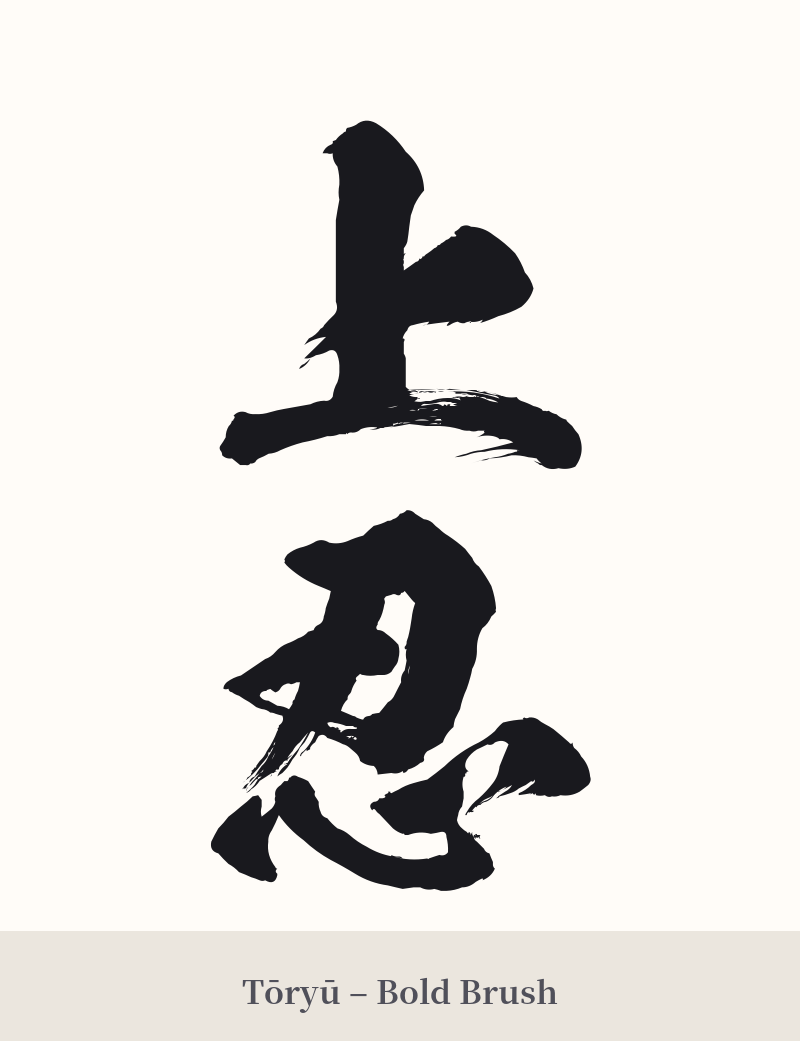
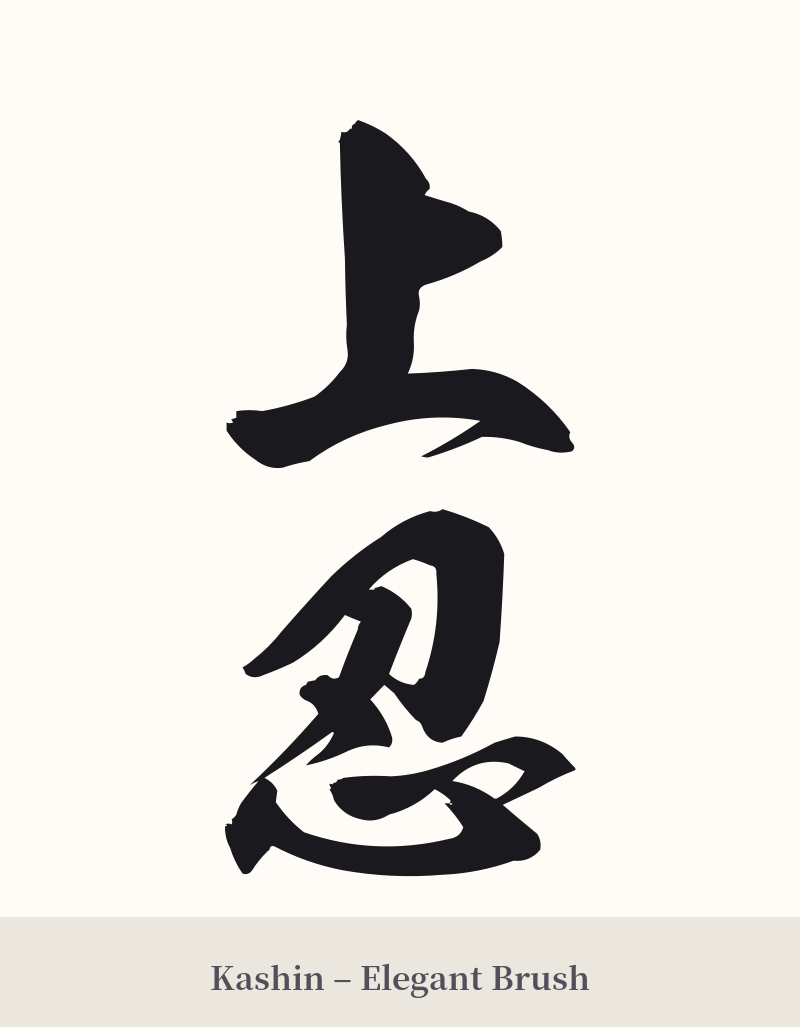
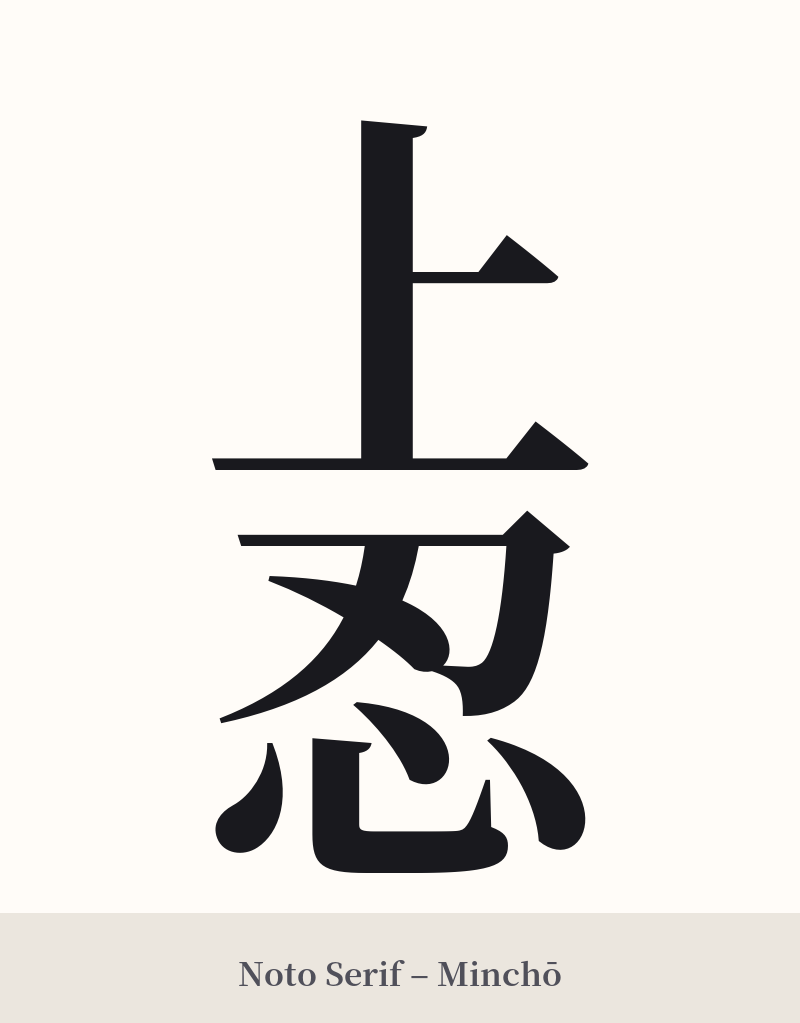
The same kanji can look dramatically different depending on the calligraphy style. Choose a font that matches the mood you want for your tattoo or design.
🎨 Tattoo Suitability
📐 Tattoo Design Guide
The two characters in Jōnin (上忍) offer a balanced and powerful visual that works well for various tattoo designs.
– Placement: A vertical orientation is traditional and looks excellent along the forearm, calf, or even down the spine, mimicking the flow of Japanese calligraphy. For a horizontal design, it fits well across the chest, upper back, or below the collarbone.
– Font Style: For a strong, impactful look, consider a thick, blocky script like a Kaisho or even an angular, modern font. To emphasize the stealth and movement associated with ninja, a semi-cursive Gyōsho style with dynamic brush strokes can be very effective.
– Visual Tips: You can add subtle elements to enhance the design. Consider a background of swirling smoke or shadows to evoke the secretive nature of the shinobi. Some people choose to render the top character, 上 (jō), in red ink to visually emphasize its meaning of 'upper' or 'superior' rank.
Comments