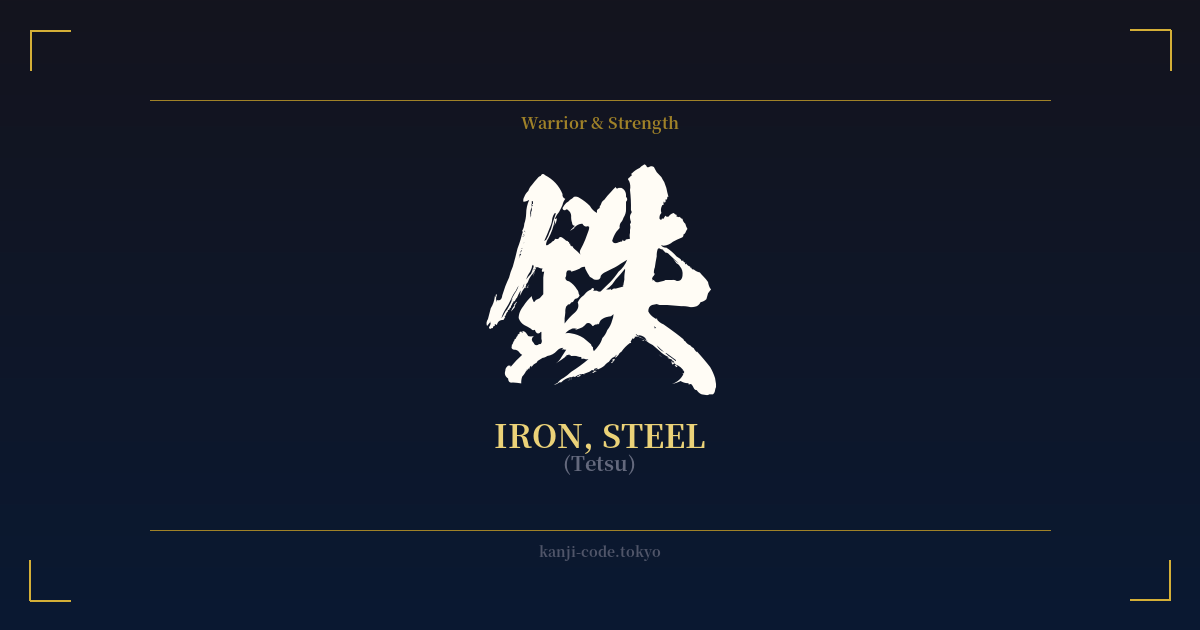
✍️ 鉄 (Tetsu) — Cultural Context
The kanji 鉄 (Tetsu) represents iron, one of the most fundamental elements in human civilization and a cornerstone of Japanese history and culture. Its meaning extends far beyond the literal metal, embodying concepts of strength, durability, and an unyielding will.
Historically, iron transformed Japan. The introduction of ironworking techniques during the Yayoi and Kofun periods led to superior tools, agriculture, and weaponry, fundamentally shaping the nation. The image of the master swordsmith hammering away at glowing steel is deeply ingrained in the Japanese psyche. This process, particularly the creation of the katana, wasn't just a craft; it was a spiritual act. The resulting blade was more than a weapon—it was the soul of the samurai, a perfect balance of hardness and flexibility. Thus, 鉄 carries the legacy of this meticulous, sacred craftsmanship.
In a more abstract sense, 鉄 symbolizes immense strength and fortitude. The expression 鉄の意志 (tetsu no ishi), meaning "iron will," is a common and powerful phrase describing unbreakable determination and resolve. Someone with an "iron will" is resolute, focused, and cannot be easily swayed from their path. This makes the kanji a potent symbol for anyone wishing to represent their own inner strength, perseverance through hardship, or an indomitable spirit.
However, the character also contains a duality. Just as iron can be rigid and inflexible, 鉄 can imply stubbornness or a lack of feeling. A person might be described as having a heart of iron (鉄の心臓, tetsu no shinzō) if they are cold or nerveless. This adds a layer of complexity to the character—its strength is its primary virtue, but its rigidity can be a flaw.
In the modern era, 鉄 took on a new meaning with the Meiji Restoration and Japan's rapid industrialization. It became the symbol of progress, technology, and national power. The word for railway, 鉄道 (tetsudō), literally means "iron road," cementing the kanji's association with modernity, connection, and the industrial might that propelled Japan onto the world stage. Today, 鉄 represents both the ancient, forged spirit of the warrior and the relentless drive of modern innovation.
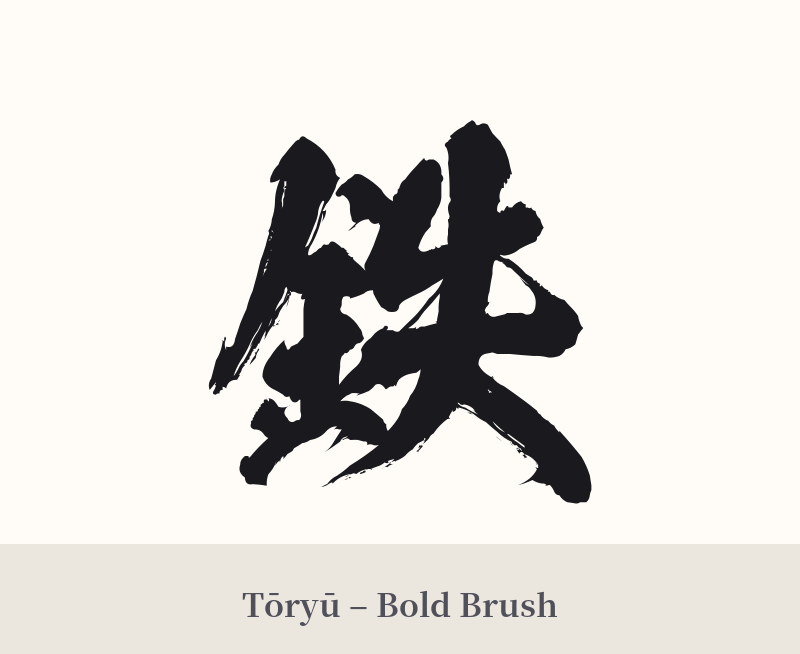
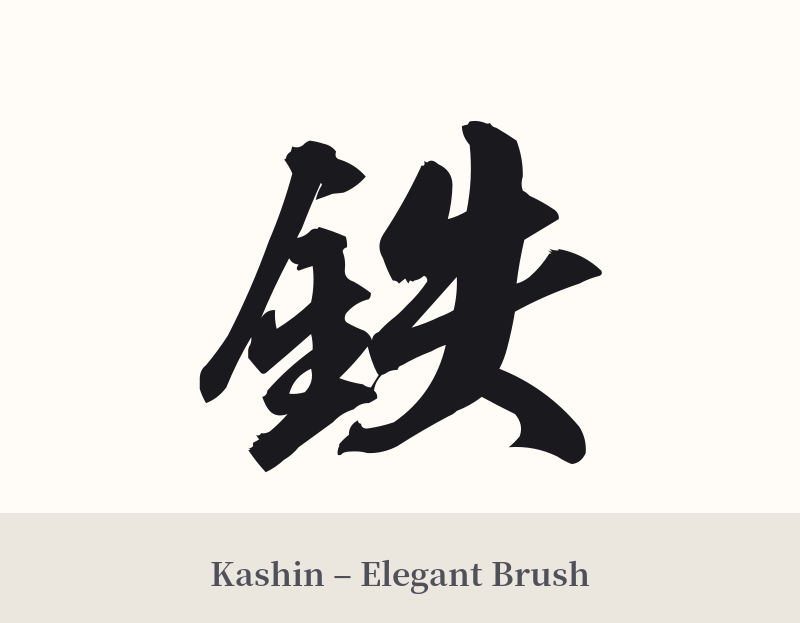
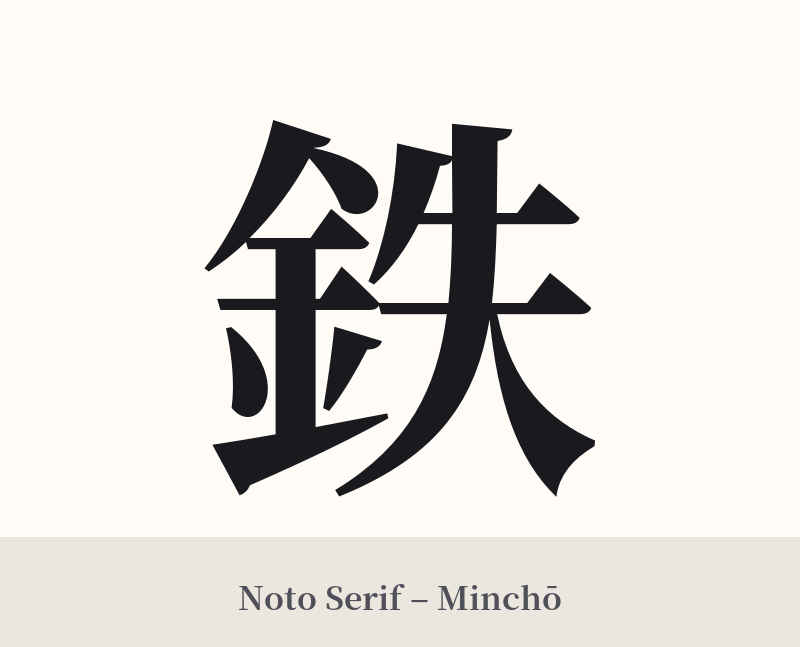
🖌️ Font Styles for 鉄
The same kanji can look dramatically different depending on the calligraphy style. Choose a font that matches the mood you want for your tattoo or design.
🎨 Tattoo Suitability
📐 Tattoo Design Guide
The kanji 鉄 has a solid, grounded structure that works well for a variety of tattoo designs. Its meaning of strength and resilience makes it a powerful statement piece.
– Placement: For a bold statement, consider the forearm, calf, or bicep where the character's strong lines can be clearly seen. For a more personal emblem of inner strength, the chest or back are excellent choices.
– Style: A thick, blocky font or a bold Kaisho (block script) style will emphasize the kanji's inherent sense of power and stability. Conversely, a flowing Gyosho (semi-cursive) or Sosho (cursive) calligraphy style can connect the design to the artistic and spiritual traditions of swordsmithing and Shodo (calligraphy), giving it a more dynamic and historical feel.
– Visuals: This kanji pairs well with imagery related to its meaning. Consider incorporating elements like a length of chain, a Japanese maple leaf to contrast the hardness with nature, or subtle sparks to evoke the image of a forge. It can also serve as a foundational element within a larger piece, such as a samurai or dragon tattoo.
Comments