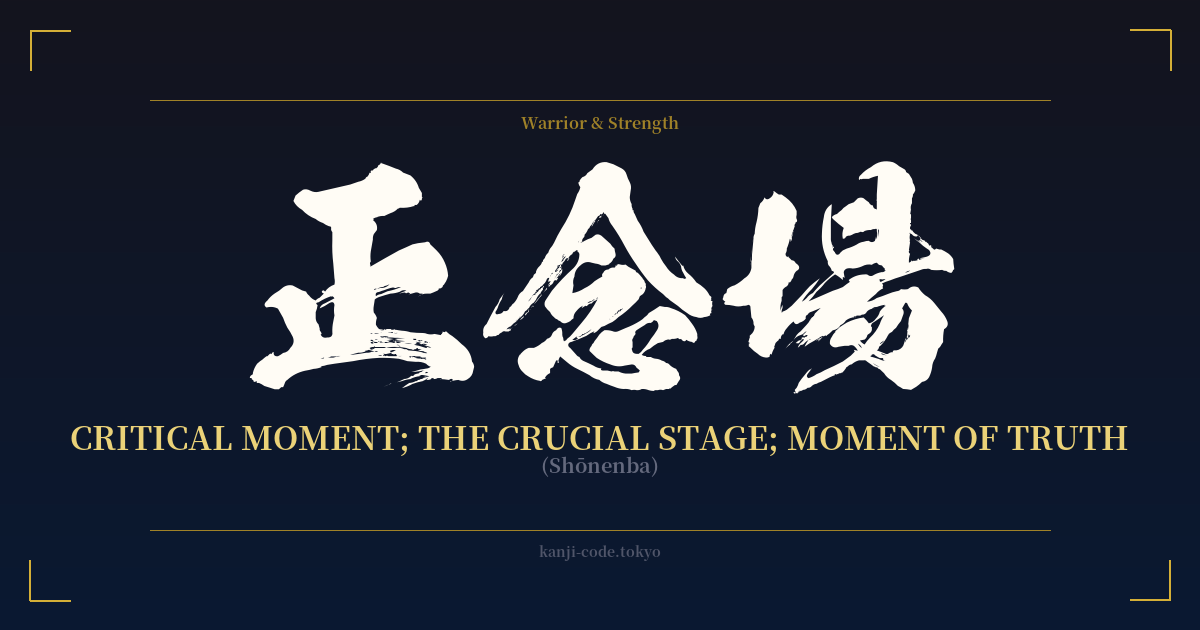
✍️ 正念場 (Shōnenba) — Cultural Context
正念場 (Shōnenba) is a potent Japanese word that translates to "the critical moment," "the crucial stage," or "the moment of truth." It signifies a point where one's true ability, character, and spirit are put to the ultimate test. It’s the make-or-break scene in the story of your life, where the outcome hangs in the balance.
The term has fascinating origins in both Buddhist philosophy and traditional Japanese theater. The first two characters, 正念 (shōnen), form a Buddhist concept meaning "right mindfulness" or "correct thought." This is a core tenet of the Noble Eightfold Path, emphasizing a state of clear, focused awareness, free from distraction and delusion. It is the practice of keeping one's mind firmly in the present.
The final character, 場 (ba), means "place" or "scene." When combined, 正念場 literally means "the scene of right mindfulness." This phrase was adopted by the world of Kabuki and Jōruri puppet theater to describe the play's climax. This was the most demanding scene for the lead actor, where they had to summon all their skill and concentration to perfectly embody their character's defining moment. It was their shōnenba, where their talent was laid bare for all to see.
From the stage, the word entered everyday language. Today, Japanese people use it to describe high-stakes situations in all walks of life. For an athlete, the final seconds of a championship game is their shōnenba. For a student, a final exam that determines their future is a shōnenba. In business, a crucial presentation to secure funding is a shōnenba.
What makes the concept of Shōnenba so compelling is that it’s not just about crisis or danger. It's about performance under pressure. It frames a challenge not as a threat to be feared, but as an opportunity to demonstrate one's true worth. It’s a call to face the decisive moment with a clear head, unwavering focus, and the full force of your spirit.
🖌️ Font Styles for 正念場
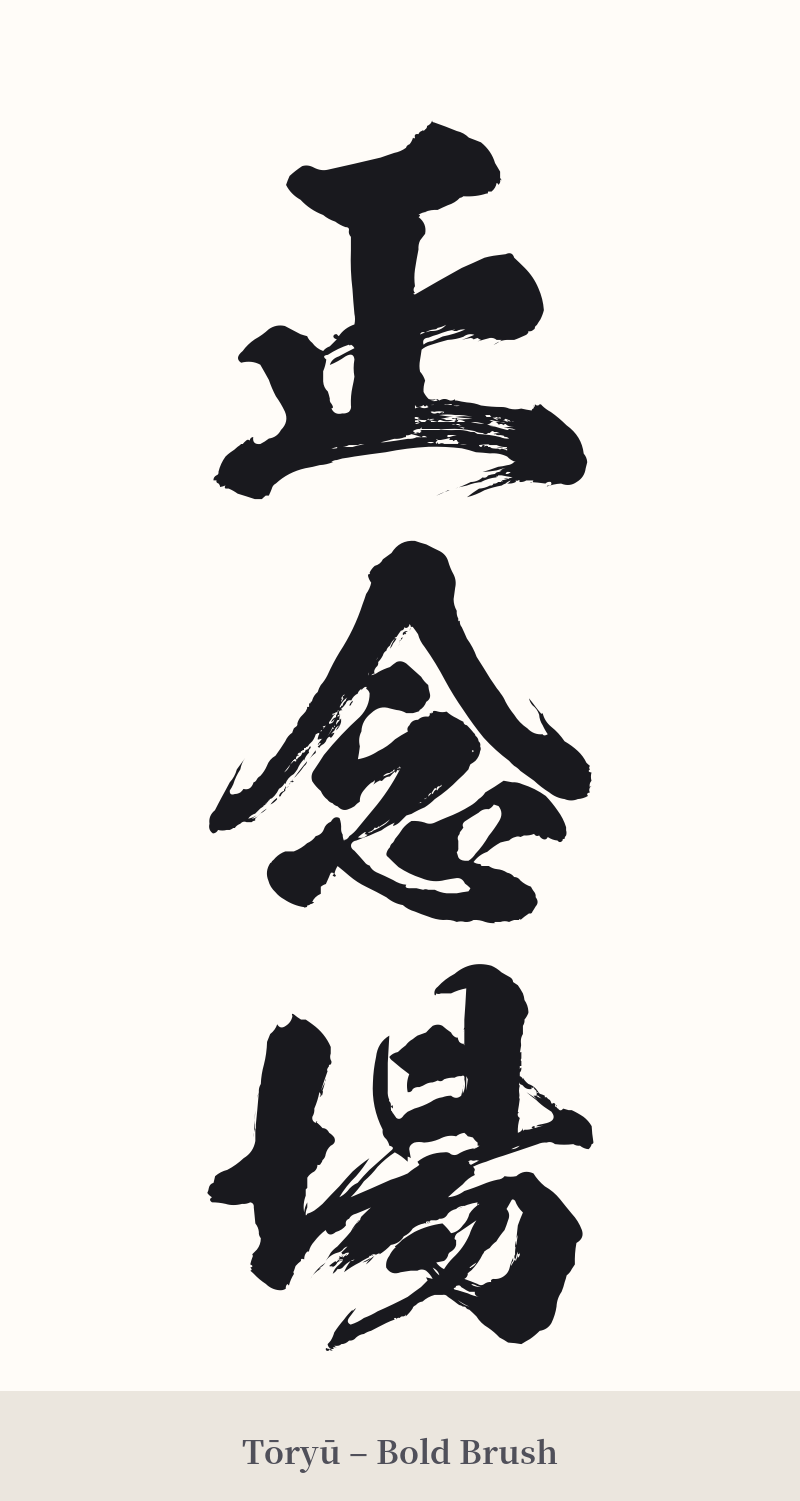
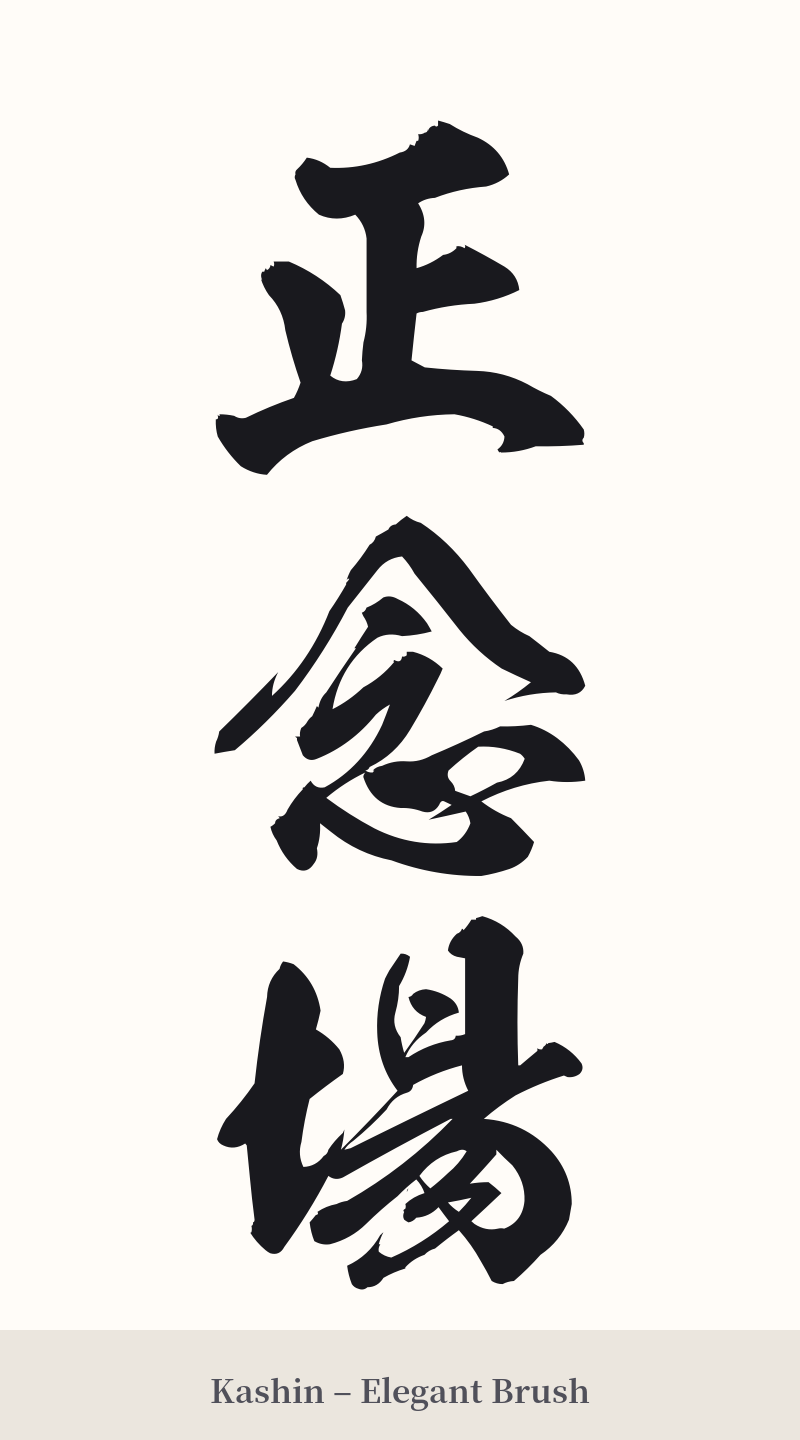
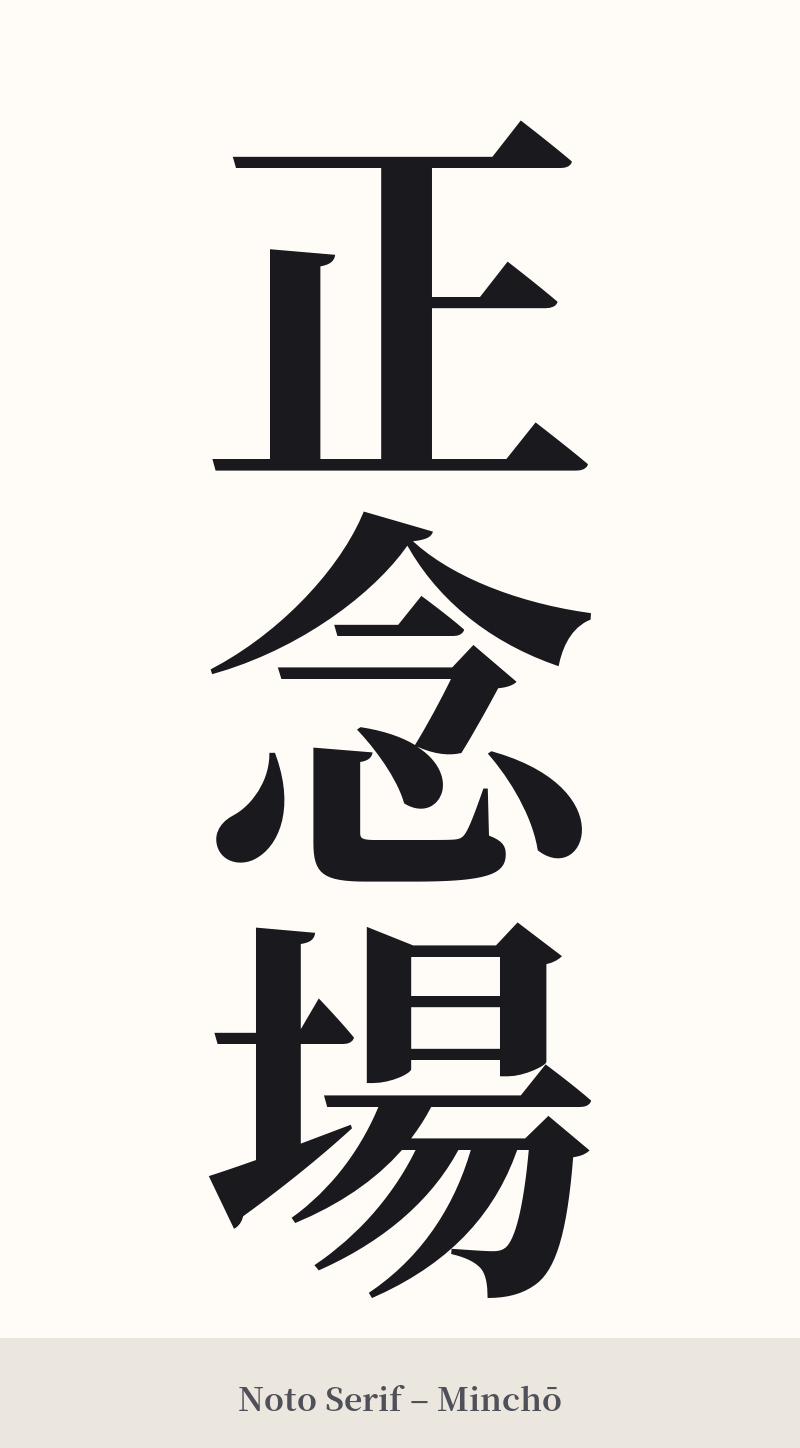
The same kanji can look dramatically different depending on the calligraphy style. Choose a font that matches the mood you want for your tattoo or design.
🎨 Tattoo Suitability
📐 Tattoo Design Guide
The three characters of 正念場 (Shōnenba) offer a balanced and powerful visual, making it an excellent choice for a tattoo.
– Placement: Vertical alignment is highly recommended to honor the traditional writing style and create a strong visual flow. Ideal placements include the spine, forearm, or calf. A horizontal design can also work well across the chest or upper back.
– Font Style: The font can dramatically shape the feeling of the tattoo. A dynamic, semi-cursive script (Gyosho) can capture the energy and tension of the 'critical moment.' For a feeling of stability and unwavering focus, a bold, clean block script (Kaisho) is an excellent choice.
– Visual Tips: These characters are impactful enough to stand alone. Avoid cluttering the design with too many other elements. If you do add imagery, consider something that represents your personal 'shōnenba,' but ensure it complements, rather than competes with, the kanji. Pay close attention to the spacing between the three characters to ensure they read as a single, cohesive word.
Comments