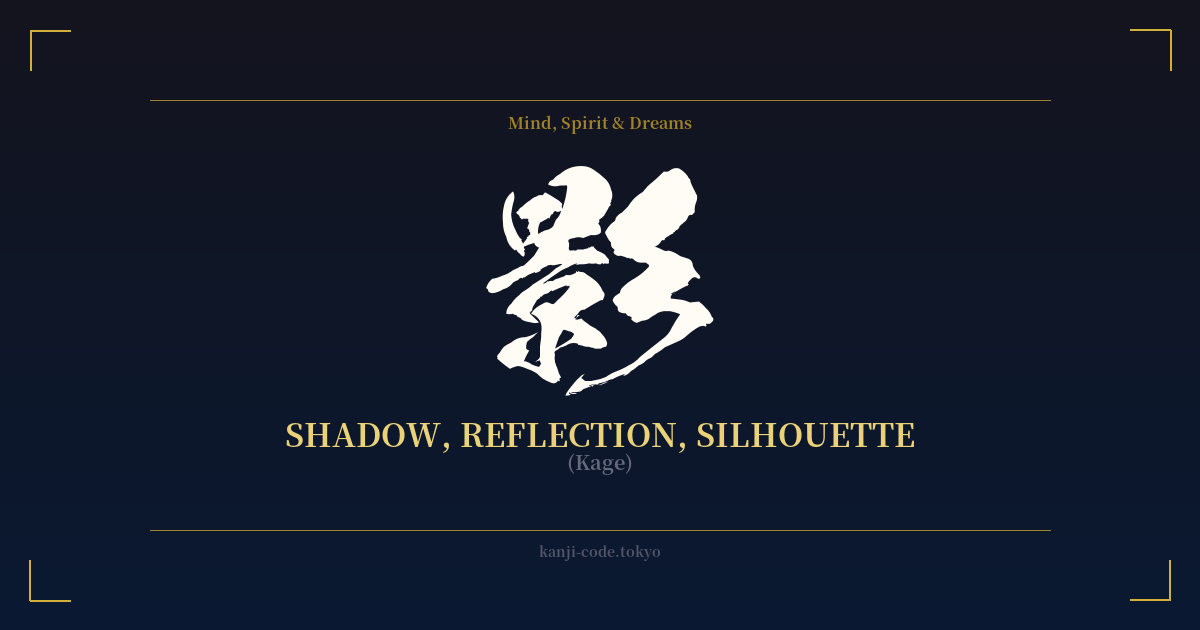
✍️ 影 (Kage) — Cultural Context
The Japanese kanji 影 (Kage) is a character rich with poetic and philosophical depth, extending far beyond its literal translation of 'shadow.' It encapsulates a spectrum of meanings, including a reflection in water or a mirror, a silhouette against a light source, and even the unseen influence or presence of a person or entity.
Originally, the character's components hinted at its meaning. It is composed of 景 (kei), meaning 'scenery' or 'view,' and 彡 (san), a radical representing shape, pattern, or light rays. Together, they create the image of a shape or pattern cast by the scenery—a shadow formed by an object blocking the light.
In Japanese aesthetics, the concept of shadow is not merely an absence of light but a celebrated element of beauty. This idea is most famously articulated in Jun'ichirō Tanizaki's essay "In Praise of Shadows" (陰翳礼讃, In'ei Raisan). Tanizaki argues that traditional Japanese aesthetics find profound beauty in subtlety, nuance, and the gentle darkness that allows materials like lacquerware and gold leaf to glow with a deep, internal luster. For Tanizaki, shadow is where mystery and beauty reside, a stark contrast to the West's pursuit of bright, uniform illumination. Choosing 影 as a design can be a nod to this unique aesthetic philosophy.
Beyond aesthetics, Kage is deeply woven into the fabric of Japanese culture and folklore. It can signify something intangible, like a person's presence or influence. The common phrase お陰様で (Okage-sama de), which translates to "thanks to you," literally means "by your honorable shadow," implying gratitude for another's support and protection. Conversely, 'kage ga usui' (shadow is thin) describes someone with a weak presence or who goes unnoticed.
In popular culture, 影 is synonymous with the world of the ninja and the samurai. These covert warriors were masters of stealth, operating from the shadows. The term 'Kage' itself is famously used in the anime series Naruto, where the leader of each hidden village holds the title (e.g., Hokage, the 'Fire Shadow'). Here, the shadow is not a symbol of evil, but of a powerful, protective force that guards the village from unseen threats. It represents strength, responsibility, and the willingness to operate behind the scenes for the greater good.
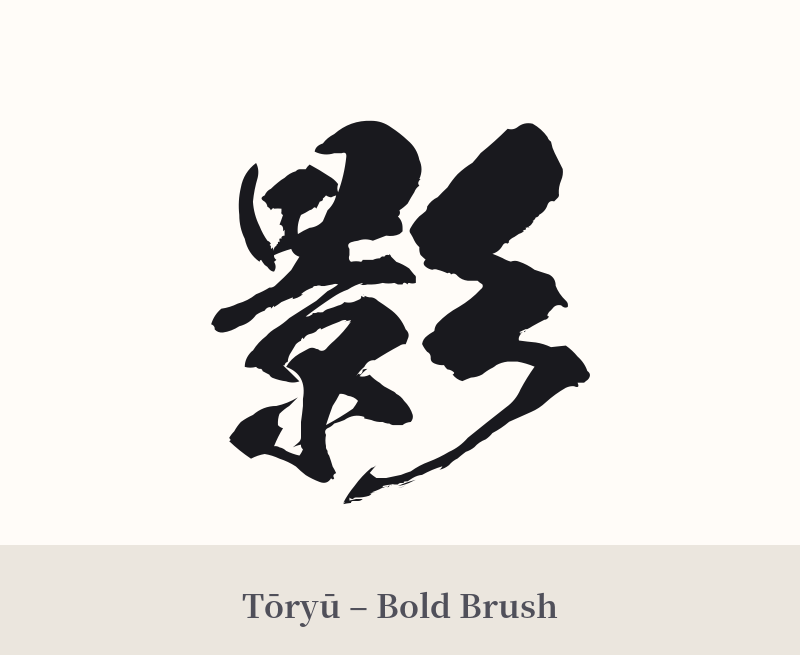
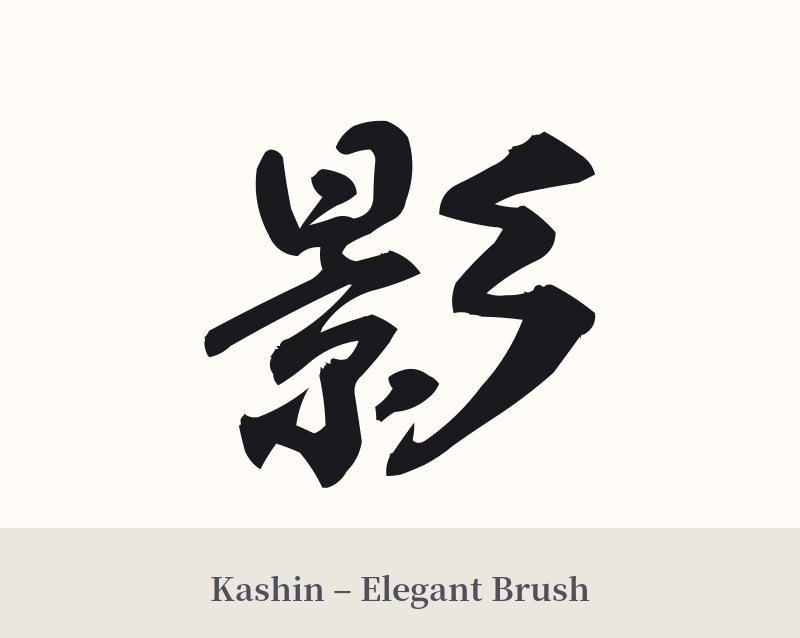
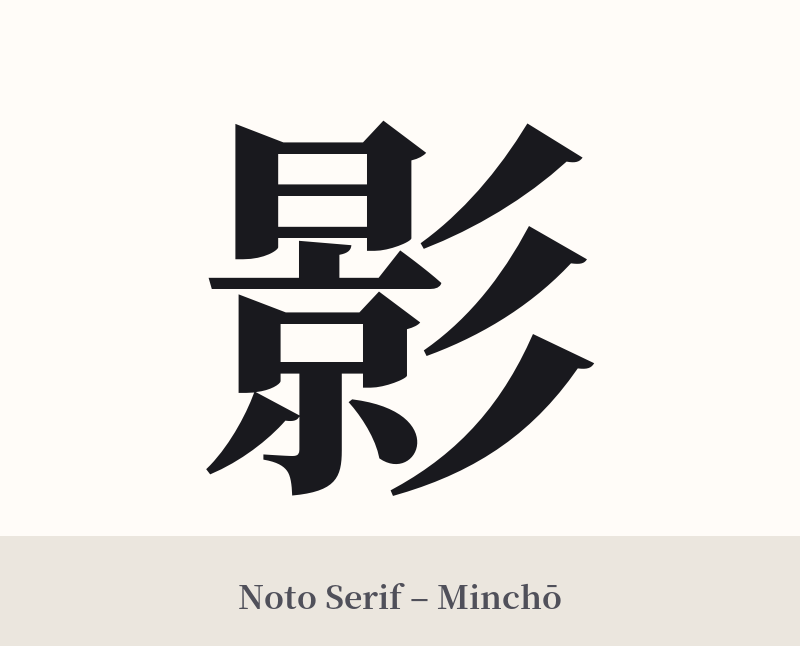
🖌️ Font Styles for 影
The same kanji can look dramatically different depending on the calligraphy style. Choose a font that matches the mood you want for your tattoo or design.
🎨 Tattoo Suitability
📐 Tattoo Design Guide
The kanji 影 (Kage) offers a wealth of design possibilities due to its balanced structure and profound meaning. It's a versatile character that can be adapted to many styles.
– Placement Suggestions: For a vertical orientation, the forearm, calf, or along the spine are excellent choices. For a more subtle placement, the back of the neck or behind the ear works well. A larger design on the back or chest allows for more intricate background details.
– Font Style Recommendations: A fluid, semi-cursive brushstroke style (gyōsho) can emphasize the mysterious and ethereal quality of a shadow. For a stronger, more grounded statement, a bold and angular block script (kaisho) is effective. A minimalist style with thin, clean lines can represent the fleeting nature of a silhouette.
– Visual Tips: Consider integrating the kanji with an image. For example, the character could be formed from the shadow cast by a wolf, a dragon, or a lone samurai. Using a watercolor or ink wash effect, where dark ink bleeds out from the character, can create a dynamic and atmospheric look. Playing with negative space can also be powerful, making the kanji appear as if it's emerging from or receding into the skin.
Comments