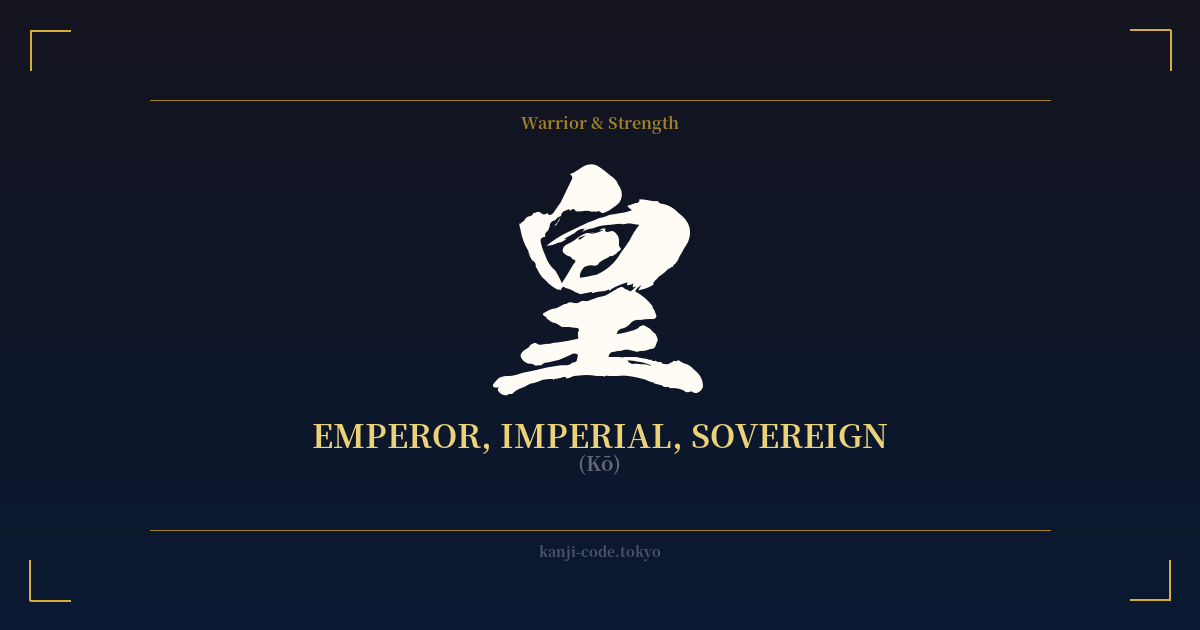
✍️ 皇 (Kō) — Cultural Context
The kanji 皇 (Kō) is one of the most powerful and culturally significant characters in the Japanese language, carrying the weight of millennia of history, tradition, and reverence. Its primary meaning is 'emperor' or 'imperial,' and its usage is almost exclusively tied to the Emperor of Japan and the Imperial Family.
The character’s structure offers a glimpse into its meaning. It is a combination of 白 (shiro – white) on top of 王 (ō – king). While 白 means white, in ancient etymology, it often represented something pure, shining, or divine, like a radiant crown. Therefore, 皇 depicts the 'shining king' or the 'king above all other kings,' a sovereign who rules with divine authority.
In Japan, the distinction between a King (王) and an Emperor (皇) is crucial. A king rules a kingdom, but an emperor rules an empire, a title considered superior. The Japanese Emperor, or 天皇 (Tennō, literally 'Heavenly Sovereign'), was historically seen as a direct descendant of the sun goddess Amaterasu Ōmikami, granting the position a divine status unique in the world. This divine lineage is central to Shintoism and the Japanese national identity.
Throughout history, the Emperor's role has shifted dramatically. In ancient times, emperors held direct political power. During the long era of samurai rule, from the Kamakura period to the Edo period, the Emperor became a symbolic and religious figurehead, while real power was wielded by the shōgun. Following the Meiji Restoration in 1868, the Emperor was restored as the center of the nation and was elevated to a god-like status that fueled Japanese nationalism leading up to World War II.
After the war, the new Japanese constitution redefined the Emperor as 'the symbol of the State and of the unity of the People,' stripping him of all political power and divinity. Despite this, the Imperial Family remains a deeply respected and revered institution in modern Japan. The topic is not one for casual discussion or lighthearted appropriation, and the symbols associated with it, especially the kanji 皇, are treated with utmost respect.
Because of this deep, complex, and sensitive history, the character 皇 is rarely, if ever, used in casual contexts. It appears in words like 皇居 (Kōkyo – the Imperial Palace), 皇室 (Kōshitsu – the Imperial House), and 皇后 (Kōgō – the Empress). To use this character is to invoke the entire history and spiritual weight of the Japanese throne.
🖌️ Font Styles for 皇
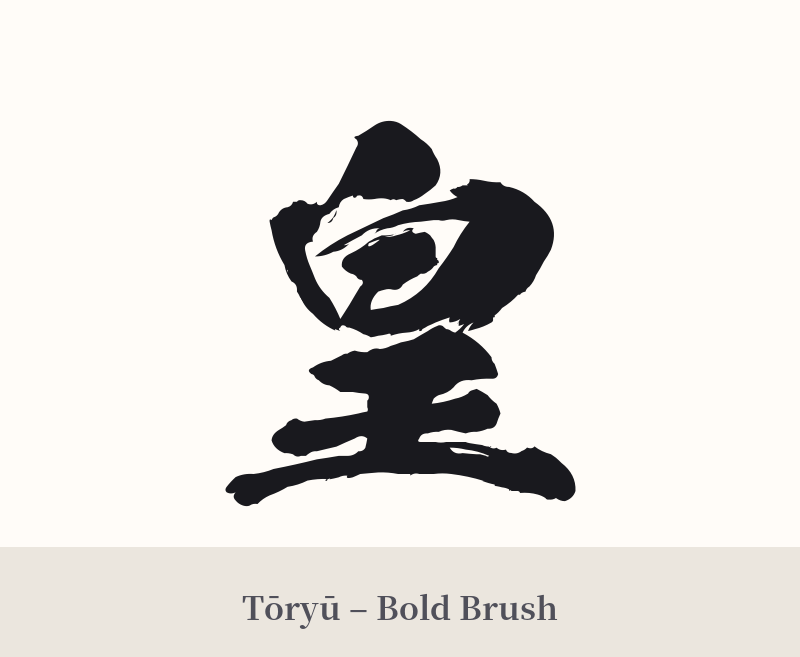
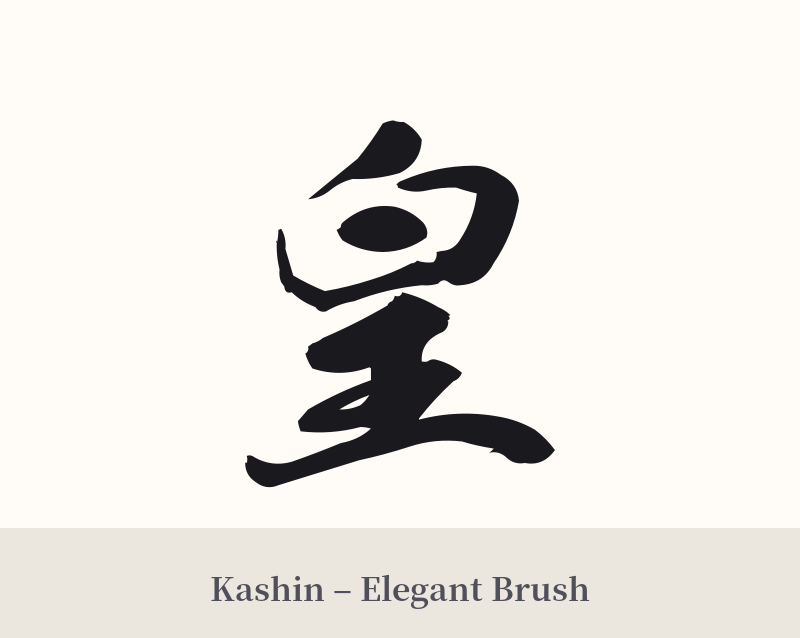
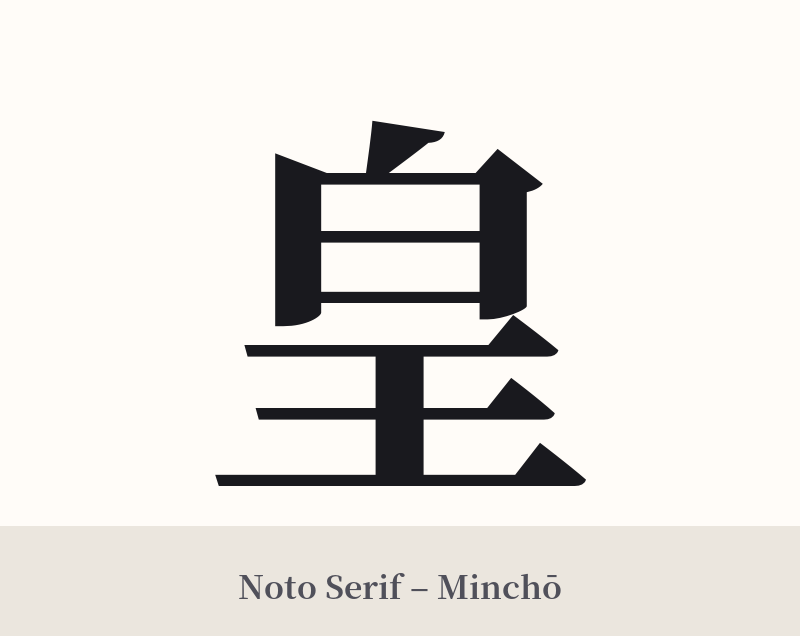
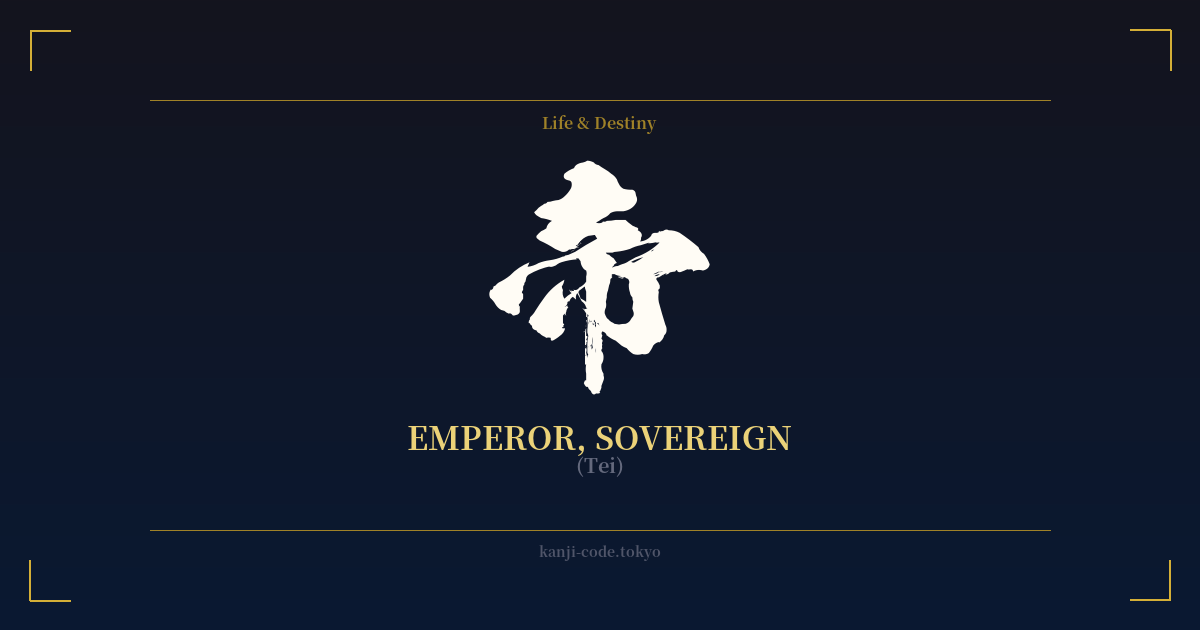
The same kanji can look dramatically different depending on the calligraphy style. Choose a font that matches the mood you want for your tattoo or design.
🎨 Tattoo Suitability
📐 Tattoo Design Guide
Given the extreme cultural sensitivity of this kanji, careful consideration is paramount if you choose it for a tattoo. The design should reflect the character's inherent gravity and formality.
– Placement: Choose a respectful and prominent location, such as the upper back, chest, or upper arm. Avoid placing it on lower parts of the body, like the legs or feet, which would be seen as profoundly disrespectful.
– Font Style: Traditional and formal calligraphy styles are the only appropriate choices. A strong, stately Kaisho (block script) or a formal, elegant Mincho (serif style) would work well. Avoid cursive, stylized, or modern fonts, as they would clash with the solemnity of the symbol.
– Visual Tips: This kanji is best rendered as a standalone piece. Its power lies in its singular meaning and form. Adding other elements risks trivializing or misinterpreting its significance. A simple, bold, black ink design will have the most impact and convey the intended gravitas.
Comments