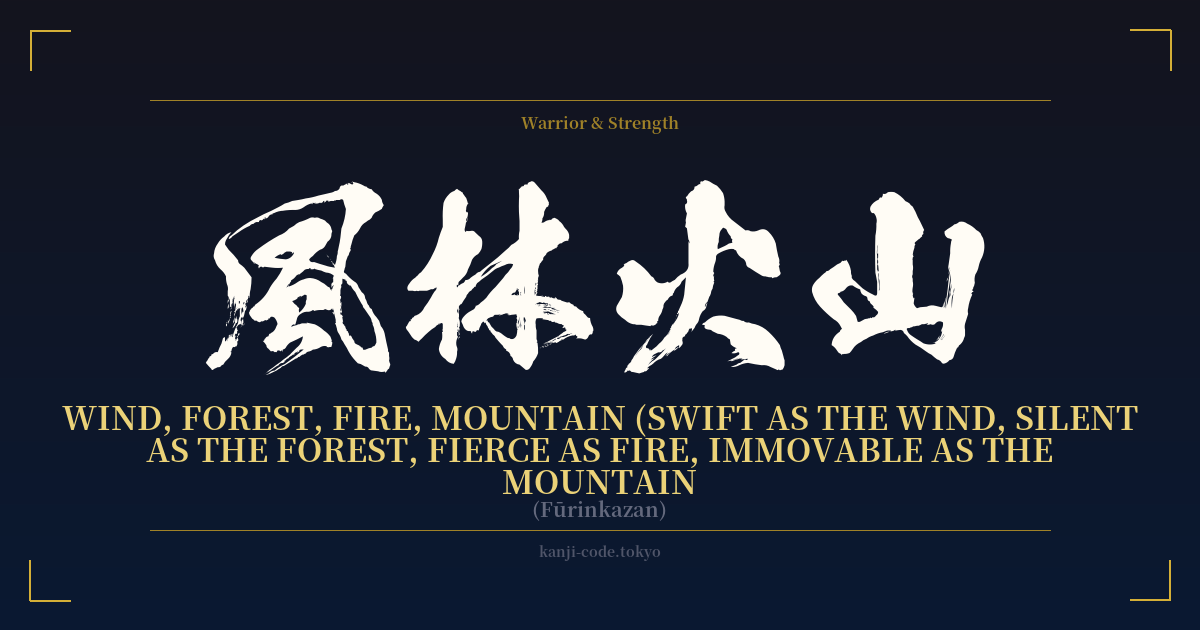
✍️ 風林火山 (Fūrinkazan) — Cultural Context
Fūrinkazan is one of the most famous and evocative phrases in Japanese warrior culture, a four-character idiom embodying a complete philosophy of strategy and conduct. The characters literally mean Wind (風), Forest (林), Fire (火), and Mountain (山), but they are shorthand for a longer passage on military tactics.
The phrase originates from Chapter 7 of the ancient Chinese military treatise, The Art of War, written by Sun Tzu around the 5th century BC. The full verse reads: 「其の疾きこと風の如く、其の徐かなること林の如く、侵掠すること火の如く、動かざること山の如し」. This translates to, "Let your rapidity be that of the wind, your silence that of the forest, your onslaught that of fire, and your immovability that of a mountain."
While its origins are in China, Fūrinkazan was immortalized in Japan by one of the most powerful and brilliant warlords of the Sengoku period (c. 1467-1615), Takeda Shingen. Known as the "Tiger of Kai," Shingen was a master strategist and a formidable military leader. He adopted this passage from Sun Tzu and had it inscribed on his battle banners, making it the iconic symbol of his army's prowess.
The banner served as a constant reminder to his troops of the ideal state of a warrior and an army. They were to move with incredible speed, gather silently and unseen, attack with overwhelming ferocity, and hold their ground with the unshakeable resolve of a mountain. This philosophy guided Shingen's forces to numerous victories and cemented his legendary status.
The rivalry between Takeda Shingen (the Tiger) and his nemesis, Uesugi Kenshin (the "Dragon of Echigo"), is a cornerstone of samurai lore, and the Fūrinkazan banner was the emblem of this epic conflict. The four principles represent a holistic approach, not just to battle, but to any challenge requiring a balance of action and inaction, aggression and defense, speed and patience.
Today, Fūrinkazan has transcended its military origins. It appears frequently in modern Japanese pop culture, including video games, manga, and anime, where it is used to signify ultimate strategy, power, and an unyielding spirit. It remains a powerful symbol of the samurai ethos and the timeless wisdom of strategic thinking.
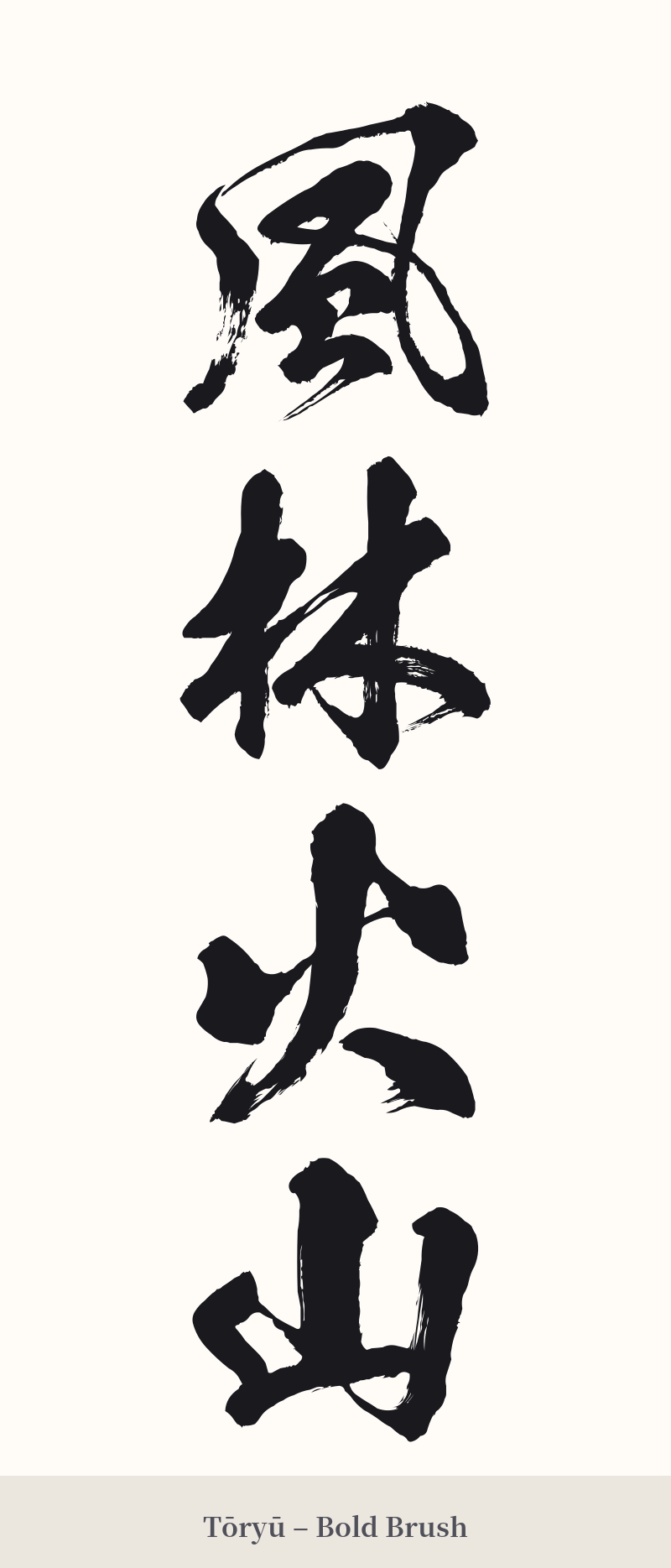
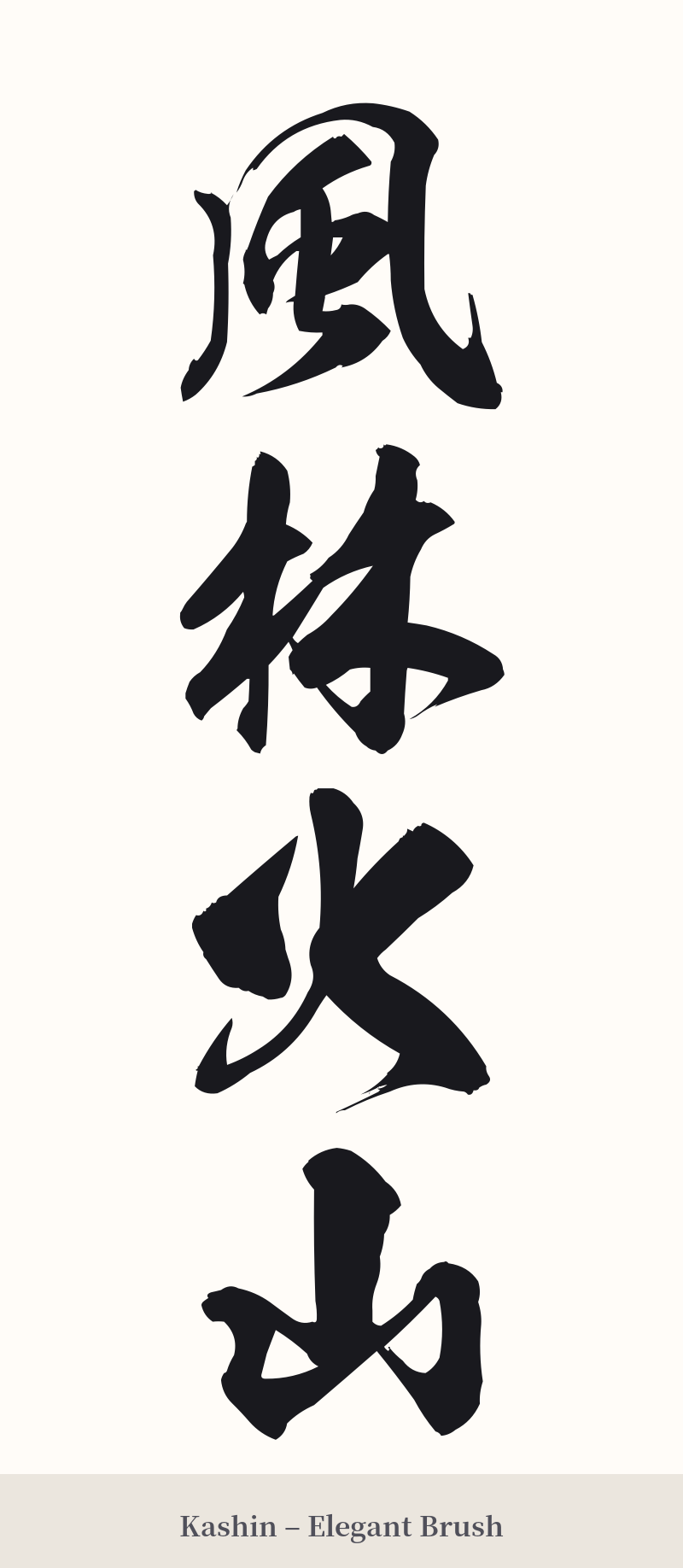
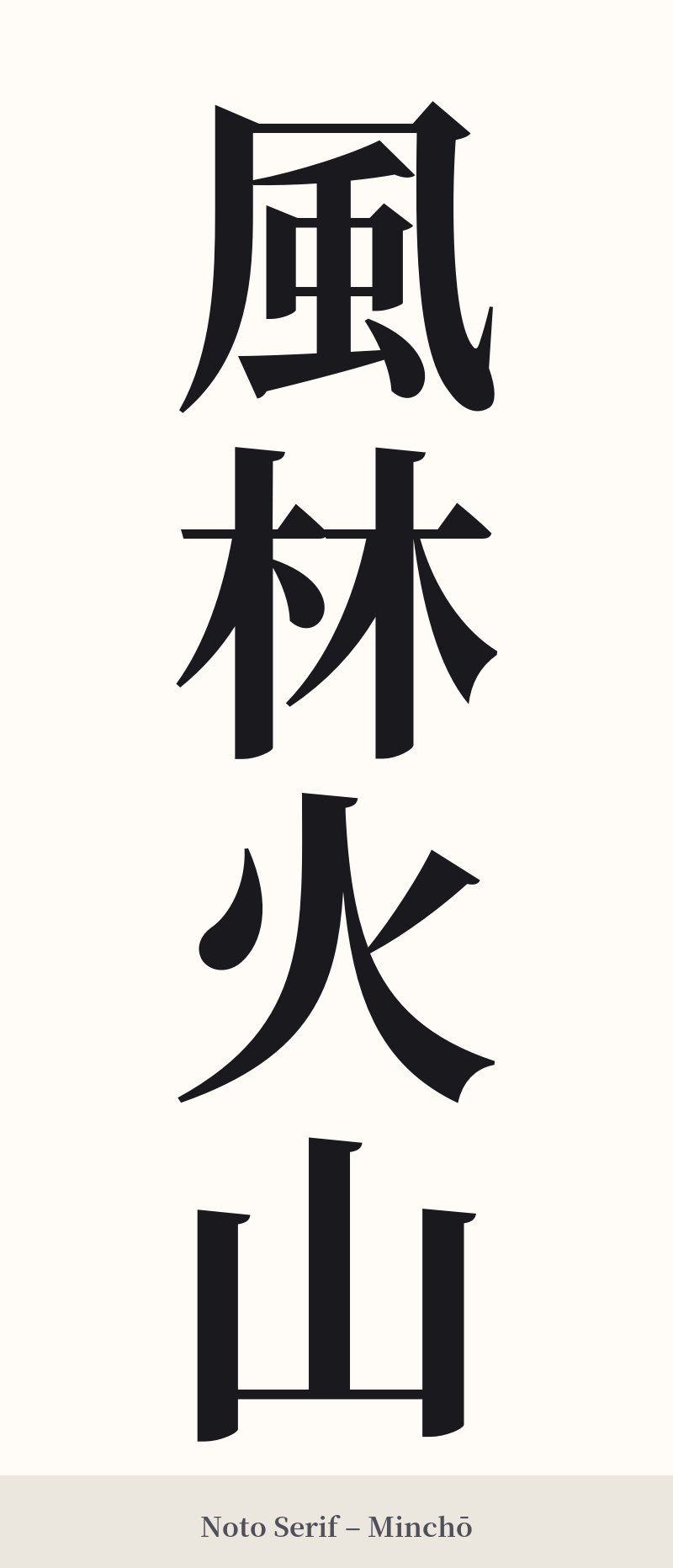
🖌️ Font Styles for 風林火山
The same kanji can look dramatically different depending on the calligraphy style. Choose a font that matches the mood you want for your tattoo or design.
🎨 Tattoo Suitability
📐 Tattoo Design Guide
Fūrinkazan offers a classic and powerful aesthetic for a tattoo. Its four-character structure lends itself beautifully to specific layouts and styles that can enhance its meaning.
– Placement: A vertical orientation is the most traditional and visually striking way to display these kanji. This layout works exceptionally well along the spine, forearm, or calf, creating a look reminiscent of the original battle banners.
– Font Style: The choice of script can dramatically alter the feeling of the piece. A bold, dynamic brushstroke style (shodō) is highly recommended to capture the historical and martial spirit. For specific scripts, consider Gyosho (semi-cursive) to convey movement and energy, or a strong, stable Kaisho (block script) to emphasize the 'mountain' aspect.
– Visual Elements: To add personal significance, you could incorporate the Takeda clan crest (a four-diamond shape called Takeda-bishi) into the design. Other complementary imagery includes a tiger (representing Takeda Shingen), or abstract elements of wind, flames, or a mountain landscape integrated around the kanji.
Comments