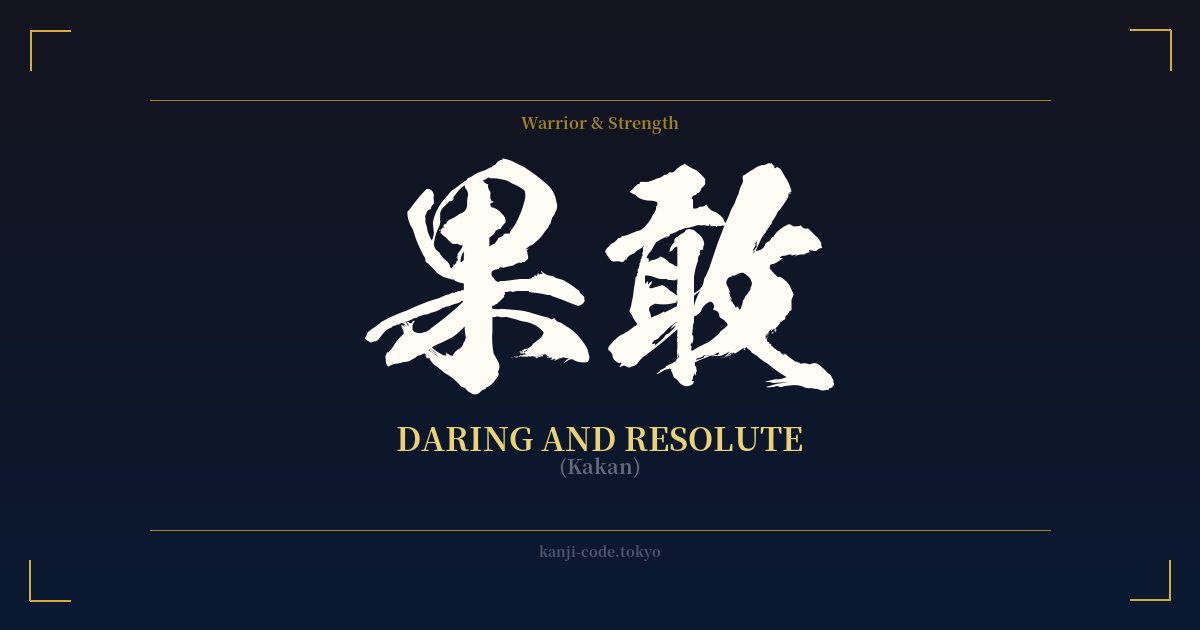
✍️ 果敢 (Kakan) — Cultural Context
果敢 (Kakan) is a Japanese word that embodies a specific and potent form of courage. It doesn't just mean 'brave'; it means 'daring and resolute.' This combination captures the essence of not only having the boldness to act but also the unwavering determination to see that action through to its conclusion. It is courage in motion, a proactive and decisive spirit that confronts challenges head-on.
The power of the word comes from its two component kanji. The first, 果 (ka), means 'fruit,' 'result,' or 'outcome.' It represents the end goal, the successful conclusion of an effort. The second, 敢 (kan), means 'daring' or 'bold.' When combined, they paint a picture of someone who dares to act with the express purpose of achieving a result. It’s the opposite of passive or hesitant bravery; it is the will to execute.
Historically, the concept of 'kakan' is deeply intertwined with the ideals of the samurai and the code of Bushido. A warrior was expected to be 果敢 in battle—to make bold decisions without hesitation and to fight resolutely until the very end. This wasn't reckless abandon but a disciplined form of courage, driven by duty and a clear objective. To be 'kakan' was to transcend the fear of death and focus entirely on the mission at hand.
In modern Japan, 果敢 is no longer confined to the battlefield. It is a highly respected characteristic in any field that requires bold initiative. You might hear it used to describe an entrepreneur who launches a disruptive new company, a politician who pushes for difficult but necessary reforms, or an athlete who makes a daring, game-winning play. It’s a term of high praise for anyone who takes calculated risks and demonstrates the fortitude to follow through.
Choosing 果敢 is to embrace a philosophy of active engagement with the world. It’s a declaration that you will not be a passive observer of your own life but a decisive actor. It represents the mental and spiritual strength to face uncertainty, make tough choices, and commit fully to your path, striving always for a tangible and meaningful outcome.
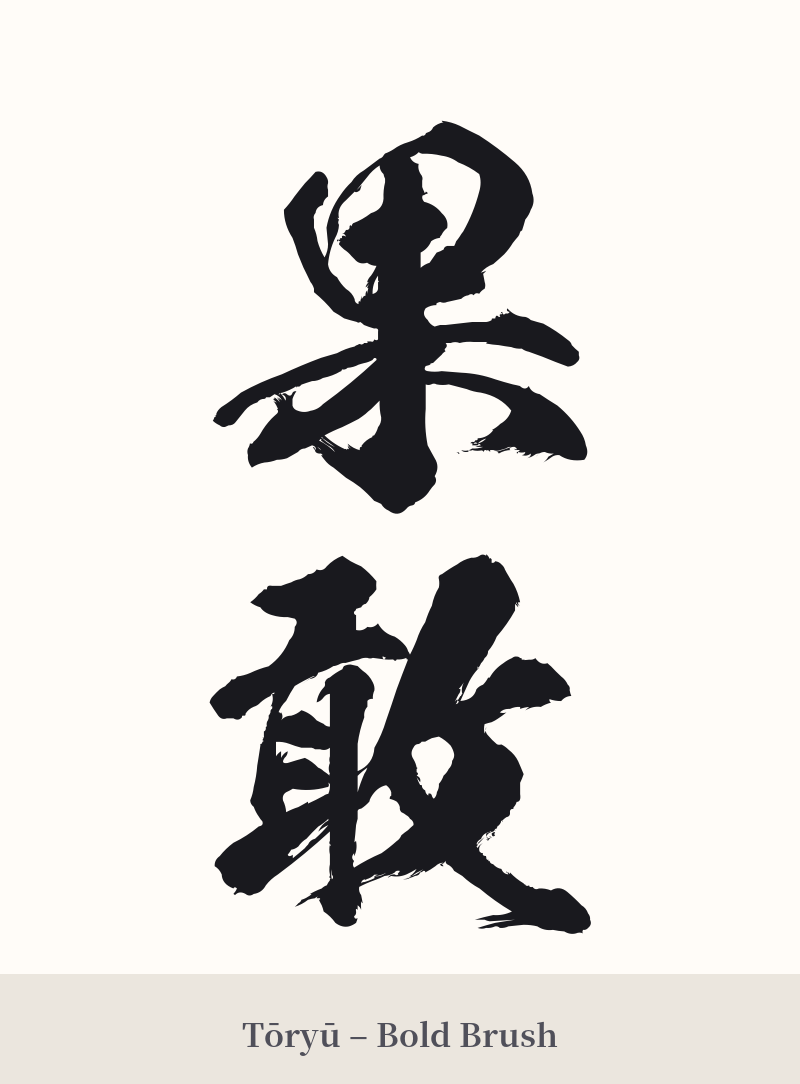
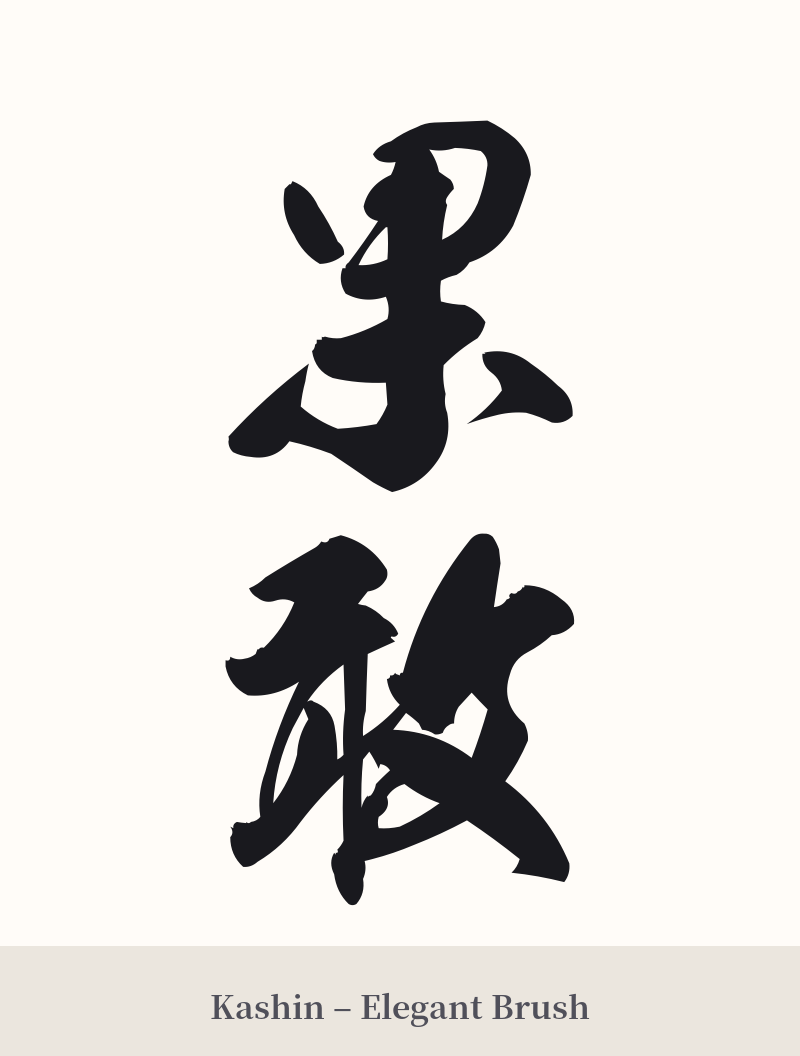
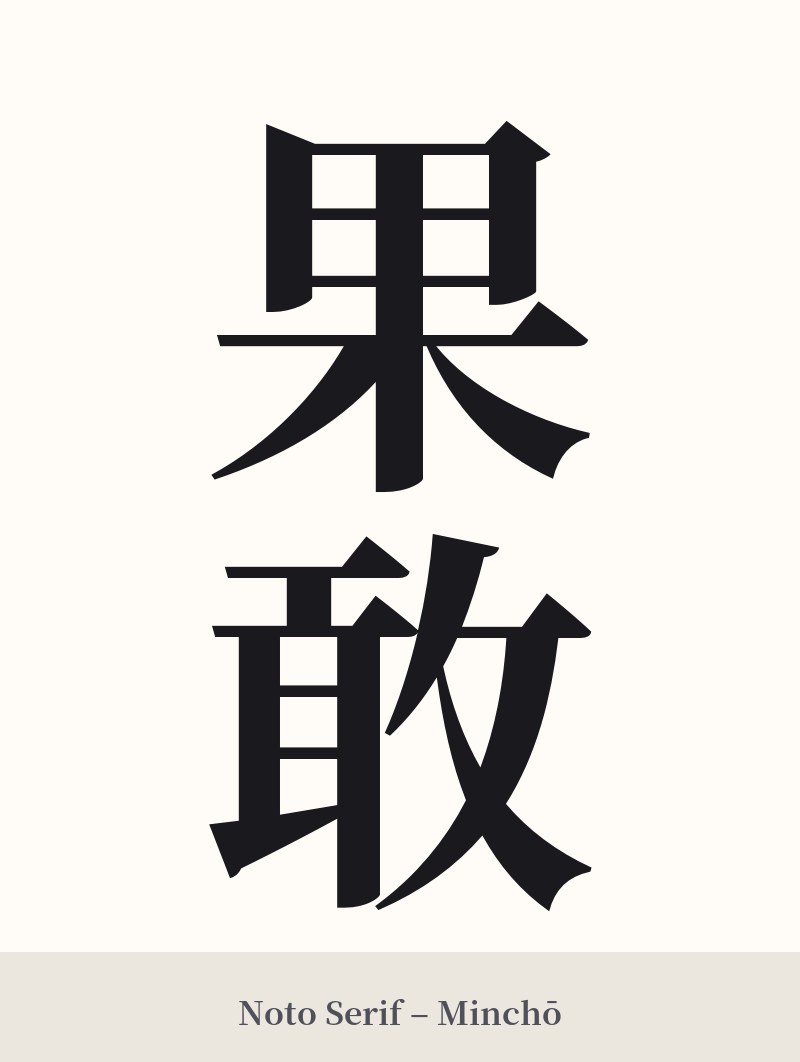
🖌️ Font Styles for 果敢
The same kanji can look dramatically different depending on the calligraphy style. Choose a font that matches the mood you want for your tattoo or design.
🎨 Tattoo Suitability
📐 Tattoo Design Guide
The kanji 果敢 offers a strong and balanced aesthetic for a tattoo, blending a simpler character with a more complex one.
– Placement: A vertical orientation is highly recommended to emphasize its meaning of forward action and resolution. Ideal placements include the forearm, the side of the calf, or along the spine. For a horizontal design, the chest or upper back provides a solid canvas that complements the word's strength.
– Font Styles: The style can dramatically alter the feel. A bold, angular Kaisho (block script) will emphasize the 'resolute' and unshakeable nature of the word. A more fluid Gyosho (semi-cursive script) can capture the 'daring' and active quality. For a more modern interpretation, a clean, sans-serif style font can give it a stoic and minimalist feel.
– Visual Elements: While 果敢 stands powerfully on its own, it can be paired with other imagery. Consider placing it beside a symbol of perseverance like a koi fish swimming upstream, or within an enso (Zen circle) to represent action within the context of a larger whole. The contrast in stroke counts between 果 (8) and 敢 (12) is itself a design feature, creating a natural visual rhythm.
Comments