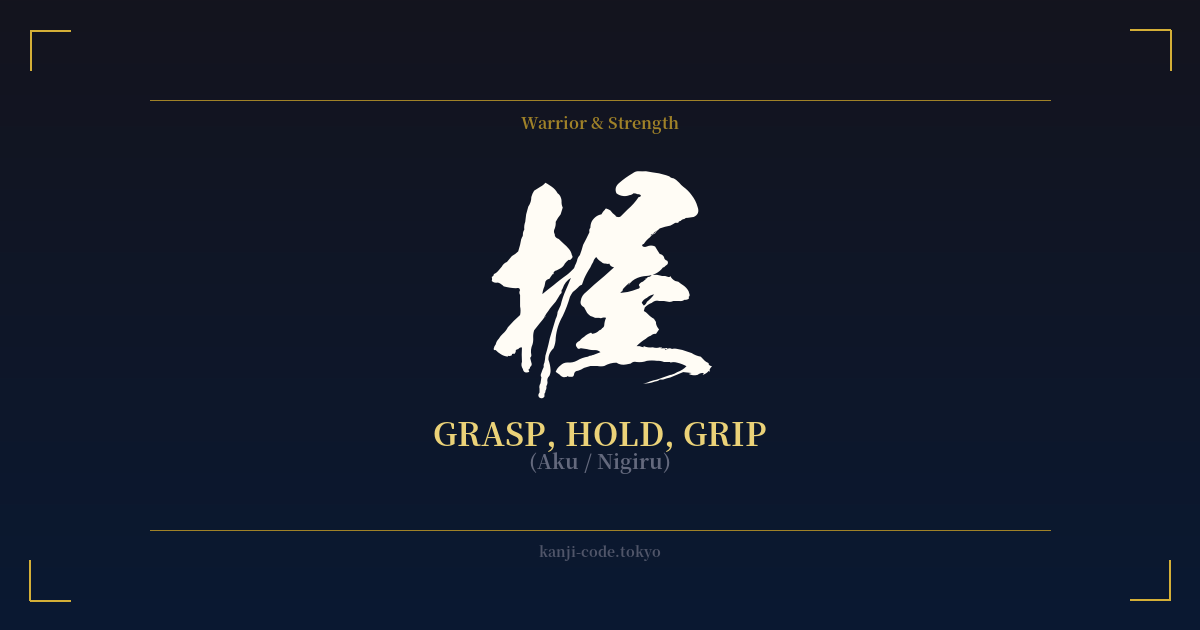
✍️ 握 (Aku / Nigiru) — Cultural Context
The kanji 握 (aku/nigiru) is a character of action and intent, representing the fundamental human ability to grasp, hold, and grip. Its construction tells a story: the radical 扌 (te-hen) on the left clearly signifies 'hand,' while the right side, 屋 (oku/ya), meaning 'house' or 'roof,' acts phonetically but also lends a nuance of enclosing or securing something within one's control, much like a house contains its inhabitants.
In everyday Japanese, the verb 握る (nigiru) is used constantly. You might 握る a pen to write, a steering wheel to drive, or someone's hand to offer comfort. This physical act of closing the fingers around an object is the character's core identity. It’s a direct, unambiguous expression of taking hold.
This physicality extends into powerful metaphors. To 握る power (権力を握る) means to seize and hold political or social control. To 握る a secret (秘密を握る) implies having critical, perhaps compromising, information in your possession. In these contexts, 握る suggests a firm, deliberate, and often unyielding control that is actively maintained.
Nowhere is this concept more vital than in the world of Japanese martial arts (武道, Budō). Whether in Kendo, Judo, or Aikido, the grip is paramount. A swordsman's grip on the tsuka (hilt) of a katana is the very foundation of their every cut and block. In Judo, the grip (kumi-kata) on an opponent's uniform dictates the flow of the match, determining who has the leverage to execute a throw. The term embodies the connection between the warrior and their tool or opponent, a conduit for power and intention.
Yet, 握る is not always about force. It can also describe an act of great care and artistry. A sushi chef performs にぎり (nigiri), delicately forming the vinegared rice in their palm. This is a gentle, precise grasp, where the goal is to shape without crushing. This same verb gives us the word for a classic Japanese comfort food: お握り (onigiri), or rice balls, named for the motion used to make them. From a warrior's decisive hold to a chef's delicate touch, 握 encapsulates a spectrum of control, intention, and creation.
🖌️ Font Styles for 握
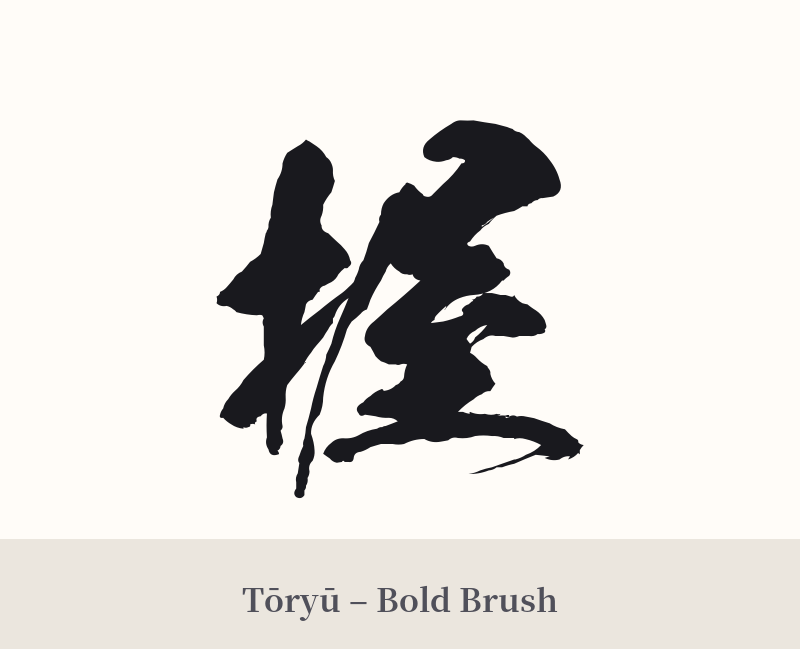
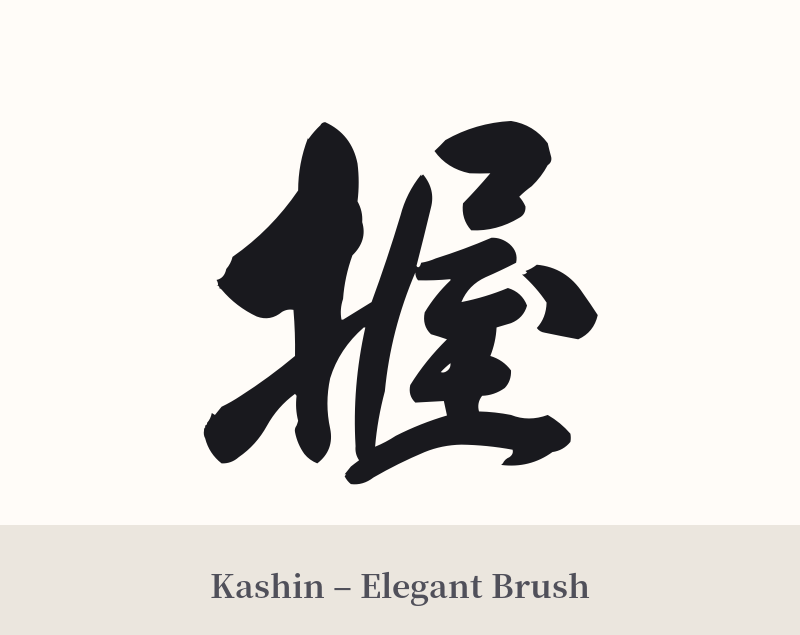
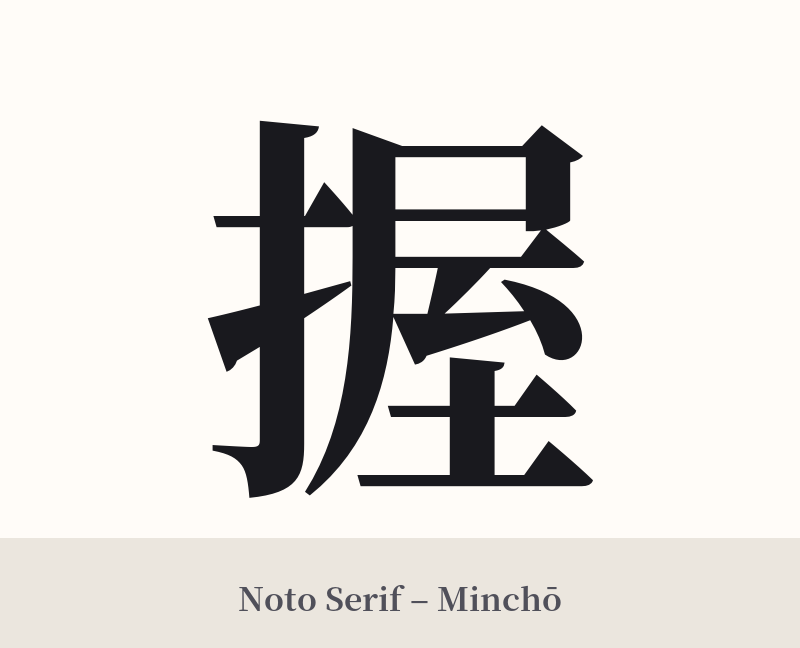
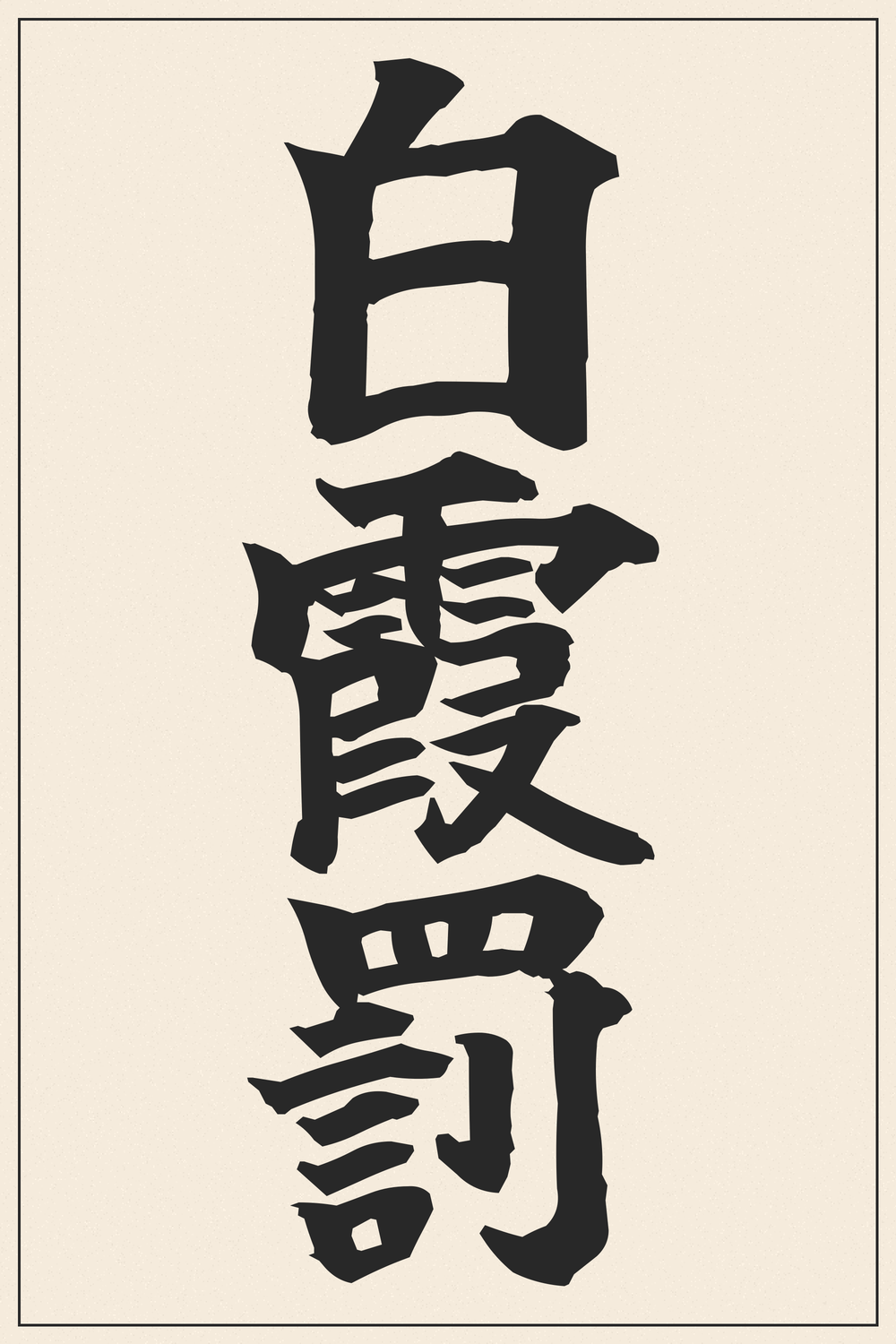
The same kanji can look dramatically different depending on the calligraphy style. Choose a font that matches the mood you want for your tattoo or design.
🎨 Tattoo Suitability
📐 Tattoo Design Guide
For a tattoo of 握, consider placement on areas of the body that suggest strength and action, such as the forearm, bicep, or calf. These locations provide a solid canvas and align with the kanji's meaning of a firm grip.
Regarding style, you have a few compelling options: – A bold, semi-cursive brushstroke (gyōsho) can emphasize the dynamic energy of the act of grasping. The flowing lines suggest movement and power. – A traditional, blocky script (kaisho) lends the character a sense of stability, precision, and control. This style is excellent for representing the metaphorical grasp of knowledge or authority. – For a more dramatic look, consider a highly expressive, cursive style (sōsho) that almost looks like a clenched fist itself.
Because the character can feel like an action without an object, you might consider incorporating it into a larger design. For example, the kanji could be placed on the hilt of a tattooed sword or within the image of a hand, giving it immediate context and amplifying its meaning.
Comments