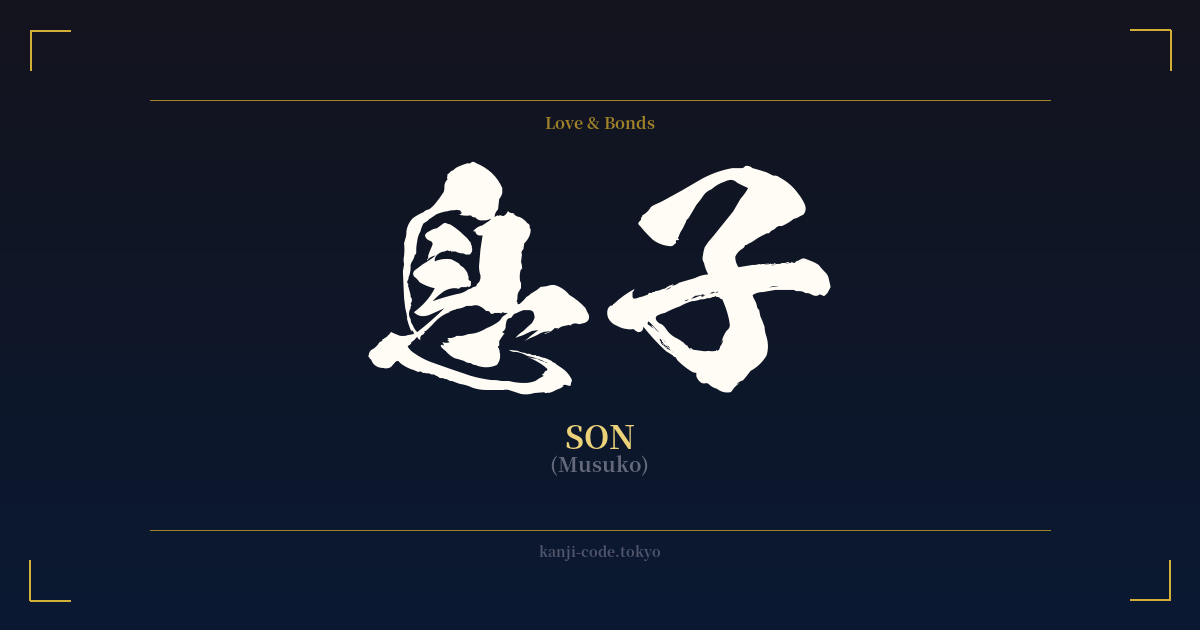
✍️ 息子 (Musuko) — Cultural Context
息子 (Musuko) is the standard and most common Japanese word for 'son'. It is a term of direct reference, used in everyday conversation to speak of one's own son or someone else's. While the English translation is simple, the kanji characters themselves reveal a deeper, more poetic layer of meaning rooted in concepts of life and lineage.
The word is composed of two characters: 息 (soku or iki) and 子 (ko). Together, they create a compound that is far more evocative than the sum of its parts. Understanding their individual origins is key to appreciating the full weight of the word.
The first character, 息, means 'breath', 'respiration', or 'life'. Its etymology is beautiful: it's a combination of the characters for 'self/nose' (自) and 'heart' (心). This paints a vivid picture of the very essence of life—the breath that flows from the heart and lungs, visible in the cold air. Its inclusion in the word for 'son' poetically implies that a son is a continuation of his parent's own life force, their very breath extended into the next generation.
The second character, 子, is straightforward. It means 'child'. It is one of the oldest and most fundamental kanji, a simple pictograph of an infant with a large head and outstretched arms. It is a pure and direct symbol of youth, progeny, and new beginnings.
When combined, 息子 (Musuko) literally translates to 'breath child'. This powerful imagery elevates the word beyond a simple familial label. It suggests that a son is not just an offspring, but the living, breathing continuation of the family line, carrying the life essence of his parents forward.
Historically, in Japan's patriarchal 'ie' (家) or household system, the role of the son, particularly the eldest son (長男, chōnan), was paramount. He was the designated heir responsible for carrying on the family name, business, and traditions, as well as caring for his parents in their old age. While these rigid structures have softened considerably in modern Japan, the cultural resonance of a son's role in the continuity of a family still subtly lingers in the language.
Today, 息子 is used with warmth and affection. It is the word a parent uses to proudly introduce their boy, the term of endearment that encompasses a lifetime of memories and hopes. It represents a fundamental human bond, recognized and cherished across all cultures.
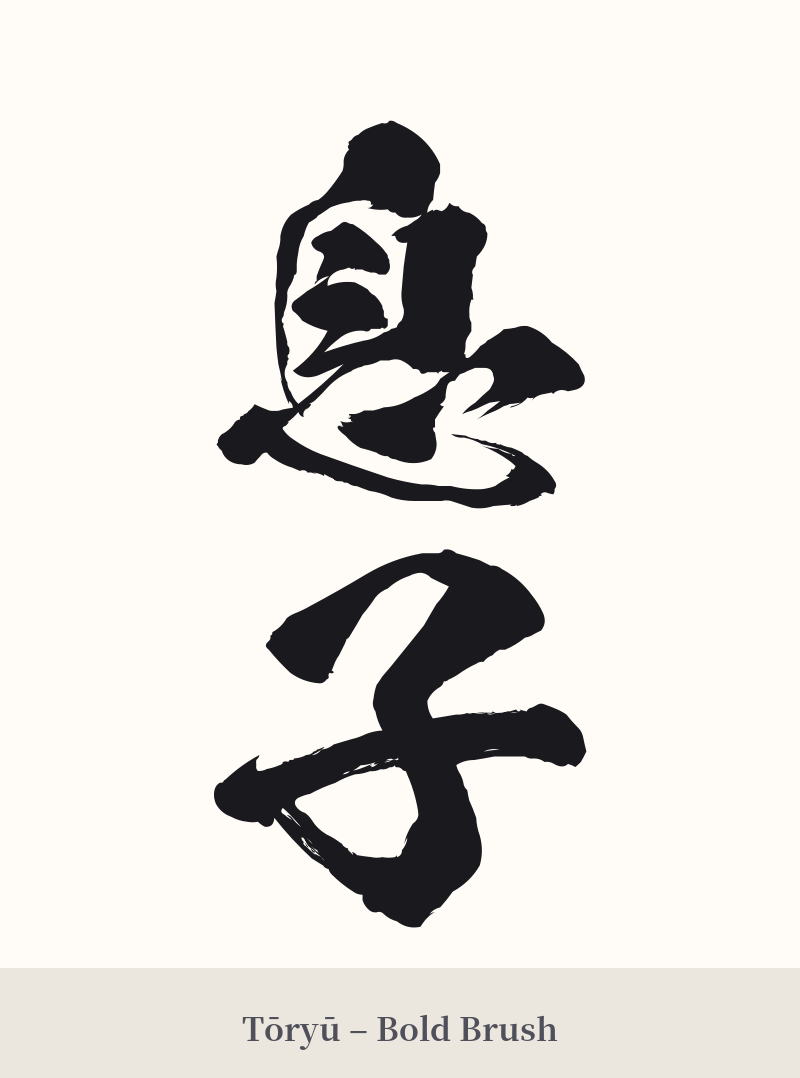
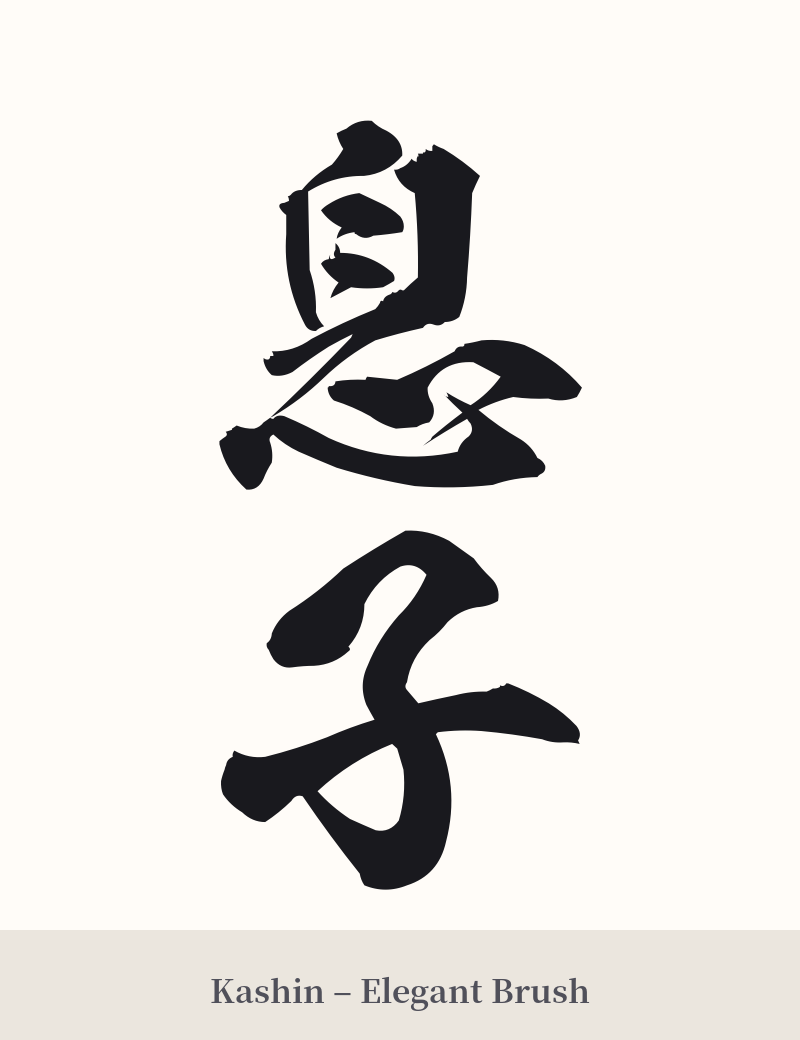
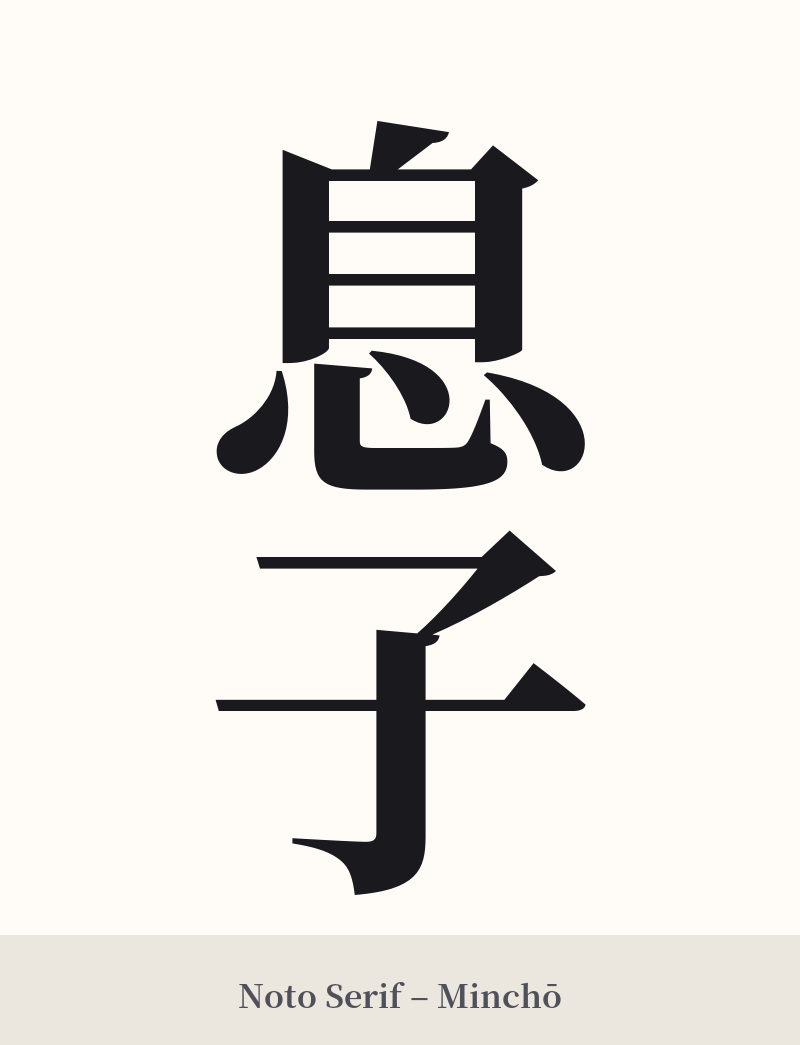
🖌️ Font Styles for 息子
The same kanji can look dramatically different depending on the calligraphy style. Choose a font that matches the mood you want for your tattoo or design.
🎨 Tattoo Suitability
📐 Tattoo Design Guide
For a 息子 tattoo, the design should reflect its personal and heartfelt nature. It's a tribute to a specific, cherished relationship.
– Placement: Consider areas that feel personal and close to you. The inner forearm, the chest over the heart, or vertically along the rib cage are all excellent choices that reinforce the meaning of the bond.
– Font Style: A clean, classic Mincho (serif) or Gothic (sans-serif) font emphasizes the word's clarity and directness. For a more emotional and artistic feel, a semi-cursive (Gyosho) or fully cursive (Sosho) calligraphy style can capture the 'breath' and 'life' nuance of the character 息, adding a sense of flow and vitality.
– Visual Elements: While the kanji can stand alone, it pairs well with other elements. Consider incorporating your son's birthdate, his name in English, or a symbol that represents him, such as his zodiac animal or a favorite flower. A vertical orientation is traditional and often creates a more elegant and balanced look on a limb or along the torso.
Comments