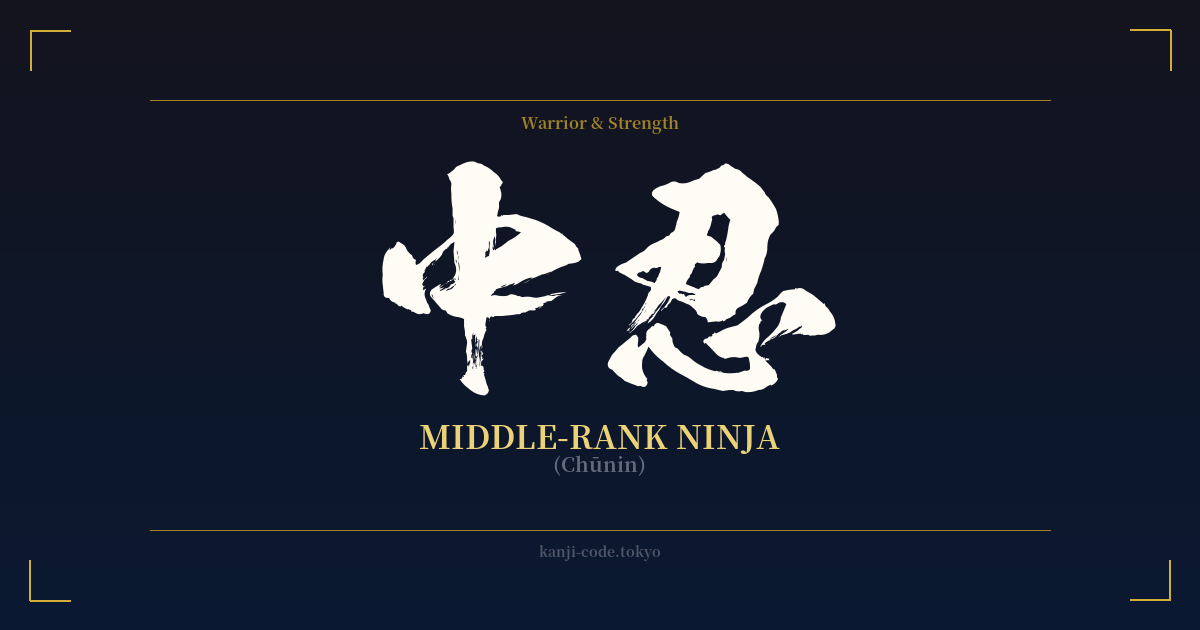
✍️ 中忍 (Chūnin) — Cultural Context
中忍 (Chūnin) translates to "Middle Ninja," representing a crucial tier in the popular conceptual hierarchy of the shinobi, or ninja. This ranking system, while not strictly historical, has been cemented in global consciousness primarily through fiction, most notably the immensely popular manga and anime series, Naruto.
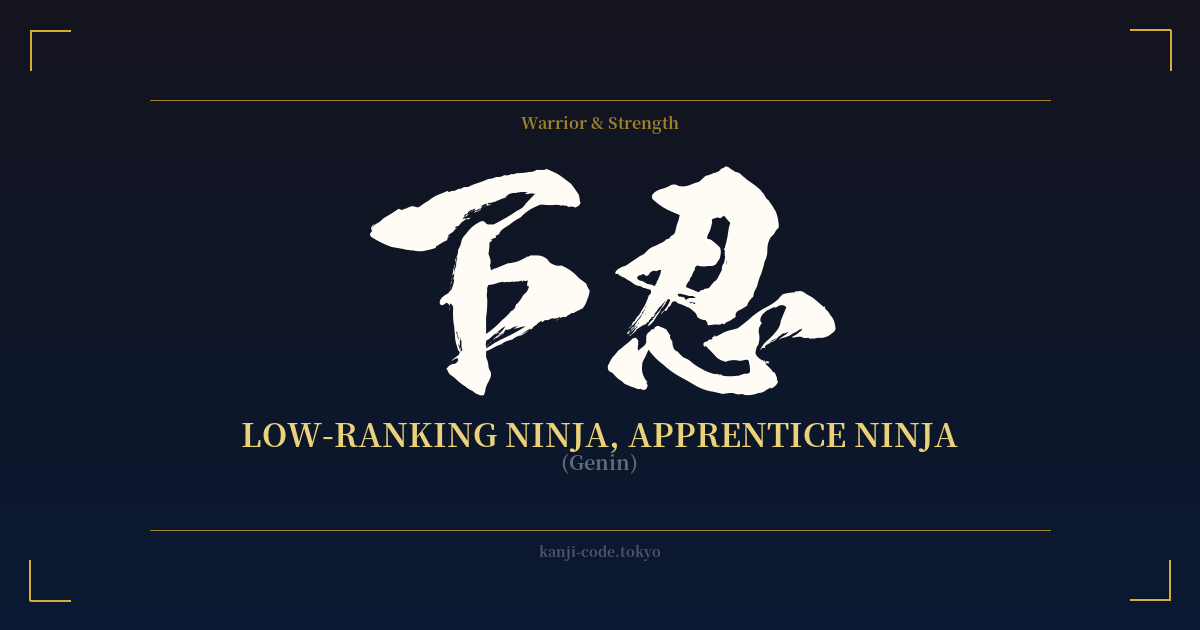
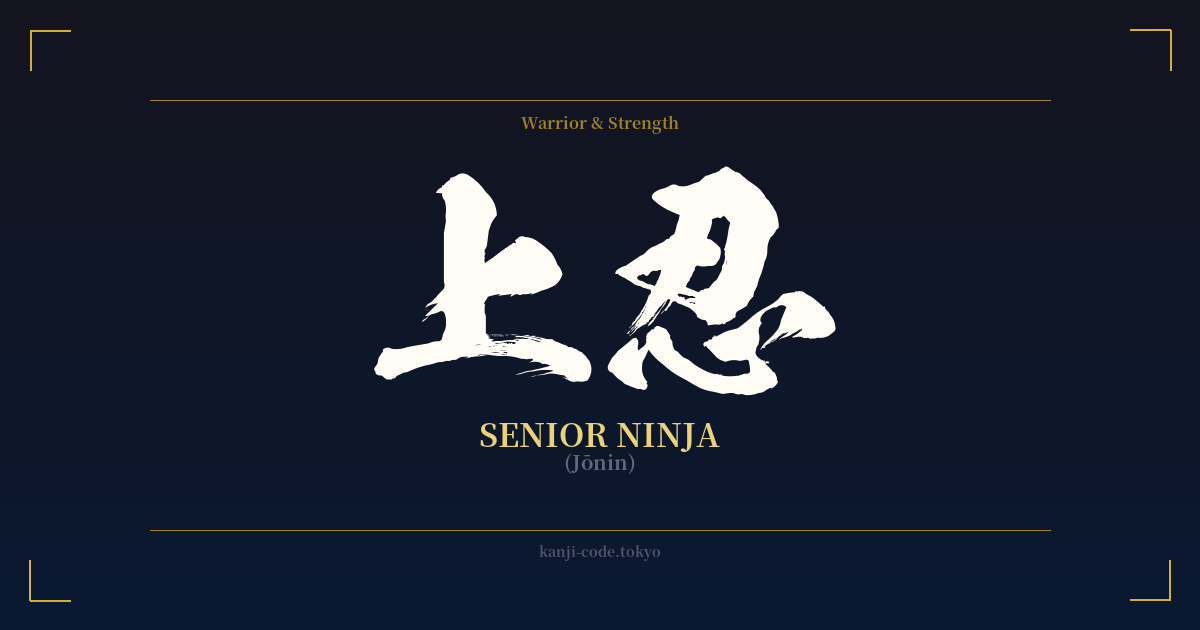
In this modern framework, the ninja ranks are typically divided into three main levels: Genin (下忍, "Lower Ninja"), the novices; Jōnin (上忍, "High Ninja"), the elite masters and commanders; and in the middle, the Chūnin. A Chūnin is a ninja who has graduated from the rookie stage and proven their capability in both combat and leadership. They are considered fully qualified and are often tasked with leading small teams of Genin on missions. Achieving this rank is a significant milestone, symbolizing competence, tactical acumen, and the trust of one's superiors.
The famous "Chūnin Exams" arc in Naruto perfectly illustrates the significance of this rank. It's not just about individual strength, but about intelligence, teamwork, and the ability to make difficult decisions under pressure. The Chūnin is the reliable backbone of the ninja village, the dependable soldier and emerging leader who executes the will of the elite.
While this specific three-tiered system is a product of 20th and 21st-century storytelling, historical ninja clans, such as those in the Iga and Kōga provinces, did have their own internal hierarchies. Leadership structures were essential for organizing espionage, infiltration, and combat operations. The term Chūnin, therefore, serves as a plausible and easily understood label for an experienced, mid-career operative within such a group, even if the term itself wasn't formally used in feudal Japan.
Symbolically, Chūnin represents a stage of progression. It is the embodiment of moving beyond apprenticeship and taking on real responsibility. It speaks to a journey of growth, of earning one's place through skill and perseverance. It is less about innate genius and more about hard-won competence, making it a relatable and aspirational symbol for many.
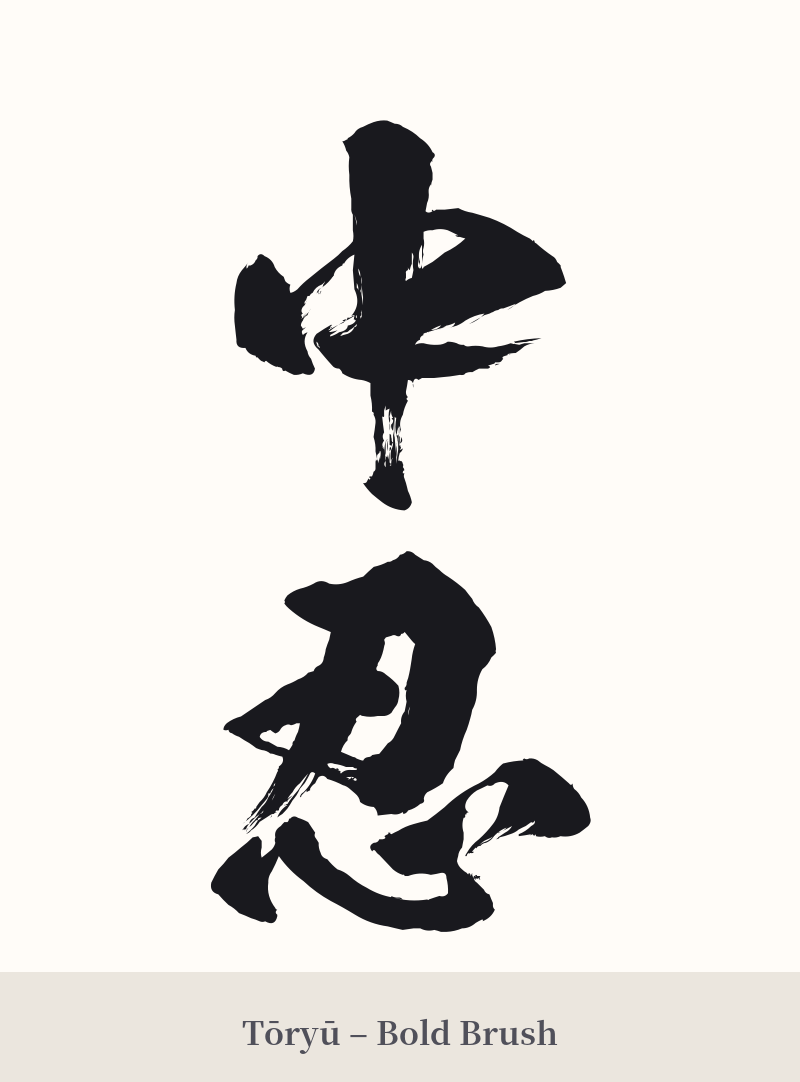
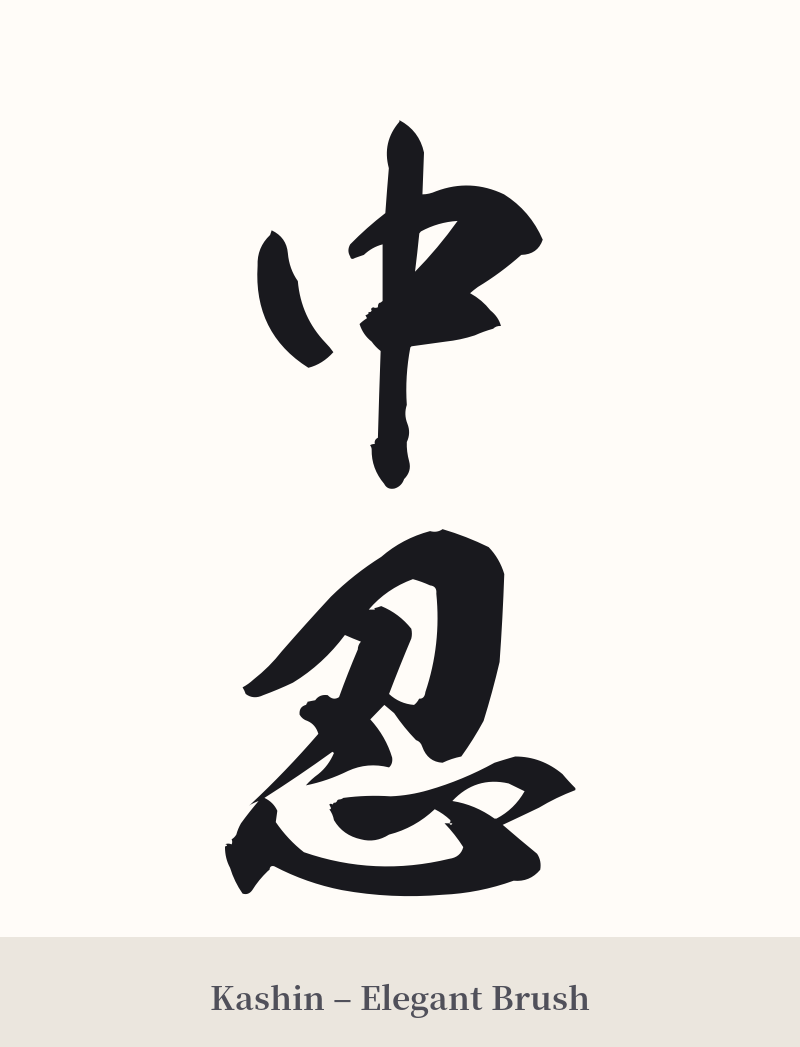
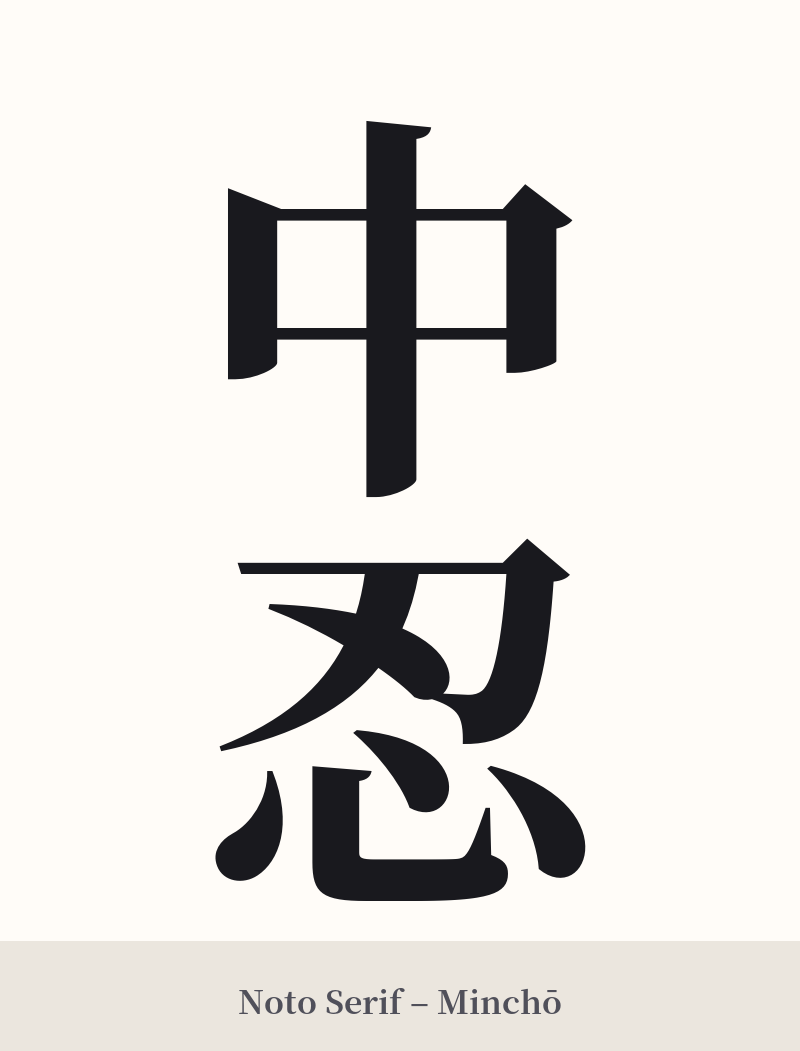
🖌️ Font Styles for 中忍
The same kanji can look dramatically different depending on the calligraphy style. Choose a font that matches the mood you want for your tattoo or design.
🎨 Tattoo Suitability
📐 Tattoo Design Guide
For a 中忍 tattoo, the design should reflect both discipline and the mystique of the ninja. The two-character compound lends itself well to a variety of styles and placements.
– Placement: A vertical alignment is classic and aesthetically pleasing for two-character kanji. Consider the forearm, the calf, or running down the bicep. For a more discreet placement, behind the ear or on the wrist could work, though the details of the 忍 character might be lost if too small.
– Font Style: A crisp, angular Kaisho (block script) font emphasizes the military precision and discipline associated with a formal rank. For a more dynamic feel, a semi-cursive Gyosho style can add a sense of movement and readiness. A heavily stylized, brush-stroke font can evoke the shadowy, fluid nature of the shinobi.
– Visual Tips: Consider integrating the kanji with related imagery. A subtle background of smoke or shadow can enhance the ninja theme without overpowering the characters. You could also place the kanji on a scroll design or alongside a classic ninja tool like a kunai or shuriken. However, the kanji alone, executed with strong lines and good spacing, makes a powerful and clear statement.
Comments