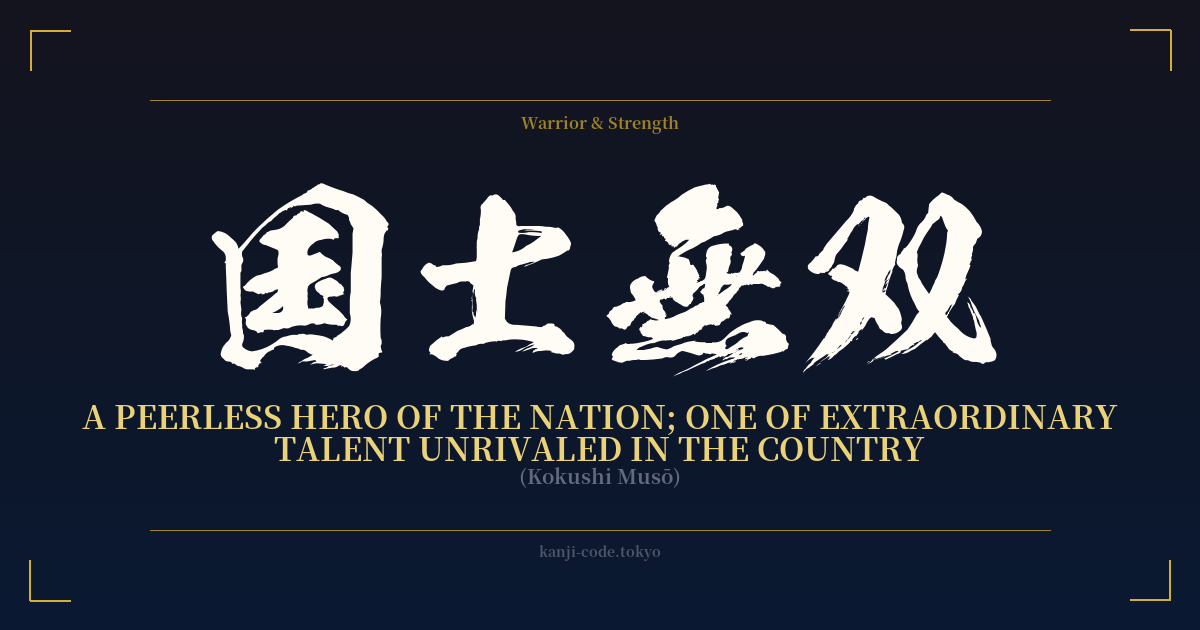
✍️ 国士無双 (Kokushi Musō) — Cultural Context
国士無双 (Kokushi Musō) is a powerful four-character idiom that translates to “a peerless talent in the nation.” It describes an individual of such extraordinary ability and value that they are considered unique and irreplaceable within the entire country. This isn't just about being good; it's about being a singular phenomenon, a hero or master without a rival.
The origin of this phrase is deeply rooted in Chinese history, recorded in Sima Qian's monumental work, the Records of the Grand Historian (史記, Shiki). The story concerns Han Xin, a brilliant military strategist who initially struggled to find a ruler who would recognize his genius. He eventually offered his services to Liu Bang, the future founder of the Han Dynasty.
When Han Xin, feeling overlooked, decided to leave, a high-ranking minister named Xiao He rode through the night to bring him back. Xiao He then went to Liu Bang and implored him to retain Han Xin, arguing that while other generals were plentiful, Han Xin was a “国士無双” – a national talent without a peer. He insisted that if Liu Bang aimed to conquer the realm, he absolutely could not afford to lose this one-of-a-kind strategist. Liu Bang listened, promoted Han Xin, and with his help, went on to unify China. This historical anecdote cemented the meaning of Kokushi Musō as the ultimate praise for irreplaceable genius.
In Japan, the term was adopted and retains this profound sense of respect for singular mastery. It can be applied to anyone who stands at the absolute pinnacle of their field. A legendary sumo wrestler, a master swordsmith whose craft is unmatched, a brilliant scientist making groundbreaking discoveries, or a visionary artist could all be described as a Kokushi Musō. The term carries a sense of grandeur and historical weight, elevating the individual's talent to a national treasure.
Interestingly, the phrase has a famous and beloved second life in modern Japanese culture: Mahjong. In Japanese Riichi Mahjong, “Kokushi Musō” is the name of a yakuman (limit hand), one of the rarest and most difficult hands to achieve. Known in English as “Thirteen Orphans,” it requires collecting one of each terminal and honor tile. The difficulty and uniqueness of this hand perfectly mirror the idiom's meaning, making it a fitting and dramatic name that every Mahjong player in Japan knows.
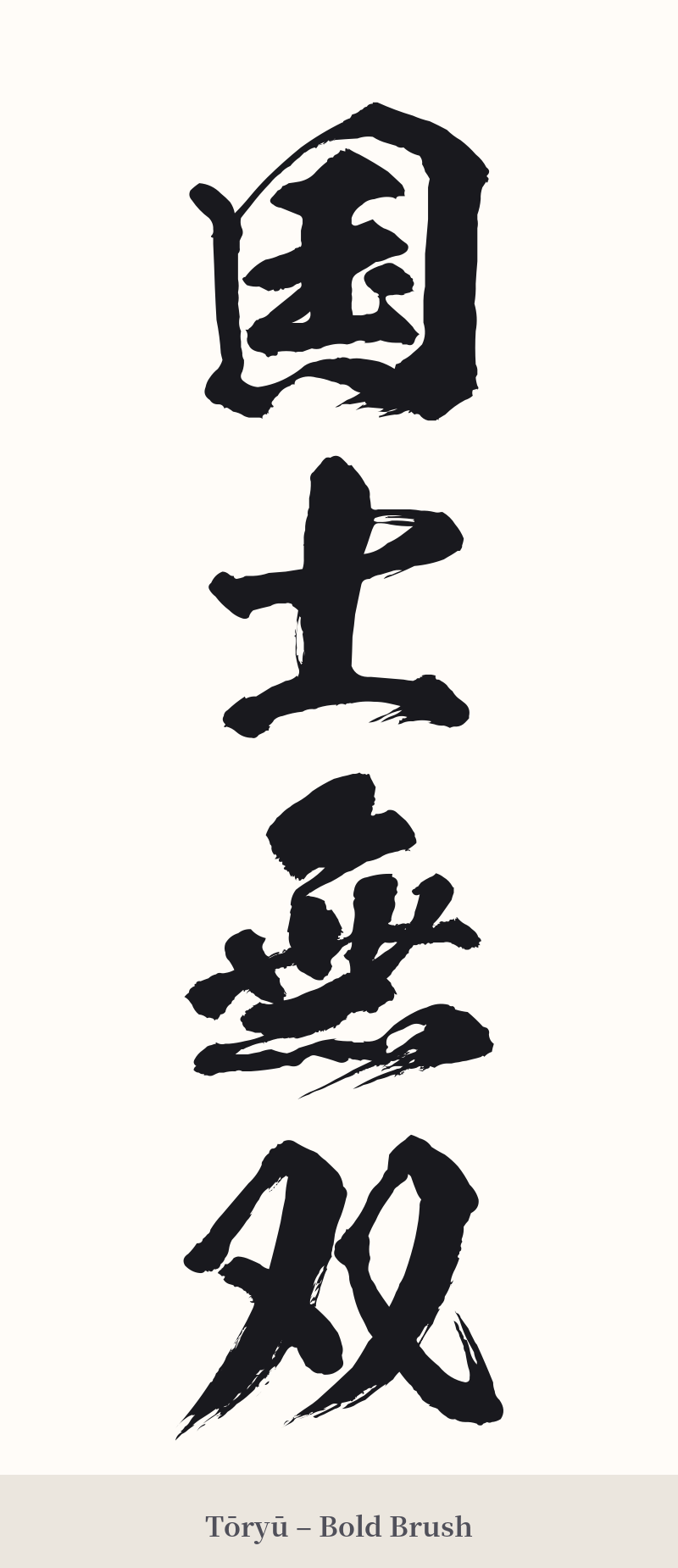
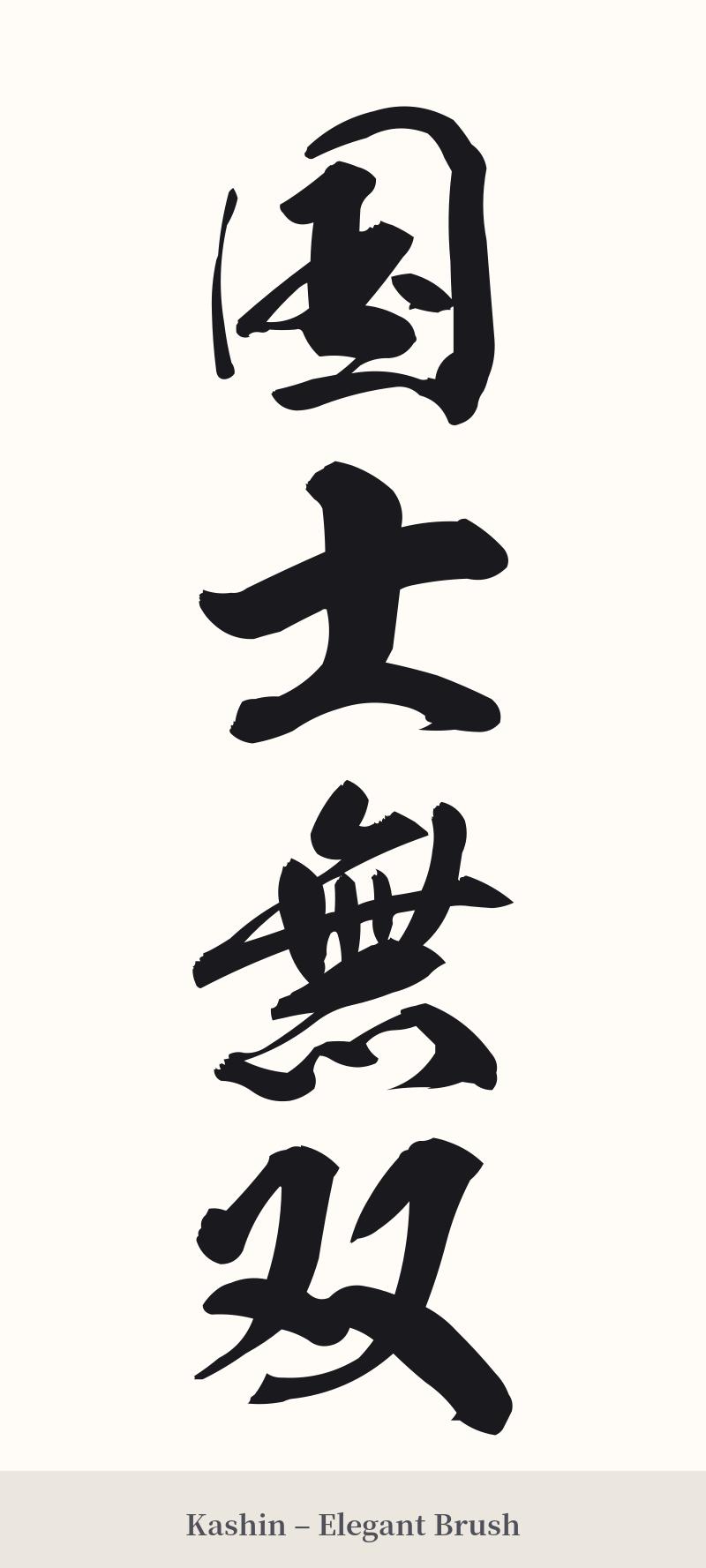
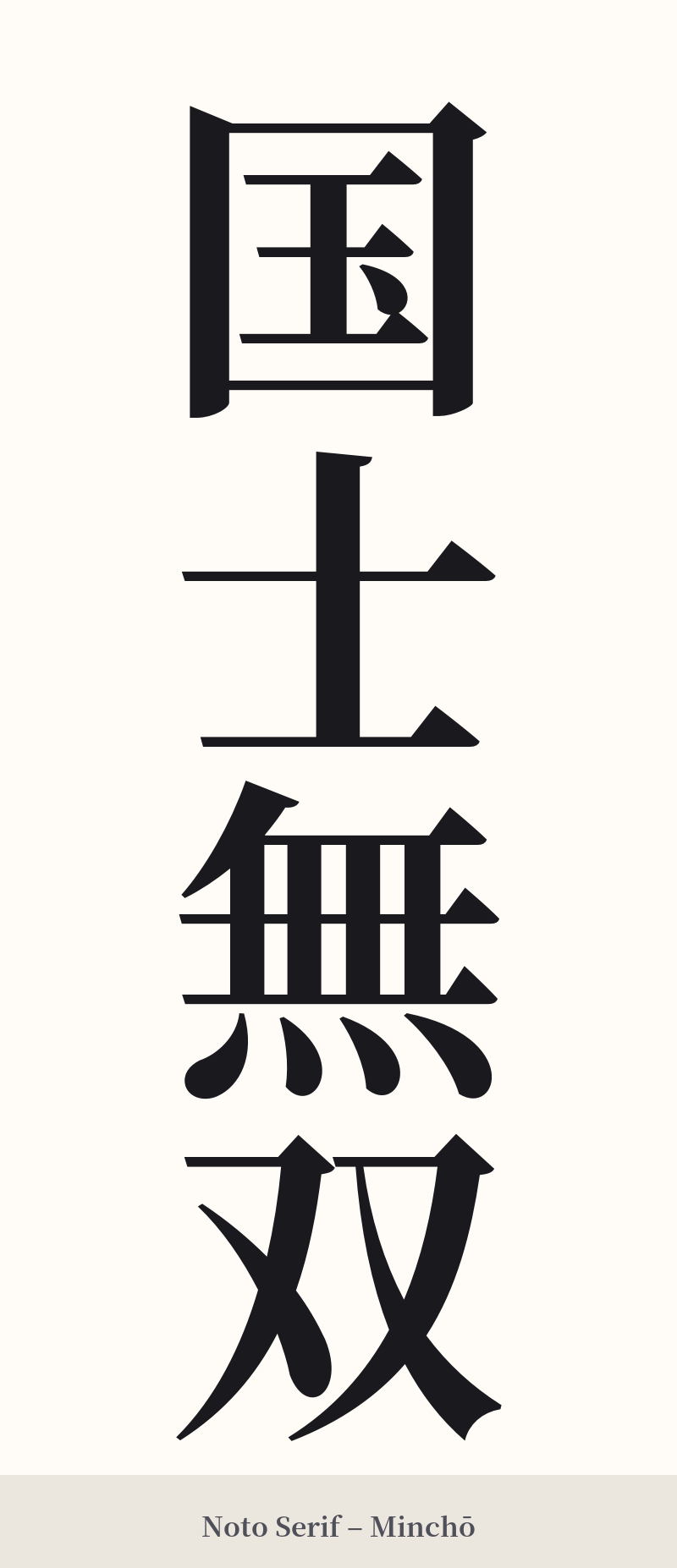
🖌️ Font Styles for 国士無双
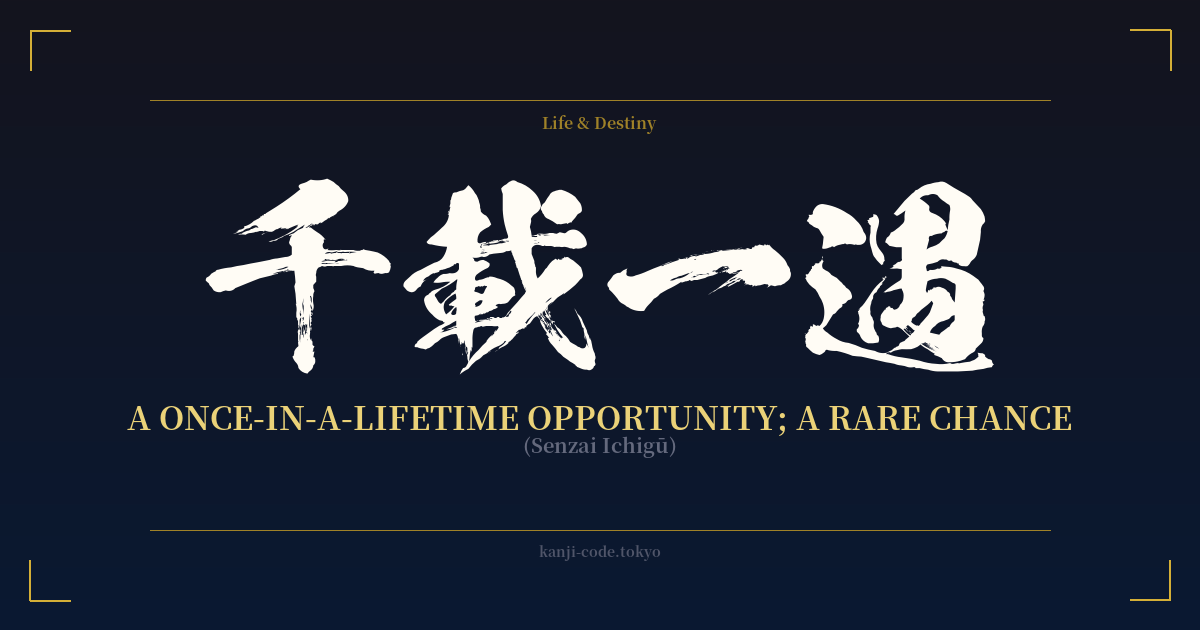
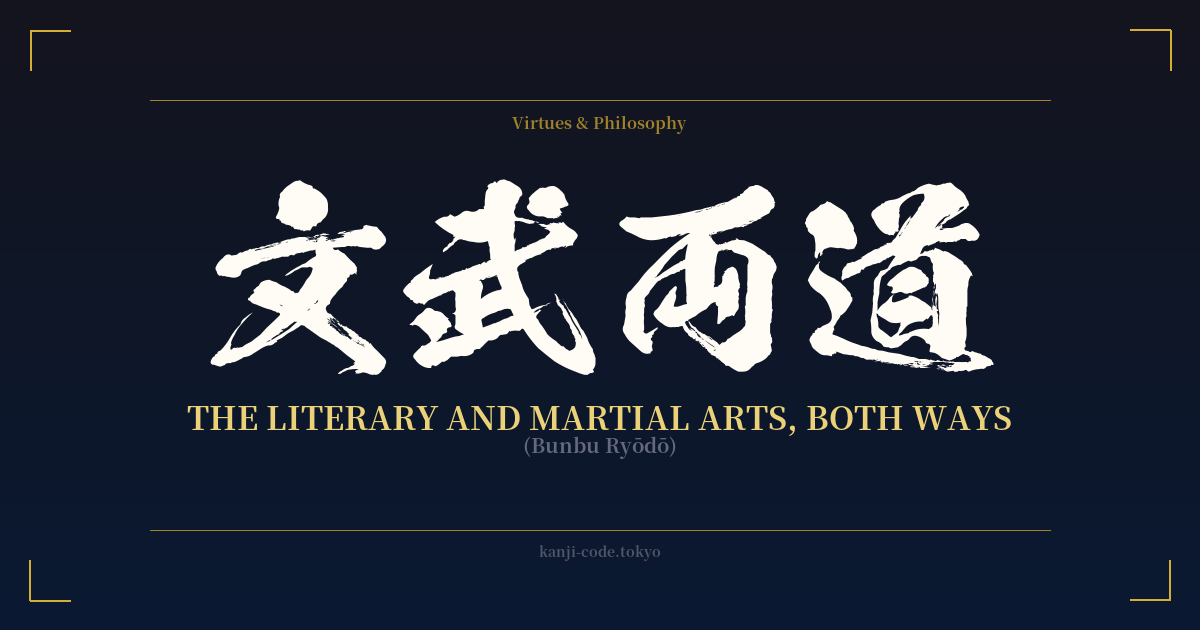
The same kanji can look dramatically different depending on the calligraphy style. Choose a font that matches the mood you want for your tattoo or design.
🎨 Tattoo Suitability
📐 Tattoo Design Guide
The four-character structure of 国士無双 lends itself beautifully to tattoo design, offering both balance and gravitas.
– Placement: A vertical orientation is the most traditional and visually striking way to display a yojijukugo. This makes it perfect for the spine, down the forearm, or along the calf. A horizontal placement can also work well across the chest or upper back.
– Font Style: The choice of script can dramatically alter the feel. A bold Kaisho (block script) emphasizes strength and clarity. For a more fluid and dynamic look, Gyōsho (semi-cursive) is an excellent choice, suggesting power in motion. A highly stylized Sōsho (cursive) can create an abstract piece of art, but may sacrifice some legibility.
– Visual Tips: The four characters (国, 士, 無, 双) have a pleasing mix of stroke counts, creating a balanced visual rhythm. A skilled artist can use this to create a design that flows naturally. It’s best to keep the focus on the calligraphy itself, avoiding overly complex background elements that might detract from the characters' powerful forms.
Comments