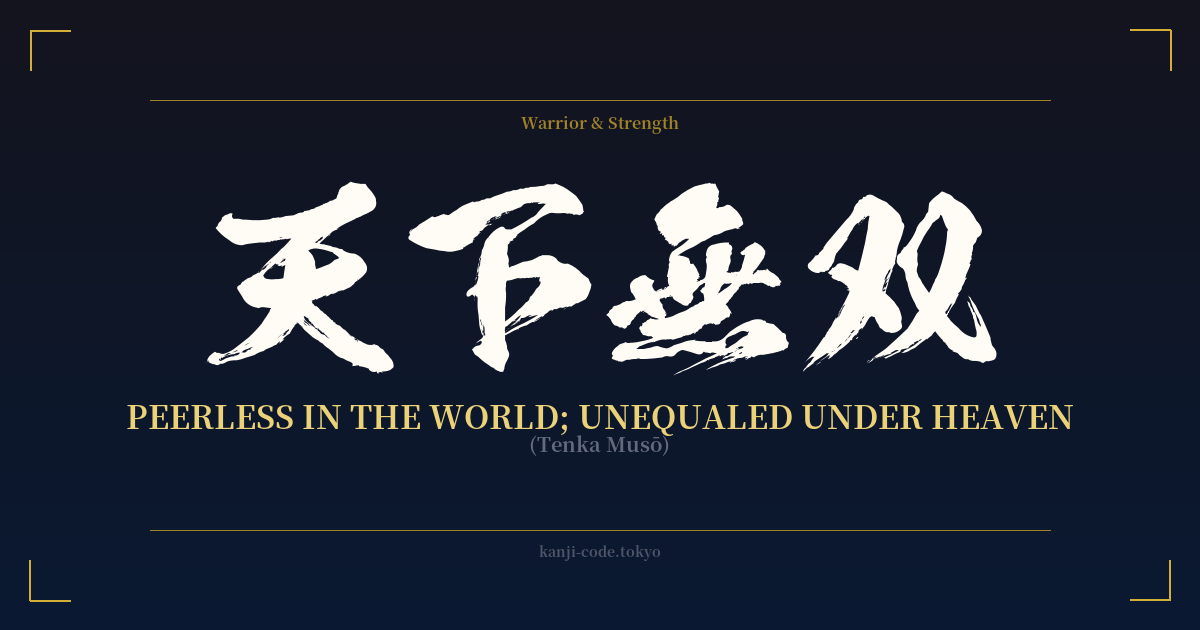
✍️ 天下無双 (Tenka Musō) — Cultural Context
天下無双 (Tenka Musō) is a powerful four-character idiom that translates to "peerless in the world" or "unequaled under heaven." It is a declaration of absolute, unrivaled supremacy, a concept deeply woven into the fabric of East Asian warrior culture.
The phrase is composed of two distinct parts. The first, 天下 (Tenka), literally means "under the heavens." In ancient Chinese and Japanese thought, this referred to the entire known world, everything reachable under the sky. It was often used to describe the realm ruled by an emperor or shogun, a domain to be conquered or unified. The second part, 無双 (Musō), means "without equal" or "unparalleled," combining 無 (without) and 双 (pair, match). Together, they create a title of ultimate honor: to be the one individual in all the world who has no match.
Historically, this title was bestowed upon the most formidable warriors and strategists. The term originates from Chinese historical texts, notably the "Records of the Grand Historian," used to describe legendary generals. In Japan, it became synonymous with the samurai ideal. Perhaps the most famous figure associated with a similar title is the samurai Honda Tadakatsu, who was famously called "the warrior who surpassed death itself" and was said to have fought in over 50 battles without ever sustaining a significant wound. His prowess earned him praise from figures like Oda Nobunaga and Toyotomi Hideyoshi, effectively making him Tenka Musō in spirit.
In modern times, Tenka Musō has exploded into popular culture, becoming a staple in manga, anime, and video games. It's the ultimate power-up, the title given to the final boss, or the goal of the ambitious protagonist. Series like "Kingdom" and the video game franchise "Dynasty Warriors" (whose Japanese title is Sangoku Musō) are built around this very concept of legendary heroes carving their names into history. This modern usage has kept the phrase alive, associating it not just with historical warriors but with any form of supreme skill, whether in martial arts, gaming, or any other competitive field. It represents the peak of achievement and the relentless pursuit of mastery.
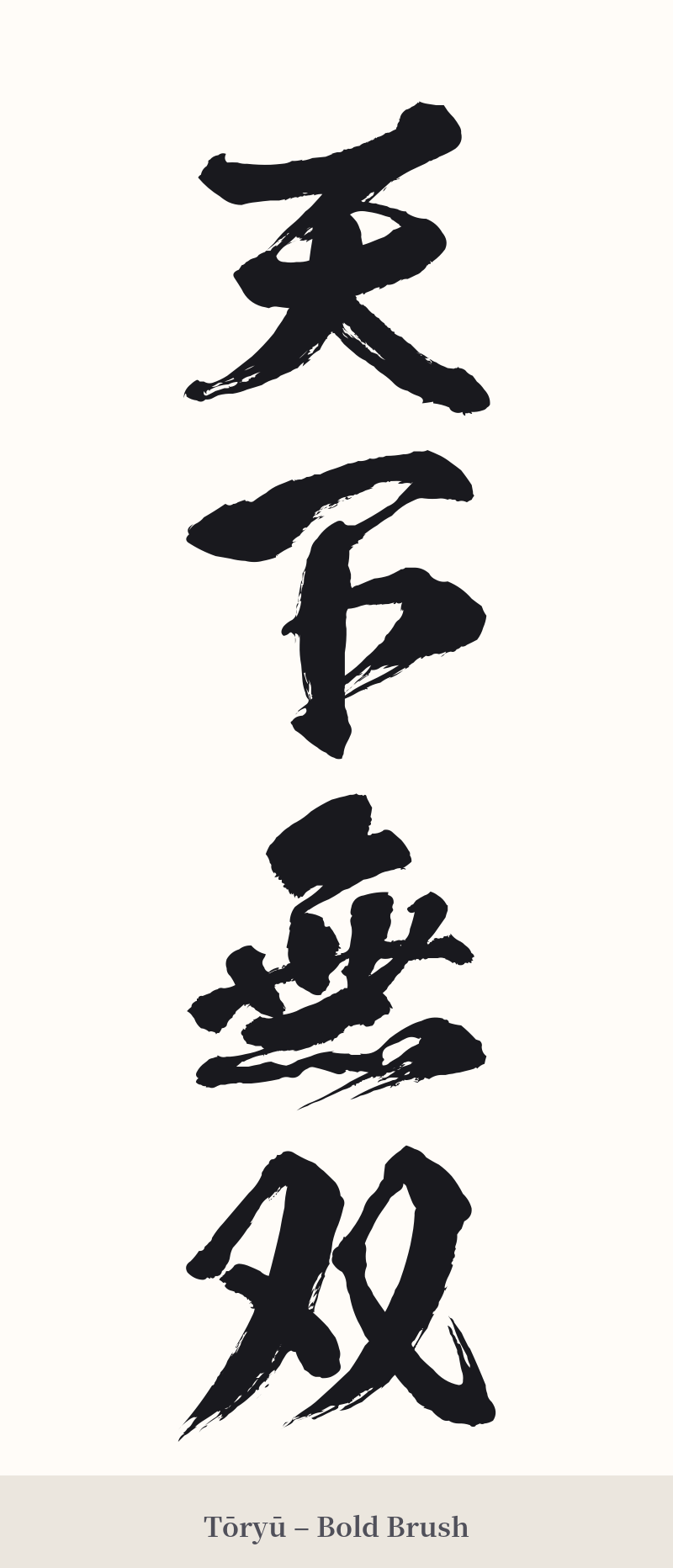
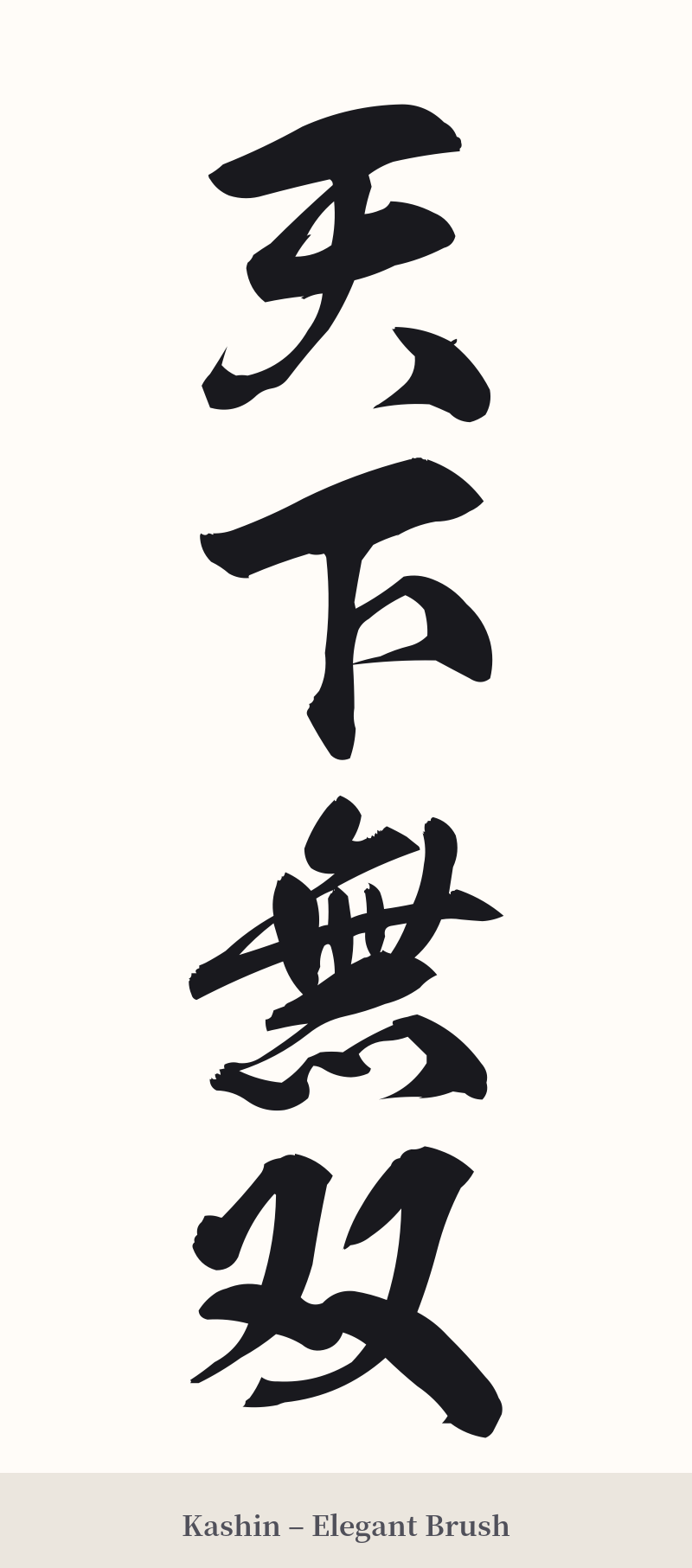
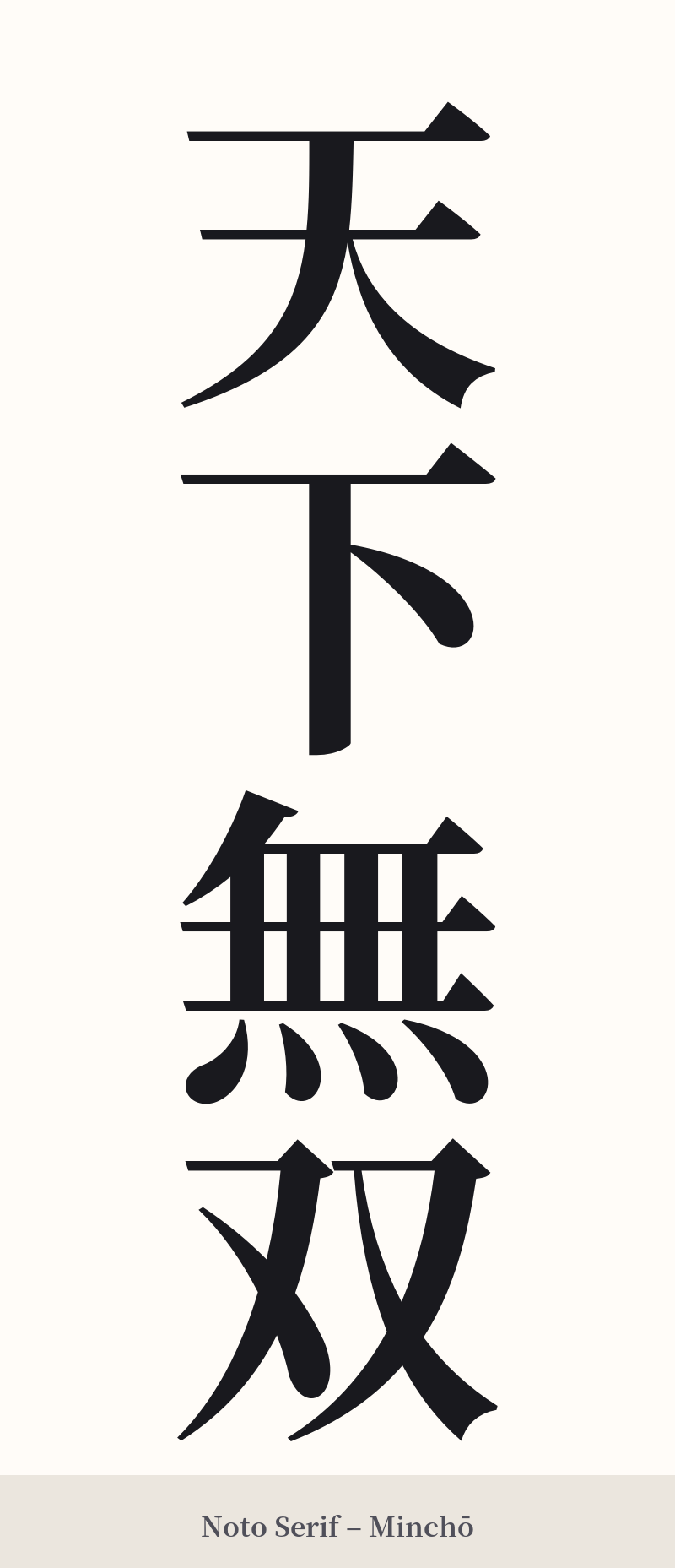
🖌️ Font Styles for 天下無双
The same kanji can look dramatically different depending on the calligraphy style. Choose a font that matches the mood you want for your tattoo or design.
🎨 Tattoo Suitability
📐 Tattoo Design Guide
The four-character structure of 天下無双 offers excellent design flexibility. Here are some recommendations for a tattoo: – Placement: A vertical orientation is classic and powerful, making it ideal for the spine, forearm, or calf. A horizontal layout works well across the chest, upper back, or below the collarbone. – Font Style: For a traditional, warrior-like feel, a dynamic brushstroke style (shodō) like Gyosho (semi-cursive) or Sosho (cursive) is perfect. These styles convey energy and movement. For a more solid, assertive look, a clean and angular Kaisho (block script) is a great choice. – Visual Tips: To enhance the theme, consider incorporating background elements. A subtle ink wash, a red sun, or imagery related to Japanese warriors like a samurai helmet (kabuto) or a dragon can frame the kanji beautifully. Ensure the artist is skilled with kanji, especially the 12-stroke character 無, to maintain clarity and balance.
Comments