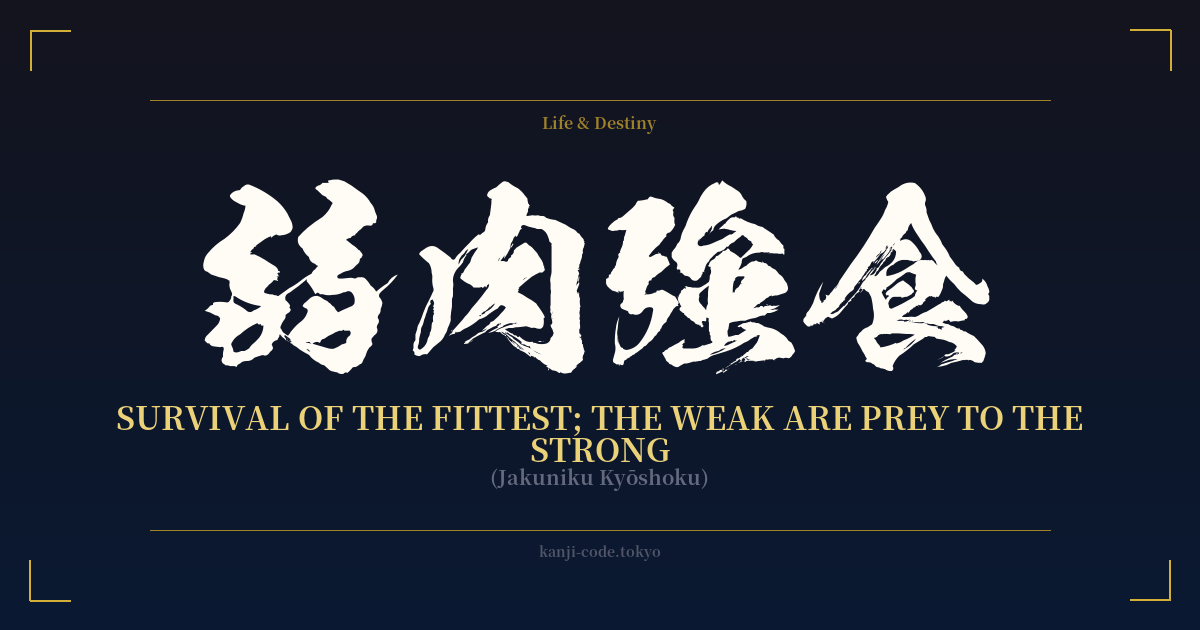
✍️ 弱肉強食 (Jakuniku Kyōshoku) — Cultural Context
弱肉強食 (Jakuniku Kyōshoku) is a four-character idiom, or yojijukugo, that paints a stark and unflinching picture of the natural order. It translates literally and brutally to 'the weak are meat, the strong eat.' This phrase is the Japanese equivalent of 'survival of the fittest' or 'the law of the jungle,' encapsulating a world where power, not morality, dictates outcomes.
The concept itself is ancient, rooted in observations of the natural world. However, the specific phrase gained prominence in Japan during the Meiji Period (1868-1912). This was a time of rapid modernization and Westernization, when concepts like Charles Darwin's theory of evolution and Social Darwinism were introduced. 弱肉強食 became a powerful lens through which to understand the competitive dynamics of international politics, industrialization, and a changing society.
Unlike philosophical concepts that guide moral behavior, 弱肉強食 is primarily descriptive. It's a statement of fact about the nature of raw competition, whether on the savanna, in the boardroom, or on the battlefield. It acknowledges a reality where sentimentality has no place and where strength prevails. This is why it often appears in anime and manga, frequently used by villains or anti-heroes to justify their ruthless actions, or to describe the harsh reality of a tournament or a war-torn world.
In modern Japan, the phrase is still commonly used. It can describe fierce business competition, political struggles, or even the unforgiving nature of professional sports. It’s a verbal shorthand for any situation governed by a 'winner-take-all' principle. While it's a recognized and understood part of the language, adopting it as a personal philosophy or motto is a strong statement. It can imply a cynical or pessimistic worldview, suggesting that you see the world as a place of constant struggle where the powerful are destined to dominate the vulnerable. It stands in stark contrast to other Japanese values like 和 (Wa – harmony) or the samurai ideal of protecting the weak, making it a particularly pointed and uncompromising expression.
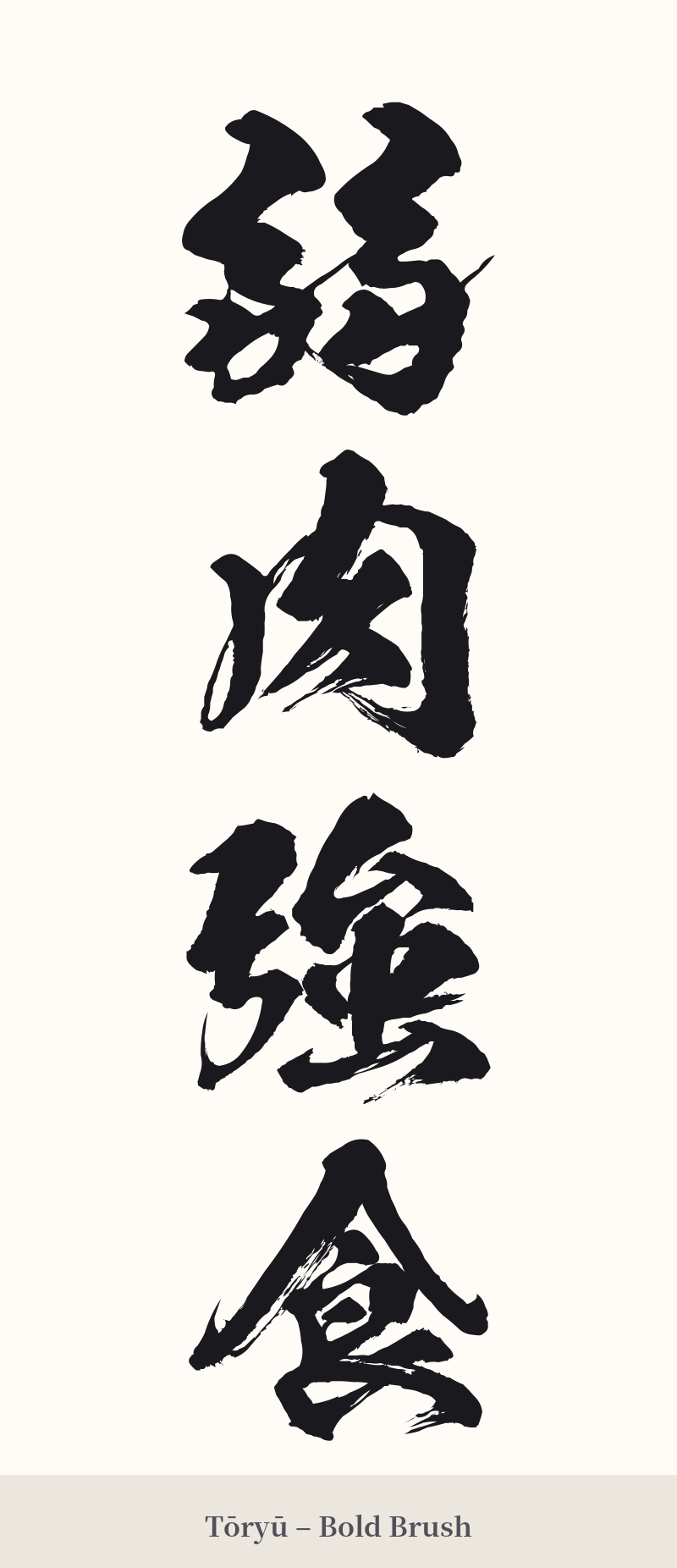
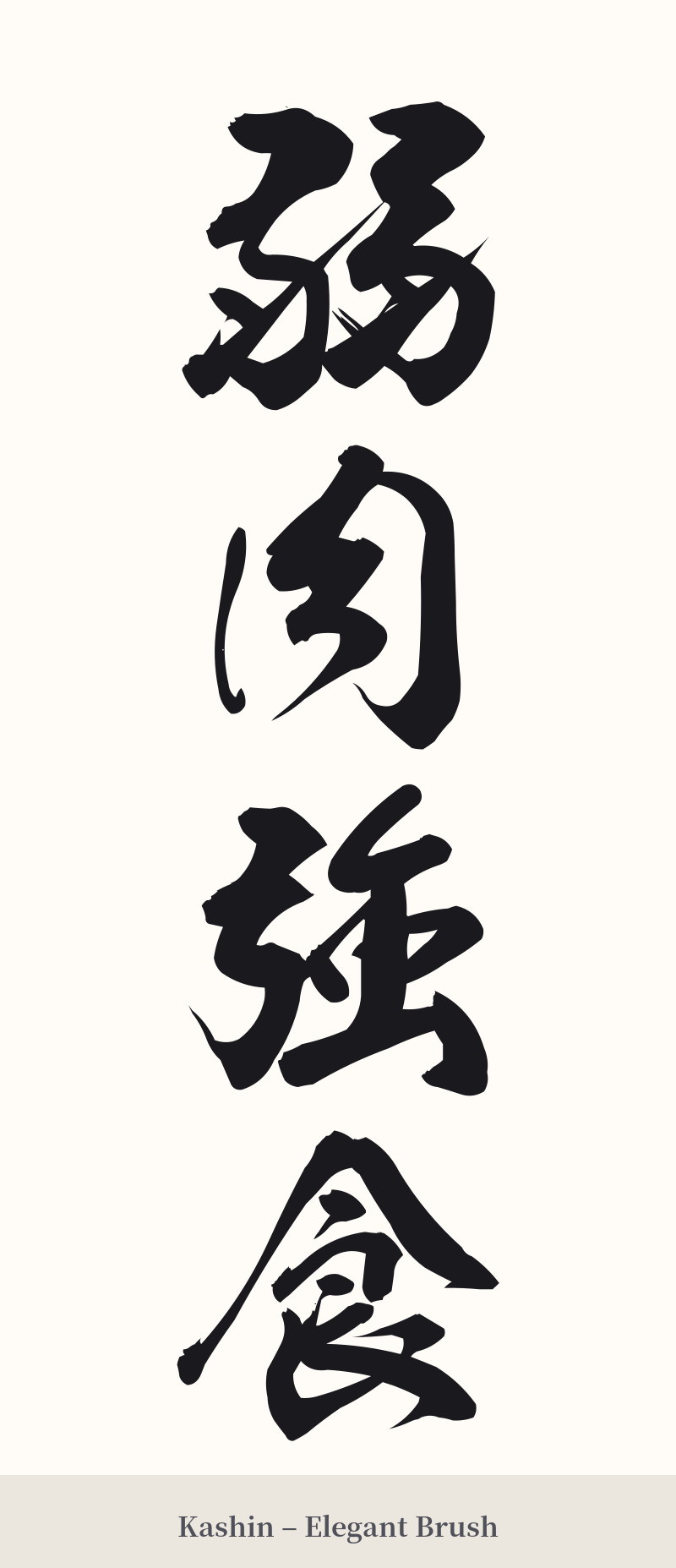
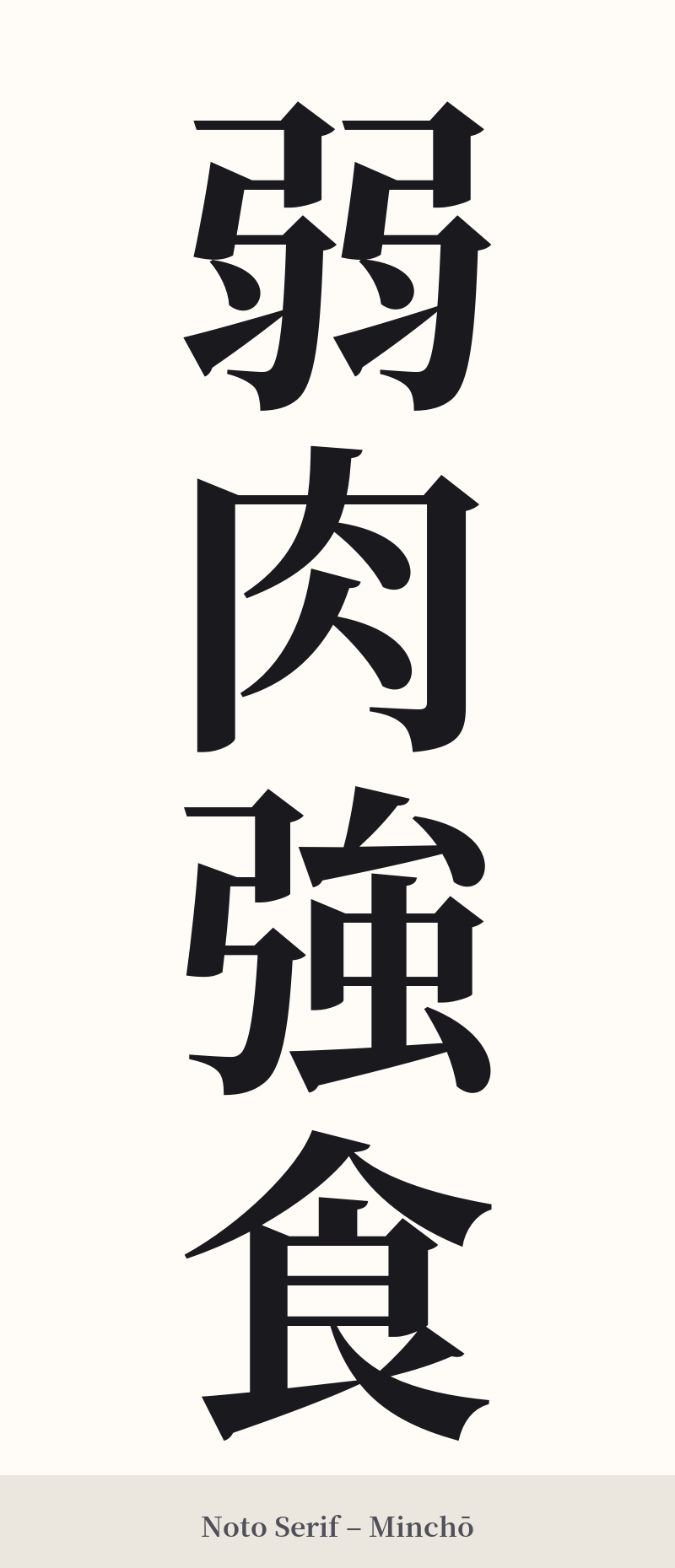
🖌️ Font Styles for 弱肉強食
The same kanji can look dramatically different depending on the calligraphy style. Choose a font that matches the mood you want for your tattoo or design.
🎨 Tattoo Suitability
📐 Tattoo Design Guide
The four-character structure of 弱肉強食 makes it ideal for a vertical tattoo design, which is the traditional orientation for Japanese text. This layout creates a strong, pillar-like visual that looks excellent along the spine, forearm, or calf.
For font styles, consider options that match the raw intensity of the meaning: – Brush Stroke (Gyosho or Sosho): A dynamic, semi-cursive or cursive calligraphy style can capture the energy and violence of the 'law of the jungle.' The flowing, sometimes scratchy lines evoke a sense of primal struggle. – Bold Kaisho: A thick, angular block script emphasizes the 'strong' (強) aspect of the phrase. This style feels solid, powerful, and unyielding.
Pairing this kanji with imagery can amplify its meaning. Consider a design that incorporates a predator and its prey, such as a tiger and a deer, or a hawk and a snake. These elements can be woven around the characters or serve as a backdrop. However, the four kanji are powerful enough to stand alone. A clean, bold design without extra imagery makes a stark and confident statement. Avoid overly ornate or delicate styles, as they would create a visual mismatch with the brutal meaning of the phrase.
Comments