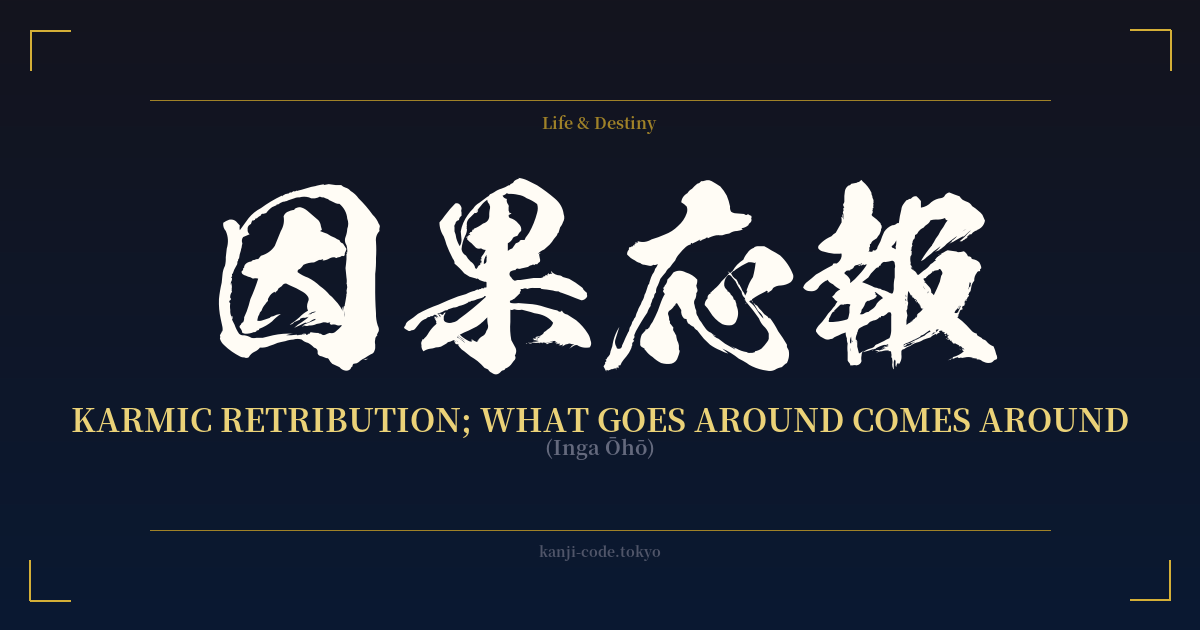
✍️ 因果応報 (Inga Ōhō) — Cultural Context
因果応報 (Inga Ōhō) is a cornerstone of Japanese philosophy, directly translating to 'cause-and-effect retribution.' While often simplified in English as 'what goes around, comes around' or 'you reap what you sow,' its roots lie deep within Buddhist teachings and carry a weight of cosmic significance.
The phrase is a 'yojijukugo,' a four-character idiom that packs a complex idea into a concise form. It can be broken down into two parts: 因果 (inga) meaning 'cause and effect,' and 応報 (ōhō) meaning 'retribution' or 'recompense.' Together, they form a powerful statement about the universe's inherent moral balance.
At its core, Inga Ōhō is the Japanese expression of karma. It posits that every action, thought, and word—the 'cause' (因)—will inevitably produce a corresponding 'effect' or 'fruit' (果). This effect is then delivered back to the originator as a 'response' (応) in the form of 'recompense' or 'retribution' (報). This is not a system of punishment meted out by a deity, but rather an impersonal, natural law, as fundamental as gravity.
Crucially, Inga Ōhō is entirely impartial. It is not solely about punishment for wrongdoing. The proverb 善因善果 (zen'in zenka), 'good causes bring good effects,' is an integral part of this worldview. Acts of kindness, compassion, and honesty are believed to plant seeds that will eventually blossom into positive outcomes for the individual. Conversely, the proverb 悪因悪果 (akuin akka), 'evil causes bring evil effects,' warns that malicious or harmful actions will inevitably lead to suffering.
In Japanese culture, Inga Ōhō serves as both a moral compass and a source of solace. It encourages ethical behavior by reminding people that their actions have inescapable consequences. It can also provide comfort in the face of injustice, fostering a belief that, in the grand scheme of things, balance will be restored and everyone will ultimately receive what they deserve. You'll find this concept woven into the fabric of Japanese storytelling, from classic folktales to modern anime and dramas, where characters often face the direct consequences of their past deeds, for better or for worse.
🖌️ Font Styles for 因果応報
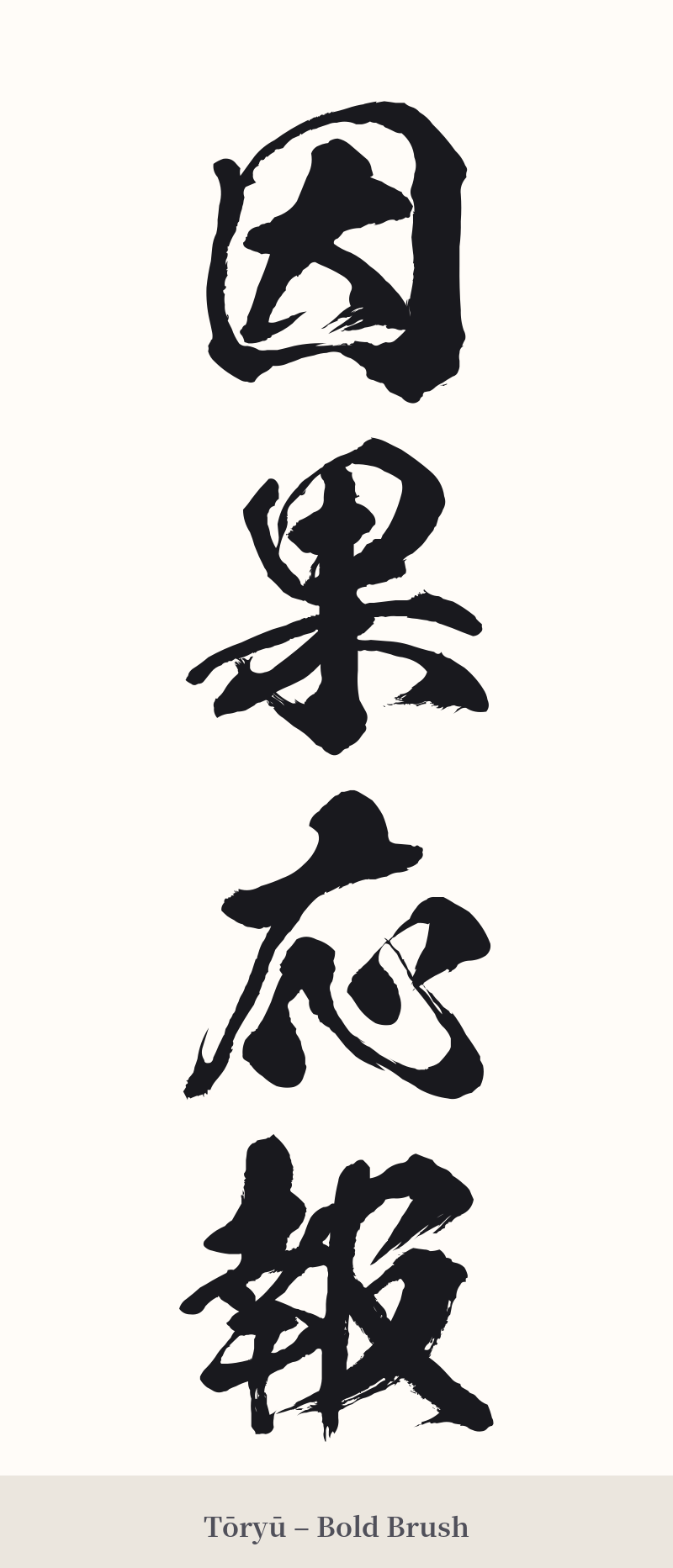
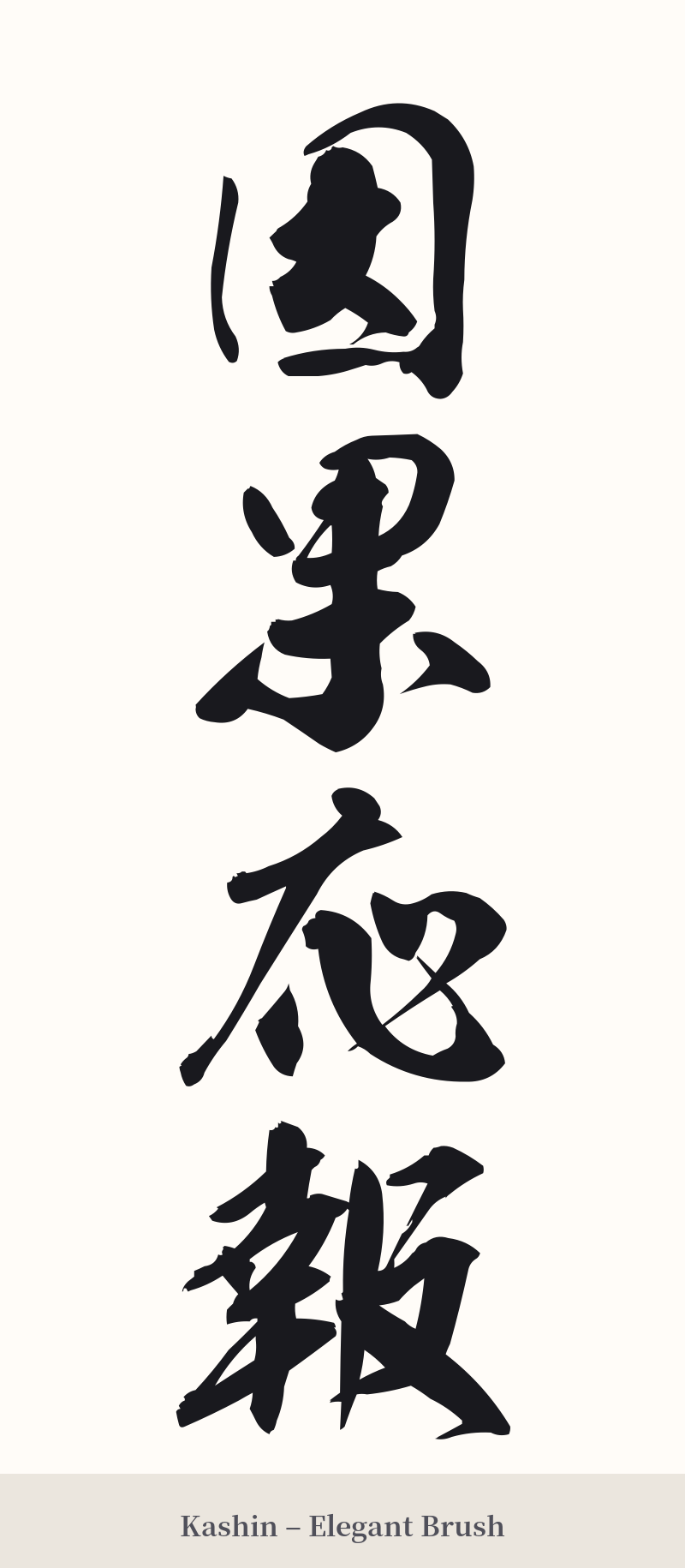
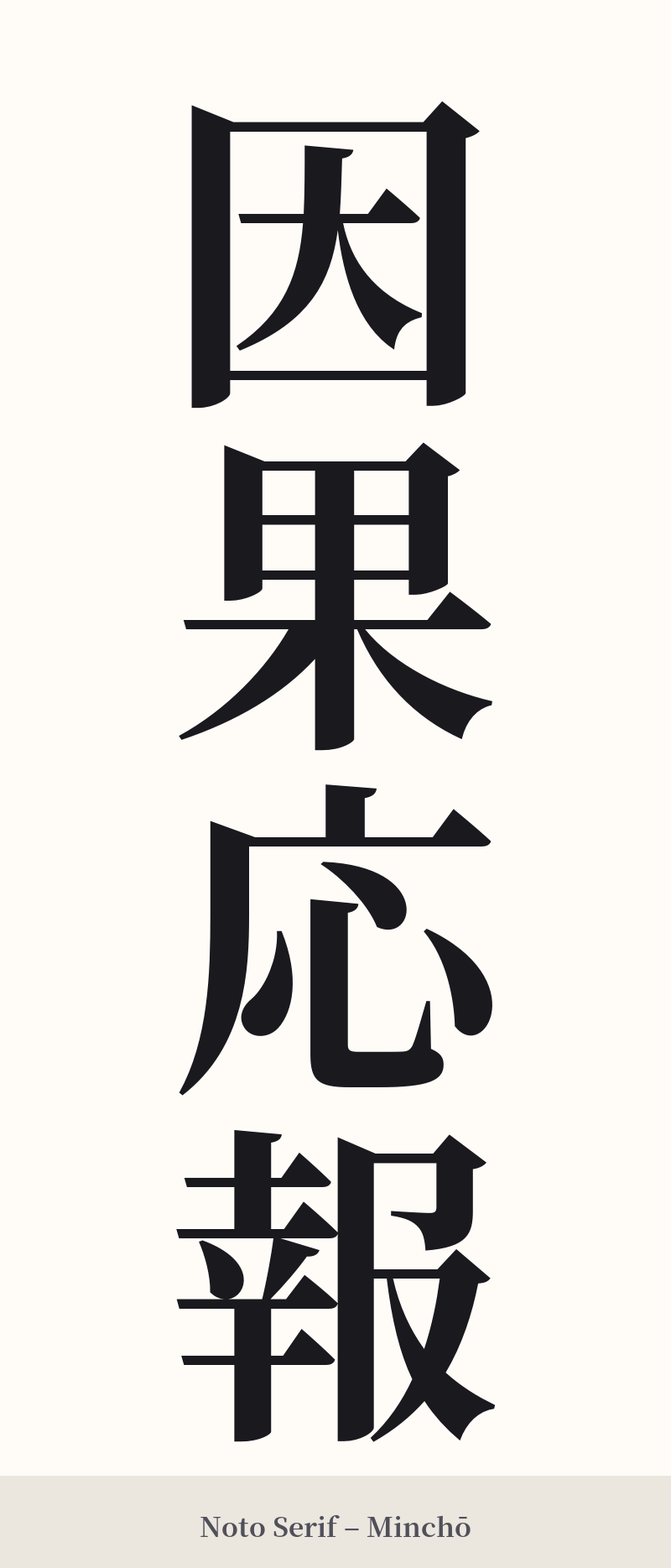
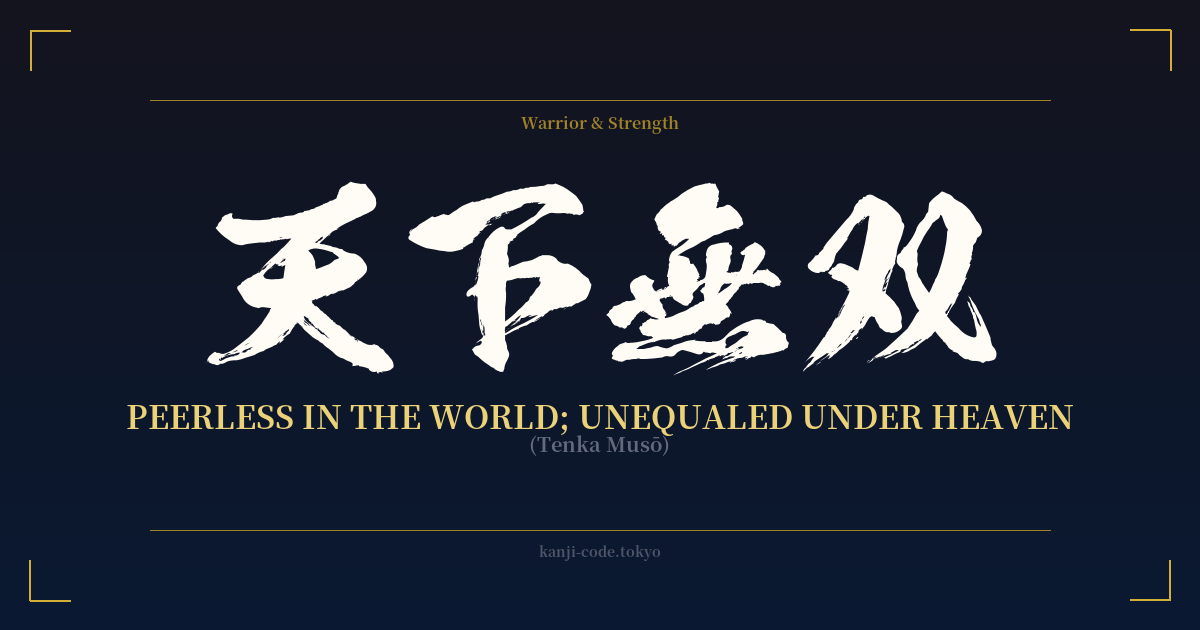
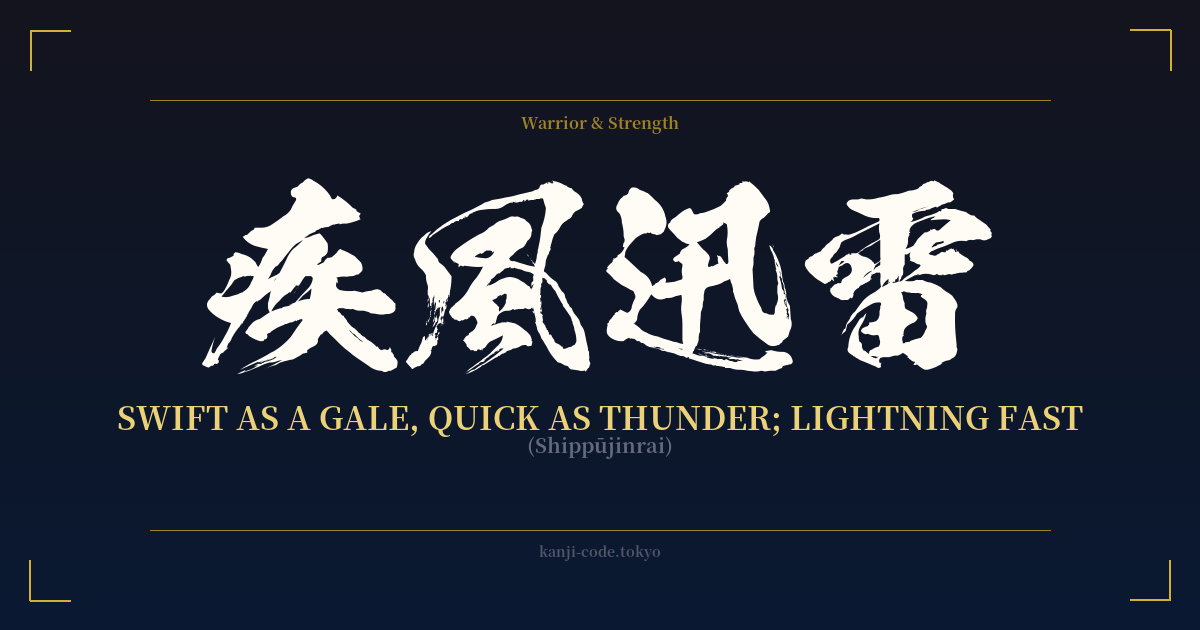
The same kanji can look dramatically different depending on the calligraphy style. Choose a font that matches the mood you want for your tattoo or design.
🎨 Tattoo Suitability
📐 Tattoo Design Guide
The power of a four-character idiom like 因果応報 lies in its symmetry and gravity. A vertical orientation is the most classic and visually striking choice for a tattoo, evoking the style of traditional Japanese calligraphy.
– Placement: Consider long, linear parts of the body that complement a vertical script. The spine is a powerful and popular choice, as are the inner forearm, the side of the calf, or running down the ribs.
– Font Style: The font will set the tone. A crisp, formal 'Kaisho' (block script) emphasizes the seriousness and immutability of this universal law. For a more fluid and artistic look, a 'Gyōsho' (semi-cursive script) can add a sense of motion and elegance. A bold, thick-brushed style can convey the weight and impact of the concept.
– Visual Elements: While the four characters are powerful enough to stand alone, they can be complemented with symbolic imagery. Consider pairing it with an Enso circle to represent the universe and enlightenment, or a lotus flower, which symbolizes purity and rising above worldly troubles—a key Buddhist theme. Scales of justice can also be used to visually represent the balancing nature of karma.
Comments