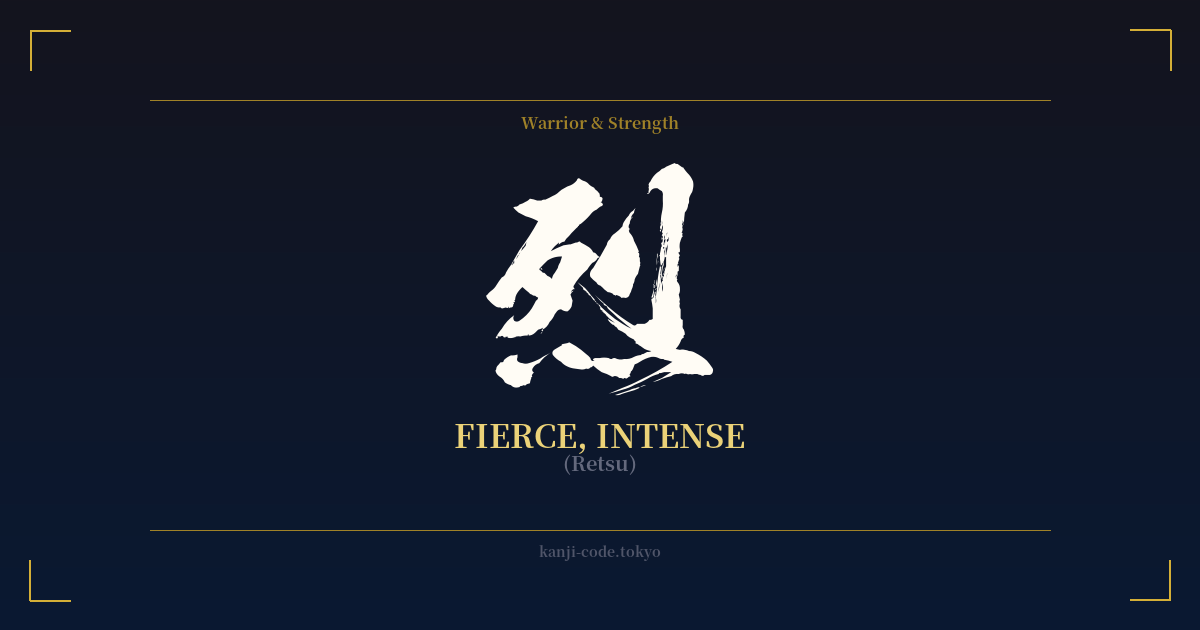
✍️ 烈 (Retsu) — Cultural Context
The kanji 烈 (retsu) is a character that burns with intensity. While its direct translation is 'fierce' or 'intense,' its essence goes deeper, describing a force that is ardent, vehement, and often explosive. It’s the difference between a strong wind and a raging gale; between a campfire and a conflagration.
Etymologically, 烈 tells a vivid story. The character is a combination of two parts. The top portion is 列 (retsu), which means 'row,' 'file,' or 'to line up.' Below it is the radical 灬 (rekka), which is a variant of 火 (hi), meaning 'fire.' The visual imagery is one of fire arranged in a line, spreading with organized and unstoppable force. This isn't the chaotic flicker of a single flame but the advancing front of a wildfire—a powerful, focused, and overwhelming energy.
In Japanese culture, 烈 is often tied to concepts of extreme dedication and sacrifice. The word 烈士 (resshi) means 'martyr,' referring to someone who dies for a cause with fierce and unwavering loyalty. This imbues 烈 with a sense of nobility and heroic tragedy. Similarly, 壮烈 (sōretsu) means 'heroic' or 'brave,' often used to describe a valiant last stand in battle (壮烈な最期, sōretsu na saigo), a concept deeply rooted in samurai lore.
The character is not limited to human endeavors. It is frequently used to describe the awesome power of nature. A 猛烈な台風 (mōretsuna taifū) is a 'furious typhoon,' and 烈火 (rekka) literally means 'raging fire.' This dual application—to both the human spirit and the natural world—highlights its core meaning: an intensity that commands respect and awe.
Unlike simpler kanji for strength like 強 (tsuyoi), which denotes general power, or 勇 (yū), which signifies courage, 烈 describes the quality of the force. It is strength that is white-hot, passion that is all-consuming, and determination that is absolute. In modern pop culture, this kanji is a favorite for naming powerful attacks or characters in anime and video games, signifying a level of power that is dramatic and overwhelming. To choose 烈 is to embrace a concept of power that is not just strong, but ferociously and brilliantly alive.
🖌️ Font Styles for 烈
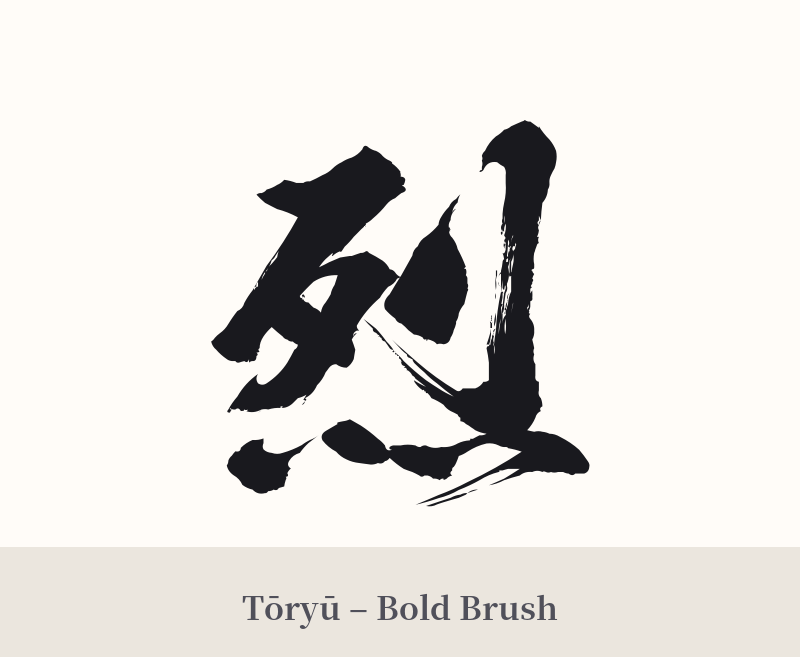
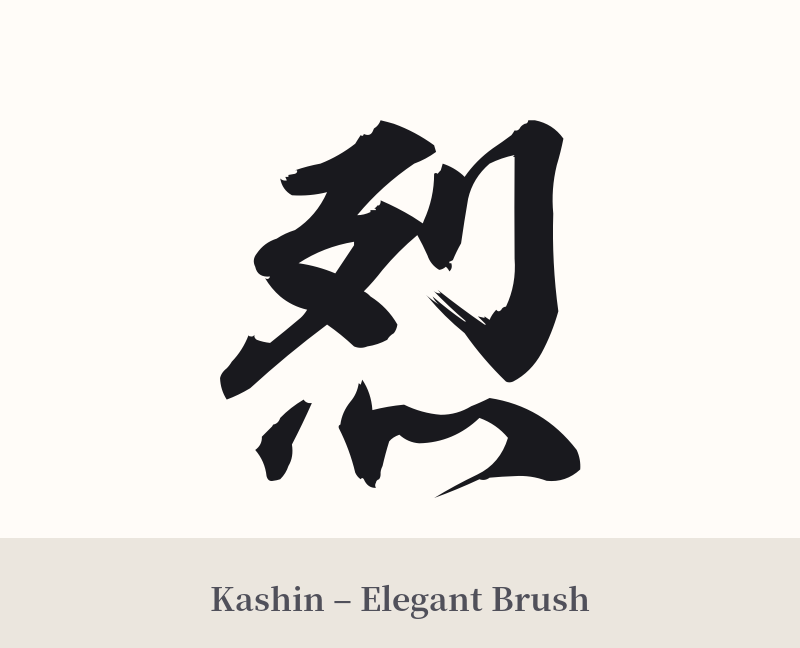
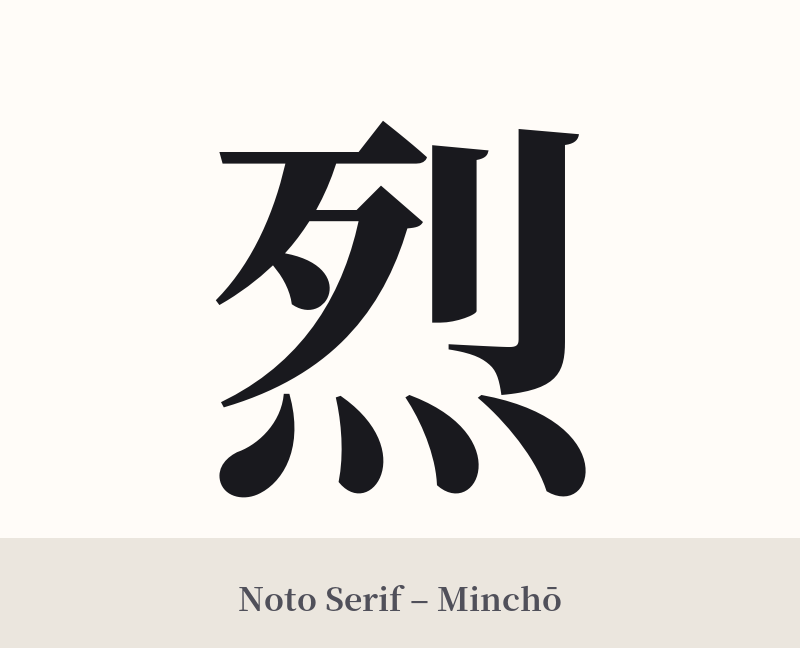
The same kanji can look dramatically different depending on the calligraphy style. Choose a font that matches the mood you want for your tattoo or design.
🎨 Tattoo Suitability
📐 Tattoo Design Guide
For a kanji as potent as 烈, the design should amplify its inherent intensity.
Placement is key. Consider areas that convey strength and directness, such as the forearm, the calf, vertically along the spine, or across the chest or upper back. These placements allow the character to stand boldly on its own.
When it comes to font style, you have several powerful options: – Kaisho (block script): This style provides a strong, stable, and clear representation. Its sharp angles and defined strokes emphasize the kanji's structured power. – Gyosho (semi-cursive): A more fluid, dynamic choice. Gyosho can capture the fiery, flowing energy of 烈, making it feel more alive and active. – Shodo (calligraphy) styles: A custom brushstroke design can be particularly effective. Incorporating elements like kasure (scratchy, trailing lines) and sumi splashes can visually mimic a burst of energy or a raging flame, perfectly matching the kanji's meaning.
For visual enhancements, consider using red ink. A tattoo done entirely in red, or with red accents, directly links to the fire radical (灬) at the bottom of the character and its association with passion and intensity. You could also have subtle flame motifs licking up from the base of the kanji to make the visual connection even more explicit.
Comments