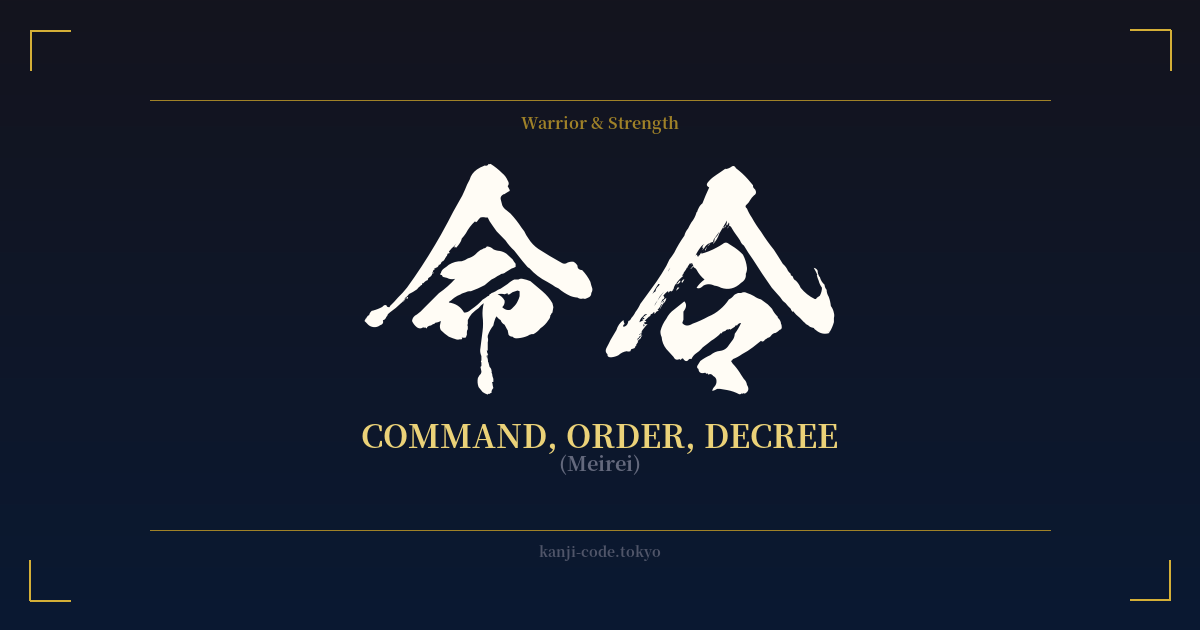
✍️ 命令 (Meirei) — Cultural Context
命令 (Meirei) is a Japanese word that translates to 'command,' 'order,' or 'decree.' It is a formal and powerful term, evoking a sense of absolute authority and non-negotiable instruction. This is not a casual request among friends; a meirei is a directive passed down from a higher authority to a subordinate, and it is expected to be carried out without question.
Historically, the concept of meirei was central to the rigid social structures of feudal Japan. The commands of a daimyo (feudal lord), shogun, or the Emperor were absolute. A samurai's life was governed by the orders of their master, and to disobey a meirei was an act of profound dishonor, often punishable by death. This imbued the word with a life-or-death gravity that it still carries in certain contexts today.
The very characters that make up the word tell this story. 命 (mei) is a fascinating kanji that means both 'command' and 'life' or 'fate.' This duality suggests that a command is something that dictates the course of one's life, a directive that shapes destiny. The second character, 令 (rei), means 'order' or 'law,' reinforcing the official and binding nature of the term. Together, they form a word that signifies a command with the power to direct life itself.
In modern Japan, 命令 is used in formal settings. It's the term for a military order, a legal injunction from a court, or a formal directive within a hierarchical corporation. In the digital age, it has also found a home in computing, where it refers to a 'command' given to a program or operating system. This modern usage retains the original sense of an unambiguous instruction that prompts a specific action.
While it shares the character 命 with 使命 (shimei), which means 'mission' or 'calling,' the two are quite different. A 'shimei' is often an internal, personal mission one feels destined to fulfill. In contrast, a 'meirei' is an external order imposed by an outside authority. Understanding this distinction is key to grasping the specific nuance of 命令 as a concept rooted in hierarchy, duty, and the execution of a given will.
🖌️ Font Styles for 命令
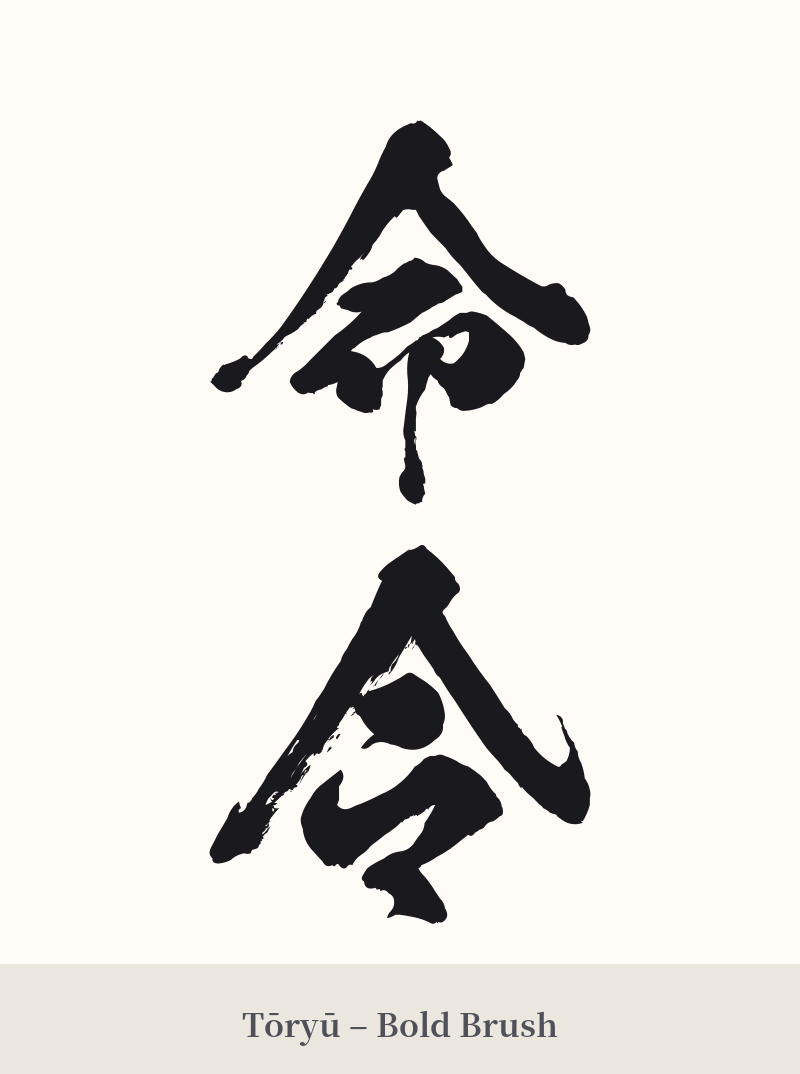
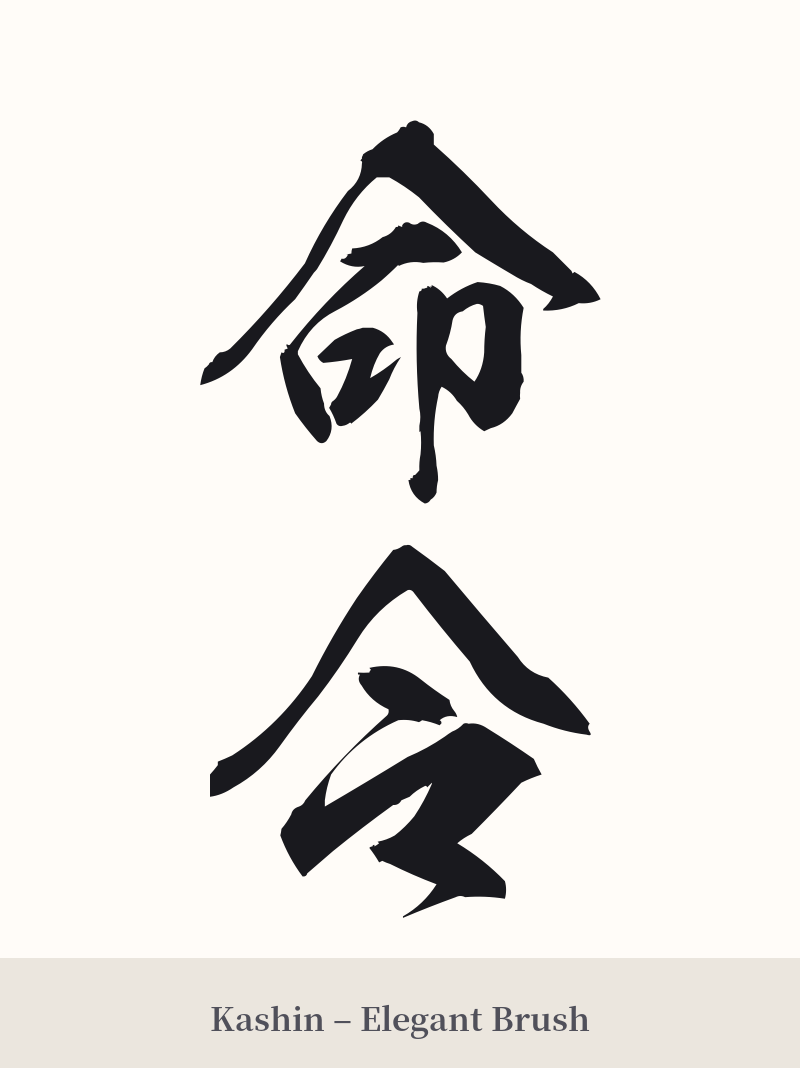
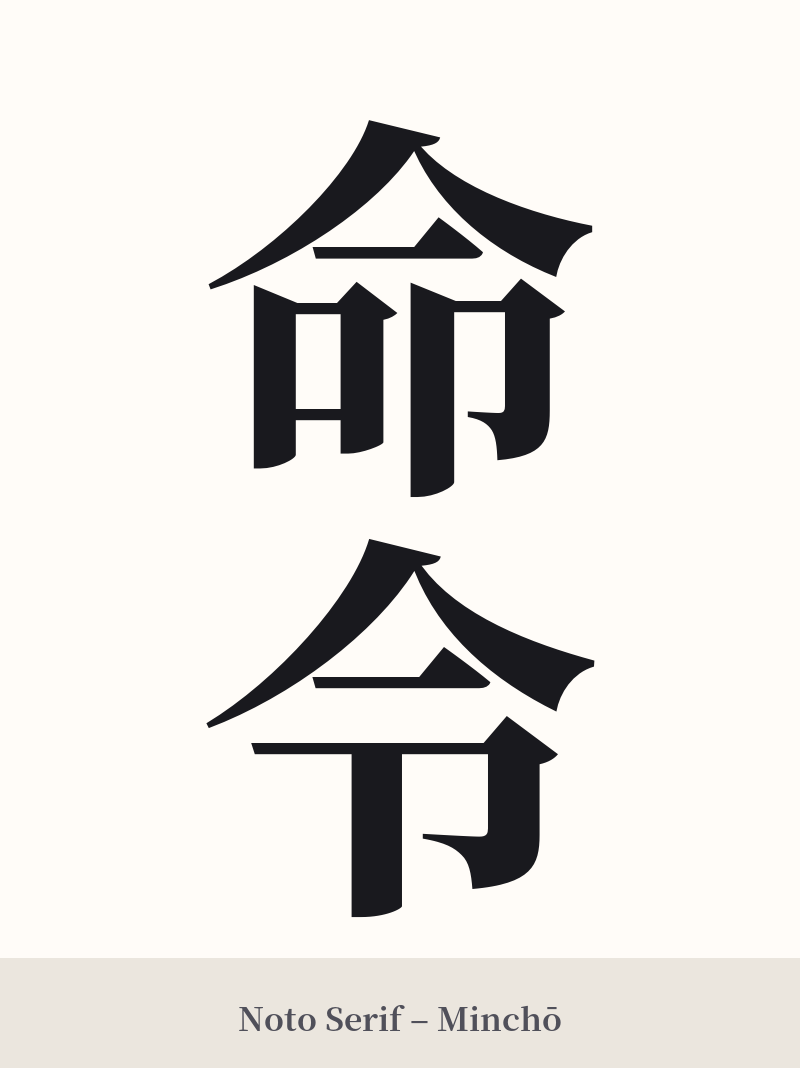
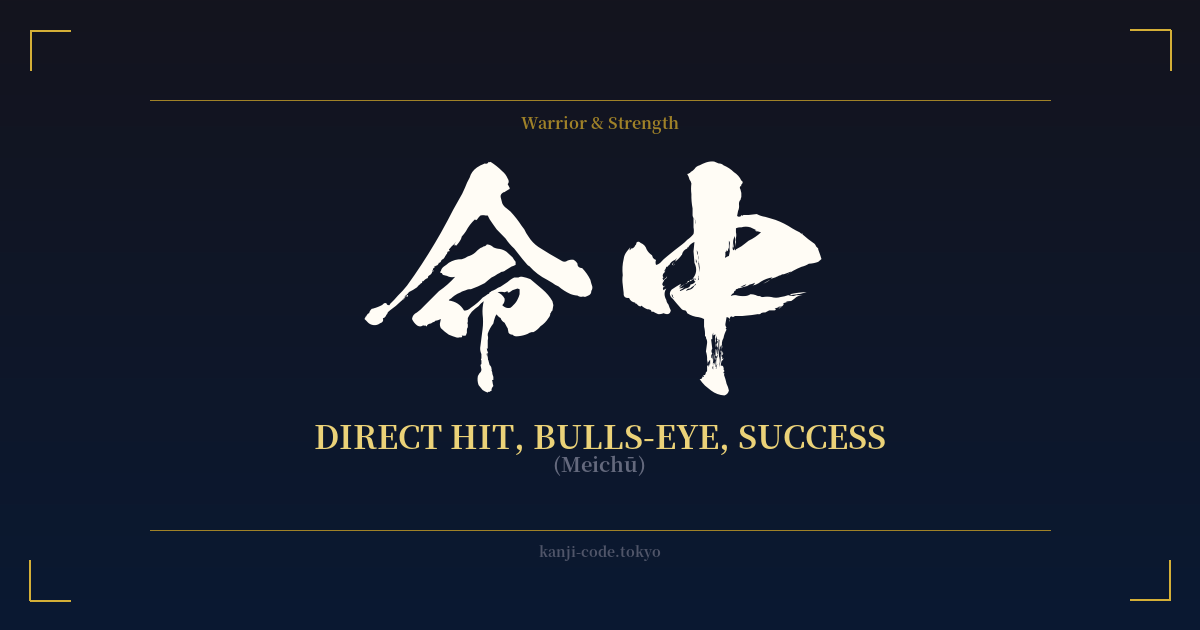
The same kanji can look dramatically different depending on the calligraphy style. Choose a font that matches the mood you want for your tattoo or design.
🎨 Tattoo Suitability
📐 Tattoo Design Guide
For a tattoo of 命令 (Meirei), the design should reflect the word's inherent authority and directness. Overly delicate or complex styles may clash with its strong, formal meaning.
– Placement: A vertical orientation is highly recommended, as it is the traditional way of writing in Japanese and enhances the sense of a top-down command. Consider placements like the forearm, the calf, or along the spine to create a strong visual line.
– Font Style: Bold, clear, and strong fonts work best. A standard Kaisho (block script) font emphasizes its formal, official nature. For a slightly more dynamic and martial feel, a Gyosho (semi-cursive) style with confident brush strokes can be very effective. Avoid overly ornate or soft scripts.
– Visual Elements: While 命令 can stand alone, it can be paired with symbols of authority. Consider incorporating a family crest (kamon), a dragon, or elements of samurai armor. However, for a minimalist approach, the two characters by themselves are powerful enough to convey the intended meaning without additional clutter.
Comments