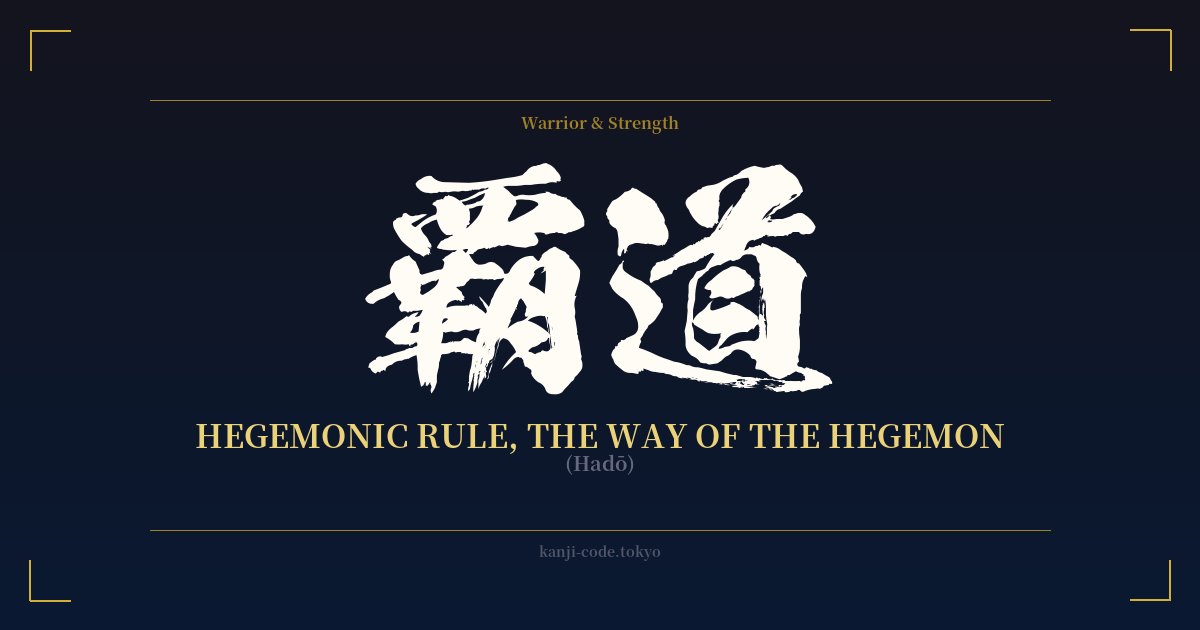
✍️ 覇道 (Hadō) — Cultural Context
覇道 (Hadō) translates to the “Way of the Hegemon” or “Rule by Force.” It is a powerful and deeply philosophical term that describes a path to leadership and unification achieved through military might, strategic dominance, and sheer ambition, rather than moral authority.
To truly understand Hadō, one must know its direct counterpart: 王道 (Ōdō), the “Way of the King.” Where Hadō is rule by force, Ōdō is rule by virtue. This fundamental dichotomy originates in ancient Chinese political philosophy, particularly with the writings of Mencius, who championed Ōdō as the ideal form of governance, where a ruler’s benevolence and righteousness naturally attract the loyalty of the people. Hadō, in contrast, was associated with the Legalist school, which argued that a strong state required strict laws and a powerful military, prioritizing order and results over morality.
In Japan, the concept of Hadō found its most potent expression during the Sengoku Jidai, the “Warring States” period of the 15th and 16th centuries. This era of constant civil war was a breeding ground for ambitious warlords (daimyō) vying for control. The figure most famously associated with the path of Hadō is Oda Nobunaga, the first of the three great unifiers of Japan. Nobunaga was a brilliant but ruthless strategist who employed innovative tactics, embraced new technologies like firearms, and did not hesitate to crush any opposition—including Buddhist monastic armies—to achieve his goal of unifying the realm “by force of arms” (Tenka Fubu).
While his methods were often brutal, they were undeniably effective. His path of Hadō laid the groundwork for a unified Japan, a task later completed by his successors Toyotomi Hideyoshi and Tokugawa Ieyasu. Because of this historical context, Hadō carries a complex legacy. It is not seen as purely evil, but rather as a pragmatic, if harsh, approach to power. It is the philosophy of the conqueror, the trailblazer who imposes their will upon the world to create a new order.
Today, the term 覇道 is frequently used in modern Japanese pop culture, especially in manga, anime, and video games. It’s the defining philosophy for powerful arch-villains or ambitious anti-heroes who seek to conquer the world or achieve a grand vision through their overwhelming strength. Characters who walk the path of Hadō are often charismatic, powerful, and driven by an unshakable will, making them compelling figures. From Raoh in Fist of the North Star to countless antagonists in strategy games, Hadō represents the ultimate expression of power and ambition.
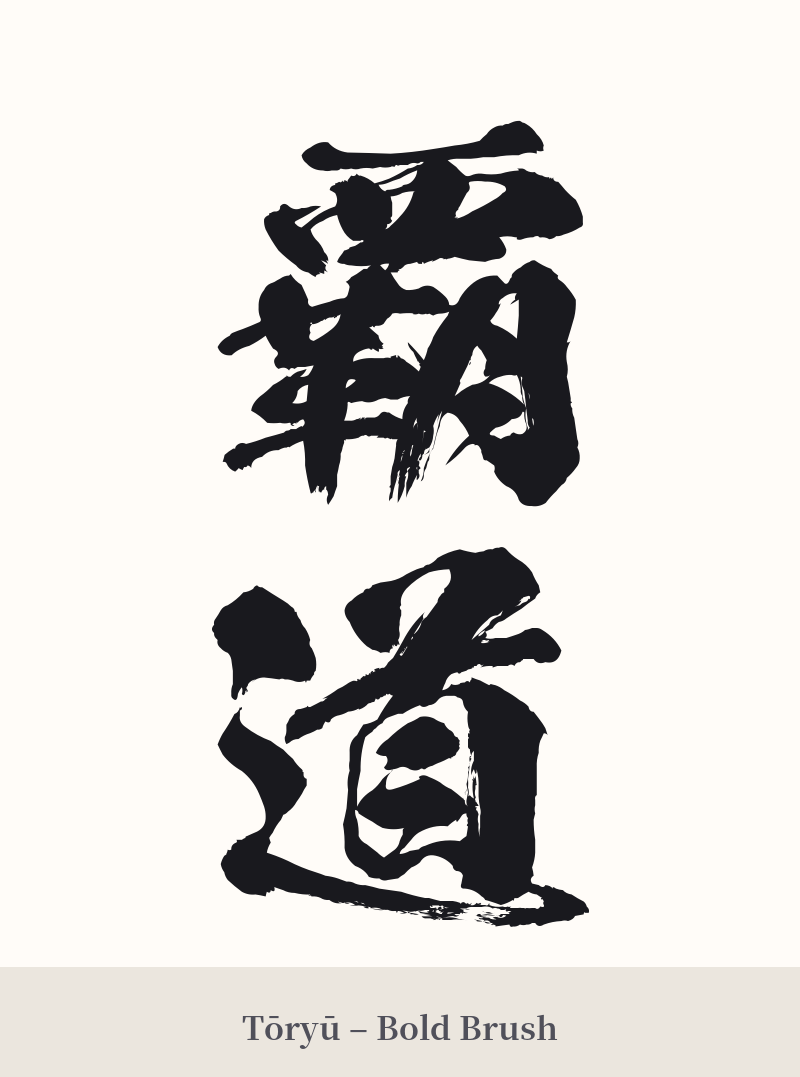
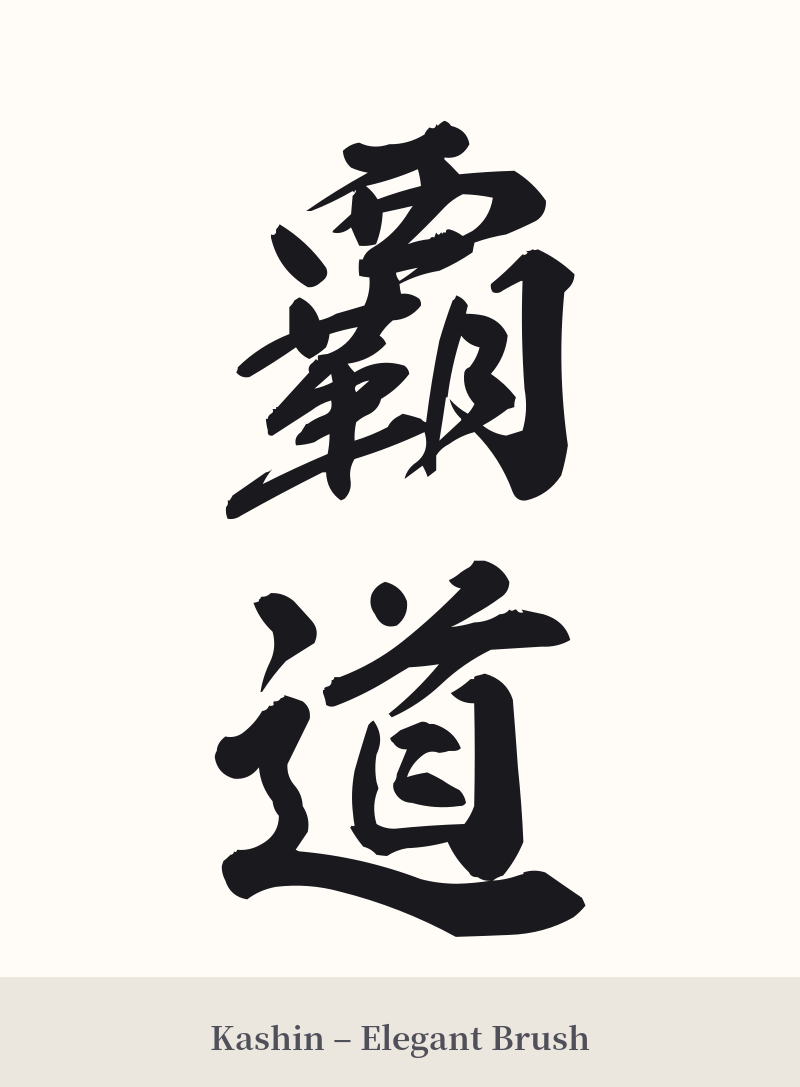
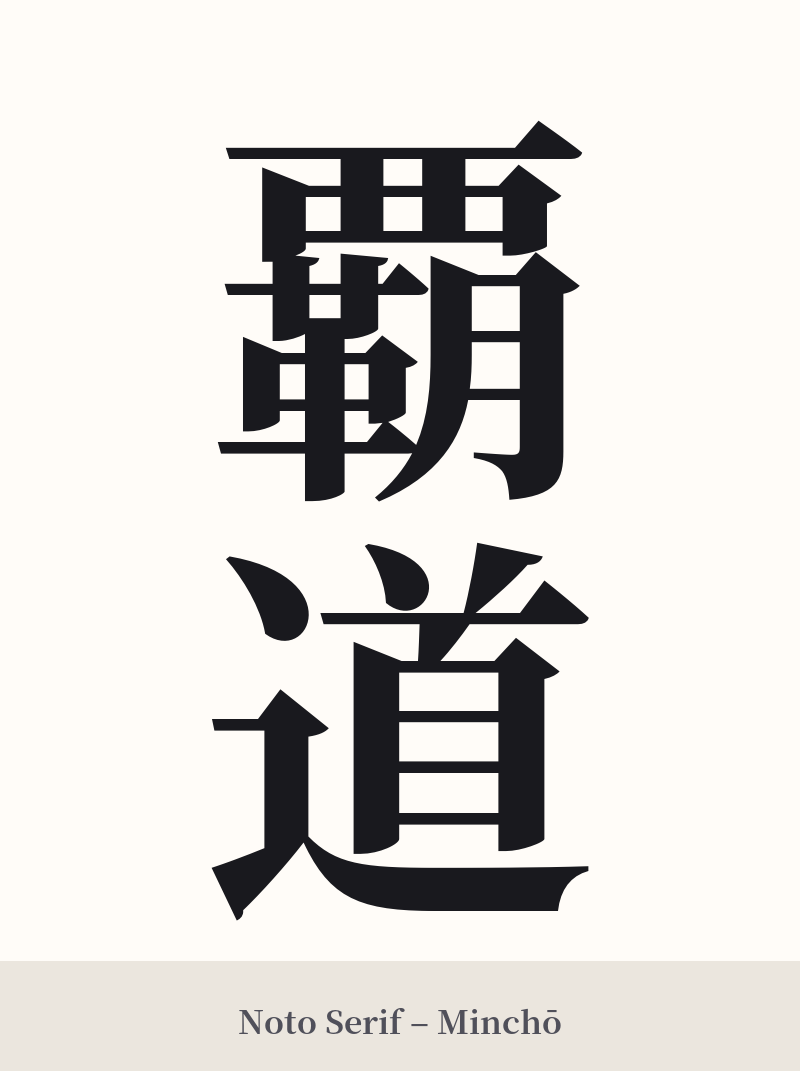
🖌️ Font Styles for 覇道
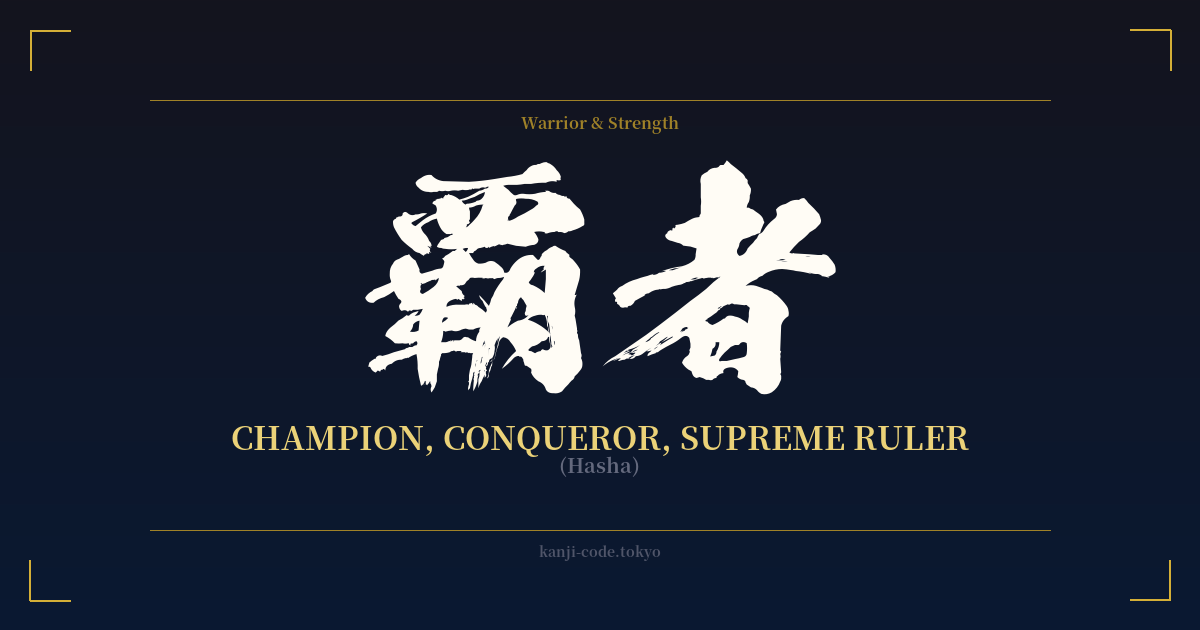
The same kanji can look dramatically different depending on the calligraphy style. Choose a font that matches the mood you want for your tattoo or design.
🎨 Tattoo Suitability
📐 Tattoo Design Guide
A tattoo of 覇道 (Hadō) is a bold statement that requires careful design considerations to match its powerful meaning.
– Placement: Due to the complexity of the first character (覇), this design needs space. Large, flat surfaces like the back, chest, or outer thigh are ideal. For a vertical design, the forearm or calf can work well, provided the artist can maintain clarity.
– Font Style: The style should reflect the concept of overwhelming power. A thick, strong Kaisho (block script) is a classic choice that emphasizes the structure and force of the characters. An aggressive, dynamic brush script (like those seen in samurai movie titles) can also be very effective, capturing the chaotic energy of conquest. Avoid thin or delicate styles, as they would contradict the word's meaning.
– Visual Tips: The two characters should be given equal visual weight, or perhaps slightly more emphasis on the imposing 覇. A vertical arrangement is traditional and visually striking. Given the strength of the kanji itself, additional imagery is often unnecessary. However, if desired, elements like dark flames, a roaring tiger, or a dragon could complement the theme of dominance and power.
Comments