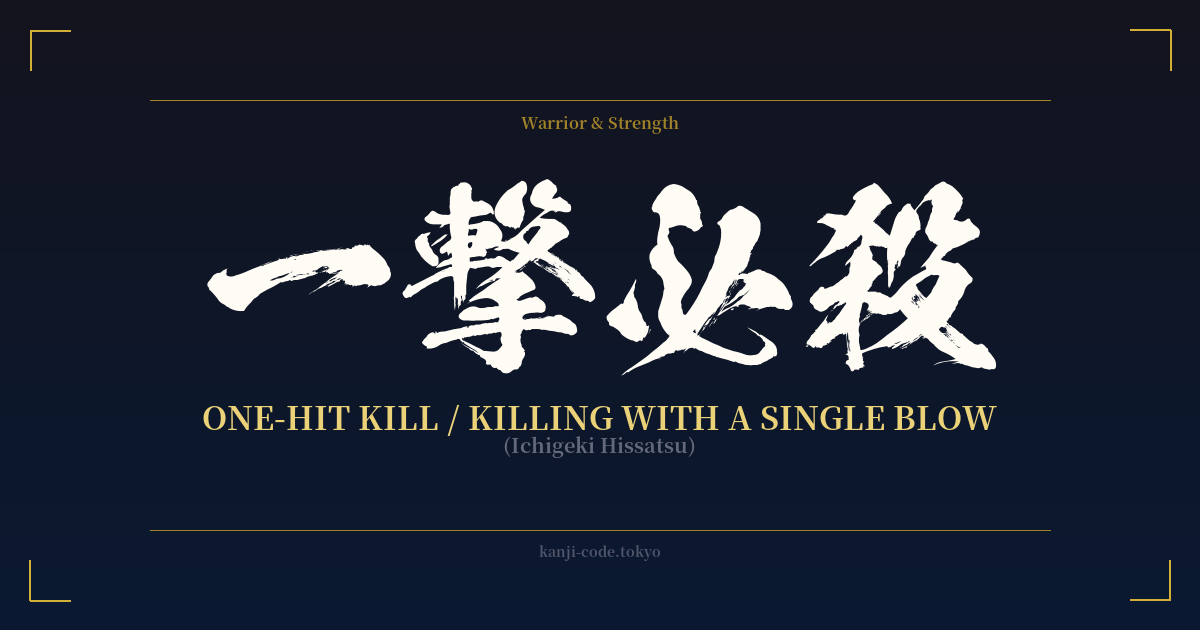
✍️ 一撃必殺 (Ichigeki Hissatsu) — Cultural Context
一撃必殺 (Ichigeki Hissatsu) is a potent four-character idiom that translates to "one strike, certain kill." It embodies the concept of ending a confrontation with a single, decisive blow. While it sounds brutally direct, its roots lie deep within the philosophy of Japanese martial arts (budō), where it represents the pinnacle of skill, focus, and efficiency.
In traditional disciplines like Karate, Kendo, and Iaido, the ideal is not a prolonged, messy brawl but a single, perfect technique that resolves the conflict instantly. This isn't born from bloodlust, but from a profound understanding of combat and a respect for its lethality. The practitioner trains relentlessly for years, honing their mind, body, and spirit to achieve a state where they can unleash this perfect, fight-ending move. The concept is about achieving such mastery that one strike is all that is needed.
This idea emphasizes a state of total awareness and readiness, where the warrior sees an opening and exploits it with absolute commitment. The "kill" in this context signifies the complete neutralization of the opponent's ability to fight, a decisive end to the threat. It is the physical manifestation of supreme confidence and calm under pressure.
In modern times, 一撃必殺 has exploded in popularity through pop culture, becoming a staple in anime, manga, and video games. It's the quintessential "special move" or "finishing blow" that a character uses to defeat a powerful enemy. From fighting games where a super combo results in a K.O. to the entire premise of shows like One-Punch Man, the idea of overwhelming power concentrated into a single attack resonates strongly with audiences worldwide.
However, this pop culture representation often focuses on the spectacle of power, sometimes losing the deeper philosophical underpinnings of discipline and restraint. The true spirit of Ichigeki Hissatsu is not just about having the power to win in one blow, but also the wisdom and control to know when and if to use it. It is the ultimate expression of martial prowess, where efficiency and finality are one and the same.
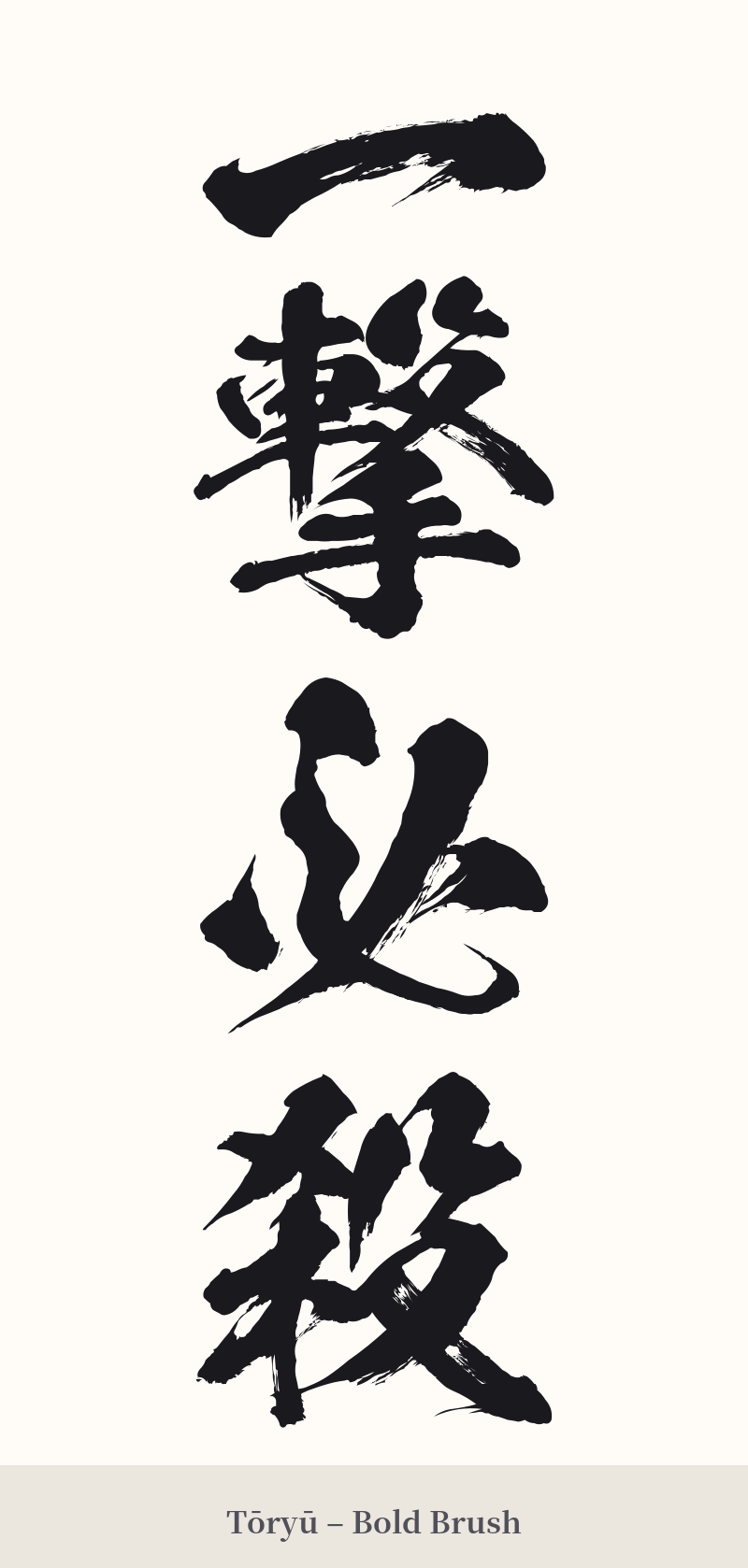
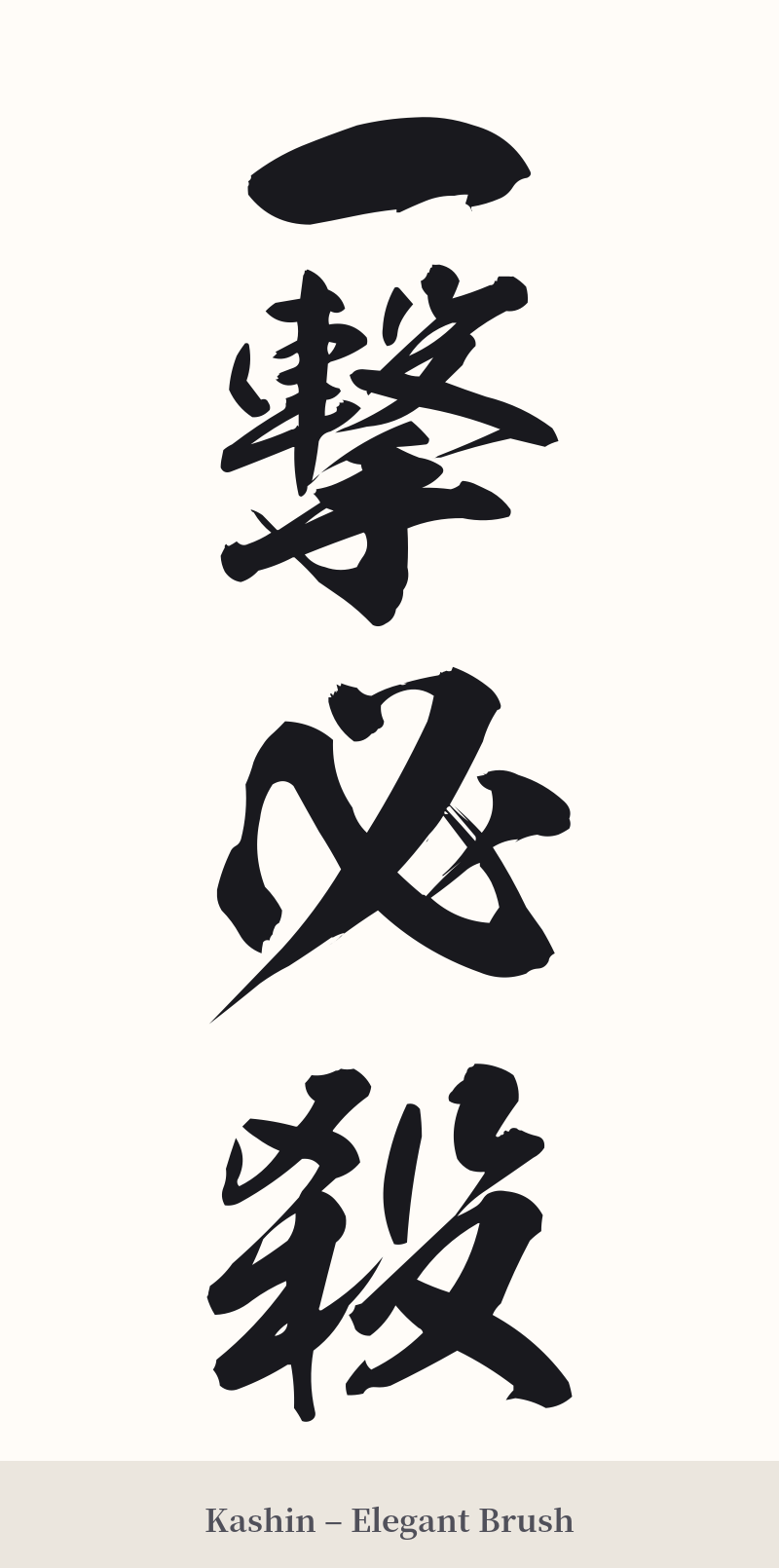
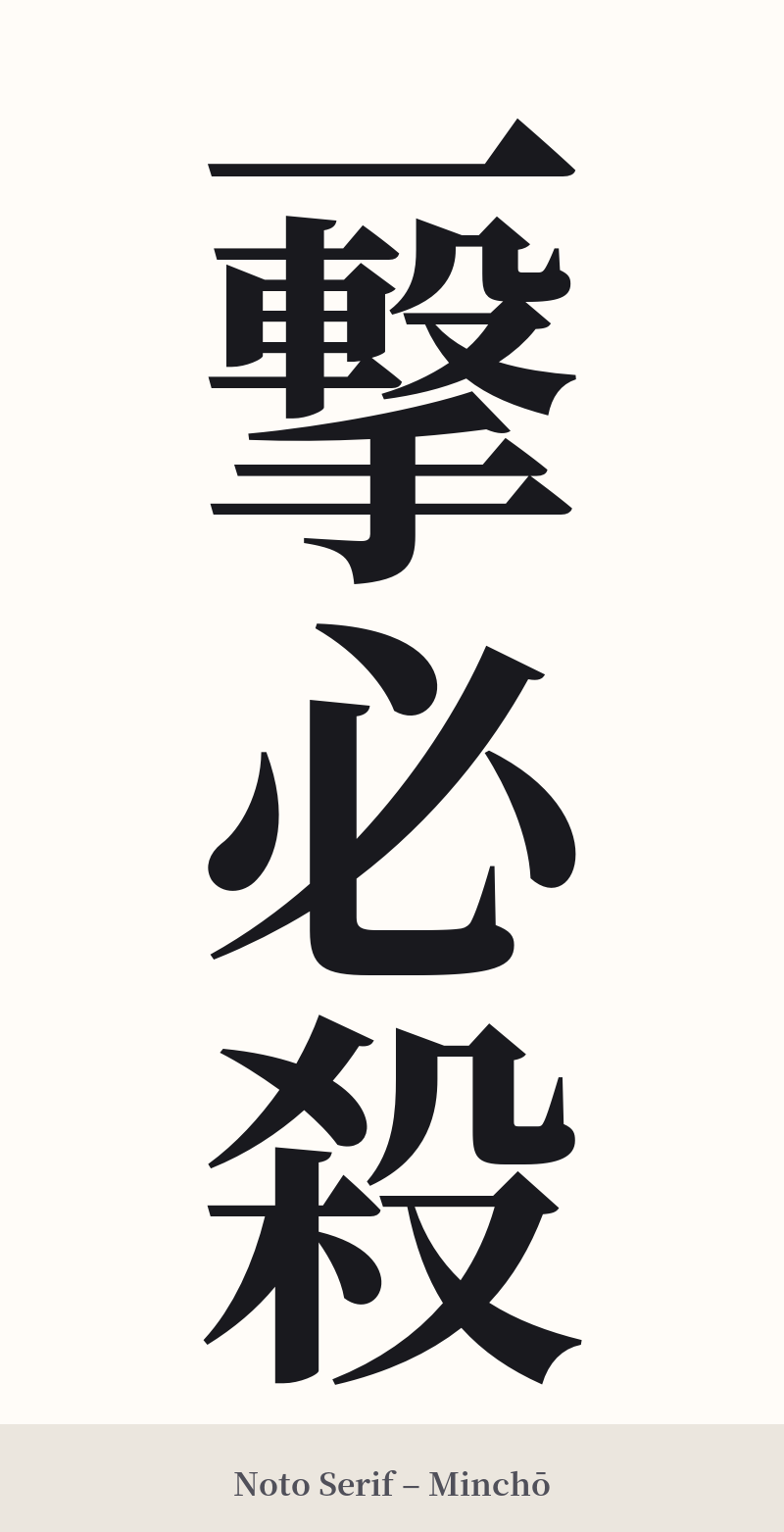
🖌️ Font Styles for 一撃必殺
The same kanji can look dramatically different depending on the calligraphy style. Choose a font that matches the mood you want for your tattoo or design.
🎨 Tattoo Suitability
📐 Tattoo Design Guide
The four-character structure of 一撃必殺 lends itself beautifully to tattoo design, particularly in a vertical arrangement. This classic orientation is perfect for the spine, forearm, or along the calf, creating a powerful visual flow.
For font style, consider the following options: – Aggressive Calligraphy: A semi-cursive (gyōsho) or fully cursive (sōsho) brush script can capture the fluid motion and raw power of the 'single strike.' The dynamic strokes convey energy and impact. – Bold Block Script: A strong, angular kaisho (block script) or a modern sans-serif font will give the tattoo a solid, unyielding, and impactful feel. This style emphasizes the 'certainty' and 'finality' of the phrase.
When it comes to visual elements, you can enhance the design by incorporating related imagery. A katana, a striking dragon, or an enso circle behind the kanji can add layers of meaning, representing the weapon, the power, or the moment of action. Some choose to highlight the final character, 殺 (kill), in red ink. While this creates a dramatic effect, be aware that it significantly amplifies the design's aggressive nature.
Comments