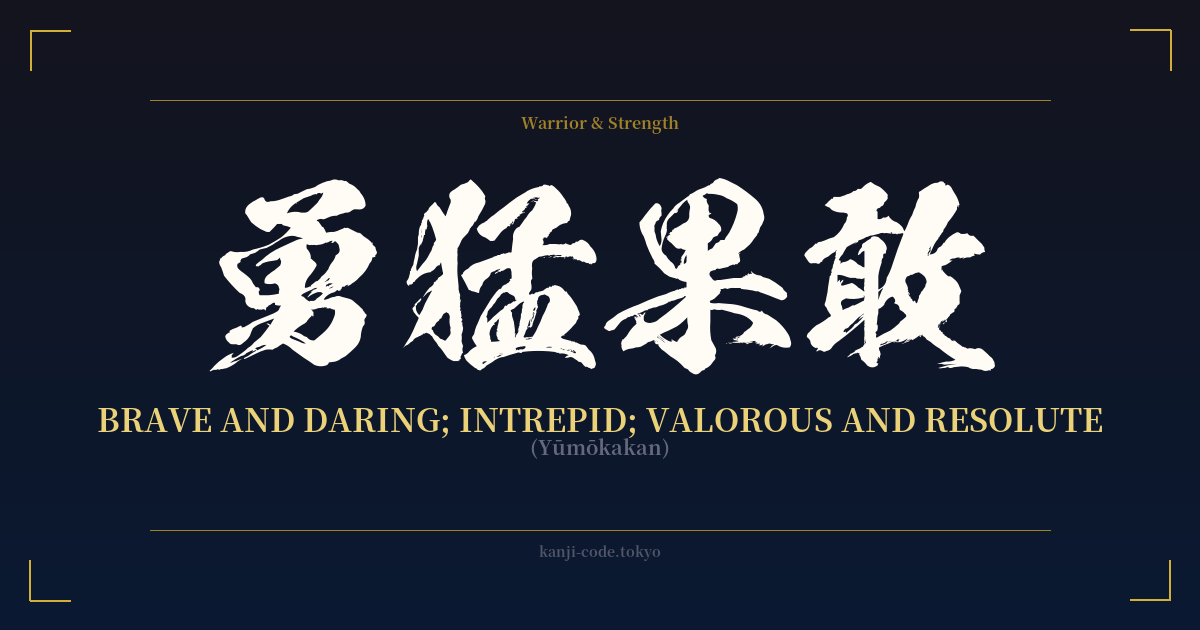
✍️ 勇猛果敢 (Yūmōkakan) — Cultural Context
Yūmōkakan is a Japanese four-character idiom, or 'yojijukugo', that encapsulates a complete and active form of courage. It doesn't just mean brave; it describes someone who is valorous, fierce, resolute, and daring all at once. This is the courage of a hero charging into battle, a leader making a bold decision under pressure, or an individual facing down immense challenges without a moment's hesitation.
The term is a compound of two distinct ideas: 'Yūmō' (勇猛) meaning 'valor and ferocity,' and 'Kakan' (果敢) meaning 'resolute and daring.' 'Yūmō' speaks to the inner spirit—a powerful, almost wild bravery reminiscent of a fierce beast like a tiger, an animal often associated with the character '猛'. It's the raw fuel of courage.
'Kakan', on the other hand, describes the execution of that courage. It is the ability to act decisively and carry out a plan boldly, without being paralyzed by fear or doubt. The character '果' literally means 'fruit' but extends to mean 'to achieve' or 'carry out,' while '敢' means 'to dare.' Together, they represent the follow-through, turning brave thoughts into concrete, daring actions.
Historically, this concept is deeply tied to the ideals of the samurai and the bushidō code. A warrior was expected to be not only brave in spirit but also decisive in action. Hesitation could mean death for oneself or failure for one's lord. Yūmōkakan perfectly describes the ideal warrior who, seeing an opportunity or a danger, acts with immediate and courageous resolve.
In modern Japan, Yūmōkakan is a term of high praise. It might be used to describe an athlete's daring play, a CEO's bold business strategy, or a character in an anime or manga who fearlessly confronts evil. It evokes a sense of dynamic, admirable heroism that is universally understood and respected. It’s not just about having courage, but about wielding it effectively and decisively to achieve a goal.
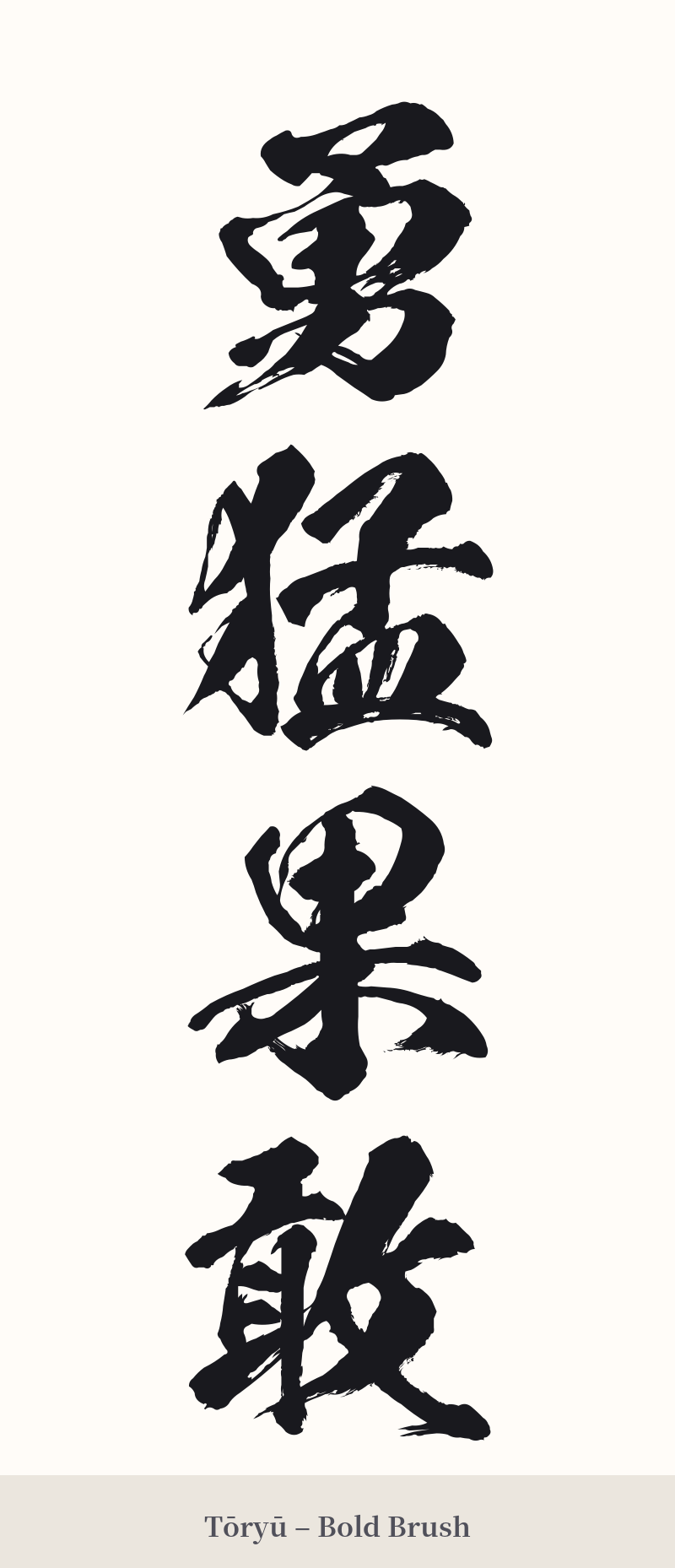
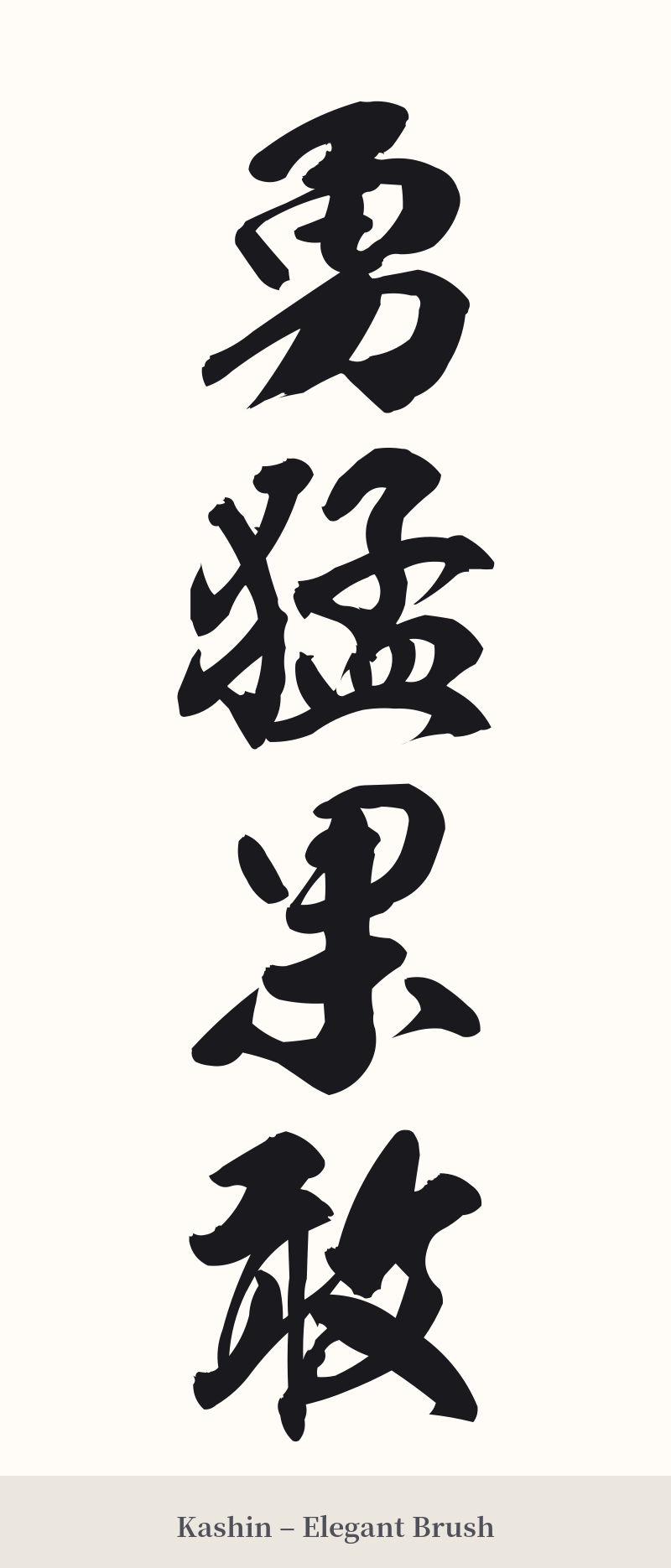
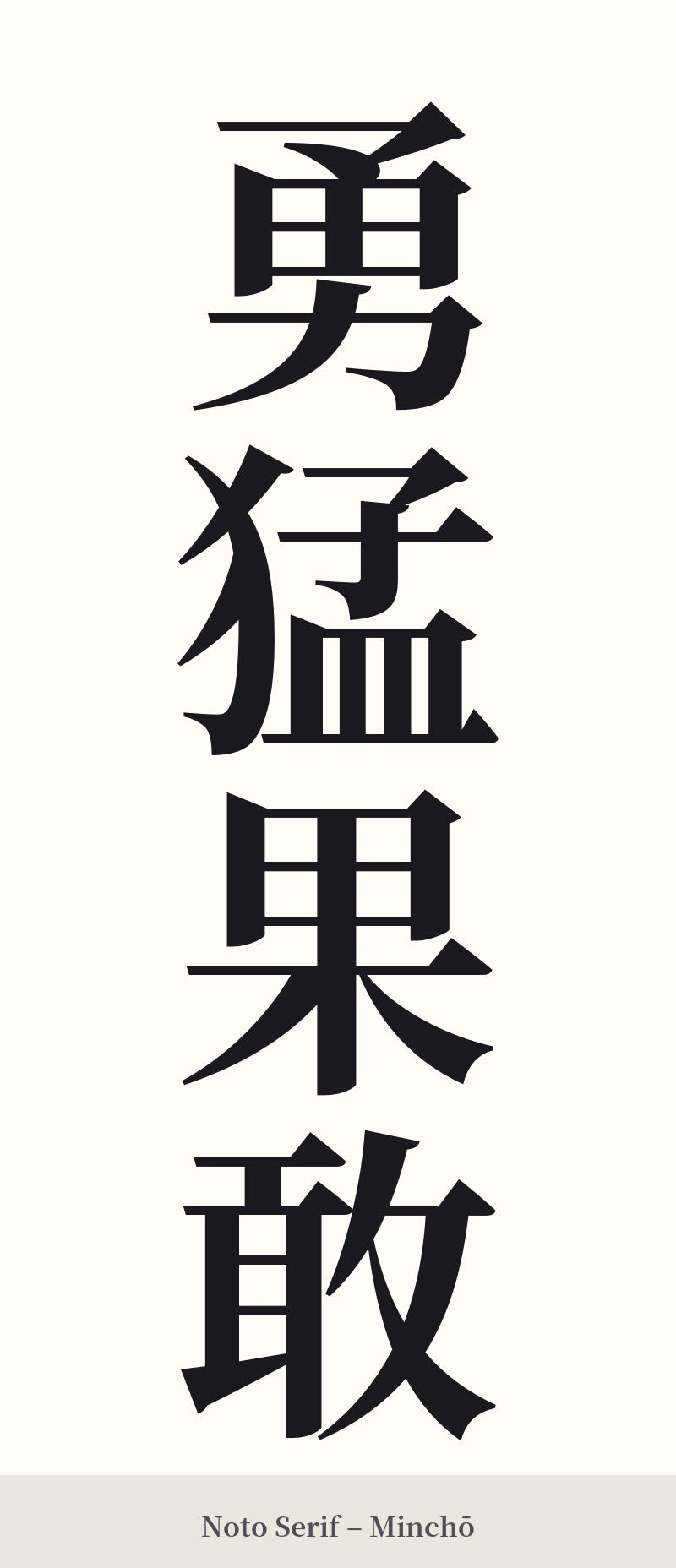
🖌️ Font Styles for 勇猛果敢
The same kanji can look dramatically different depending on the calligraphy style. Choose a font that matches the mood you want for your tattoo or design.
🎨 Tattoo Suitability
📐 Tattoo Design Guide
A four-character compound like Yūmōkakan offers excellent design flexibility, though it is traditionally written vertically.
– Placement: A vertical column looks powerful along the spine, forearm, or calf. A horizontal arrangement works well across the chest, upper back, or below the collarbone.
– Font Style: The font choice can dramatically alter the feel. A bold, semi-cursive script (gyōsho) can emphasize the 'fierce' and 'daring' aspects, lending a sense of motion and energy. A formal, blocky script (kaisho) will give it a more stoic, disciplined, and resolute feeling.
– Visual Elements: This kanji pairs exceptionally well with Japanese motifs that symbolize strength and courage. Consider a design that incorporates a tiger (a direct link to the character '猛'), a dragon, or crashing waves. These elements can frame the kanji or be integrated into the background to create a larger, more epic piece.
Comments