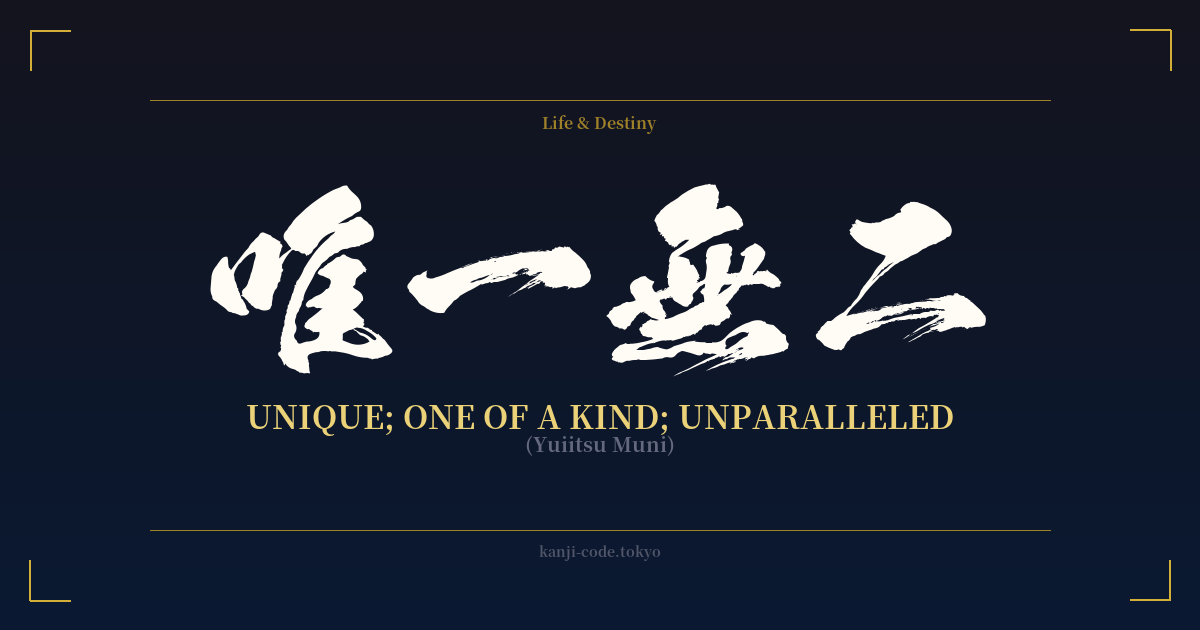
✍️ 唯一無二 (Yuiitsu Muni) — Cultural Context
唯一無二 (Yuiitsu Muni) is a Japanese four-character idiom, or yojijukugo, that translates to "one and only" or "unique and unparalleled." While the English phrase "one of a kind" is a close approximation, Yuiitsu Muni carries a much deeper, more profound resonance rooted in Buddhist philosophy. It doesn't just mean something is rare; it signifies that something is so singular that it exists without a second or a duplicate in the entire universe.
The phrase originates from Buddhist scriptures, where it was used to describe the absolute and singular nature of the Buddha's teachings and enlightenment. The structure itself is a beautiful piece of linguistic logic: 唯一 (Yuiitsu) means "only one," and 無二 (Muni) means "no two." Together, they form an emphatic declaration: "There is only one, and there is no second." This construction gives the phrase an undeniable power and finality.
In modern Japan, Yuiitsu Muni has moved beyond its religious origins and is used widely in secular contexts. It's a term of high praise reserved for things, people, or experiences that are truly exceptional. You might hear it used to describe a master artisan's lifelong work, a breathtaking natural landscape, a once-in-a-lifetime performance, or the bond between two people. It elevates the subject from merely being 'special' to being fundamentally irreplaceable.
Unlike the casual use of "unique" in English, which can sometimes just mean "quirky" or "different," Yuiitsu Muni implies a level of quality, importance, or emotional connection that cannot be replicated. To call a person Yuiitsu Muni is one of the highest compliments, acknowledging their irreplaceable presence in the world or in your life. It speaks to a core value in Japanese aesthetics and philosophy: the appreciation of the singular, transient, and perfect-in-its-moment nature of existence, much like the concept of Ichigo Ichie (one time, one meeting).
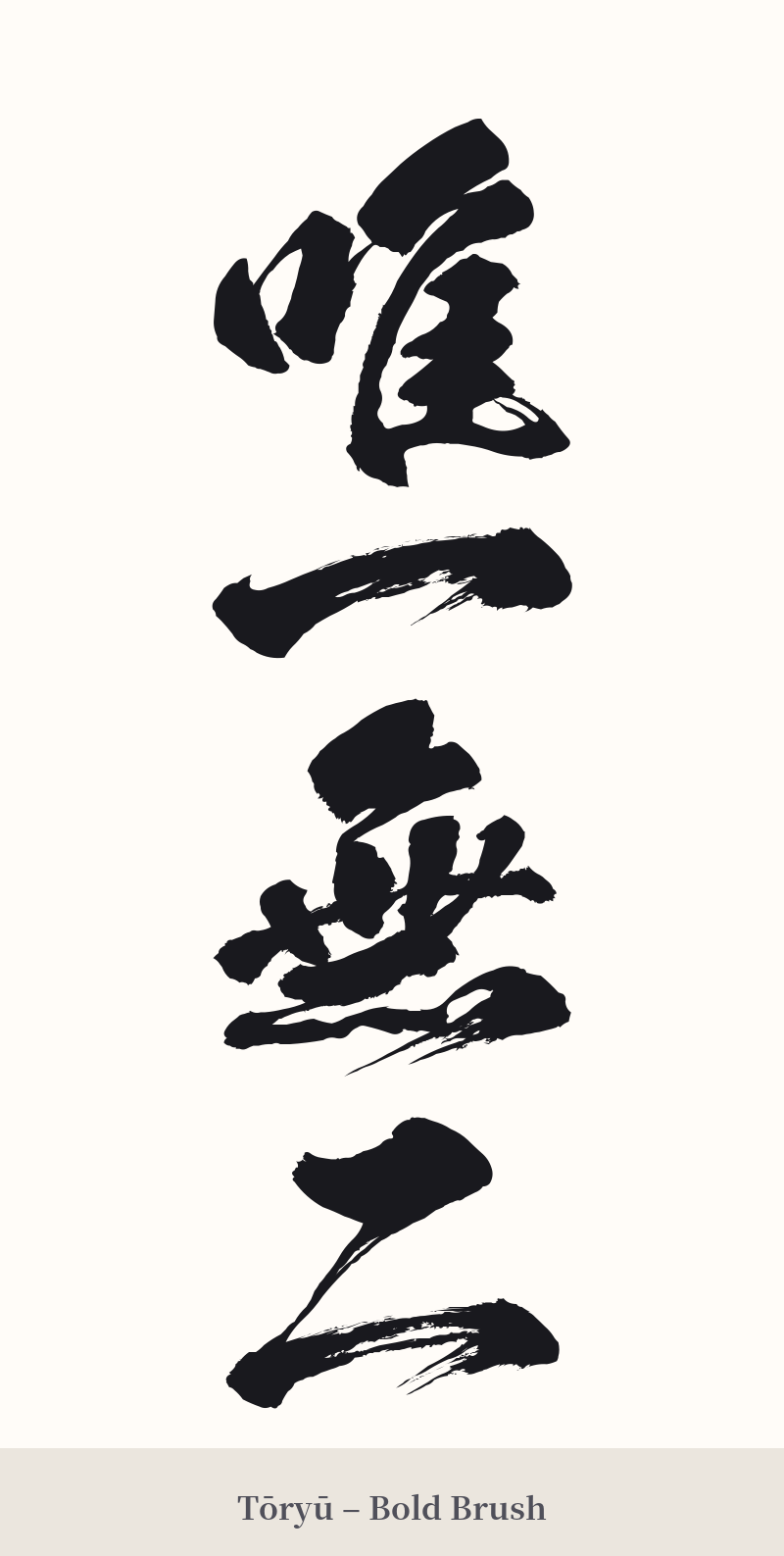
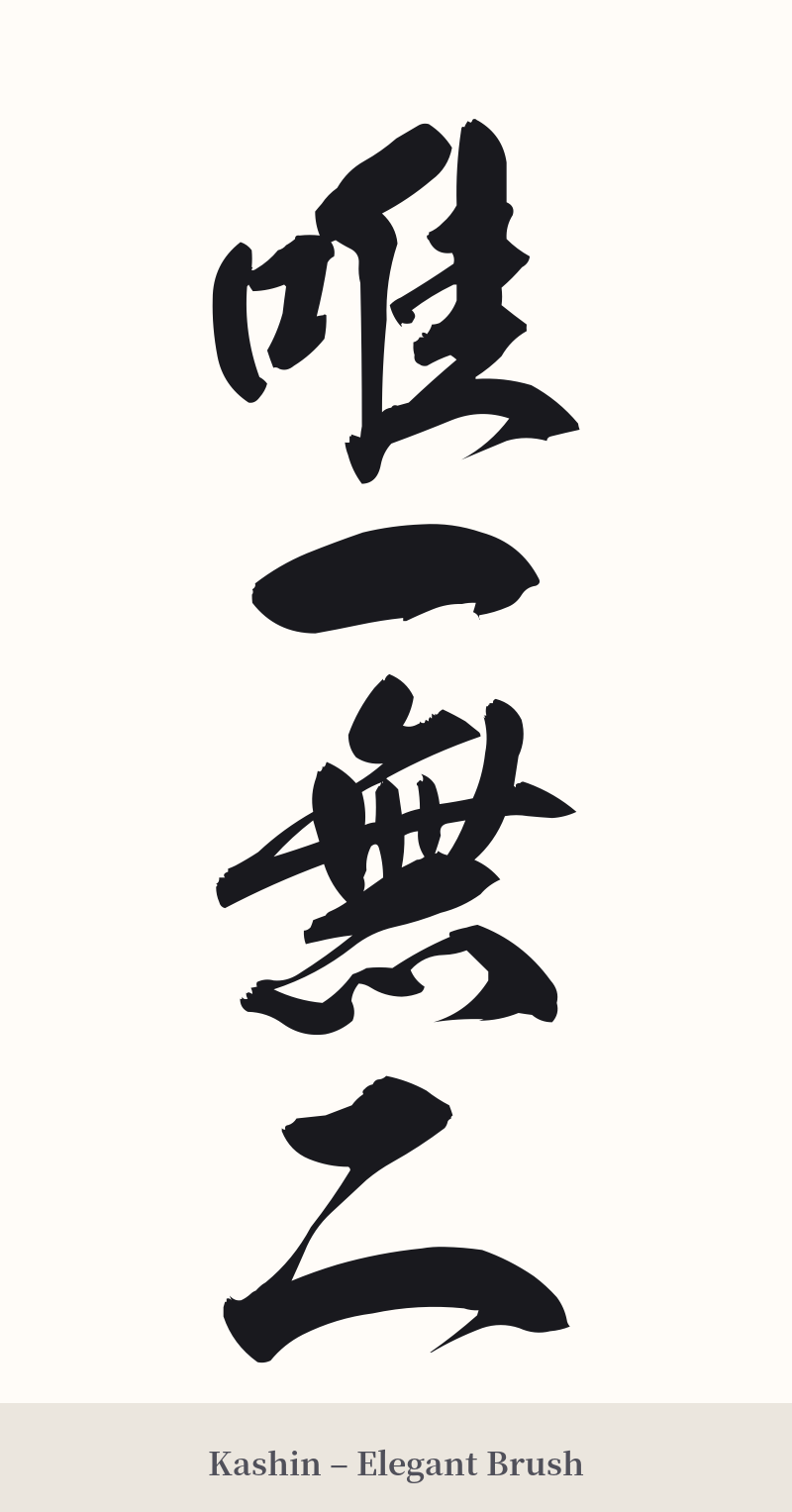
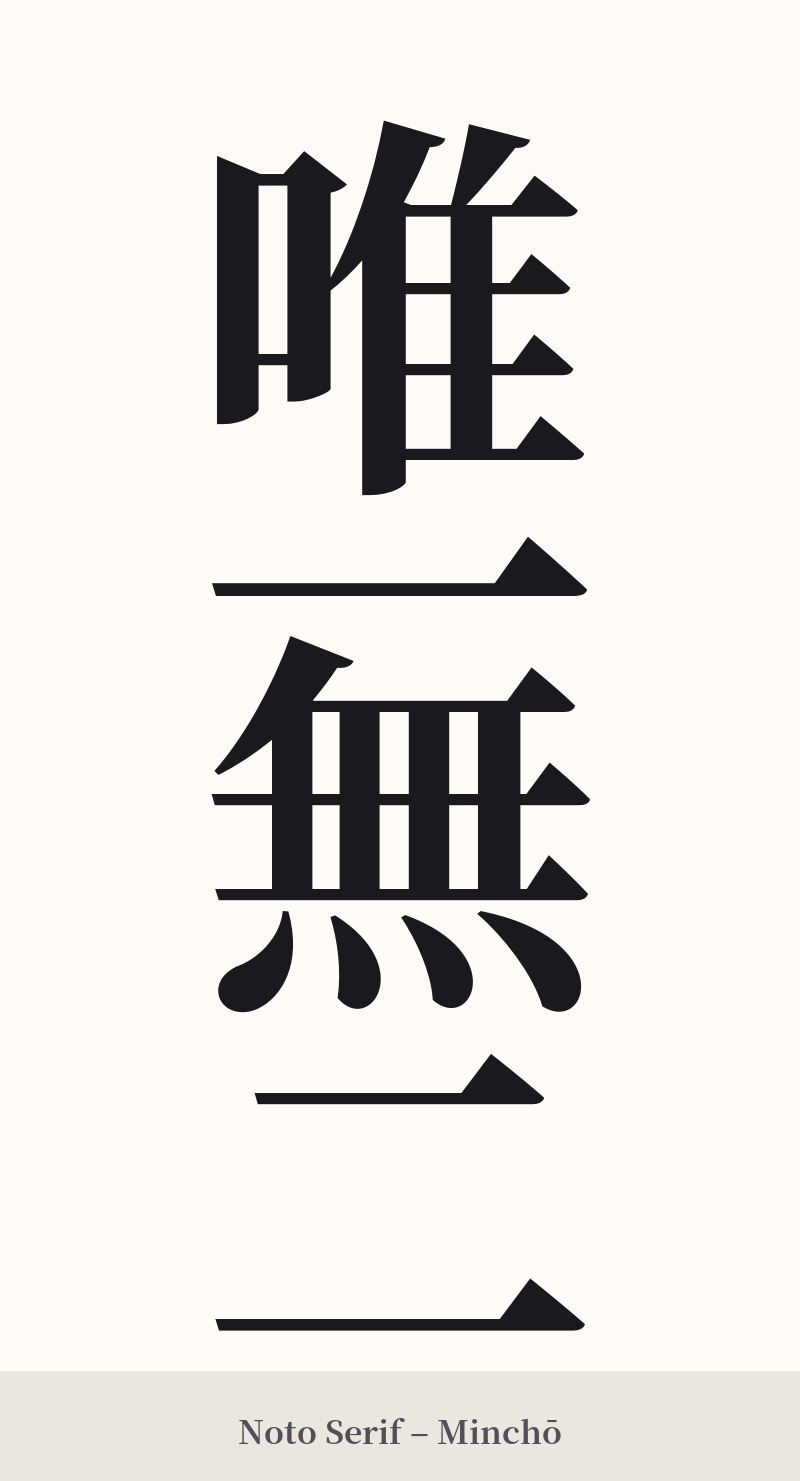
🖌️ Font Styles for 唯一無二
The same kanji can look dramatically different depending on the calligraphy style. Choose a font that matches the mood you want for your tattoo or design.
🎨 Tattoo Suitability
📐 Tattoo Design Guide
As a classic four-character idiom (yojijukugo), 唯一無二 is best suited for a vertical orientation. This traditional arrangement allows each character to flow into the next, creating a powerful pillar of text.
– Placement: Ideal placements include the forearm, the calf, or down the spine, where the verticality of the design can be emphasized. For a horizontal design, the back of the neck or across the chest can also work well.
– Font Style: A traditional calligraphy style is highly recommended to honor the phrase's classic origins. A semi-cursive script (Gyōsho) can give it a fluid, artistic feel, while a standard block script (Kaisho) will provide a strong, clear, and bold statement.
– Visual Elements: Consider pairing the kanji with a simple, complementary image. An Enso (Zen circle) drawn with a single brushstroke can visually represent the idea of singularity and completeness. A single lotus flower can also be a fitting addition, subtly nodding to the phrase's Buddhist roots.
Comments